Why Activity Spikes Two Days After Heavy Rain
Anyone who manages a building in this city eventually notices the pattern. A heavy storm passes, the following day is unremarkable, and then on the second or third day the reports arrive — ants indoors, cockroaches in bathrooms, rodents in ceilings, millipedes at thresholds.
The delay is consistent, it has a straightforward explanation, and knowing it changes how you schedule work and how you interpret a spike in complaints.
What happens underground first
Heavy rain saturates soil and fills the void spaces where a great deal of urban life happens: ant nests, rodent burrows, the gaps around buried services, and the drainage network itself. Water does not kill the occupants; it makes those spaces unusable.
The response is not instant. Colonies and animals wait out the immediate event where they can, and it is when the water level stays high, or when it drains and leaves the space collapsed or fouled, that relocation begins. That takes a day or two.
Then the drainage system equalises
During a storm the drainage network runs full and fast, which is actually hostile to the cockroach population living in it. As flow drops back over the following day, those animals move again — and some of them move upward through floor gullies whose water seals were disturbed by the surge.
This is why bathroom sightings so often follow rain by two days rather than occurring during it. The animals were pushed out of their normal space and are now travelling.
Ants are the clearest example
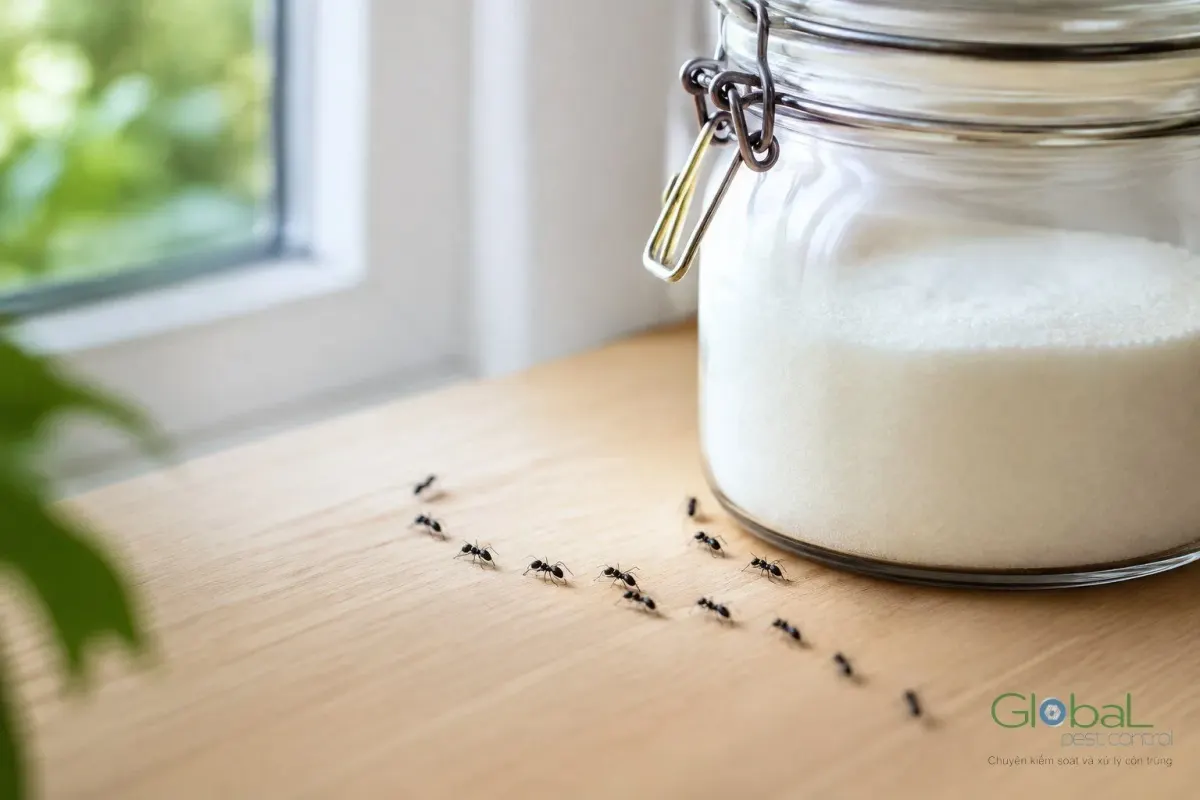
Ant colonies nesting in soil, in planters, under paving or against foundations relocate when the nest floods. A relocation is a deliberate, organised move rather than a scattering, and it takes time to organise and to execute — which is precisely why an ant trail appears indoors on day two or three rather than during the storm.
It also explains why post-rain ant problems are more persistent than other post-rain effects. The colony has not visited; it has moved in, and unless the new site is treated it will still be there when the ground dries.
What this means for scheduling
A treatment applied during or immediately after heavy rain lands on wet surfaces where residual products do not adhere well, and on a population that is still moving. Waiting two to three days means treating settled animals on dry surfaces, which is a better use of the same visit.
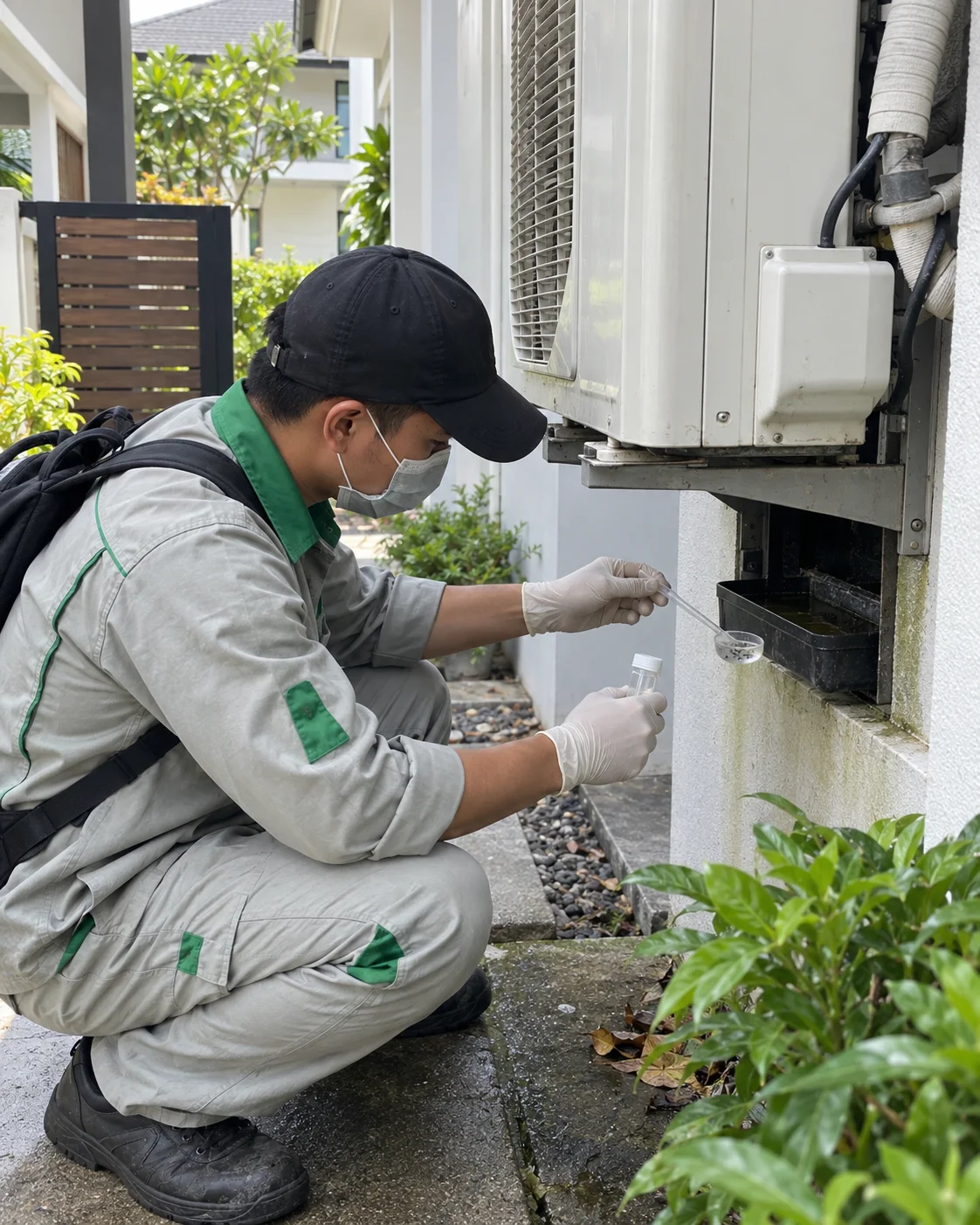
The exception is drain and container work, which is most valuable immediately — tipping out water on day one prevents a mosquito generation on day ten.
How to read a spike in complaints
For a building manager, this matters because a wave of reports two days after a storm looks like a programme failure and usually is not. The right response is to check the date against the weather before concluding anything.
What would indicate a genuine problem is a spike that does not subside within one to two weeks, a spike in a location that has never had activity before, or the same pattern recurring after every storm — the last of which usually points at a specific drainage defect rather than at the treatment programme.
Rodents follow the same delay for a slightly different reason. A flooded burrow is abandoned quickly, but an animal displaced from its normal range spends the first day or so finding somewhere rather than establishing anywhere, and it becomes visible to people only once it starts foraging in an unfamiliar building. That is also why post-rain rodent sightings are often in unusual places — a lobby, a stairwell, a car park — rather than in the areas where a settled population would normally be found.
What to do in those forty-eight hours
Check that floor gully gratings are seated and that traps hold water, because surge flow displaces both. Tip out everything that filled. Look at the wall-floor junction at ground level for mud and debris lines that show where water reached. And if you have external bait stations, check whether any were submerged, since bait that has been under water is finished.
Related reading
See what happens during a flood and August damp. For ants, reading an ant trail and our ant guide. Drainage is covered in how buildings here are drained. Our parent company covers the same seasonal effects in Vietnamese at its service pages.
Global Pest Control is the English-language arm of Khử Trùng Toàn Cầu, based in Thu Duc City.
Common questions
Should we cancel a scheduled visit if it is raining?
Not usually — indoor work, inspection, baiting and monitoring are all unaffected. What should be rescheduled is external perimeter treatment and any residual applied to outdoor surfaces, because it will not adhere and will be washed off. A contractor who applies external residual in the rain is billing for an application that has already been removed.
We get ants after every storm, in the same place. Why does treatment not hold?
Because the same colony is relocating to the same void each time, which means the void itself is the issue rather than the trail. That needs the nest located and treated, and then the void sealed once activity has stopped. Repeated trail treatment addresses the symptom and will keep addressing it every rainy season.
Is this pattern the same everywhere in the city?
The mechanism is, and the intensity is not. Low-lying areas, canal-adjacent property and older districts with overloaded drainage show it much more strongly than a modern tower on higher ground. If your building shows a severe version of it, that is usually telling you something about local drainage rather than about pest pressure.