
In food retail the risk arrives on a pallet. A restaurant's stock passes through a kitchen where somebody handles every item; a shop's stock goes from a delivery vehicle to a back store to a shelf, largely unopened. That single difference decides where a retail programme puts its effort: goods-in first, back store second, shop floor last.
Goods-in is the control point
Almost every stored product infestation in a shop was delivered, not bred on site. Cartons of rice, flour, pet food, dried goods, nuts and confectionery arrive already carrying eggs or larvae, and the back store then provides warmth and stillness. A programme that inspects only the shop floor will find the problem three months later on a shelf edge, by which time the source carton is long since broken down.
Practical control is unglamorous: inspect representative cartons on arrival, reject visibly infested stock, keep pallets off the wall and off the floor, rotate strictly, and never let a damaged sack sit "to deal with later".
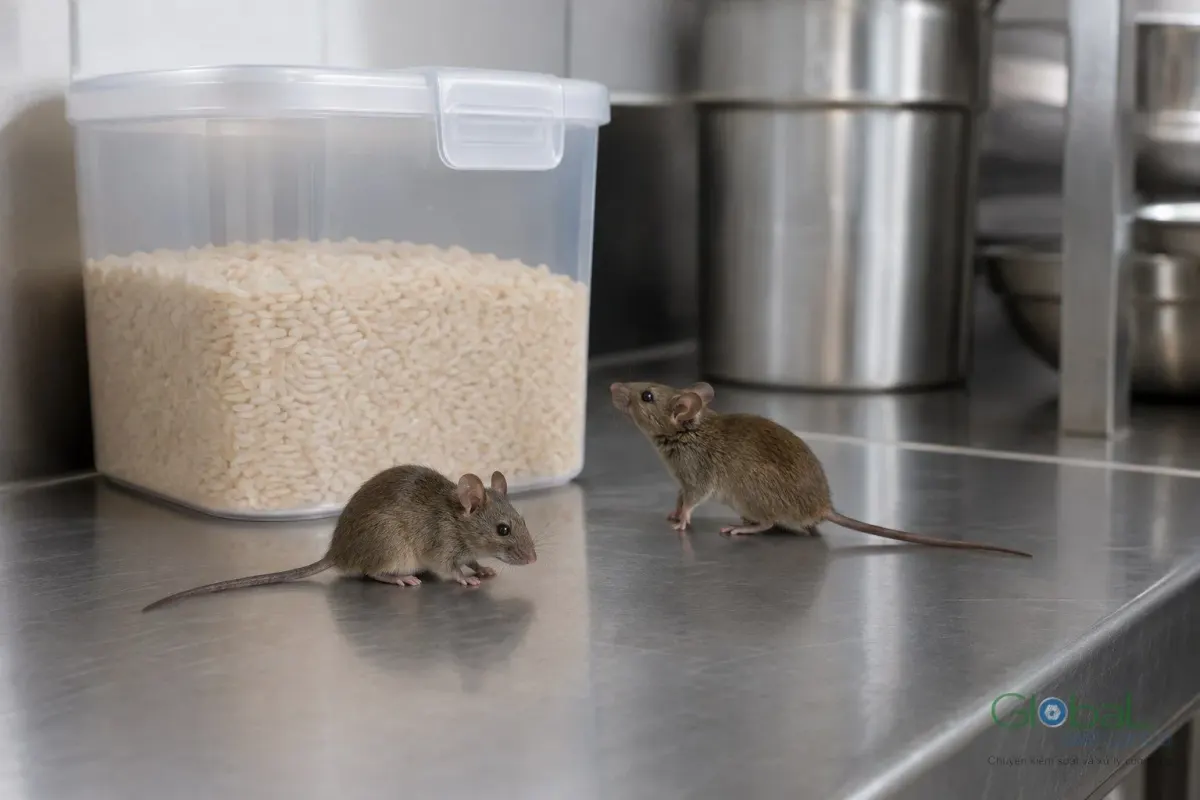
Rodents and the back-of-house
Rodents in retail come through the delivery door, the waste area and unsealed service penetrations, and they nest in exactly the place we photograph most often: cardboard standing on the floor in a store room. External bait stations along the perimeter, snap traps and monitors inside, and proofing of the door and pipe gaps do more than anything applied indoors. A shop that fixes its delivery door threshold usually halves its rodent activity without a single additional treatment.
The shop floor
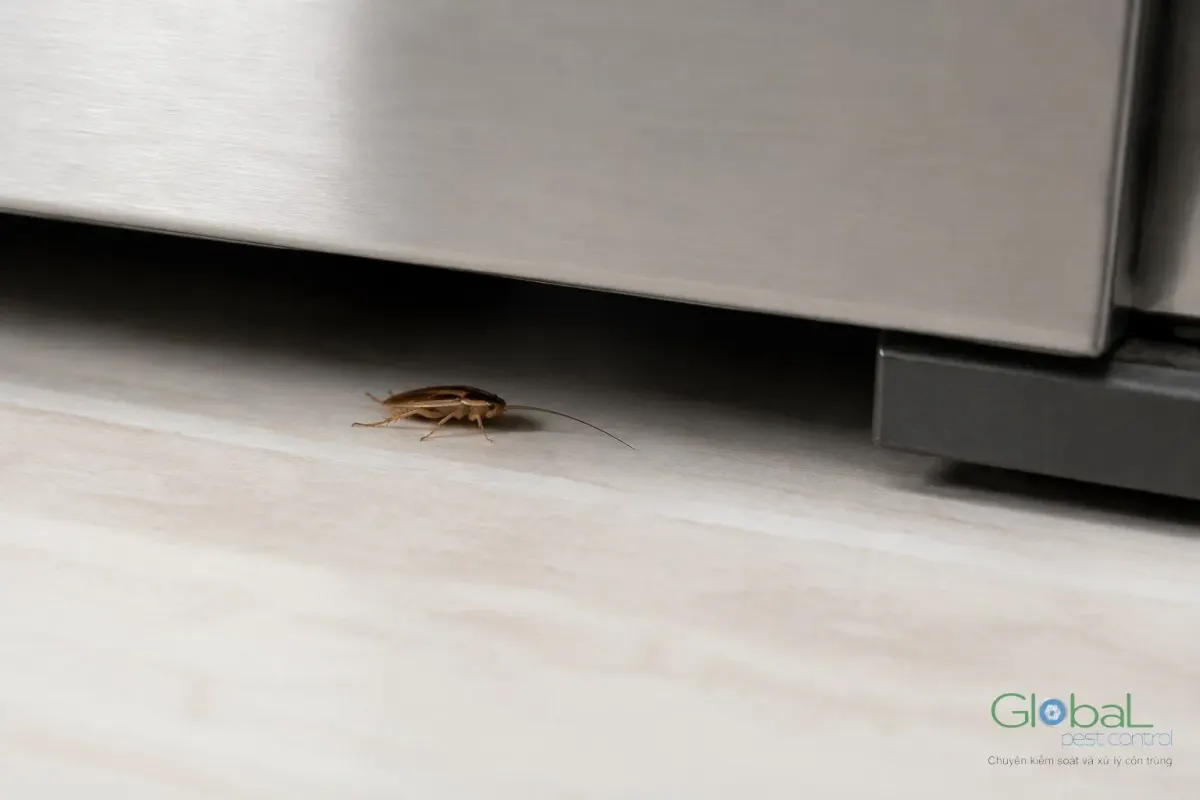
Customer-facing areas are treated with restraint: gel bait and monitors in shelf voids, under chillers and behind the checkout run, plus drainage and the gap beneath fixed units. No residual spraying of open product areas, no fogging during trading. The chiller and freezer plinths deserve particular attention — warm compressor voids directly beneath cold cabinets are the most reliable cockroach harbourage in any shop.
What the programme includes
- Numbered device plan covering external bait stations, internal monitors and fly units, with each device read and recorded at every visit.
- Goods-in inspection protocol your receiving staff can apply, with a card showing what to look for in dry goods.
- Back store treatment and a written proofing list for doors, penetrations and the waste area.
- Shelf void, chiller plinth and checkout run treatment out of trading hours.
- Drain and waste area cycle.
- Trend reporting by device and by area, so a rising count is visible before it becomes a sighting.
Records, audits and landlords
Mall leases and food safety audits ask for the same file: site plan, device register, service reports, trend data, corrective actions, licences and product registrations. Keeping it current is most of the compliance burden and almost none of the technical work. See what an audit file should contain and pest control for businesses in Vietnam.
Related
For premises with a full kitchen alongside retail, see the restaurant programme. For warehouses and central stores feeding several shops, see factory and production site programmes. Prices are indicated on the price list.
Common questions
Do you treat during trading hours?
Inspection and device reading, yes. Treatment of the shop floor, no — that is done before opening or after closing. Back-of-house work can usually run during the day without affecting customers.
A customer found an insect in a packet. What now?
Keep the packet and the batch code, do not discard them. Identifying the species tells you whether it came from the supplier, the store room or the shelf, and the batch code tells you what else to check. We identify it and put the finding in writing, which is what a supplier discussion needs.
How many devices does a shop need?
It depends on the perimeter, the number of external doors and the layout, not on floor area alone. We produce the device plan at the survey and it becomes part of your file. Adding devices without a plan produces a longer report and no more control.
Small shops are not small versions of big ones
A mini-mart or a specialty food shop has the same risks as a supermarket and none of the infrastructure. There is usually no separate goods-in area, no back store worth the name, and stock is broken down on the shop floor. The practical adaptation is to move the control point to the delivery moment itself: inspect cartons as they come off the vehicle rather than after they are stacked, keep nothing on the floor, and treat the two metres inside the delivery door as the critical zone.
For a shop of that size the device plan is short — a handful of external stations, monitors under the chillers and behind the counter run, and one fly unit if there is a door open to the street. A longer list is not better control; it is a longer report.
Frozen and chilled cabinets
The warm compressor void beneath a cold cabinet is the most reliable cockroach harbourage in any food retail unit, and it is also the hardest place for staff to clean. It should be opened and inspected at every visit rather than treated blind, and spillage beneath it removed before anything is applied. Where a cabinet cannot be moved, monitors underneath it are the only honest way to know what is there.
Who we are
Global Pest Control is the English-language arm of Khử Trùng Toàn Cầu. Your device plan, service reports and audit file arrive in English; the discussions with suppliers, the landlord and the waste contractor happen in Vietnamese. Vietnamese-language services are at khutrungtoancau.vn.