
A landlord's pest problem is really a documentation problem. The insect is treatable in a fortnight; the argument about whose fault it was, and whether the deposit covers it, can run for months and costs more. The fix is a dated report at the start of the tenancy and another at the end, and almost nothing else.
The two visits that prevent most disputes
Before the tenant moves in. An inspection and treatment of an empty unit is cheap, fast and unobstructed — no furniture to work around, no occupant to schedule. It also produces a dated record of the property's condition, which is the document that settles a claim ten months later.
At handover. The same inspection at the end of the tenancy shows what changed. If the property is clear, the deposit discussion is over in one email. If it is not, you have evidence rather than an accusation. The article on end-of-lease pest treatment covers what the outgoing tenant should expect.
What we do differently for a portfolio
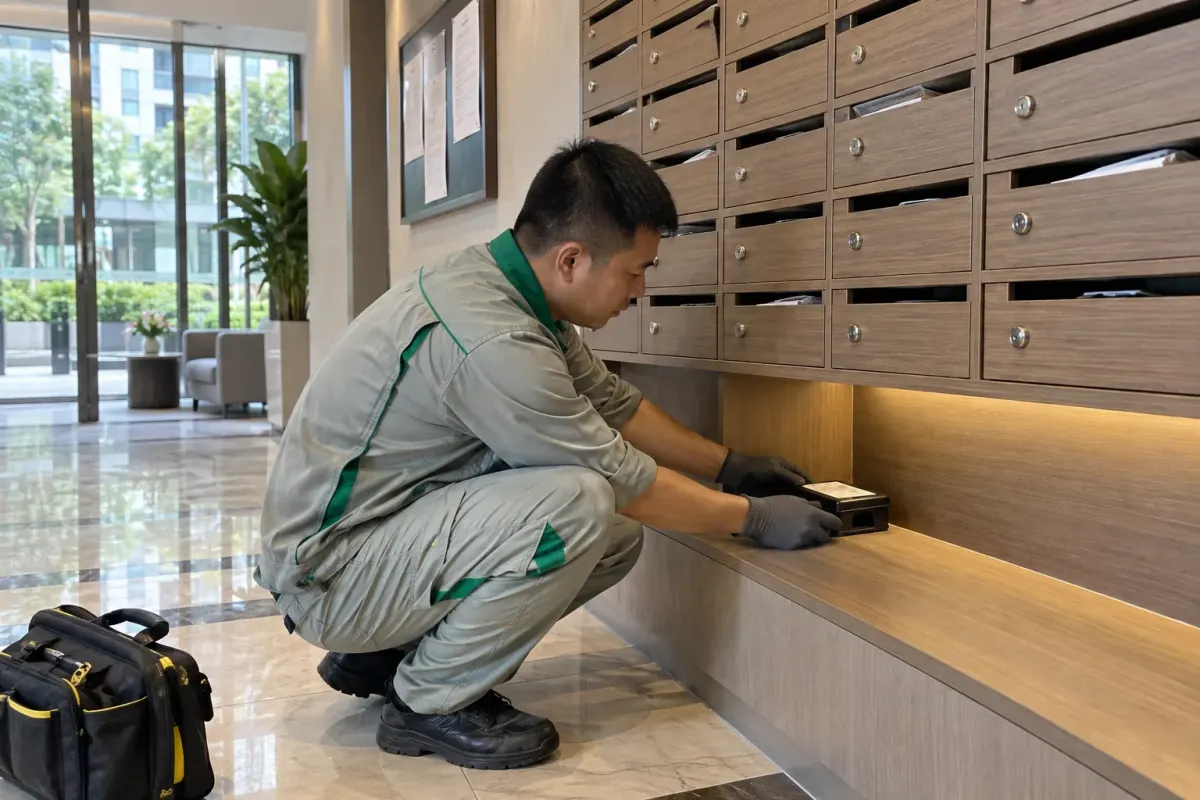
- One account across properties. Units in different districts on one contract, one schedule and one monthly invoice, rather than a separate arrangement per address.
- Per-unit reporting. Every visit is recorded against the unit, not against the portfolio, so a report can be forwarded to a single tenant or a single owner without redacting anything.
- Direct tenant contact where you want it. We can arrange access with the tenant directly and copy you on the outcome, so you are not relaying appointment times.
- Void-period priority. Empty units get scheduled first because they are the cheapest and most effective to treat.
- English and Vietnamese. The report reaches an overseas owner in English and the technician speaks to the tenant or the building in Vietnamese. Neither side has to translate anything.
Where the responsibility actually sits
Vietnamese residential leases rarely spell this out, which is why it becomes an argument. The workable division, and the one most managing agents already apply, is: anything structural — termites, rodents entering through the fabric, a defect that lets insects in — belongs to the owner; anything arising from how the property is used and maintained belongs to the occupier. Put that sentence in the lease and most disputes never start. See who pays for pest control for the longer version, and what building management covers for the part that is neither of yours.
Buildings where management already treats the common areas
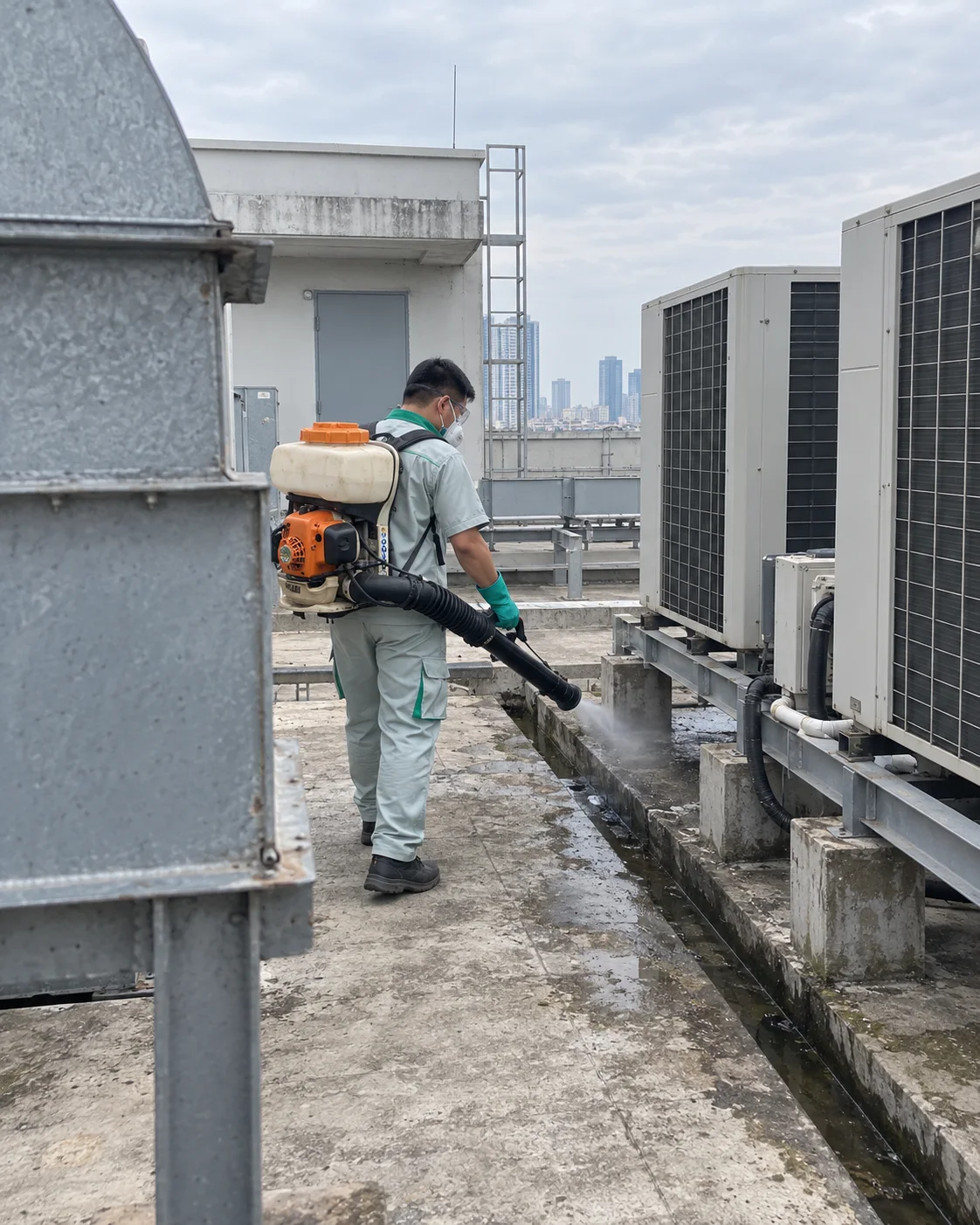
Most managed buildings in District 1, District 2, District 7 and Binh Thanh fog the corridors, basements and refuse rooms on a schedule. That work stops at the apartment door. It reduces pressure on your unit but it does not treat inside it, and it is not evidence about the condition of your unit. A landlord who relies on it entirely usually discovers the gap during a deposit dispute.
Cost shape for a portfolio
Per-unit pricing falls once several units in the same building or district are on one visit, because most of the cost of a small treatment is travel and set-up rather than product. Two units in the same tower cost noticeably less each than the same two units across the city. Indicative ranges are on the price list. Larger portfolios are quoted after a walk-through of a representative sample rather than of every unit.
Common questions
Can you attend without the owner present?
Yes. Most of our landlord work is arranged with the managing agent or directly with the tenant, and the report goes to whoever is paying. For an empty unit we need key access; for an occupied one we need the tenant's agreement to a time.
Will you tell me if the tenant is causing the problem?
We report what we find — food debris, standing water, blocked ventilation, a gap left open — factually and with photographs. We do not characterise it as anybody's fault. That is a judgement for you and the tenant, and a report that reads as an accusation usually makes the discussion harder, not easier.
Do you handle properties outside Ho Chi Minh City?
We cover Ho Chi Minh City and the surrounding provinces. Distance affects the call-out element rather than the treatment, so a portfolio spread across the city is straightforward and a single unit two hours away is usually not economic on its own. See areas we cover.
A clause worth putting in the lease
Most disputes we see would not have started if the lease had said something. The wording does not need to be elaborate. Something close to this covers it: the owner is responsible for pest issues arising from the structure or fabric of the property, including termites and rodent entry; the occupier is responsible for routine treatment and for conditions arising from use of the property; the property is treated and reported before occupation and again at handover, at the owner's cost.
Two sentences, and the deposit conversation at the end becomes a comparison of two dated reports rather than a disagreement about memory.
Working across two languages
Global Pest Control is the English-language arm of Khử Trùng Toàn Cầu. For a landlord that usually means an overseas owner receives the report in English while the technician arranges access with a Vietnamese-speaking tenant, or the reverse — a Vietnamese owner with foreign tenants. Neither side has to translate a technical document, which is where detail is normally lost. Vietnamese-language services are at khutrungtoancau.vn.