
Thu Duc is not one place, and that is the practical point. Within a few kilometres you move from a sealed high-rise compound to a lane of shophouses to open ground that was farmland five years ago. A treatment that suits one of those is close to useless in the next, so the first question we ask about a Thu Duc address is which of the three it sits in.
The new compounds
Large residential developments — Vinhomes Grand Park and the towers along the Hanoi Highway among them — behave like the towers in District 2 and District 7: shared risers, shared refuse rooms, basement car parks, and a management company that fogs the common areas on a schedule. Inside an apartment the recurring species is the German cockroach, which arrives in a delivery box or moves along the riser from a neighbour, and American cockroaches coming up a dry floor drain after a quiet week.
Two things matter more here than anywhere: treating the units either side and above when one reports an infestation, and keeping every floor trap wet. Our page on apartment programmes covers the stack problem, and why pests reach high-floor apartments explains how they get to the twentieth floor without using the lift.
The older lanes
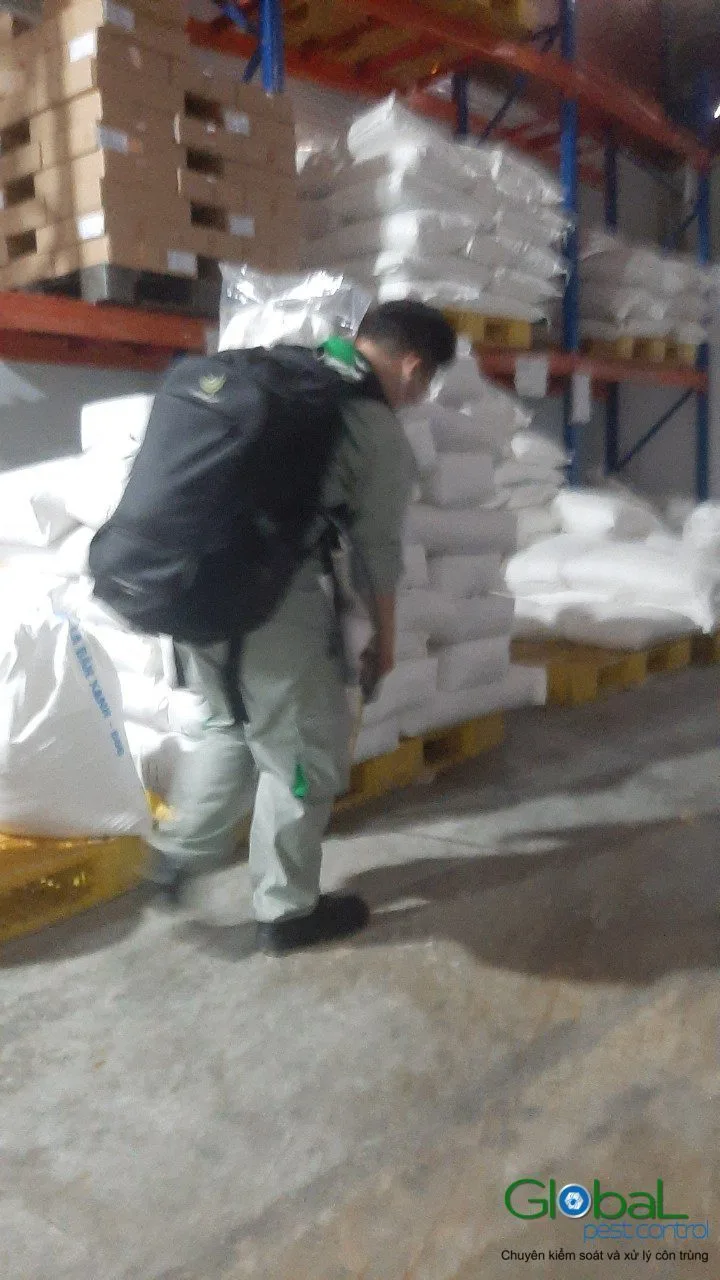
Linh Tay, Linh Dong, Hiep Binh and the lanes around Thu Duc market are the opposite situation: single or low-rise buildings, direct ground contact, open drainage channels and neighbours a metre away. Termites, rodents and ants dominate, and no amount of interior work holds if the boundary is open. Treatment concentrates on the perimeter, the drainage channel, and physical proofing of door thresholds and pipe penetrations.
This is also where termite work is most often needed. A house with timber flooring or fitted wardrobes and direct ground contact should be inspected rather than assumed clear, because subterranean termites give almost no visible warning until timber is already hollow.
The construction edge
Thu Duc has more active building sites than any other part of the city, and construction is a genuine driver of pest movement. Excavation displaces rodent populations into the nearest occupied buildings; standing water in foundations and equipment produces mosquitoes within a week; and a compound that was quiet for two years starts reporting activity the month a neighbouring plot is cleared.
If you live or operate next to a site, expect pressure to rise and treat the perimeter more often rather than waiting for a sighting. It is a temporary condition and it responds well to a defended boundary.
Universities, student housing and small offices
The university cluster brings dense shared housing, and shared housing brings the two species that travel with people: bed bugs and German cockroaches. For landlords letting rooms, a between-tenancy treatment costs less than a single dispute — see pest control for landlords and property managers.
What we cover in Thu Duc
- Apartments and compound houses, including treatment of adjoining units where the building layout requires it.
- Villas and townhouses with gardens, boundary walls and direct ground contact.
- Shophouses, cafés and small retail on the ground floor of residential buildings.
- Offices, coworking spaces and small commercial units.
- Termite inspection and treatment for properties with timber or ground-contact slabs.
Getting a quotation
The inspection is free and there is no obligation. A technician walks the property, names the species, identifies where it is actually living, and sends a written quotation — method, areas, number of visits, warranty and exclusions — normally within one working day. Indicative ranges are on the price list, and you can request an inspection here.
Global Pest Control is the English-language arm of Khử Trùng Toàn Cầu, whose office is in Linh Tay Ward, Thu Duc City — this is the district we work in every day. Vietnamese-language services are at khutrungtoancau.vn.
Common questions
Do you cover all of Thu Duc, including the far side towards Di An?
Yes, the whole of Thu Duc City. Distance affects the call-out element of the quotation rather than the treatment itself, and our office is in Linh Tay so most of Thu Duc is a short journey.
My compound already has pest control. Do I still need my own?
Management treats common areas — corridors, basements, refuse rooms, landscaping. That reduces pressure on your unit but stops at your door and is not a record of your unit's condition. See what building management covers for where the line usually falls.
There is construction next door and it started three weeks ago. Is that connected?
Very probably. Excavation moves rodents into neighbouring buildings and open foundations hold water long enough to breed mosquitoes. It is temporary but it needs the perimeter treated more often while the site is active.
What changes with the seasons here
Thu Duc has more open ground and more water than the inner districts, so the seasonal swing is sharper. From May to November the rains fill every container, every excavation and every blocked channel, and mosquito complaints rise across the whole district. April brings termite swarms — winged termites at lights after the first rains are the visible sign of colonies that have been active underground for years. From December to March the ground dries, and rodents move indoors looking for water rather than food.
A programme that shifts emphasis with the season costs the same as one that does not and works considerably better. See the pest year in Ho Chi Minh City for the month-by-month version.