Rove Beetles (Paederus) in Ho Chi Minh City: What to Do
Quick answer. Paederus rove beetles (kiến ba khoang) are small orange-and-black beetles, about 7–10 mm long. They do not bite or sting. The problem is the fluid inside them. If one is crushed or rubbed against the skin, it releases a toxin that causes a burning, blistering rash a day or so later. They breed in damp vegetation and fields, fly at night, and are drawn indoors by lights, mostly during and just after the rainy season. We reduce them by treating the places they land and rest, and by cutting the light that draws them in.
How to recognise them
- Slender body, about the length of a grain of rice, with bands of black and orange and a short black tail end.
- Often mistaken for ants because they run fast and hold the tail up.
- Found on window sills, walls near lamps, bedding and bathroom walls, usually after dark.
Are rove beetles dangerous?
They are not poisonous to touch if they simply walk on you. The rash comes from crushing them, often in sleep or when brushing one off by hand. The rash shows up as red, burning streaks or blisters, sometimes in a "kissing" pattern where two skin surfaces touch. It usually heals on its own within one to two weeks. See a doctor if it is near the eyes, covers a large area, or becomes infected.
What to do if one lands on you
- Do not slap or crush it. Blow it off, or tip it onto a sheet of paper.
- If you think you have touched one, wash the skin with soap and water straight away.
- Wash your hands before touching your eyes.
- Shake out bedding in the morning if you have seen them in the room.
Why they come indoors
Rove beetles live in damp soil, grass, paddies and garden beds. When those areas are wet or being cleared, and the adults fly at night, bright white light pulls them towards buildings. High-rise units near parks, riverbanks and building sites often see more of them than homes in dense streets. In southern Vietnam the numbers rise with the rains and usually peak towards the end of the rainy season.
What you can do tonight
- Close windows at dusk or keep fine screens on them.
- Draw curtains so indoor light does not spill outside.
- Switch outdoor and balcony lights to warm or yellow bulbs, or turn them off when not needed.
- Keep beds away from windows and do not leave clothes or towels on window sills.
How we treat for rove beetles
- Survey first: where they come in, which lights draw them, and the planting or damp ground they come from.
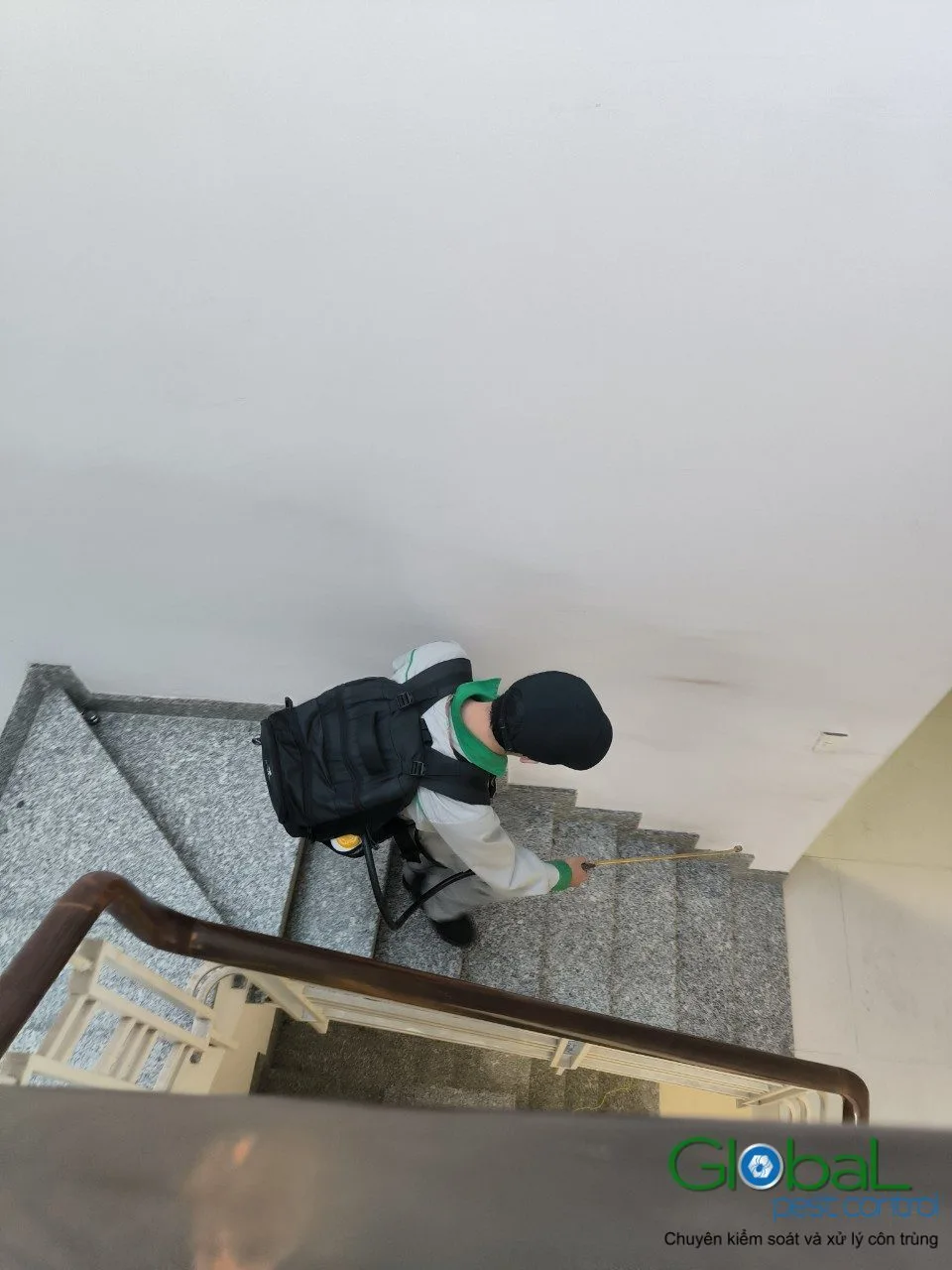
- Residual treatment on window frames, sills, the wall around lights, and along the base of outside walls, where the beetles land and walk. Beetles that cross the treated surface are affected over the following hours.
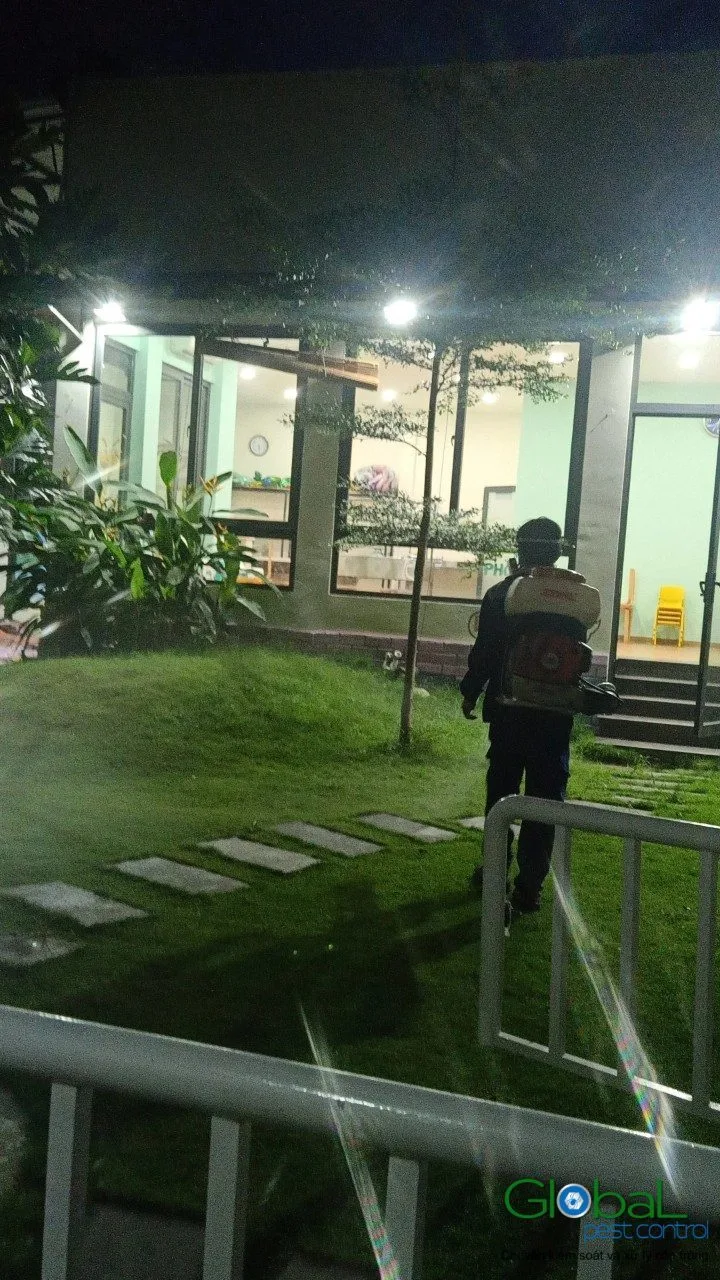
- Misting of the planting, lawns and damp areas close to the building at the time of year they are active. Large grounds can be treated by thermal fogging.
- Timing: we treat when people are away from the treated rooms. For homes this is usually during the day; for businesses, outside their working hours.
- Products: only products registered for use in Vietnam, mixed at the label rate, with a stated time before rooms are used again.
During the peak season, sites next to parks or water usually need a visit each month. Numbers come down but new beetles keep flying in from untreated ground, so the aim is to keep them low, not to promise that none will appear.
Common questions
Does insect spray from the supermarket help?
It kills the beetles you spray, but spraying one on your skin or bed and then wiping it away is how people get burned. Remove them without crushing, and fix the light and the gaps.
Are they the same as the "fire ants" people talk about?
No. Kiến ba khoang is a beetle, not an ant. Fire ants sting; rove beetles do not.
Can you treat just one apartment?
Yes. In a tower block the result is better when management also treats the common areas and the planting at the base of the building.