
District 3 is the oldest residential fabric that expatriates commonly live in, and age is the whole difference. French-era villas, converted apartment blocks, mature street trees and drainage laid decades ago produce problems that new towers simply do not have — and almost none of them are solved by treating the interior.
Old buildings leak in ways new ones do not
A converted villa has settled. Timber has moved, render has cracked, service pipes have been added and re-routed, and there are voids nobody has opened in fifty years. That gives insects continuous routes between floors and between neighbours, and it means the same apartment can report activity that originates two units away with no shared wall.
Practically: treatment here is void and route work, not surface work. Gel bait in cracks, drain and riser treatment, and a proofing report listing the gaps a builder should close. Anything sprayed on a visible surface in a building like this is decoration.
Drainage that predates the buildings on top of it
Much of the district's drainage is old, shallow and connected to street channels shaded by trees. American cockroaches live in that system permanently and enter buildings through dry floor traps, unsealed pipe penetrations and gully covers. They are not a hygiene failure and they do not indicate anything about how a home is kept — they indicate a route.
The two fixes that hold: keep every floor trap wet, including in a bathroom nobody uses, and seal the penetrations where pipes pass through walls and slabs. Treatment stops the current population; those two things stop the next one.
Trees, gardens and what lives in them
District 3 has more mature planting than almost anywhere in the city. That is why people want to live there, and it is why ants, mosquitoes and the occasional snake or gecko are more visible than in a sealed tower. Ant trails come in along a branch touching a wall or a wire crossing a garden; mosquitoes rest in dense shrub in daylight and bite at dusk. Cutting a branch back from the building does more than a treatment does.
Cafés, offices and the ground floor
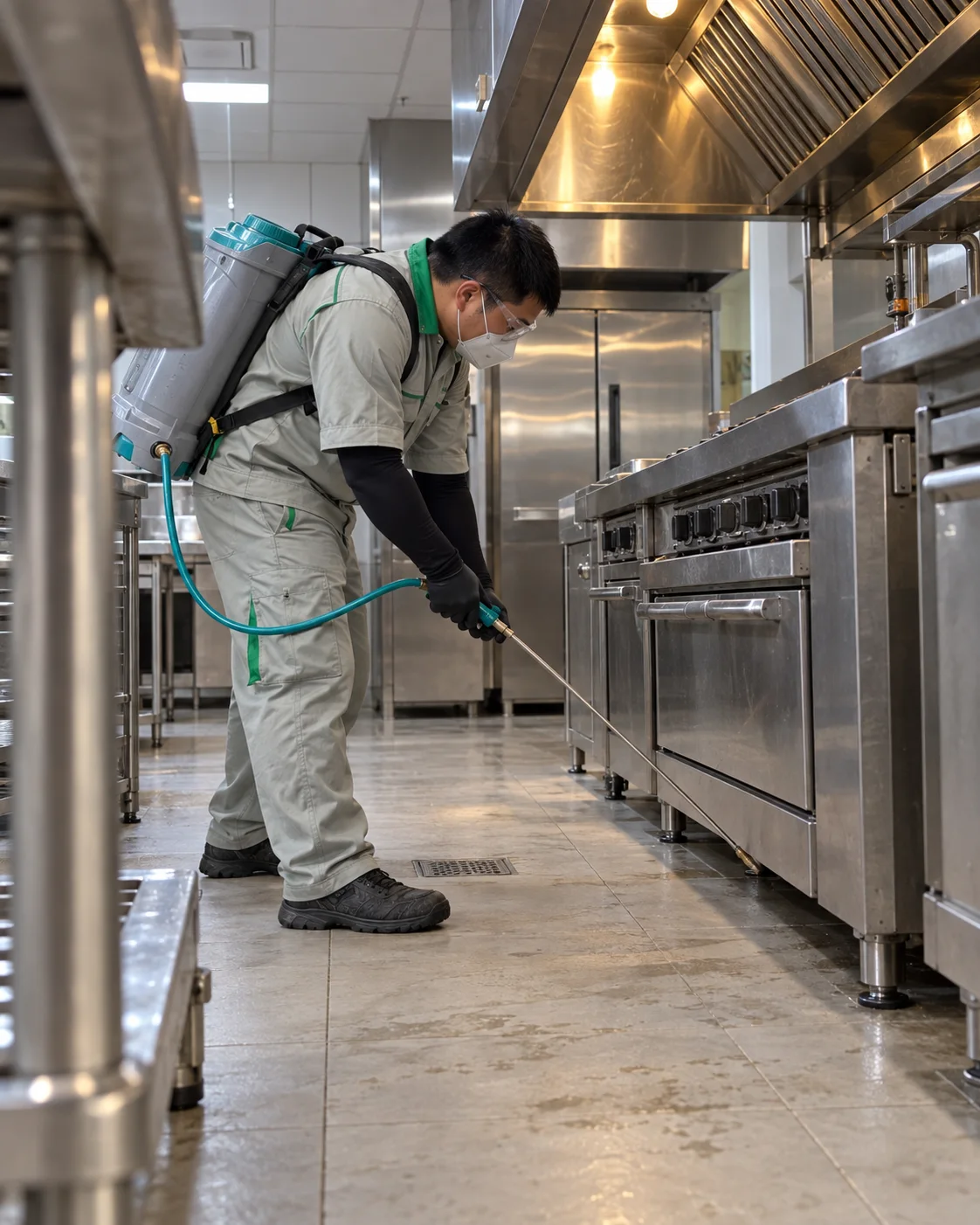
The district has an unusual density of small cafés, design studios and boutique offices in converted residential buildings. That combination — food preparation on the ground floor, residential or office use above, shared old drainage — is the classic path for a complaint upstairs that originates downstairs. If you live above a food business, living above a restaurant or café explains what to expect and what to ask for. If you run one, see the café and bakery programme.
Termites in old timber
Original floorboards, staircases, shutters and roof timbers in a district this old are a standing termite risk, and the damage is usually well advanced before anything is visible. If you are renting a period property, ask the owner when it was last inspected; if you own one, treat inspection as maintenance rather than as a response. See pest problems in older buildings and shophouses.
What we cover in District 3
- Apartments in converted and purpose-built blocks, including void and riser treatment.
- Period villas and townhouses, with proofing reports for the physical gaps found.
- Cafés, studios and small offices in mixed-use buildings.
- Termite inspection and treatment for original timber.
- Drainage-led programmes for American cockroaches, which are the district's signature complaint.
Arranging a visit
The inspection is free and in English, and the written quotation follows normally within one working day. Request an inspection or see the price list. Vietnamese-language services are at khutrungtoancau.vn.
Common questions
We keep the apartment spotless and still see large cockroaches. Why?
Because American cockroaches in an old district live in the drainage system, not in your kitchen. They enter through a dry floor trap or an unsealed pipe. Cleanliness makes almost no difference to them; a wet trap and a sealed penetration make all of it.
Can you treat a listed or period property without damaging finishes?
Yes. Gel bait is placed in cracks and voids with a fine applicator and leaves no visible residue. We do not drill timber or masonry, and for termite work in a period building we set out the options and their consequences before anything is done.
Our building has ten apartments and only ours has a problem. Is that possible?
It is possible but uncommon in old buildings. More often the others have it and have stopped reporting it, or the population sits in a shared void and emerges into whichever unit is quietest. We will say honestly whether treating your unit alone is likely to hold.
What renting a period property should include
If you are taking a lease on an older District 3 property, three questions are worth asking before you sign, and all three are ordinary. When was the timber last inspected for termites, and is there a report? Are the floor drains in every bathroom working, including in rooms not currently used? And has the building had a pest treatment in the last year, with a record of it?
None of those is an unusual request, and the answers tell you what you are taking on. Our checklist for viewings is at what to check before you sign a lease, and the responsibility question is covered in who pays for pest control.