Gnaw Marks, Rub Marks and Runs
Finding evidence that a rodent exists is the easy part. Finding out where it travels is what decides where traps, stations and monitors go, and it is the difference between a job that resolves in a fortnight and one that runs for months.
Three signs map the route: gnaw marks, rub marks and physical runs. All three are visible with a torch and all three are consistently walked past.
Gnaw marks
Rodent incisors grow continuously and must be worn down, so gnawing is maintenance rather than only feeding. Marks appear on door edges, packaging, cable insulation, plastic pipe, soft mortar and timber.
Fresh gnawing is pale and clean, showing the original colour of the material beneath. Older gnawing darkens with dust and handling within a week or two. Two parallel grooves a few millimetres apart is the classic incisor signature.
Size in the gnaw marks
Rat incisor marks are roughly 4 mm across and mice around 1 to 2 mm, so the marks themselves distinguish species when no droppings are available. Rats also gnaw larger, rougher openings, while mice produce small neat holes.
A hole in a plasterboard wall about the size of a large coin with rough edges is rat work. A clean hole the size of a fingertip is mouse.
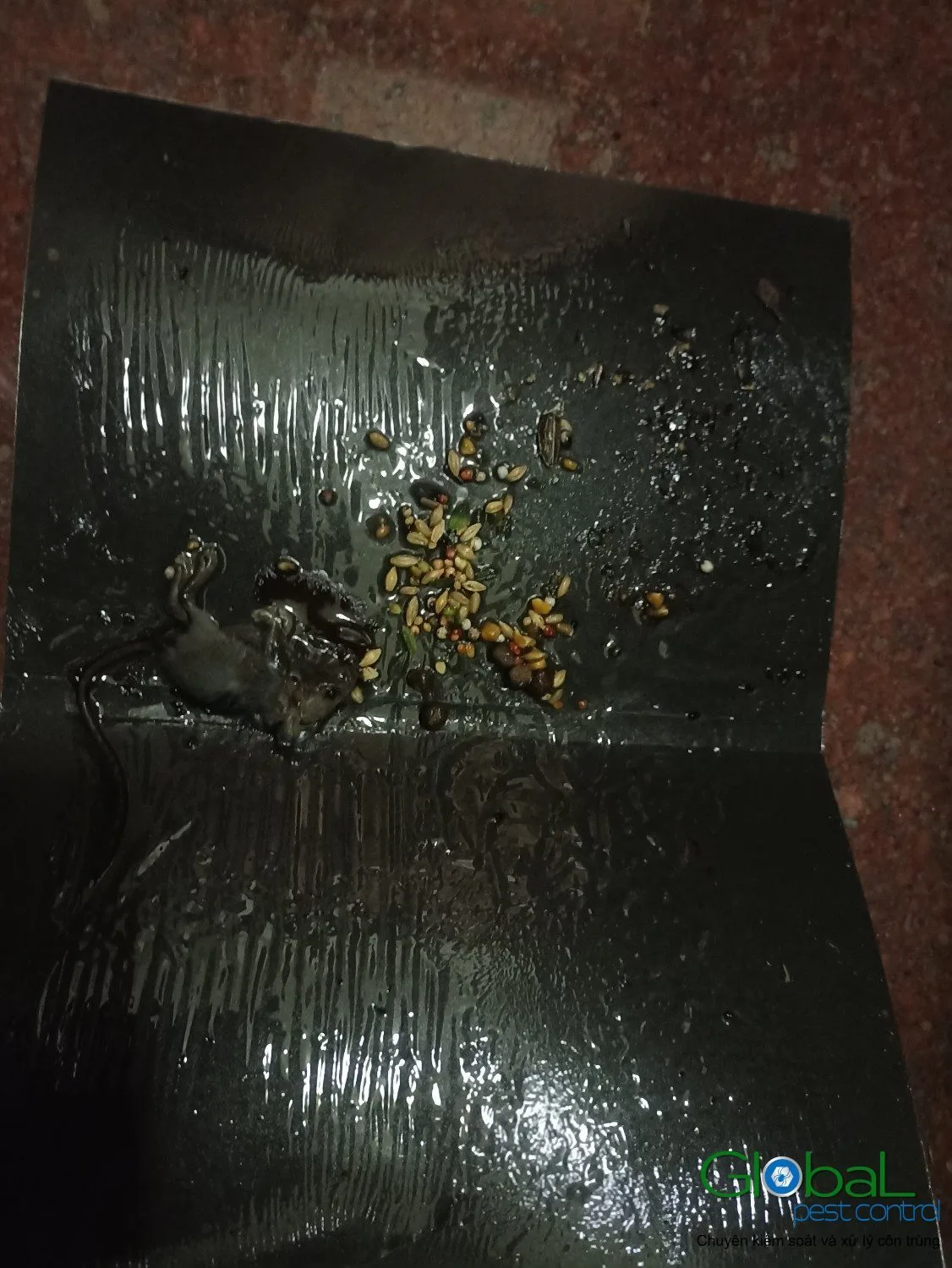
Rub marks, the most useful of the three
Rodents have poor eyesight and navigate by touch, keeping their bodies against a vertical surface as they travel. Body oils and dirt transfer to that surface, and over repeated use build a dark greasy smear.
These marks appear along wall-floor junctions, at the edges of a hole an animal squeezes through, on pipe runs, on beam edges and at the corner of a doorway. A dark smear at the edge of a gap is one of the strongest indications available that the gap is in current use, and it takes weeks of repeated traffic to form — which means it also tells you the route is established rather than incidental.
Runs
Outdoors, a run appears as a beaten path through vegetation, along a wall base, or as a burrow entrance with fresh soil at it. Indoors, a run shows as a line of droppings, a rub mark, or a track through dust.
Rodents strongly prefer to travel along edges rather than across open floor, so runs follow walls, skirting, pipe runs and cable trays almost without exception. Anything placed in the middle of a room is placed where nothing travels.
Testing whether a route is current
The tracking dust test is simple and it works. Sprinkle a light dusting of flour, talc or a proper tracking powder across the suspected run, note the date, and check the following morning. Footprints and tail drags mean the route is in use, and the direction of travel is often readable.
For a hole, a loose plug of tissue paper does the same job: replaced overnight means active, undisturbed after several days means not. Both tests cost nothing and both answer a question that would otherwise take weeks of monitoring.
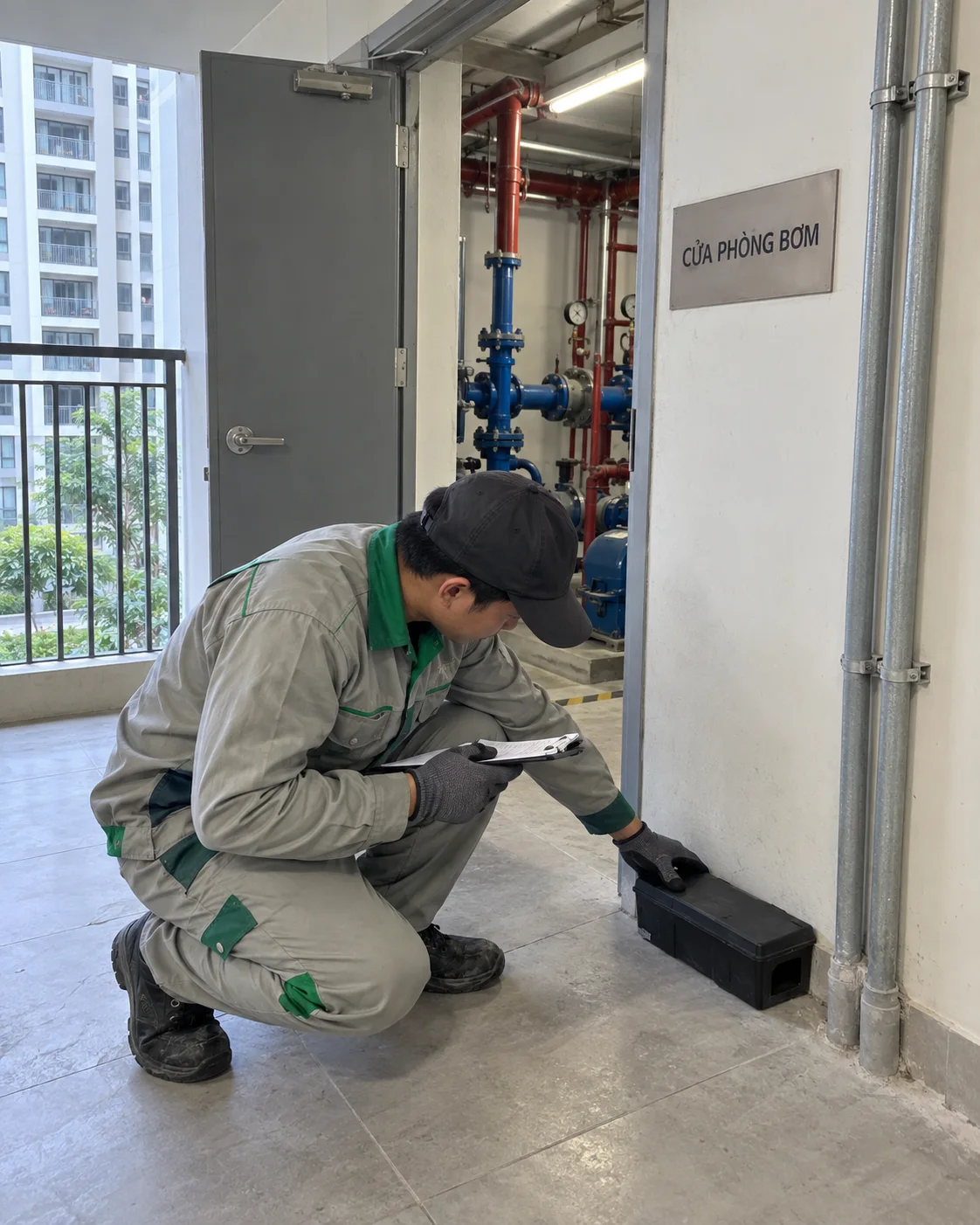
Why this determines device placement
Traps and stations work only if the animal encounters them, and a rodent following a wall will pass within centimetres of a device on that wall and never approach one a metre away. Devices go on runs, against walls, at the entrance to a hole, and at right angles to the direction of travel.
A site with twenty evenly spaced stations and no reference to runs is a site where most of the devices are decorative. This is the most common reason a rodent programme underperforms while looking thorough on paper.
The other sign: smell and sound
An established rodent population produces a distinctive musky ammonia smell, particularly in an enclosed void, and it is often the first thing noticed in a ceiling or a cupboard. Sound matters too: noise that travels across a ceiling in a few seconds is a run, while noise that stays in one spot is more likely nesting. A run has two ends that can be found; a nest has a location.
Related reading
See reading droppings and rats and mice compared. For routes through a building, service risers and ceiling voids. On closing them, physical proofing. Our parent company runs the Vietnamese-language rodent control programme.
Global Pest Control is the English-language arm of Khử Trùng Toàn Cầu, based in Thu Duc City.
Common questions
Can I seal a hole with rub marks around it?
Yes, and the sequence matters. Sealing an entry from outside the building is fine immediately. Sealing an internal hole while animals are still inside simply relocates the exit, so for internal routes it is worth establishing that activity has stopped first. Whatever you use has to be hard — soft filler and expanding foam alone are chewed through within days.
How old are the rub marks likely to be?
They take weeks of repeated traffic to build, so a well-developed dark smear indicates an established route rather than a recent one. Whether it is still in use is a separate question, and the tracking dust or tissue plug test answers it in a night.
We found gnaw marks on electrical cable. How serious is that?
Serious enough to act on promptly. Gnawed cable insulation is a genuine fire risk and it is also the reason intermittent electrical faults get misdiagnosed for weeks. Have the cable inspected by an electrician as well as dealing with the rodent, and treat it as an urgent proofing item rather than a routine one.