Reading an Ant Trail Instead of Wiping It
The universal first response to an ant trail is a damp cloth, and it is the wrong one. The trail is not the problem — it is the visible part of a system whose important components are somewhere you cannot see.
It is also, for about two days, the most useful diagnostic object in the room and the most efficient delivery route you will ever have to the nest.
What a trail is
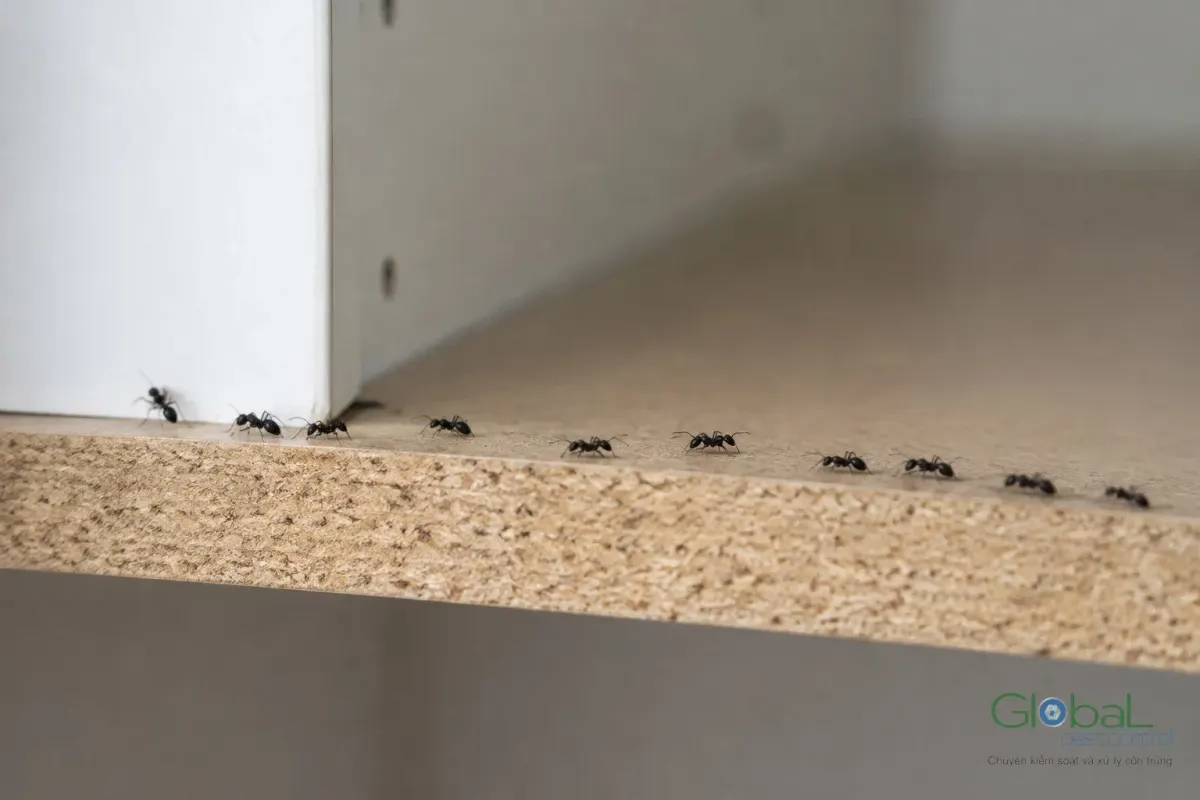
A chemical path laid in pheromone by foraging workers who have found something worth returning to. Each successful forager reinforces it on the way back, so a trail is a measure of how good the food source is as well as a route to it.
Wiping it removes the pheromone. The colony does not lose the food source — it loses the path, and within a day or two a new path appears on a slightly different line, which is why wiping produces a trail that seems to move.
What the trail tells you
Direction is the first thing. Watch which way loaded ants are travelling, because ants carrying food are going home. Follow that direction to a wall, a skirting gap, a pipe penetration, a window frame or a crack in a tile, and you have found the entry point.
Timing is the second. Trails that appear in the afternoon usually reflect surface temperature and food availability; trails that appear after rain usually mean a colony has relocated. Both are information a technician cannot get from a single visit.
What they are carrying
Ants foraging for sugar and ants foraging for protein behave differently and take different baits, and colonies switch preference through the season and through their own brood cycle. If the trail leads to something sweet, a sugar-based gel is likely to be accepted; if it leads to grease, oil residue or dead insects, a protein-based bait will do better.
This is why a bait that was taken enthusiastically in March can be ignored in September. The bait has not changed; the colony has.
Bait on the trail, not beside it
Placement matters more than quantity. A bait dot placed directly on the trail line is found within minutes; the same dot placed ten centimetres away may never be found at all, because foragers are following a chemical path rather than searching.
Place several small dots along the trail rather than one large one, and place them close to the entry point where traffic is densest.
Then leave it alone
For two to four days activity increases. More ants, a heavier trail, and a household convinced the treatment has failed. That increase is recruitment to the bait, and it is the strongest available sign that the treatment will work.
Intervening at that point — wiping the trail, spraying, moving the bait — kills the foragers that are carrying material back and destroys the route. This single reaction accounts for most failed ant treatments in homes.
When to wipe, and how
After the trail has stopped, which is usually one to two weeks. Then clean the surfaces properly with detergent to remove the residual pheromone, and seal the entry point you identified.
Sealing before the colony is dealt with simply moves the entry to the next gap, so the order is bait, wait, clean, seal.
One more thing the trail can tell you is whether you are dealing with one colony or several. Two trails running in genuinely different directions from the same food source usually means two nests, and that changes the plan — both entry points need baiting, and treating one will produce a partial result that looks like failure. Watching for a few minutes before doing anything is worth more than it sounds.
Species that behave differently
Some ants common here do not form long visible trails, and pharaoh-type ants respond badly to disturbance by budding — a stressed colony splits into several, which turns one problem into four. This is the strongest reason not to spray an unidentified ant trail indoors, and the reason a technician will ask what the ants look like before deciding anything.
Related reading
See why bait looks worse first and our ant guide. On method, baiting versus killing. For the situations where trails appear, working from home and August damp. Our parent company runs the Vietnamese-language ant control programme.
Global Pest Control is the English-language arm of Khử Trùng Toàn Cầu, based in Thu Duc City.
Common questions
I already wiped it. Have I ruined the treatment?
No, you have delayed it. The colony still has the food memory and a new trail will usually reappear within a day or two on a similar line, at which point bait it and leave it. What is worth avoiding now is spraying, because that adds a repellent barrier to a surface where the bait needs to go.
The ants are ignoring the bait. Why?
Three usual reasons: the bait is the wrong type for what the colony currently wants, it is placed beside the trail rather than on it, or there is insecticide residue nearby making the area unattractive. Try a different bait type on the trail line in a spot that has not been sprayed, and give it two days.
Can I just find the nest and destroy it?
Sometimes, for a species nesting in a pot plant or a single visible location outdoors. Indoors the nest is usually in a wall void, under a floor or above a ceiling, and there may be several. Bait carried back by foragers reaches those places without anyone having to find them, which is why it is the standard approach rather than a compromise.