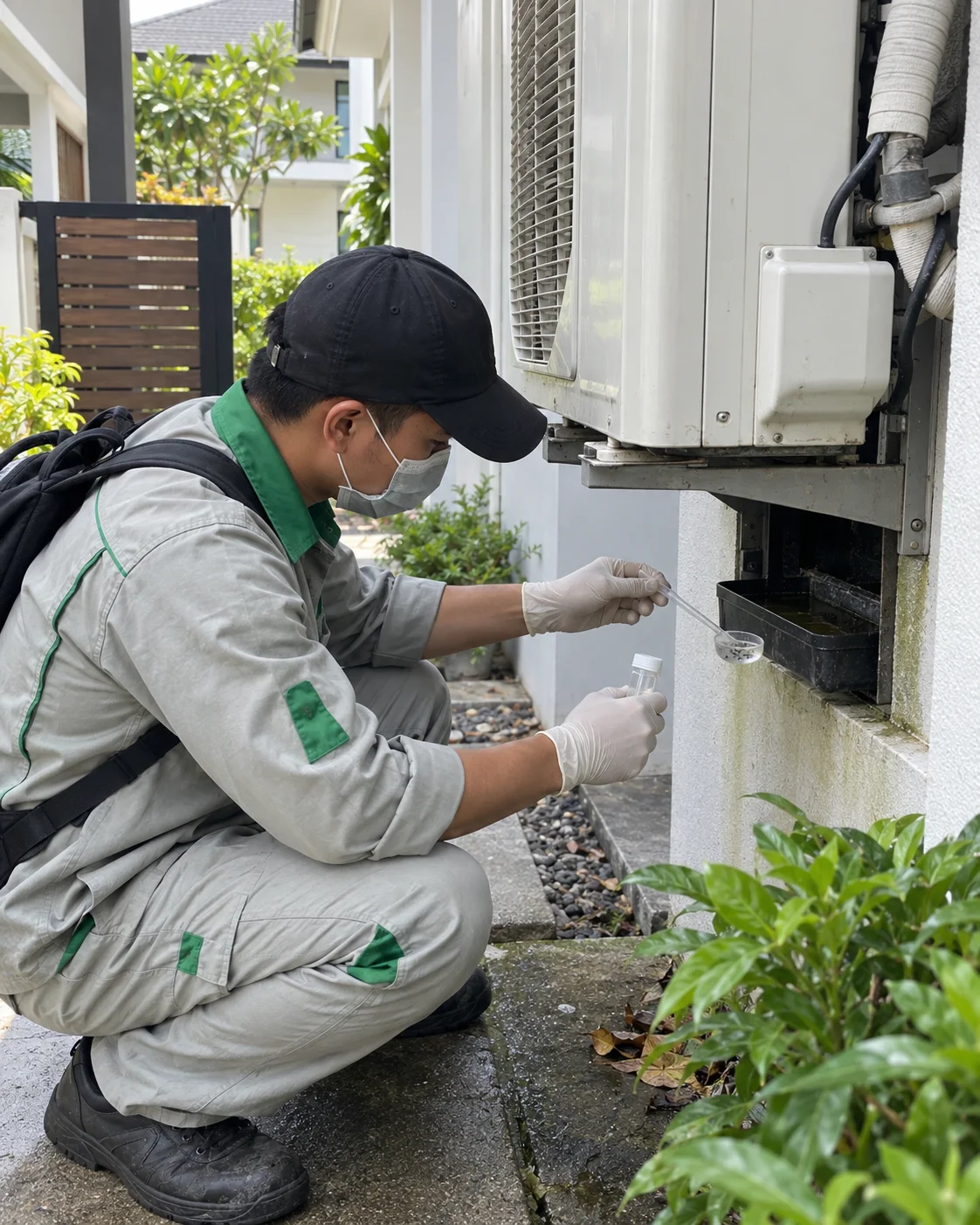
August: Mid-Rains, Damp and What Loves It
By the middle of the rainy season the ground is saturated, humidity sits above 80 per cent for days at a time, and nothing inside a building has been genuinely dry for weeks.
That produces a different set of complaints from June. Mosquitoes are still present, but the calls that increase in August are about small insects in cupboards, in books, in bathrooms and behind wardrobes — and most of them are telling you about moisture rather than about themselves.
The damp indicator species
- Silverfish — feed on starch and cellulose, need high humidity, and appear in paper, cardboard, stored clothing and bathroom cabinets.
- Booklice (psocids) — tiny, pale, fast, found on damp walls, in books and around new plasterwork. They feed on microscopic mould.
- Springtails — minute jumping insects in perpetually damp soil, drains and bathroom corners.
- Fungus gnats — small dark flies from overwatered plant pots.
- Drain flies — from the organic film in drains, which loads up as the system runs constantly.
None of these damage a building, none bite, and all of them are worth paying attention to, because each is a reliable indicator of a moisture condition somewhere nearby.
Booklice deserve a specific mention
They are the most commonly misidentified insect we get photographs of, usually described as baby cockroaches or dust mites. They are 1 to 2 mm, pale grey or straw coloured, and they run rather than crawl.
They feed on microscopic mould, which means a booklice population is a mould report. Finding them on a wall behind a wardrobe usually means condensation on that wall, and the answer is airflow rather than insecticide.
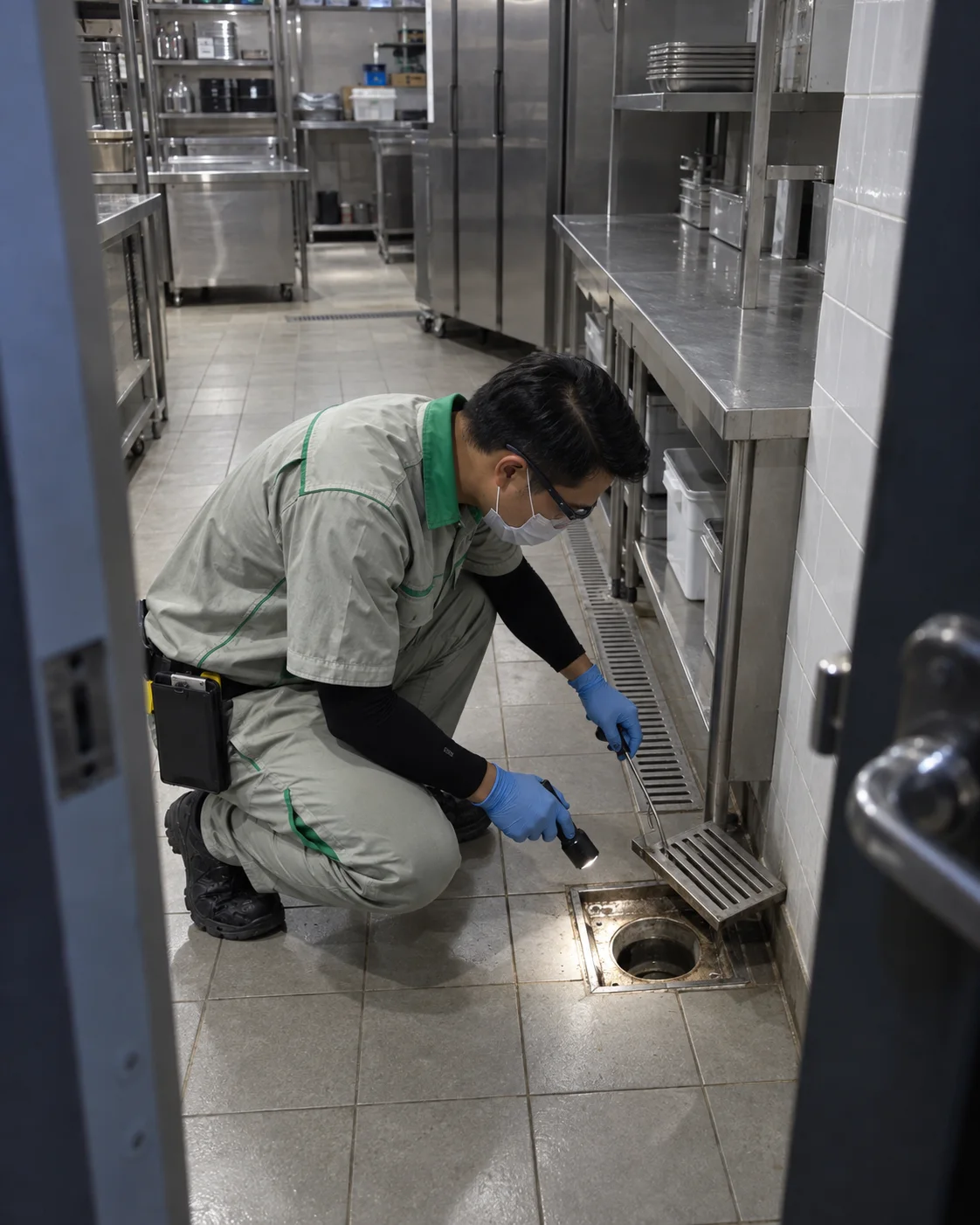
Why insecticide is the wrong response
Every species on the list above depends on a moisture condition. Treat the insects and the condition remains, so the population returns within weeks. Remove the moisture and they disappear without any treatment at all.
This is one of the few areas where we routinely tell customers that a treatment is not what they need. A dehumidifier, a fan, a repaired leak or a wardrobe pulled 3 cm off an external wall does more than anything we could apply.
What to check in August
The back of wardrobes and cupboards on external walls, where condensation forms. Under sinks and behind the washing machine. Stored cardboard and paper. Plant pots, particularly indoor ones being watered on the same schedule as in the dry season. And the space behind the fridge, which is warm and now also humid.
Also worth checking: any room that has been closed for weeks. Guest rooms and storerooms concentrate all of this because nothing moves the air.
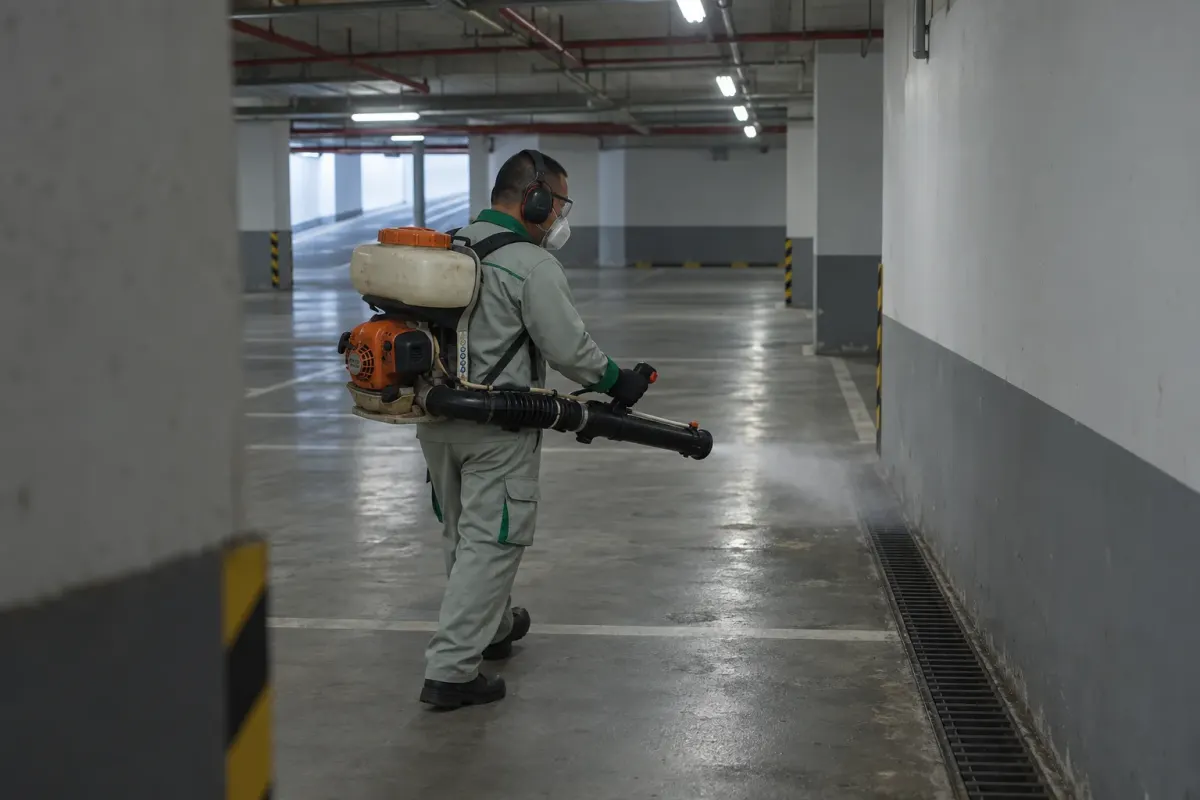
The other August pattern: things moving indoors
Saturated ground pushes soil-dwelling species toward buildings. Ants relocate nests upward and indoors, which is why ant complaints often rise in the middle of the season rather than at the start. Millipedes, centipedes and occasionally snakes appear at ground-floor thresholds after heavy rain.
Most of this is temporary and resolves as conditions change. What is worth acting on is anything that establishes indoors, particularly an ant nest that has moved into a wall void, because that will not leave when the ground dries.
Mould itself is the largest August problem in most apartments and it is not a pest problem at all, though it is the reason several of these insects are present. Leather shoes and bags, wooden furniture, stored clothing and anything in a closed wardrobe are the usual casualties, and airflow plus a moisture box in each wardrobe prevents nearly all of it.
The two-day rule after a storm
Activity reliably rises about forty-eight hours after heavy rain rather than during it, which catches people out. Flooded burrows displace rodents, saturated soil moves ants, and drainage systems back up. If you see a pattern of complaints two days after every major storm, that is a drainage and ground-water story rather than a failure of whatever treatment you last had.
Related reading
See silverfish, booklice and damp and why activity spikes after rain. Storage is covered in wardrobes and fabric pests and spare rooms and storerooms. For the season, rainy season pest control. Our parent company covers the same period in Vietnamese across its service pages.
Global Pest Control is the English-language arm of Khử Trùng Toàn Cầu, based in Thu Duc City.
Common questions
Tiny insects are all over one wall. Should I be worried?
Almost certainly booklice, and almost certainly a moisture signal rather than a pest problem. Check whether that wall is external, whether there is a wardrobe or a cupboard against it, and whether there is any staining or a musty smell. Improve airflow and the population goes on its own; spraying the wall achieves a fortnight.
Is a dehumidifier worth buying in Ho Chi Minh City?
For a wardrobe or a small closed room, a rechargeable moisture box is inexpensive and genuinely effective. For a whole apartment, an electric dehumidifier is worth it if you are storing leather, wooden instruments, artwork or books, and it costs less to run than air-conditioning the same space. Most households find the small ones sufficient.
Why do we get ants indoors in August when the food storage has not changed?
Because saturated soil makes outdoor nesting sites untenable and colonies relocate, often into wall voids and under floors. The trigger is water rather than food, which is why the trail may lead to a bathroom rather than to a kitchen. Treatment is the same, but the timing tells you why it happened now.