June: Peak Mosquito Production and How to Cut It
The rains have been running for a month or more. Every saucer, bucket, gutter, tray and blocked channel in the city has filled, and the container-breeding cycle has had time to run several generations.
June is when the numbers peak, and it is also when the response is most visible, because a container emptied today stops producing within a week.
The seven-day arithmetic
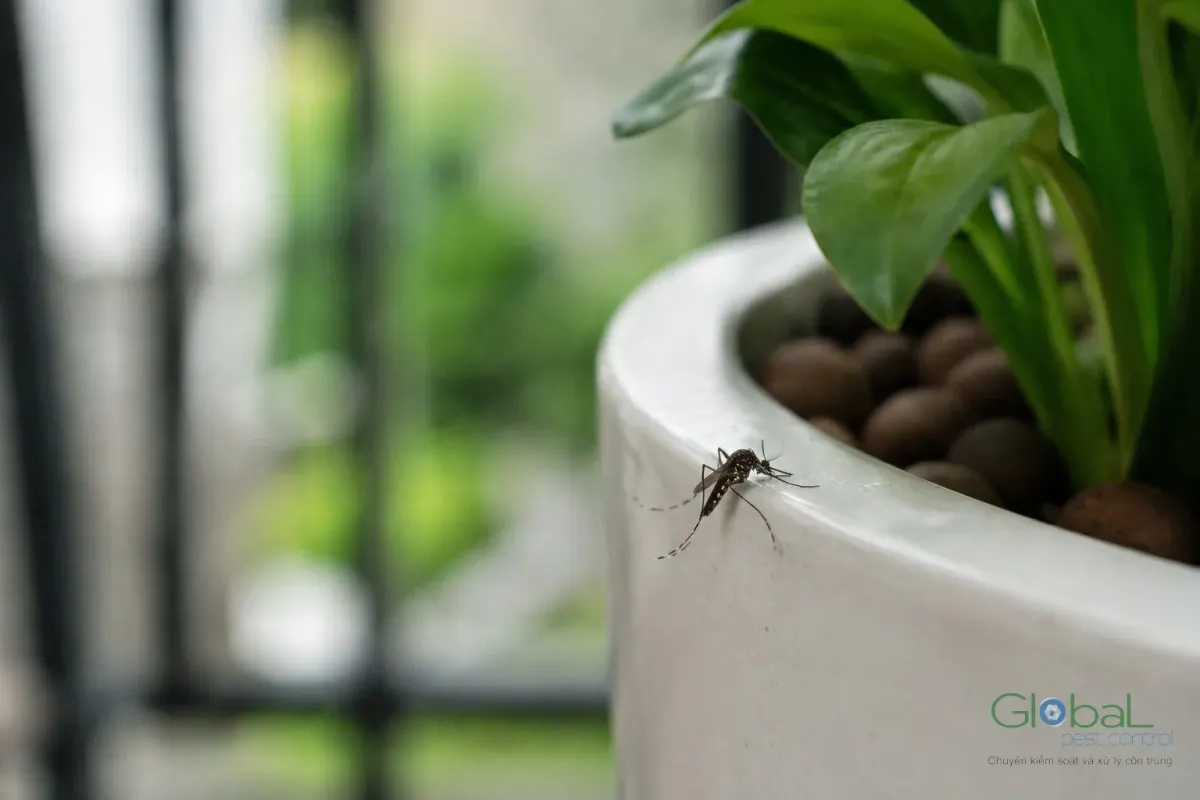
In these conditions Aedes aegypti completes egg to adult in roughly seven to ten days. That single figure is the whole strategy: anything that holds water for less than a week produces nothing, so the target is not eliminating water but interrupting it weekly.
This is far more achievable than trying to make a property dry. A garden with forty plant pots can be made non-productive in twenty minutes a week.
The weekly round
- Empty and wipe every saucer and tray. Wiping matters — eggs sit on the container wall above the water line and survive drying.
- Invert buckets, watering cans and anything storable.
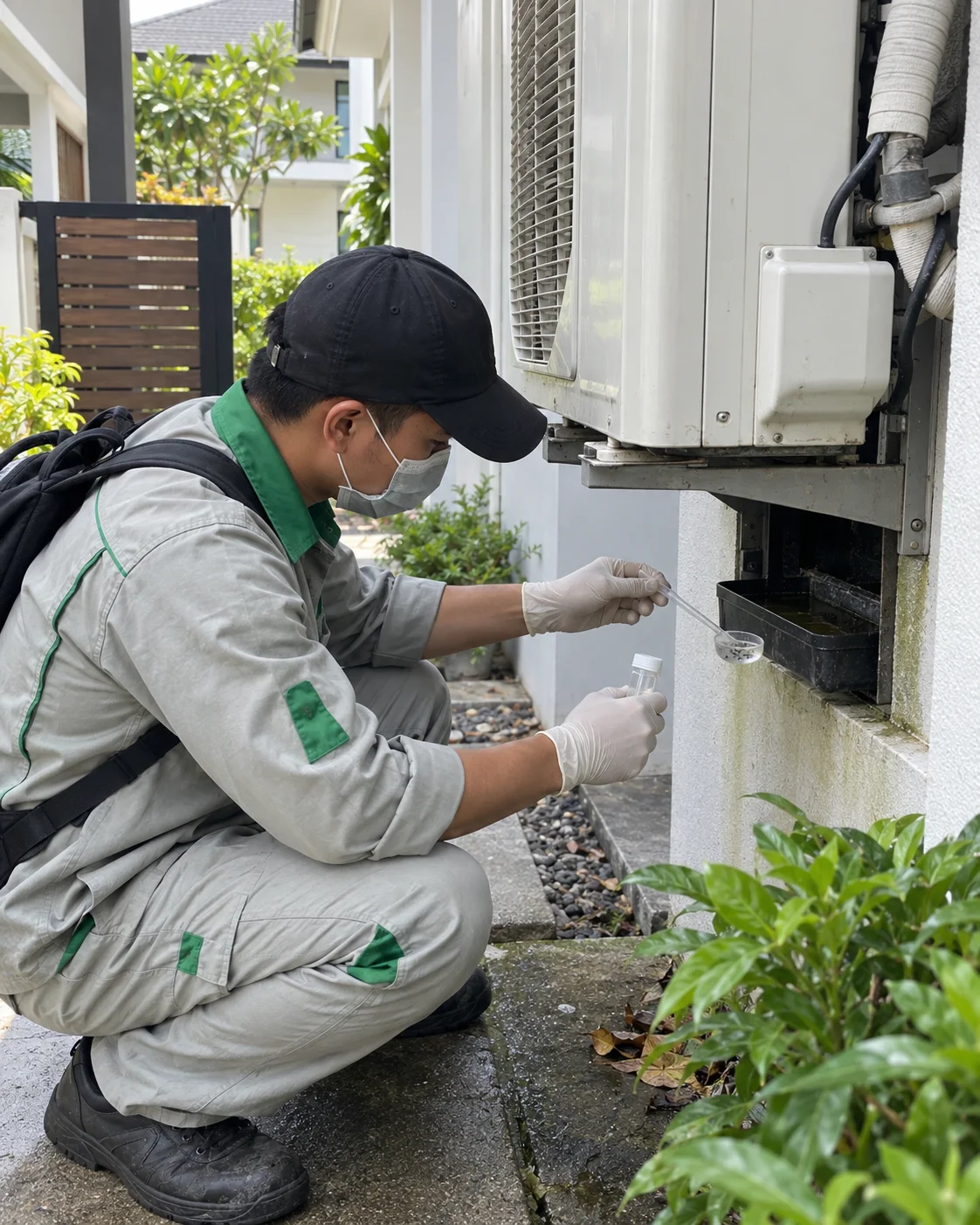
- Check the air-conditioner tray, which nobody looks at and which is always full in June.
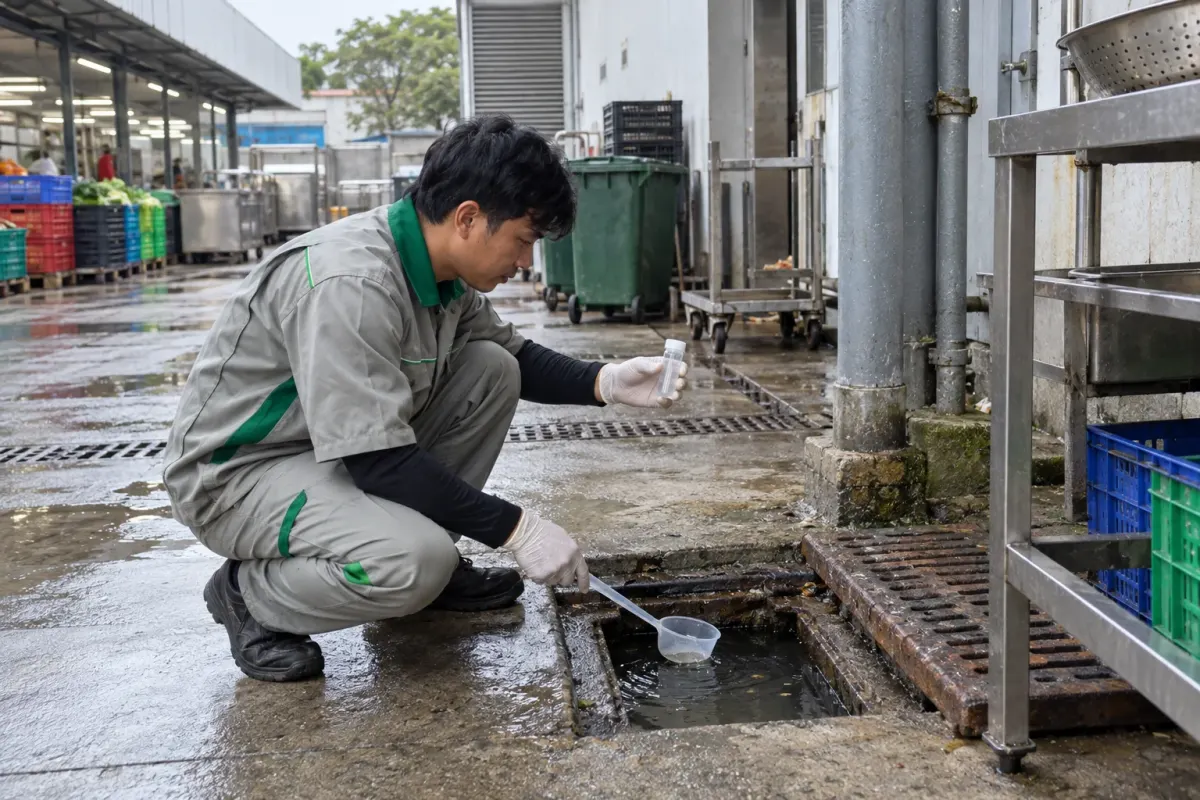
- Look at gutters and channel drains after each heavy storm.
- Check tarpaulins, bike covers and anything folded outdoors for pooled water.
The containers people never find
In every survey there are two or three sites nobody had considered. The tray under an outdoor condenser unit. The base of a decorative pot used as a sleeve. A blocked balcony drain. The lip of a flat roof. A disused sump in a basement. An old water tank left in place when a new one was installed.
If a property has been managed carefully and still has mosquitoes, these are what to look for — and one of them is usually the answer.
Where treatment fits, and where it does not
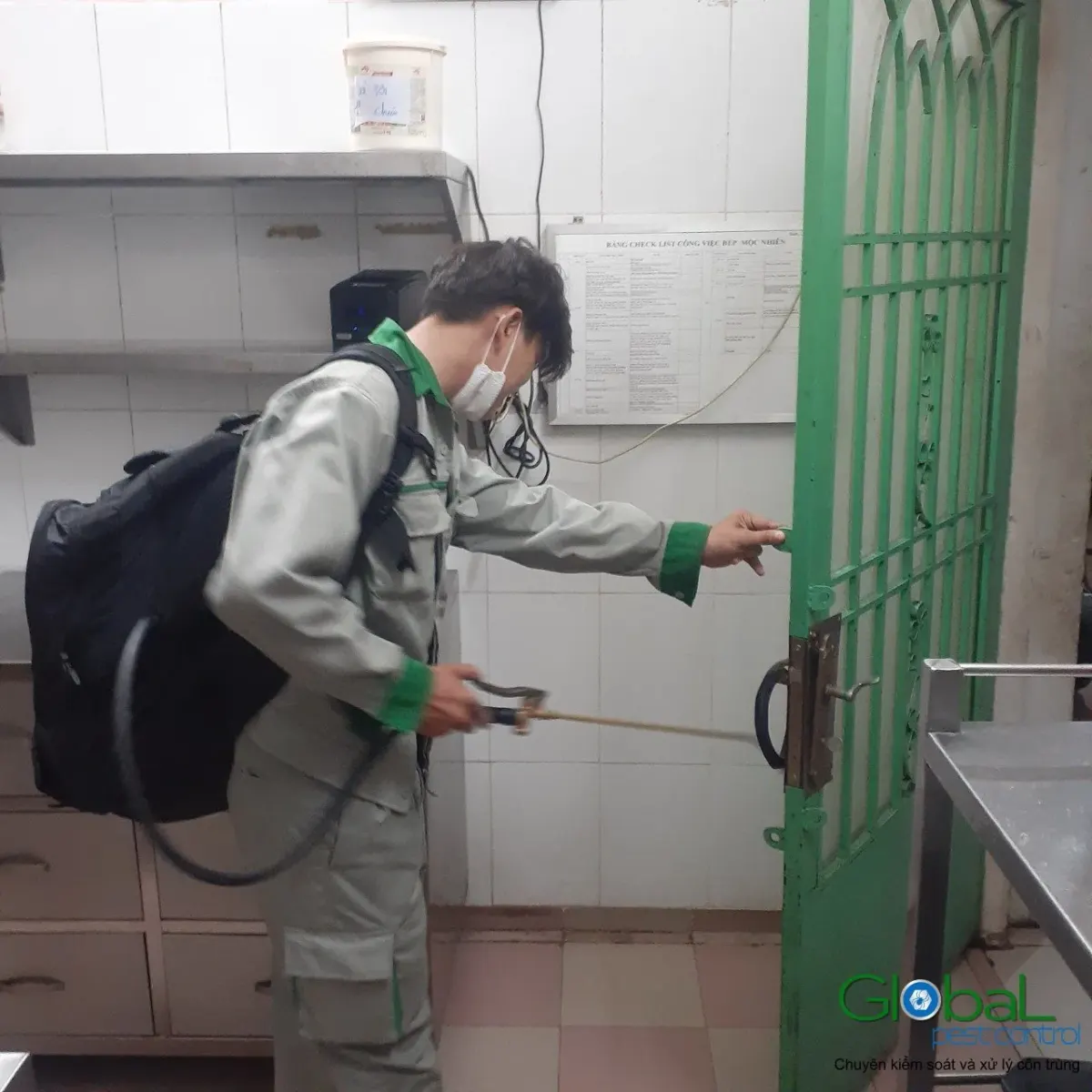
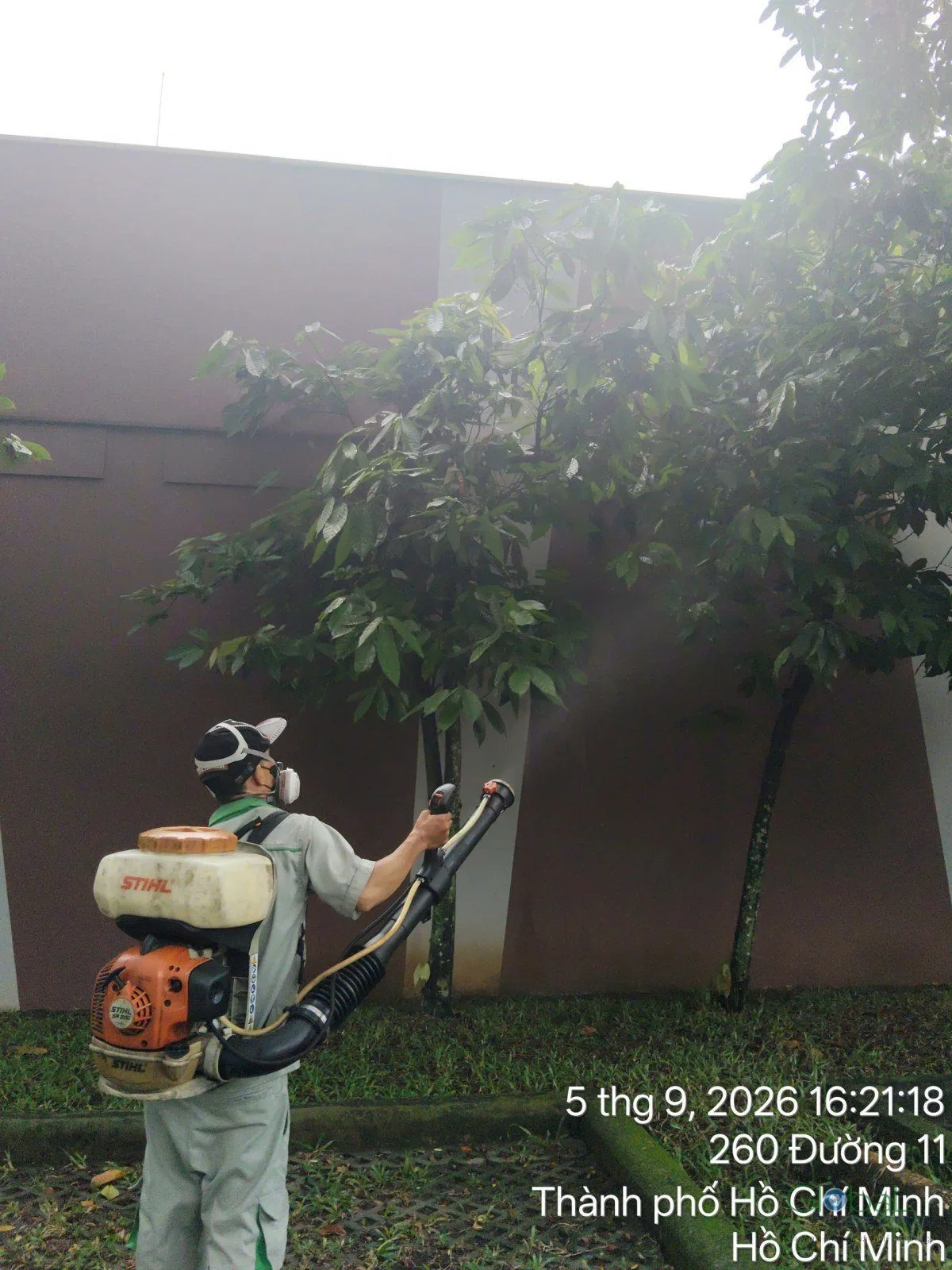
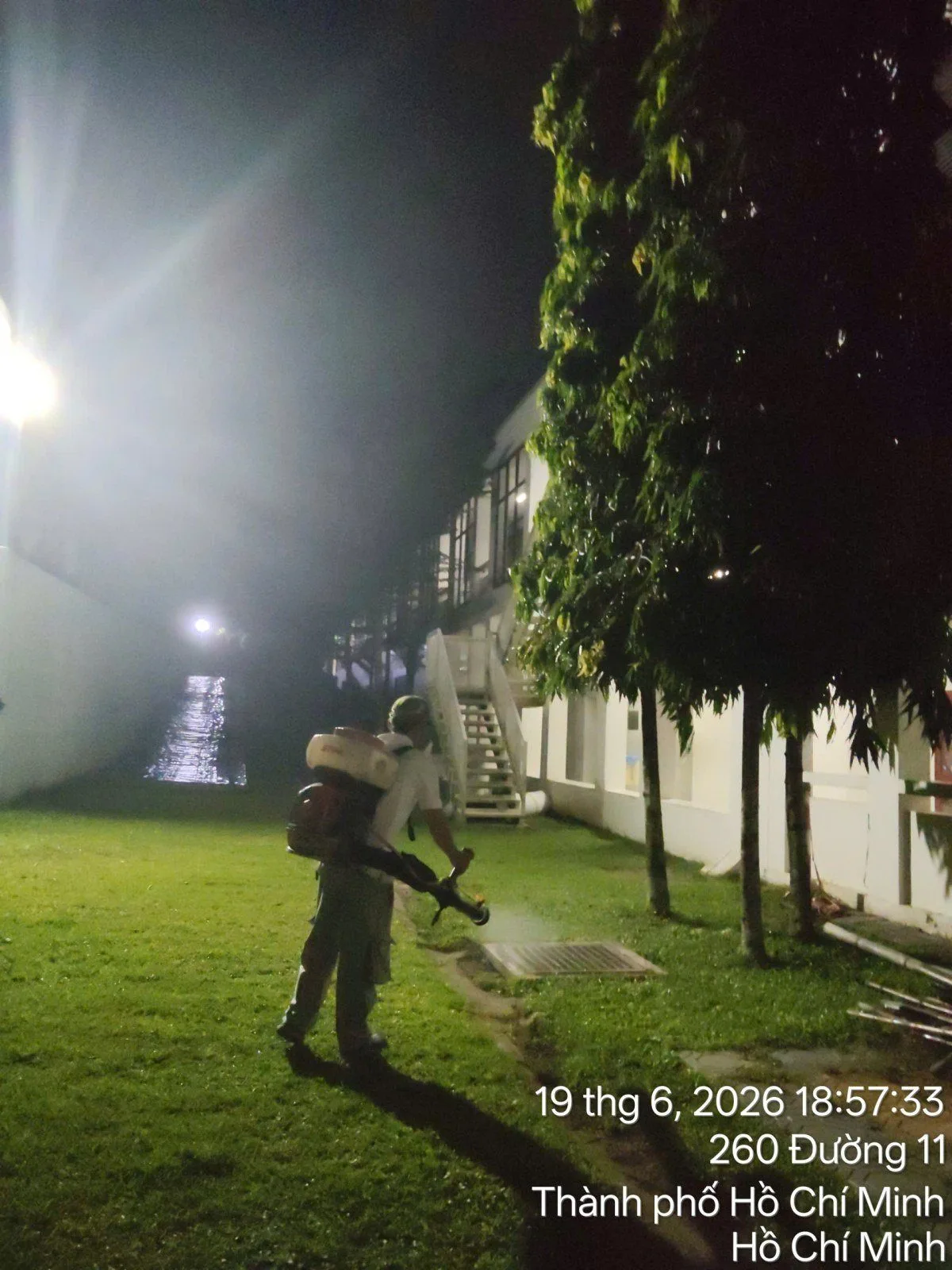
Adulticide treatment — fogging or residual spraying of resting surfaces — reduces the adults present now and does nothing about the source. It has a place during an outbreak and around a specific event, and it is a poor routine measure.
Larviciding is the treatment that changes numbers. A Bti product applied to water that genuinely cannot be emptied — an ornamental pond, a water feature, a permanent sump — is specific to mosquito larvae, lasts several weeks and is never used in water for drinking or washing.
The neighbour problem, stated honestly
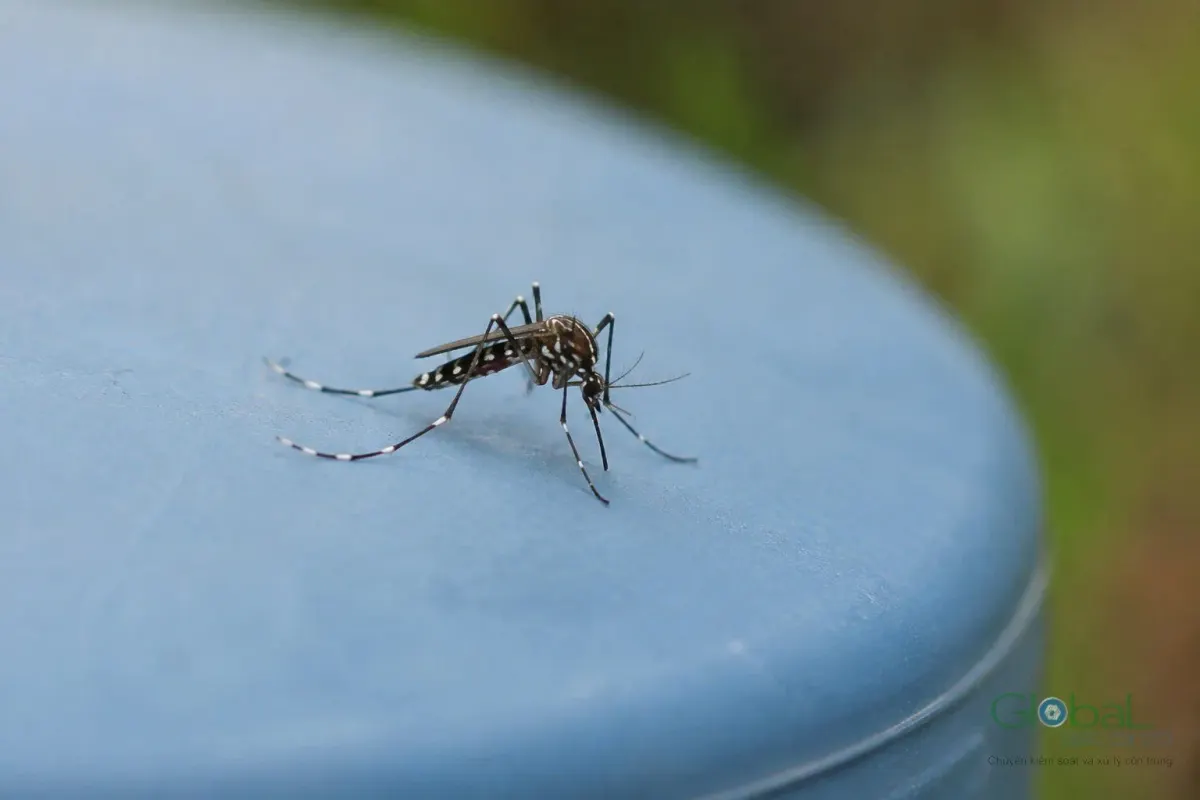
An Aedes mosquito usually stays within about a hundred metres of where it emerged, which means your neighbours\x27 containers are firmly within range and yours are within theirs. A perfectly managed property in a street where nothing else is managed will still have mosquitoes.
That is not a reason to stop; it is a reason to raise it at the building or street level, where a coordinated container clear-out achieves far more than any individual effort. In buildings with an owners\x27 committee this is one of the few interventions with a visible result within a month.
One more container type deserves its own line because it is so often missed in Vietnamese buildings: the ant moat and the water tray placed under furniture legs and food cabinets to keep ants out. It works for its intended purpose and it is a small, clean, permanently full container sitting indoors. If you use them, change the water weekly along with everything else.
Personal protection in June
Screens on windows and doors, a fan in rooms where you sit in the evening, and a topical repellent containing DEET, picaridin or lemon eucalyptus oil for outdoor time at dawn and dusk (DEET is not for children under 4). Aedes bites during the day rather than at night, which surprises people who expect mosquitoes to be an evening problem, and it is why daytime protection matters more here than in many countries.
Why June is a poor month for a one-off treatment
People often book a treatment in June because that is when the problem is worst, and it is the month when a single visit delivers least. Pressure from surrounding properties is at its peak, so anything you clear is replaced from outside within days. The money goes further on containers, screens and a larvicide, with any adulticide work reserved for a specific event or an outbreak response.
Related reading
See breeding sites around your home and balcony planters. Building-level water is covered in rooftop water tanks, and species differences in Aedes and Culex compared. On fogging, why we rarely fog. Our parent company runs the Vietnamese-language mosquito control programme.
Global Pest Control is the English-language arm of Khử Trùng Toàn Cầu, based in Thu Duc City.
Common questions
We fog the garden every month and it makes no difference. Why?
Because fogging removes the adults present at that moment and leaves every larva in every container untouched, so the population is replaced within one to two weeks. Spend the same money on a fortnightly container round and a larvicide in whatever cannot be emptied, and the difference is measurable within a month.
Is a mosquito trap worth buying?
The carbon dioxide and heat-baited traps do catch mosquitoes and can reduce biting pressure in a defined outdoor area, and they are expensive, need consumables and do not address the source. In a garden where the containers have already been dealt with, one may add something. Bought instead of source reduction, it is a costly way to catch a fraction of what is being produced.
Do I need to worry about dengue in June?
It is the season when cases rise, and the sensible response is practical rather than anxious: screens, repellent during the day, and container reduction at home. If anyone in the household develops a high fever with severe aches, see a doctor and mention dengue, because monitoring matters more than treatment in the early stage.