Aedes and Culex: Why the Difference Matters
People describe mosquitoes as a single problem. In Ho Chi Minh City there are two that matter, they behave in almost opposite ways, and telling them apart changes what you do.
One bites during the day, breeds in tiny volumes of clean water and carries dengue. The other bites at night, breeds in dirty standing water and is mainly a nuisance. Neither responds well to the same measure.
Aedes: the daytime one
Aedes aegypti is dark with white markings on the legs and body, bites during the day with peaks around dawn and late afternoon, flies low and tends to approach from behind and bite around the ankles.
It breeds in small volumes of clean water in containers: a plant saucer, a bottle cap, a bucket, a tyre, an air-conditioner tray, a water tank, the fold of a tarpaulin. It rarely travels far — usually within a hundred metres or so of where it emerged.
Culex: the night one
Culex species are browner and less distinctly marked, bite mainly at night, and produce the familiar high whine near your ear.
They breed in dirty, organically rich standing water — drains, gullies, blocked channels, septic overflow, ponds with decaying vegetation. They fly further than Aedes, sometimes over a kilometre, which means the source may not be anywhere near you.
Why the distinction changes the response
If you are being bitten during the day, you have an Aedes problem and the source is almost certainly a container within a hundred metres — very possibly on your own balcony. That is good news, because container reduction is cheap and entirely within your control.
If you are being bitten at night, you likely have a Culex problem and the source is drainage, which usually means a building-level or street-level issue rather than a household one. Emptying your saucers will not change it.
The disease question, stated plainly
Aedes aegypti transmits dengue, and dengue is present in Ho Chi Minh City every year with a marked rise in the rainy season. This is the reason the daytime species is the one worth acting on with priority.
Culex species can transmit Japanese encephalitis, which is far less common in urban Ho Chi Minh City than in rural areas and for which a vaccine exists. For most urban households the night-biting mosquito is a comfort problem.
What works against each
Against Aedes: weekly emptying and wiping of every container, mesh on tank vents and overflows, screens on windows and doors, and repellent during the day. Wiping matters because the eggs are laid above the water line and survive drying.
Against Culex: drain and gully treatment, clearing blocked channels, larviciding standing water that cannot be drained, screens, and a bed net or a plug-in vaporiser for the sleeping hours.
Why misting alone is not enough
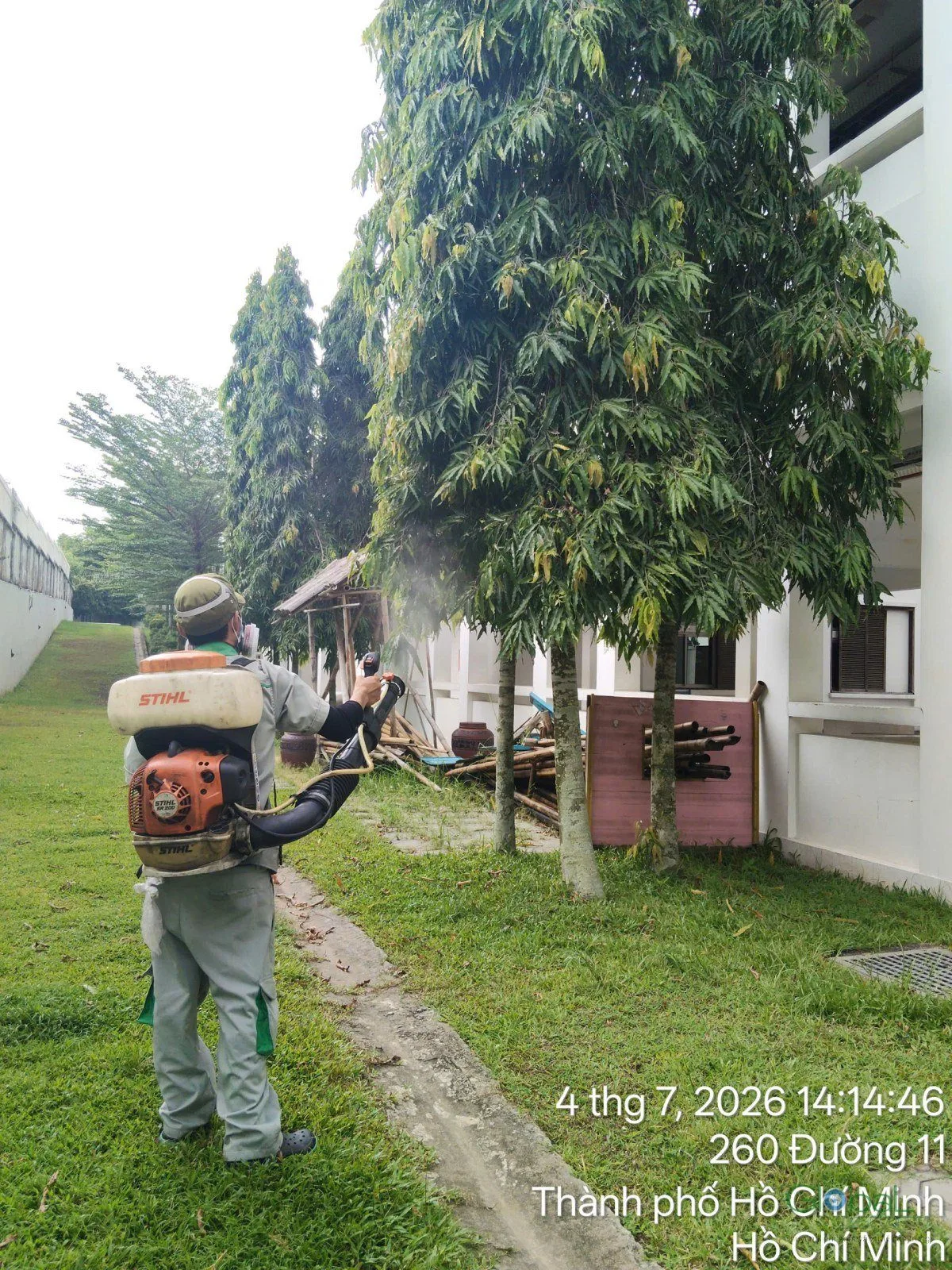
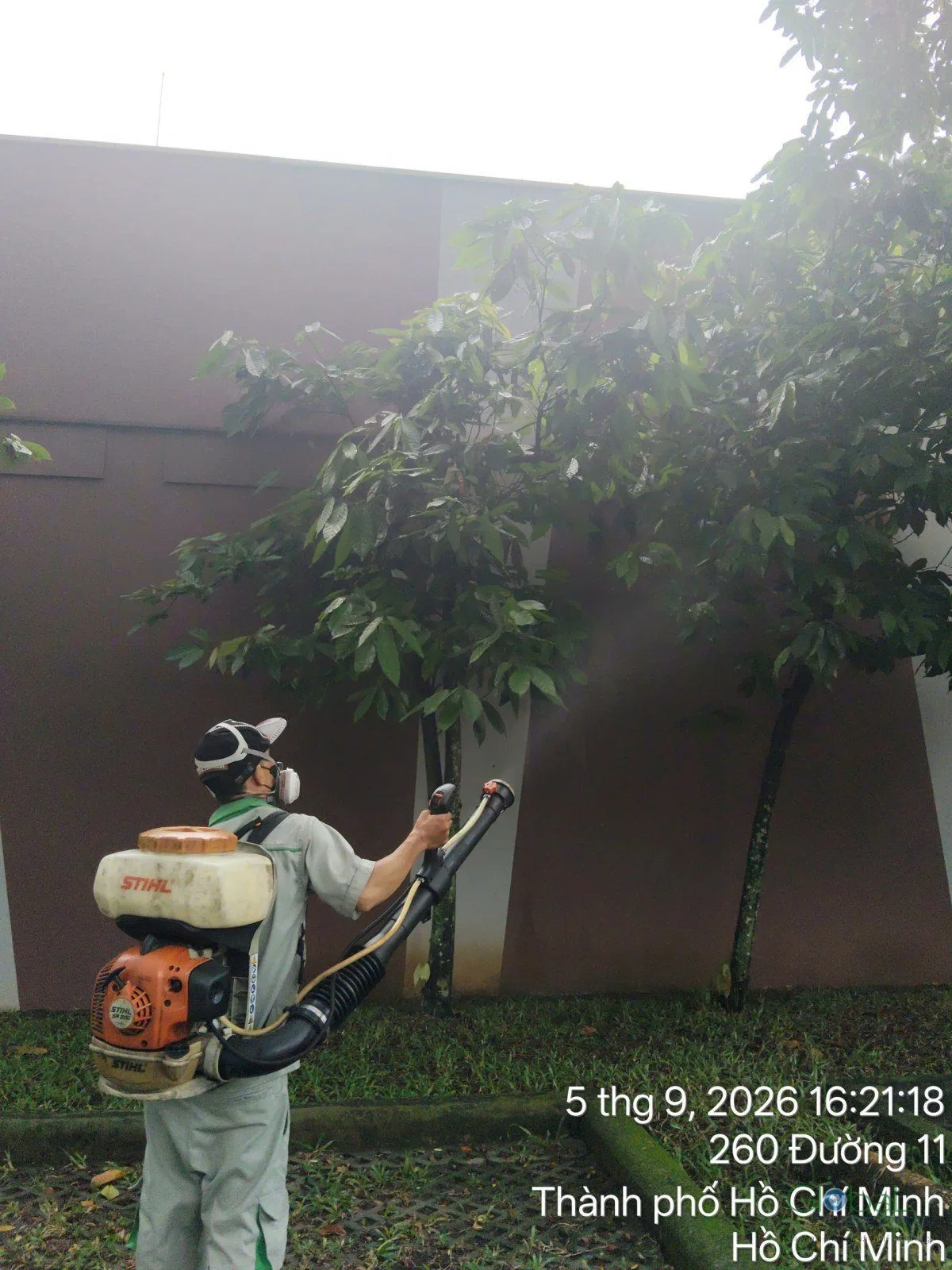
Misting kills the adults present at that moment. Where breeding water remains, new adults emerge within one to two weeks, which is why buildings that only mist still receive complaints.
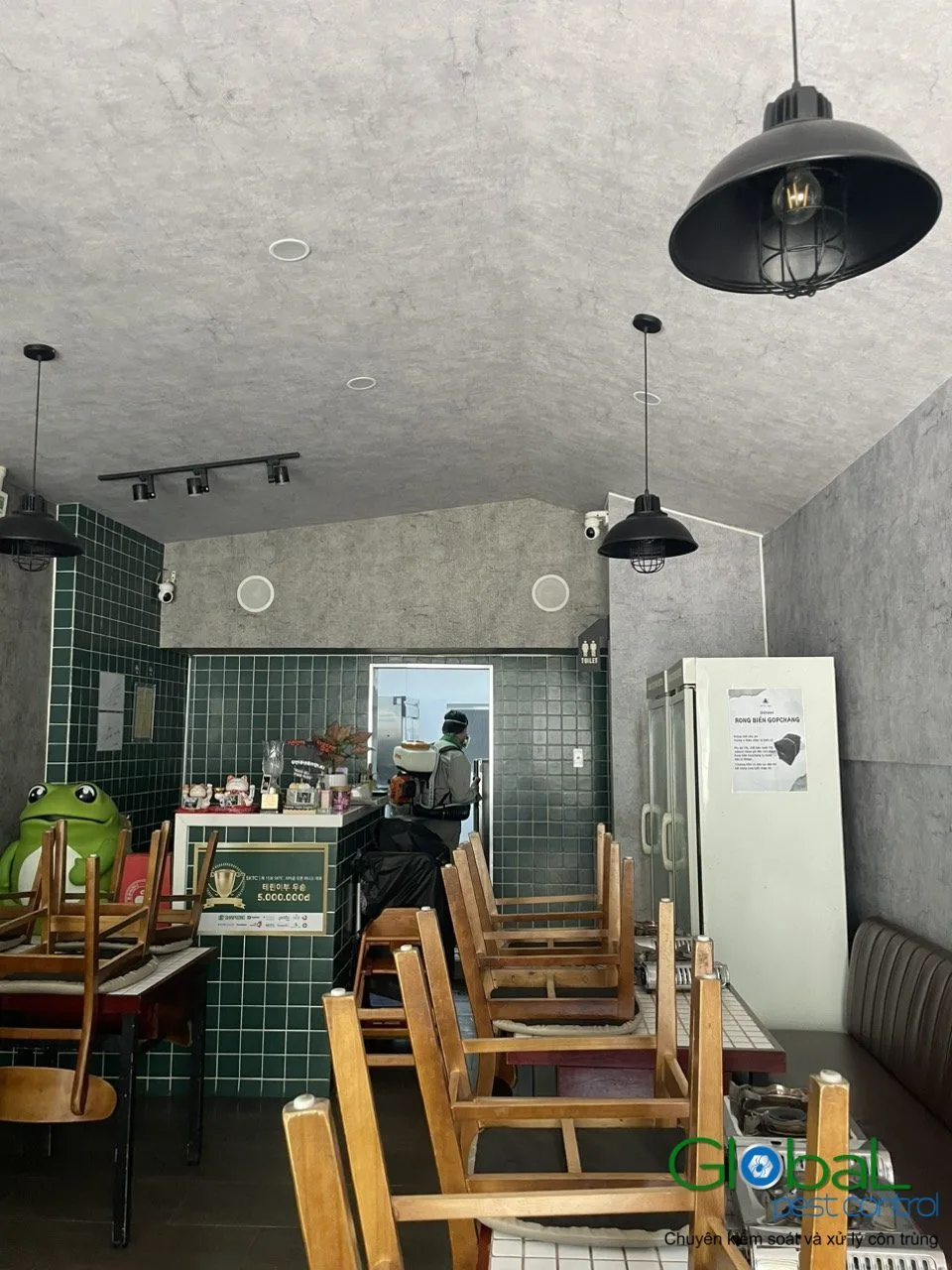
So our mosquito work is always three parts: removing breeding water, ULV misting across the area (thermal fogging for large grounds), and a residual band along the walls from the floor up to one metre, where mosquitoes rest. Visits are monthly, or twice a month in damp, shaded sites.
There is a third group worth a sentence. Anopheles mosquitoes, the malaria vectors, bite at night and breed in clean natural water — paddy, streams, marsh — rather than in urban containers or drains. They are essentially absent from central Ho Chi Minh City, which is why malaria is not a practical concern for residents here while dengue very much is.
The observation that tells you which you have
Time of day, and nothing else is needed. Bitten while working at your desk in the afternoon: Aedes, look at containers. Woken at two in the morning by a whine: Culex, look at drains. It is the most useful single piece of information you can give a technician, and most people have it already without realising it matters.
Related reading
See our mosquito guide and breeding sites around your home. For containers, balcony planters and rooftop water tanks. On fogging, when fogging is and is not the right tool, and on biting, why some people get bitten more. Our parent company runs the Vietnamese-language mosquito control programme.
Global Pest Control is the English-language arm of Khử Trùng Toàn Cầu, based in Thu Duc City.
Common questions
I am bitten both day and night. What does that mean?
Both species are present, which is entirely normal in this city, and it means both sets of measures are worth doing. Start with containers, because that is the half you control directly and it addresses the species that carries dengue. Then raise the drainage side with your building or your neighbours.
Does a mosquito net help against Aedes?
Only while you are under it, which for a daytime biter means very little for an adult. It matters a great deal for an infant sleeping during the day, which is exactly when Aedes is active, and that is why cot nets are worth using here in a way that adult bed nets often are not.
Why do I get bitten indoors with the doors closed?
Aedes is strongly adapted to indoor environments and rests during the day in dark places inside — under furniture, behind curtains, in wardrobes, in bathrooms. It may have entered hours earlier through a door opened briefly, and it does not need to leave. That is also why a screen on a balcony door does more than most people expect.