Snake Removal for Villas, Compounds and Factories in Ho Chi Minh City
Quick answer. We catch snakes alive with proper snake tools and relocate them; we do not use poison on snakes. Species protected by Vietnamese law, such as cobras, rat snakes and pythons, are handed over to the local forest protection rangers (Kiểm lâm). After the catch we look for how the snake got in, seal the gaps, clear hiding places close to the building, and control the rats and frogs that drew it there. While you wait, close the door of the room, keep children and pets away, and do not try to hit or chase the snake.
Why snakes come in
Snakes rarely wander into a building by chance. They follow rats, mice and frogs to drains, piles of building material, pallets and dense planting, then slip through a door gap, a drain opening or a pipe entry looking for a cool place. Catching one snake and leaving the rats and hiding places means another one uses the same route a few weeks later.
Villas and compounds next to canals, rice fields and empty land on the edge of the city see more snakes, especially in the rainy season when water pushes them out of their burrows.
When to call us
- The snake is inside a room, store room, ceiling or technical box.
- You cannot tell whether it is venomous.
- Snakes keep appearing in the same area.
A snake crossing the garden and leaving is not usually a call-out. Clearing the rubble, long grass and stacked material near the house does more in that case.
How we work
- Find and catch: the technician finds the snake and catches it alive with snake tongs and a secure bag or box.
- Relocate or hand over: harmless species are released away from homes; protected species are handed to the forest protection rangers as the law requires.
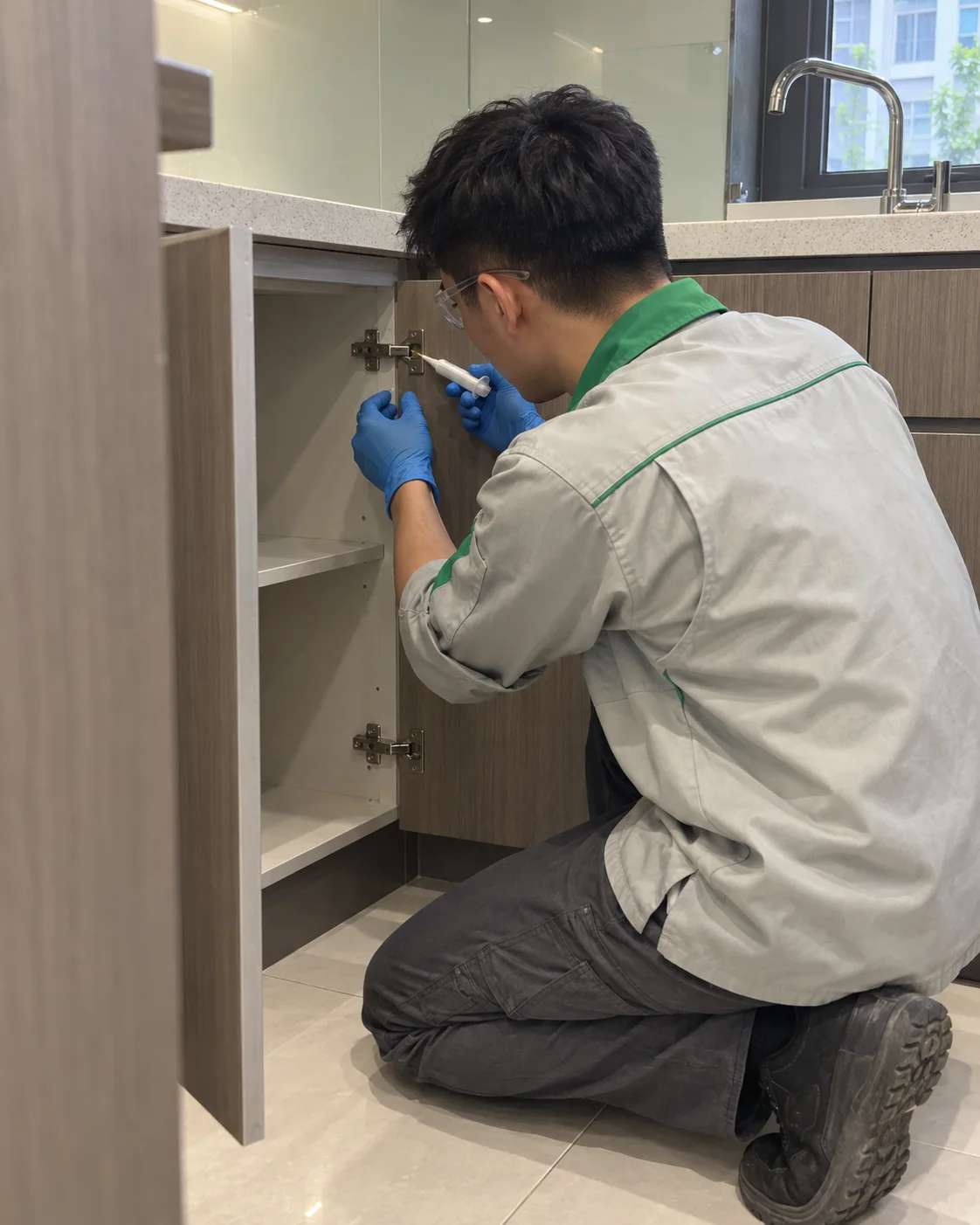
- Find the way in: door gaps, drain openings, pipe and cable entries, gaps under roller doors, and trees or walls touching the roof.
- Seal and clear: we list the gaps to close, and clear or tell you what to move near the building: rubble, stacked material, dense shrubs against the walls.
- Cut the food supply: rats and mice around the building are controlled with traps inside and locked bait stations outside, which is the longest-lasting part of the work.
While you wait
- Close the door of the room with the snake and put a towel along the gap under it.
- Keep children, older relatives and pets away; stand 2–3 m back if you need to keep an eye on it.
- Do not try to kill it. Most bites happen when people try to catch or hit a snake.
- If someone is bitten, keep them still and calm, remove rings and tight clothing near the bite, and get them to hospital at once. Do not cut the wound, suck it or apply a tight tourniquet.
Common questions
Do you use snake repellent or poison?
No. Repellent powders and sulphur do little, and we do not use poison on snakes.
Is the snake killed?
No. We catch it alive. Harmless species are relocated, and protected ones go to the rangers.
How much does it cost?
A call-out is priced after we know the site and the situation; tell us where the snake is and send a photo if you can.