
A bakery is not a small restaurant. The materials are dry rather than wet, the room is warm for eighteen hours instead of six, and most of the floor area is customers rather than kitchen. Those three differences change which species turn up and where the treatment has to go.
What dry stores attract
Flour, sugar, nuts, dried fruit and chocolate feed a group of insects that a restaurant rarely meets: stored product pests. Indian meal moth, flour beetle and biscuit beetle breed inside the sack, not on the floor, and no amount of surface spraying reaches them. The signs are webbing in the corner of a bag, small moths flying at head height in the late afternoon, and fine dust that turns out to be frass.
The fix is stock rotation, sealed containers and disposal of the infested unit — treatment alone will not clear a product infestation, and any company that offers to spray your flour store rather than open the sacks is selling you a visit rather than a result.
What long opening hours attract
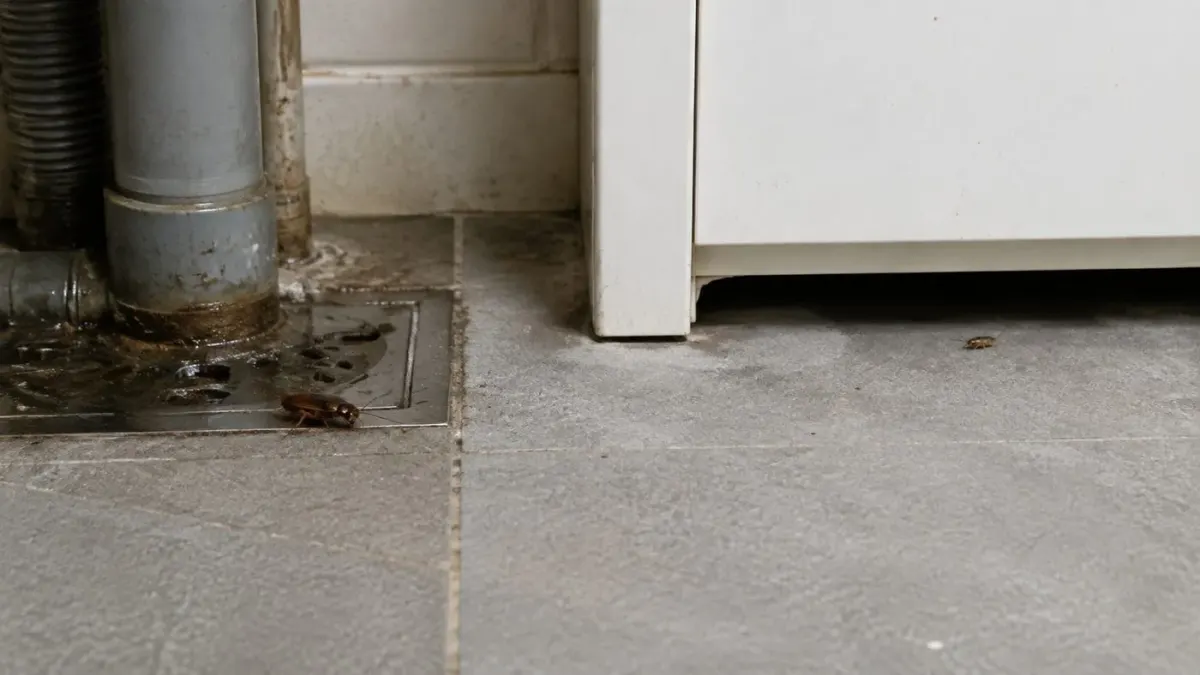
A café that opens at six and closes at eleven has almost no dark, quiet period. That suits ants, which forage continuously along the same trails, and it suits fruit flies, which breed in the two millimetres of syrup inside a pourer, in the drip tray, in the mop bucket and in the sink overflow. Fruit fly work is drain and residue work; if a technician treats the walls and leaves without opening the drip trays, expect them back in a week.
It also means the treatment window is narrow. Most café work here happens between closing and opening, and we schedule it that way as standard rather than as an extra.
What the seating area attracts
Outdoor and semi-outdoor seating is the norm in this city, and it puts your customers next to planting, drainage and the street. Mosquitoes at dusk are the complaint that actually moves people to another café. Treating the planting bases and the drainage channel along the frontage, and removing the standing water in plant saucers and umbrella bases, does more for that than anything applied indoors.
What a café programme includes
- Out-of-hours treatment of the servery, kitchen, prep and wash-up areas.
- Drain and trap treatment on a defined cycle — the single most effective recurring item for fruit flies and small flies.
- Dry store inspection, opening representative sacks rather than looking at the outside of them.
- Monitors in the store and under fixed equipment, read and recorded on each visit rather than replaced unread.
- Frontage and seating: planting bases, drainage channel, bin store and any water feature.
- A dated report per visit, suitable for a food safety file.
Documentation you will be asked for
Delivery platforms and landlords in managed retail both ask for evidence of pest management, and a mall lease often specifies it. What they want is a site plan with numbered devices, service reports by date, trend data and licences. See HACCP pest control records for the full list, and pest control for businesses in Vietnam for how the file is assembled.
Related
If you operate a full kitchen as well, the restaurant programme covers grease traps and hot line equipment. If your café is on the ground floor of a residential building, living above a restaurant or café explains what your upstairs neighbours experience — useful context when a complaint arrives from above.
Common questions
Do you work after closing?
Yes, and for a café it is usually the only sensible time. We agree a fixed window with your closing team, and the technician works to it. There is no surcharge for out-of-hours work on a contract.
Will treatment affect coffee or food flavour?
Nothing is applied to food contact surfaces, open product or equipment interiors. Gel bait goes into cracks and voids; residual work goes to skirting, plinths and service voids. Cover or remove open product before the visit and wipe preparation surfaces afterwards as you would at any close-down.
We keep finding small flies at the bar. Is that a cleaning failure?
Almost never. It is nearly always a breeding site inside something — a drip tray, a pourer, a floor drain, the gap under a bar mat, or the sink overflow. Find and clean the site and the flies stop within days; spray the air and they return the same evening.
The three-week rule for a new site
A café that has just fitted out has no history, and that is an advantage worth using. Treat and proof the premises before the first bag of flour arrives: seal the pipe penetrations, fit the door brushes, get the drainage cycle started and place the monitors. Doing it in an empty shell takes an hour and costs a fraction of doing it later around live equipment, and it means your first three months of monitoring records show a genuine baseline rather than a problem already under way.
If you are taking over an existing unit, ask the previous operator for their pest records before you sign. Their absence is itself information.
Working in English
Global Pest Control is the English-language arm of Khử Trùng Toàn Cầu. For a foreign-owned café that means the survey, the quotation, the monitoring records and the audit file are in English, while the conversations with the landlord, the neighbouring kitchen and the waste contractor happen in Vietnamese. Vietnamese-language services are at khutrungtoancau.vn.