How Buildings in Ho Chi Minh City Are Drained
If you understand one technical system in a Vietnamese building, make it the drainage. It explains where the cockroaches come from, why a smell appears after a holiday, why the ground floor has more problems, and why treating one apartment repeatedly does not hold.
The system has three parts that matter: the floor trap, the stack, and the shared network beyond the building.
The floor trap
Vietnamese bathrooms, kitchens, balconies and service areas have floor drains, called ga thoát sàn. Each contains a water seal — a small volume of standing water that blocks the passage of air and, more relevantly, of insects.
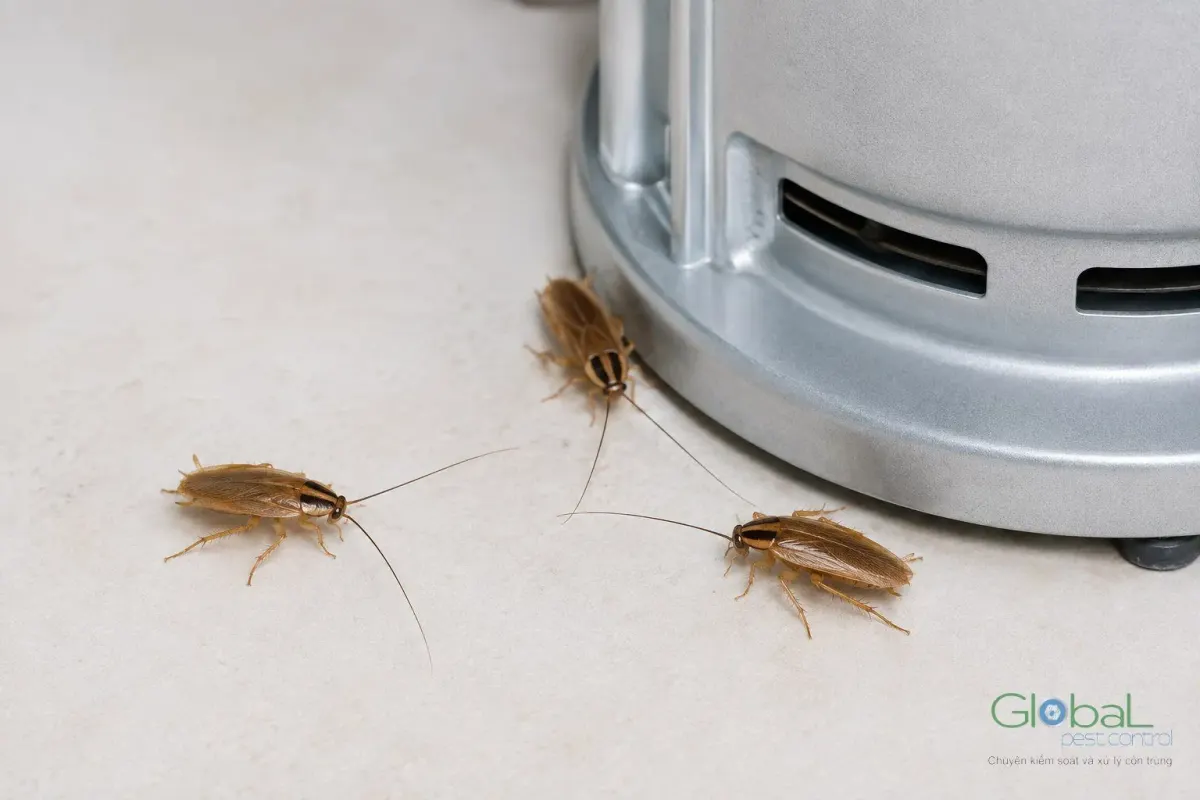
This is a well-designed feature that fails predictably. In this heat the water evaporates within roughly two weeks of disuse, and once it has gone the drain is simply an open pipe from the building drainage into your room. Almost every large cockroach reported in a Ho Chi Minh City bathroom entered this way.
Why traps here dry faster than elsewhere
High temperature, air movement from ceiling fans and air-conditioning, and the low water volume of many Vietnamese trap designs. A guest bathroom used once a month, a service balcony, a spare shower room and a drain behind a washing machine all dry out routinely.
The fix is trivial and almost nobody does it: half a litre of water down every drain weekly, and a spoonful of cooking oil on the surface of the ones you never use, which floats and slows evaporation considerably.
The stack
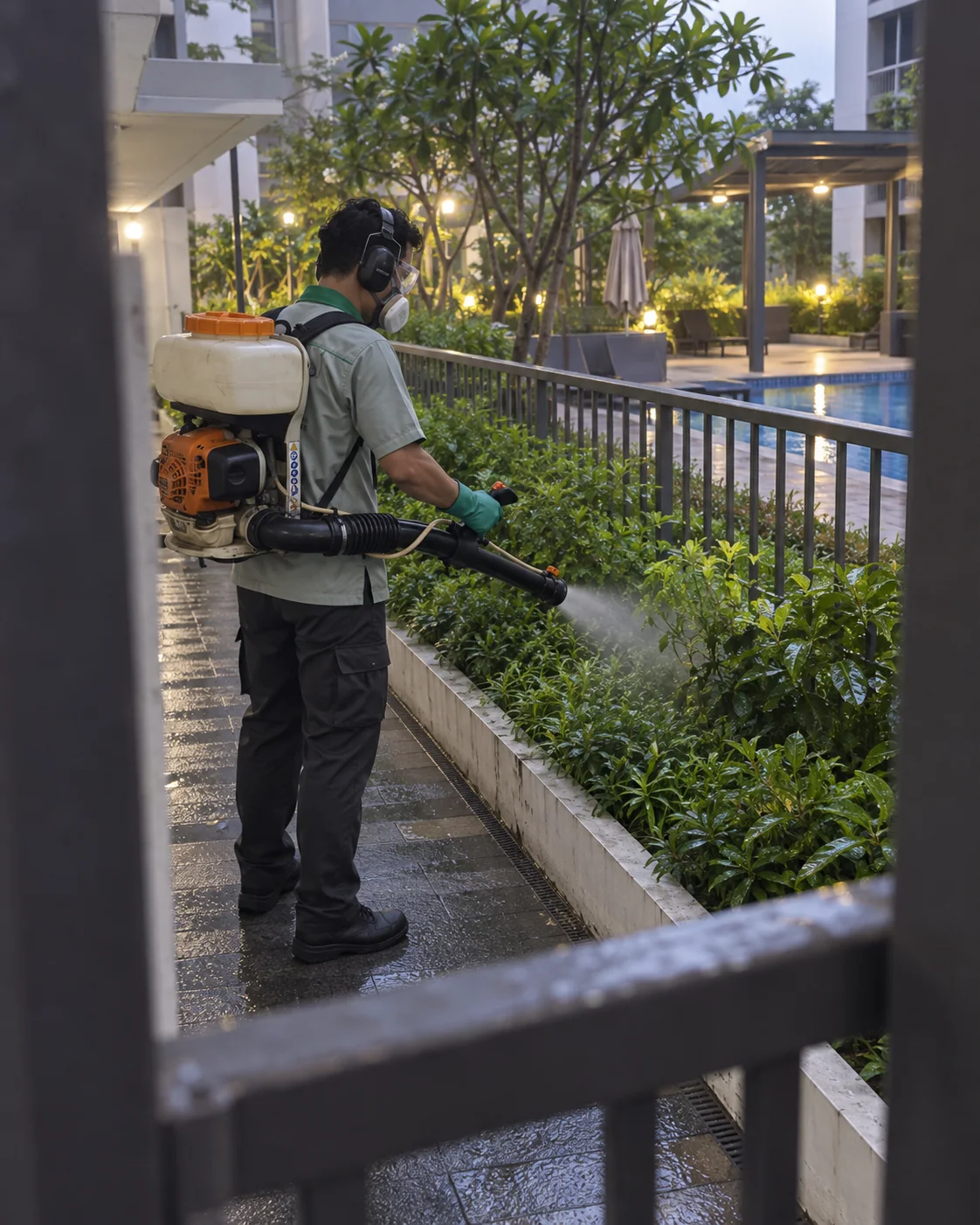
Every apartment on a vertical line connects to the same drainage stack, which runs the full height of the building inside a service riser and discharges into the network below. That stack is warm, wet, dark and continuous, and it is a genuinely good habitat for American cockroaches and for the flies that breed in drain film.
It is also why a problem is often vertical rather than horizontal. If several flats on the same line report the same thing, the stack is a stronger explanation than anything happening inside any one of them.
The network beyond the building
Below ground, the building connects to a municipal network that is shared with neighbouring properties. In older districts that network is combined — carrying both sewage and stormwater — which is why heavy rain surges the system and why activity rises two days after a storm.
The practical consequence is that a thorough drain treatment inside one building can be undone by an untreated restaurant two doors away, and it is why persistent drain-associated problems in dense areas need a block-level view rather than a building-level one.
Grease is the accelerant
Every food business discharges fats into the system, and where a grease trap is undersized or unmaintained, that fat coats the inside of the pipework. That coating is both food and breeding substrate, and it is why a residential block above a row of restaurants has a materially different pest profile from an identical block on a residential street.
If you are choosing an apartment, what is on the ground floor of the building matters more than most people realise.
What can go wrong structurally
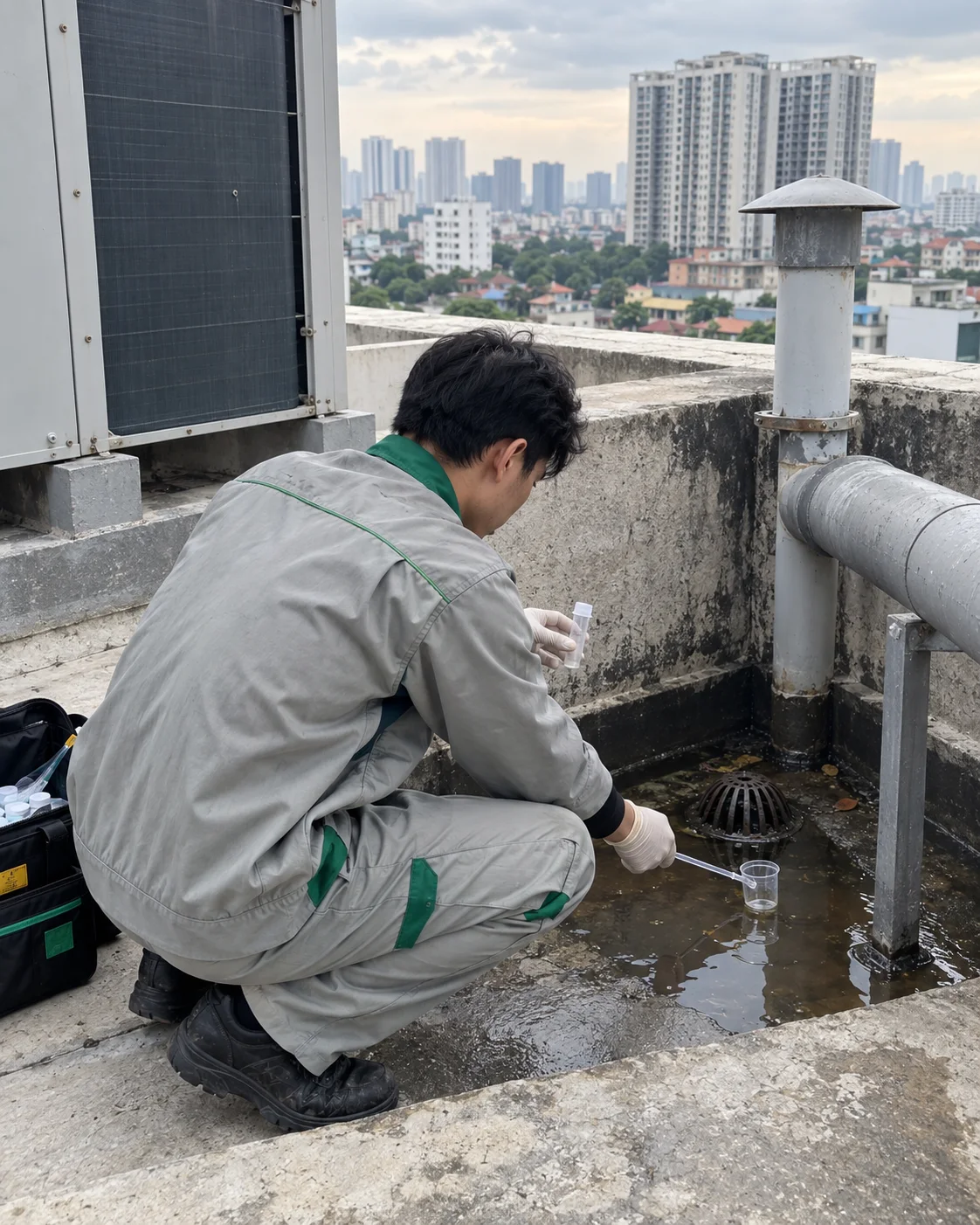
Cracked drains beneath a floor slab, which produce persistent phorid fly problems and cannot be resolved by anything applied inside the room. Trap designs that were installed without a water seal at all. Gratings that no longer seat. And connections between the stack and a wall void that were never sealed after installation.
All four are plumbing findings rather than pest findings, and all four are why a competent survey involves looking at the drains before proposing a treatment.
What this means for you
Keep every trap wet, including in rooms you never enter. Fit a silicone one-way insert to any drain in a rarely used room, which costs very little and removes the problem permanently. Report a persistent smell as a plumbing defect rather than a pest complaint, because that routes it to somebody who can fix it.
And where sightings are confined to wet rooms and involve large brown cockroaches, treat it as a drainage question first. That reframing saves a great many unnecessary treatments.
Related reading
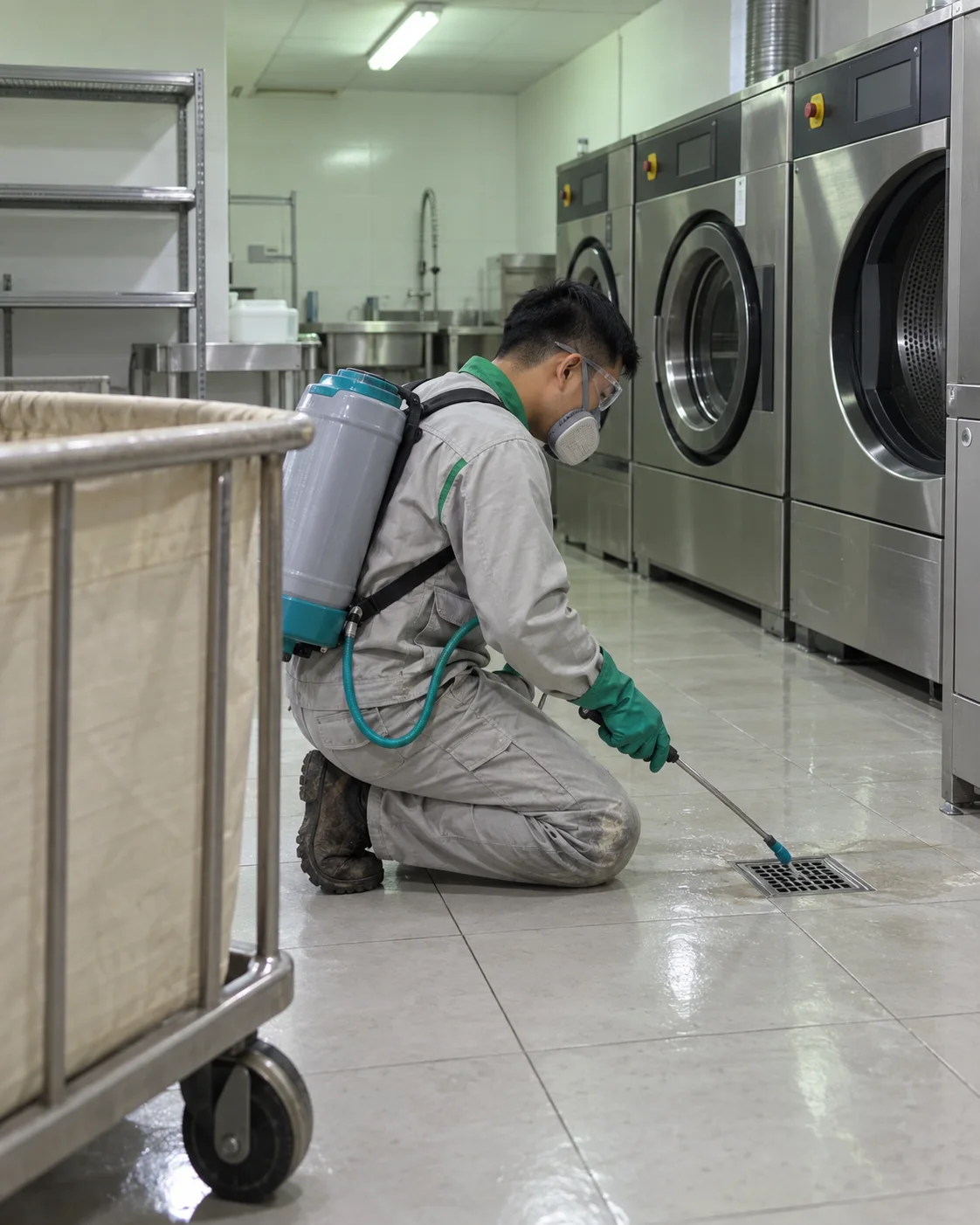
See bathroom floor traps and drain treatment. For the vertical route, service risers. Flies from drains are covered in telling flies apart, and the rain effect in why activity spikes after rain. Our parent company runs the Vietnamese-language cockroach control programme.
Global Pest Control is the English-language arm of Khử Trùng Toàn Cầu, based in Thu Duc City.
Common questions
We keep the traps wet and still get large cockroaches. Why?
Then the entry is elsewhere, and the two commonest are a damaged trap that no longer holds a seal even when filled, and an unsealed gap where a waste pipe passes through a cabinet back or a wall. Both are visible with a torch. In older buildings a cracked drain under the slab is the third possibility and needs a plumber.
Can I fit something to block the drain permanently?
Yes. Silicone one-way drain inserts sit inside the grating, open under water flow and close otherwise, and they cost very little. They are the right answer for any drain in a room you rarely use. For a drain in daily use the water seal does the job provided the trap is sound.
Is the smell dangerous?
Sewer gas in the concentrations produced by a dry domestic trap is unpleasant rather than hazardous, and it should not be ignored, because it means the same opening is available to anything living in the system. Fill the trap; if the smell persists after a day, the trap or the pipe is damaged and that is a repair.