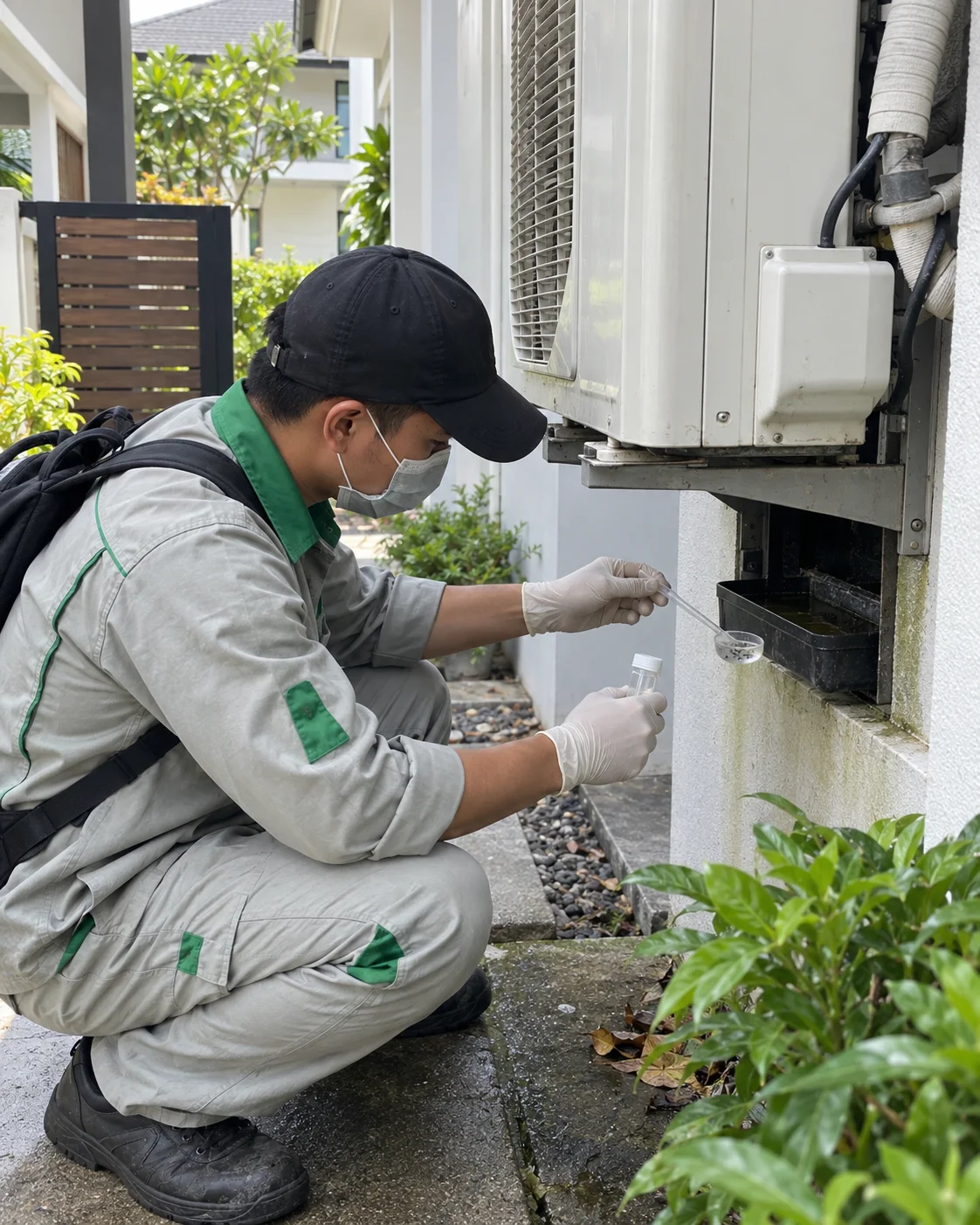
What a Technician Carries and What Each Item Does
Somebody arrives with a sprayer and nothing else. That single observation tells you what kind of visit this is going to be, before anyone has said a word.
This is a walk through what a properly equipped technician carries in Vietnam, what each item is for, and what an absence indicates.
The diagnostic tools, which come out first
- A good torch. The most used item in the bag by a wide margin.
- An inspection mirror on a handle, for looking behind and under fixed units.
- A moisture meter, for termite and damp-related work.
- A camera, usually a phone, for the report.
- A screwdriver set, for removing kick plates, socket covers and access panels.
A visit that begins with a survey using these, rather than with an application, is the visit you want. In most residential jobs the diagnostic phase should be longer than the treatment phase.
The application equipment
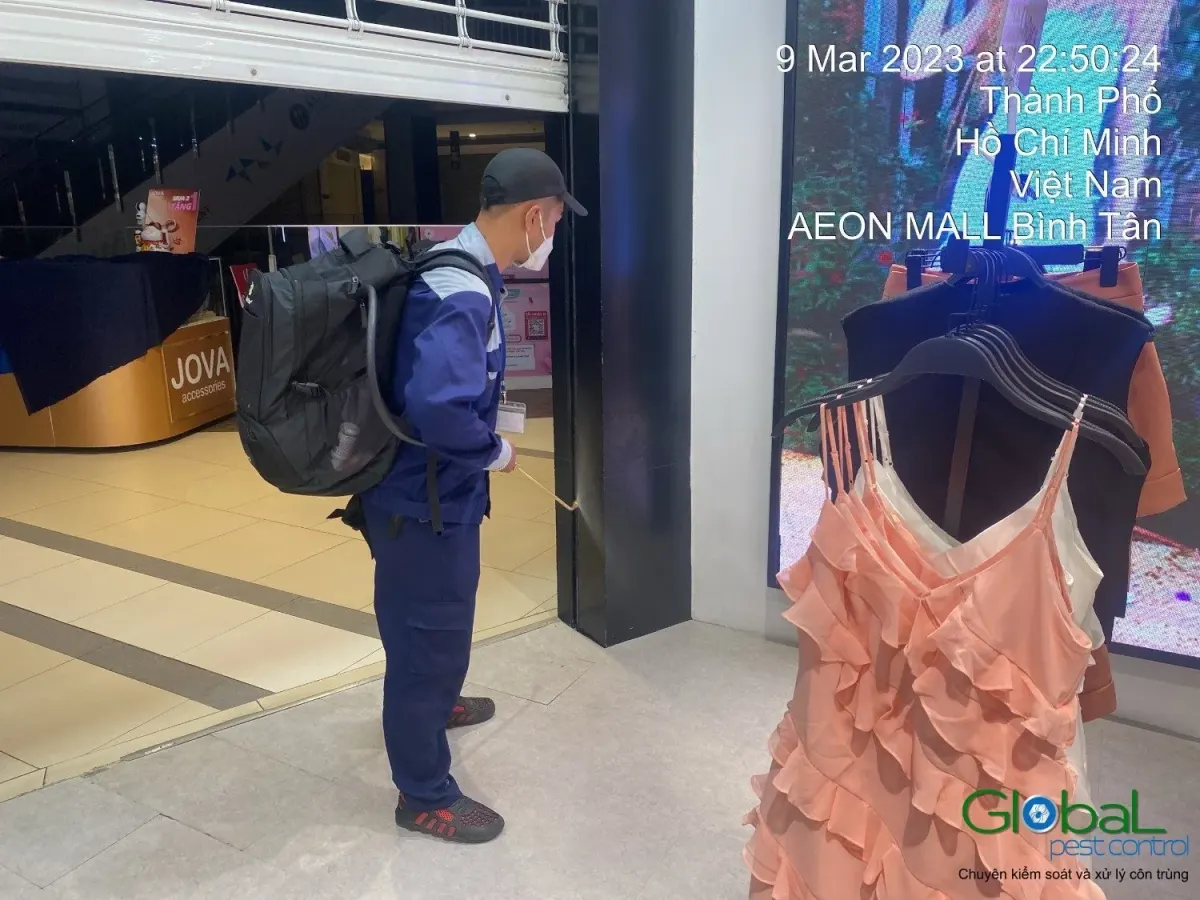
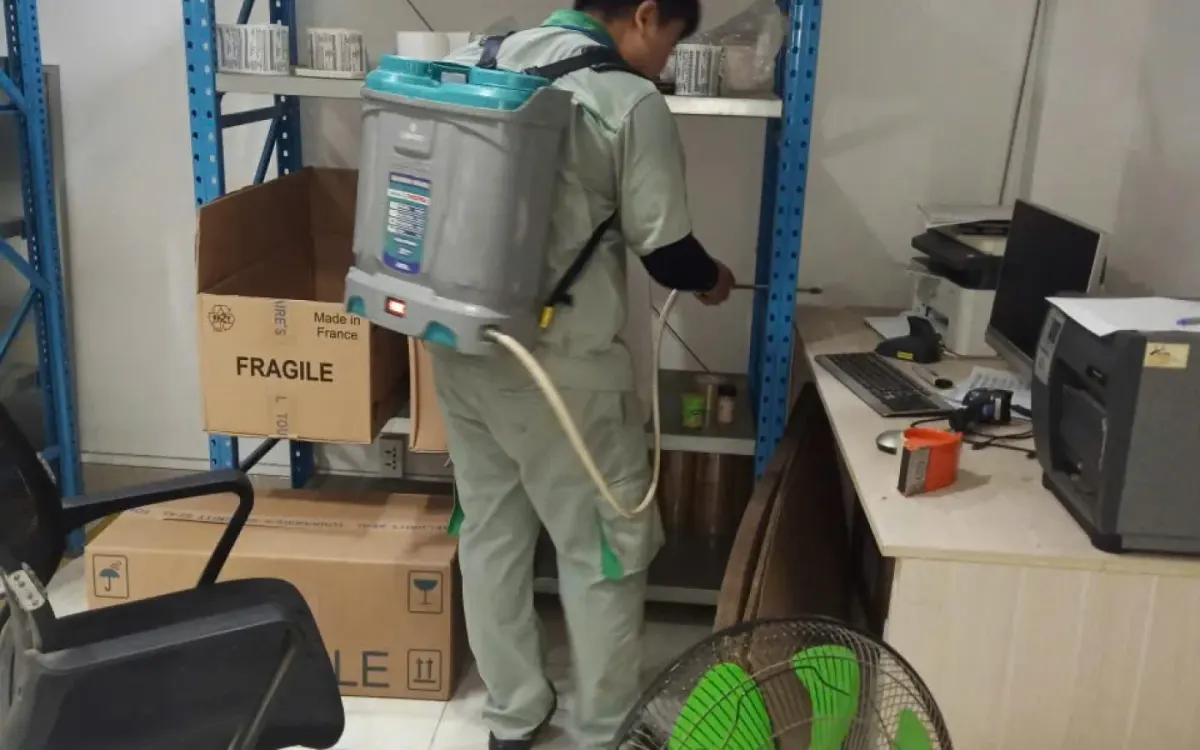
A compression sprayer with interchangeable nozzles for residual work — a pin-stream nozzle for cracks and a fan for surfaces, and a technician who never changes nozzle is applying everything the same way. A hand duster or a powered duster with an extension tube for voids. A bait gun for gel, which places a precise dot rather than a smear.
A foaming applicator for drains, because a liquid poured down a drain runs through and a foam coats the pipe wall where the larvae are. In a city where drains matter as much as they do here, the absence of a foamer says something.
The monitoring equipment
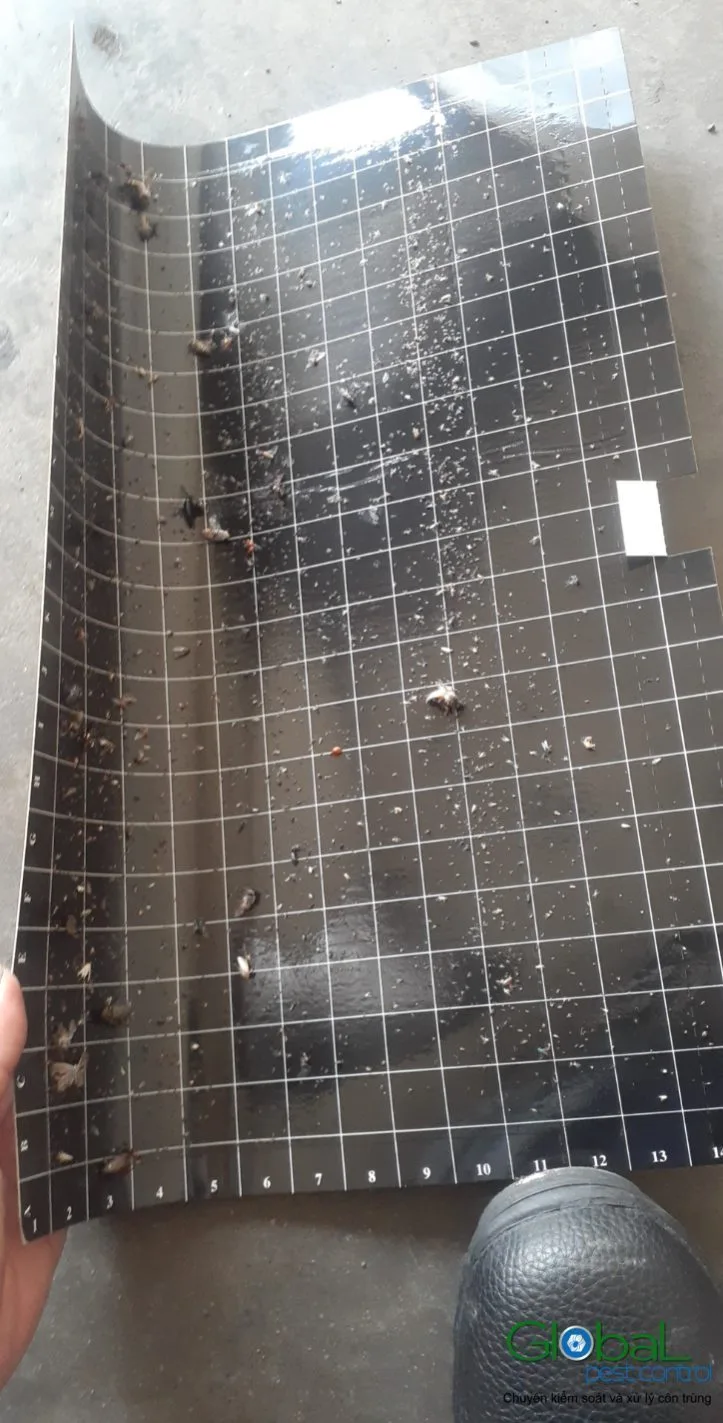
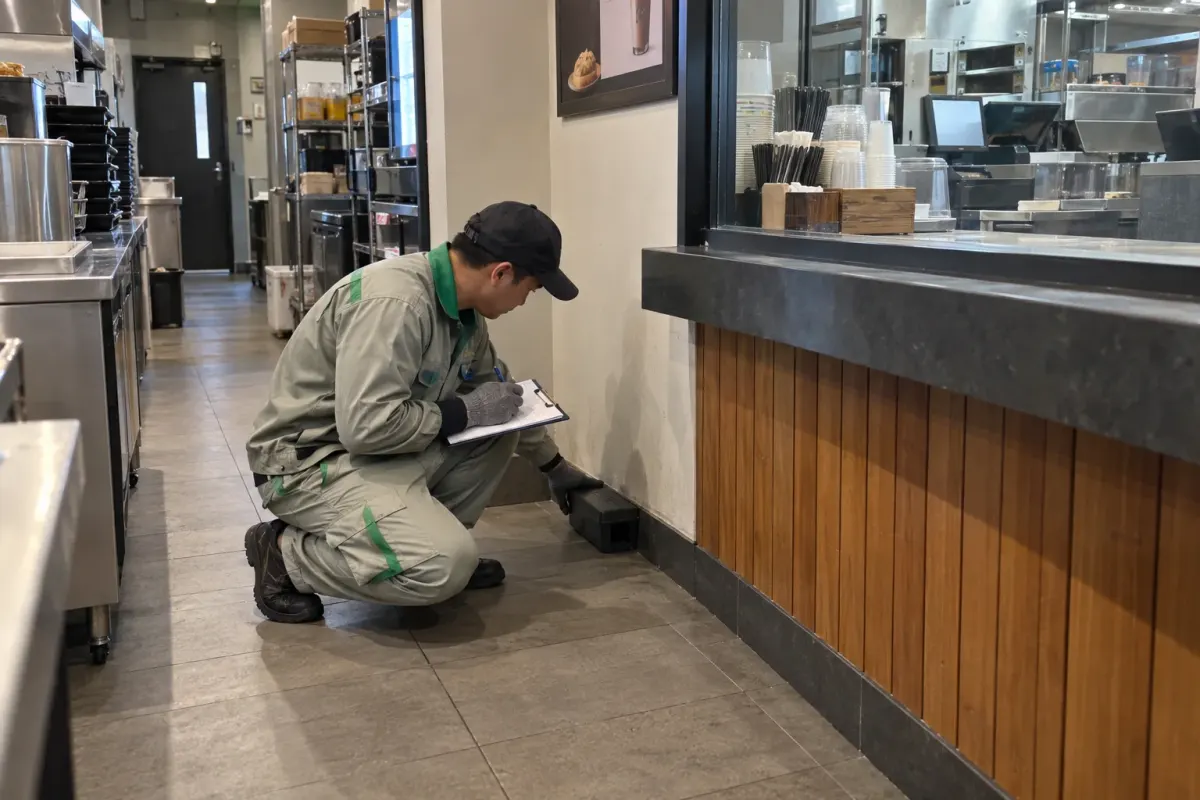
Sticky monitors, numbered. Non-toxic rodent monitoring blocks. Insect light trap replacement boards for commercial sites. A device with no numbering system on it is a device nobody intends to compare over time.
Safety equipment
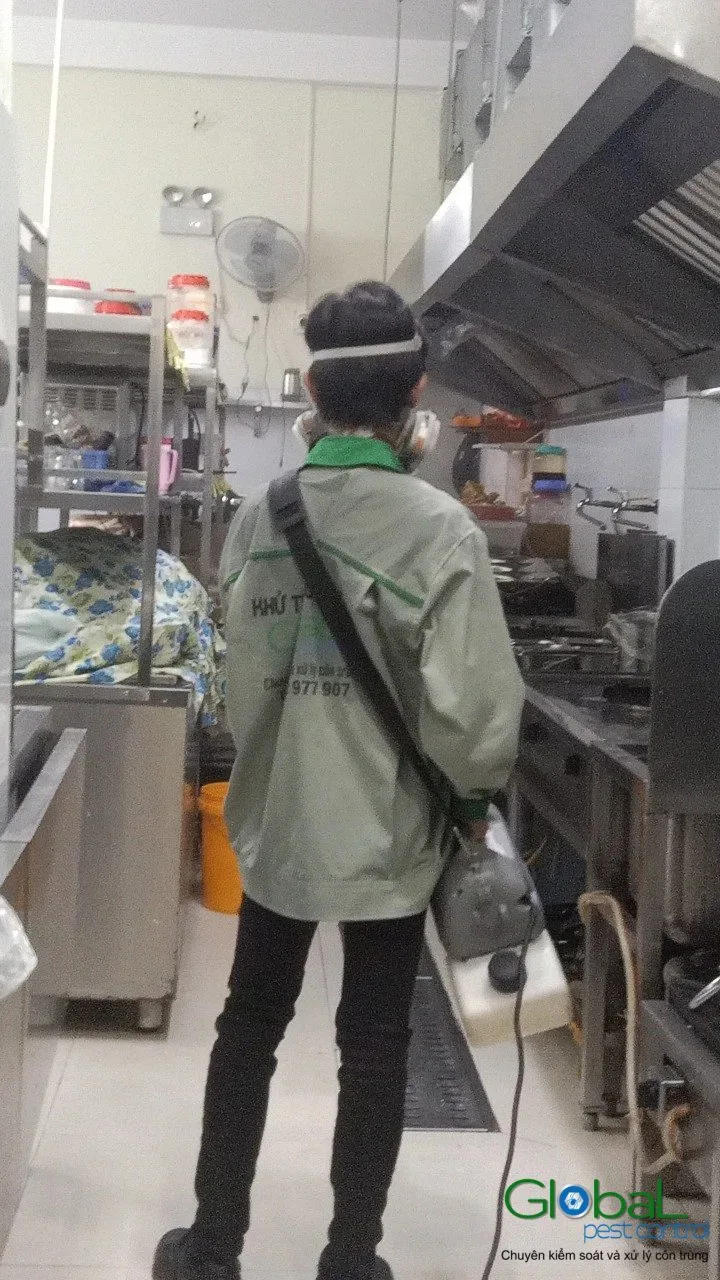
Nitrile gloves, changed rather than reused all day. Eye protection when spraying overhead. A respirator for dusting in enclosed spaces and for any powered application. Overshoes for a home.
Watch this closely, because it is a reliable indicator. A technician who protects themselves properly is a technician whose company trains and equips people, and that same company is more likely to have current registrations, a product rotation policy and a record system. It is the cheapest signal you get.
Two more items separate a residential visit from a commercial one. A ladder or steps, because ceiling voids, riser landings and light traps are all above head height and nobody surveys them from the floor. And a set of clean overshoes, which sounds cosmetic and is not — the same boots that walked a basement should not walk a nursery an hour later.
The paperwork
A service report form, ideally bilingual, with fields for findings and recommendations rather than only for areas treated. Product safety data sheets, which should be available on request within the day. And a site plan for a commercial visit, with device numbers on it.
A technician who writes the report on the doorstep in thirty seconds has not recorded findings, because there were none to record — the visit was an application rather than an inspection.
The vehicle matters too, though customers rarely see it. Products should travel in a secured, labelled compartment separate from the passenger space, in their original containers rather than decanted into unmarked bottles. A technician who mixes on site from a labelled container to a measured volume is following the label; one who pours from an unmarked bottle by eye is not, and no equipment list compensates for that.
What the absence of things tells you
No torch means no inspection. No duster means voids will not be treated. No bait gun means gel is either not being used or is being applied badly. No foamer means drains will be poured rather than treated. No monitors means nobody intends to measure whether this worked.
None of these are absolute rules and a good technician can do useful work with less. But a service consisting of one sprayer and one product is a service that has one answer for every question, and most pest problems in this city do not have that answer.
Related reading
See what happens during a visit and what to tell the technician. On methods, insecticidal dust and drain treatment. For choosing a company, how to choose a pest control company. Our parent company equips its teams to the same standard across its service programmes.
Global Pest Control is the English-language arm of Khử Trùng Toàn Cầu, based in Thu Duc City.
Common questions
Should I be worried if the technician wears a respirator in my home?
No — it is a good sign rather than a bad one. Their exposure is different from yours in kind and in degree: they do this in several properties a day, every working day, often in enclosed spaces during application. Protecting against a cumulative occupational exposure says nothing about the risk to a household after the surfaces are dry.
Is a bigger machine better?
Not in a home. Powered misters and large fogging units have a place in warehouses and outdoor spaces, and in an apartment they mostly produce airborne product in a space where a hand-placed bait would work better. Equipment size is a poor proxy for thoroughness.
What should the visit cost in terms of time?
For an apartment, forty minutes to two hours, with a substantial part of it spent inspecting. A fifteen-minute visit has not moved a fridge or opened a cabinet. For a restaurant or a warehouse, considerably longer, and any commercial visit under an hour is unlikely to have covered the site.