Documentation Expectations of Foreign-Owned Companies
A manufacturing site in Binh Duong or a regional office in District 1 reports to a parent company that has group standards, an internal audit function and a supplier assurance process. The local pest contract was agreed on price and frequency.
The gap that appears is almost never about the standard of the treatment. It is that the two sides assume different things about what a service produces besides the service.
What a local contract typically includes
A defined number of visits, a defined scope of areas, a price, and a service report signed on completion. That is a complete and reasonable commercial arrangement, and it is what the market here sells.
What it usually does not include is the surrounding documentation a group compliance function expects, because nobody asked for it and it is not standard.
What a head office usually expects
Approved supplier documentation including registration, insurance and technician certification. Product safety data sheets in English. A written scope with defined frequencies and defined action thresholds. Trend analysis and an annual review. A corrective action process with owners and dates. And records readable by somebody who does not speak Vietnamese.
None of that is difficult and none of it is normally included by default. All of it can be added to an existing contract by asking.
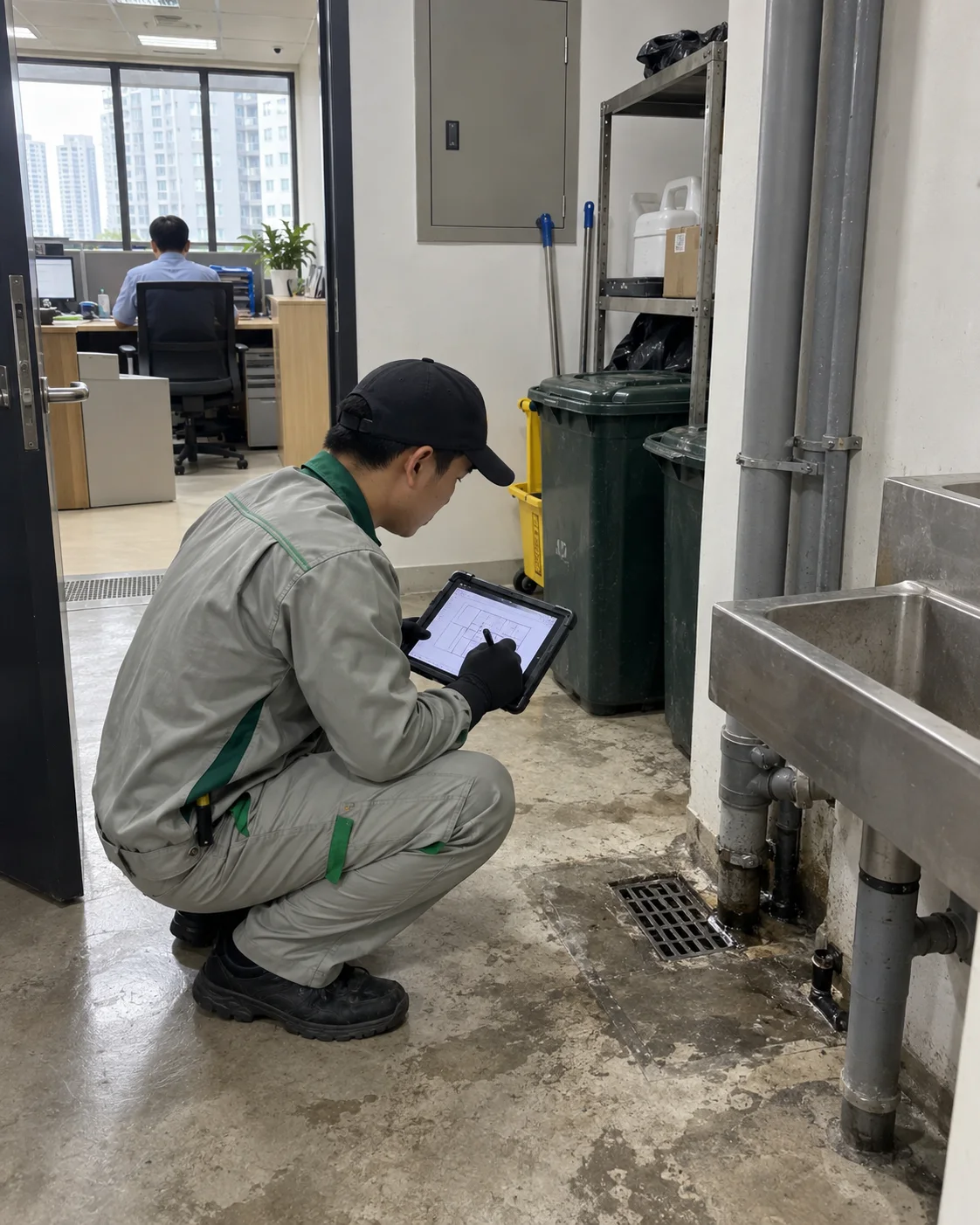
The language question is the practical one
A perfectly good Vietnamese service report is not usable by a compliance function in Osaka or Rotterdam. Translating a year of reports before an audit is an expensive afternoon that recurs annually.
The fix is a bilingual template from the start, so the technician writes once and both readers see the same document. Any established contractor here will produce one; it is a template change rather than an ongoing cost.
Action thresholds are the item most often missing
Group standards frequently require a defined threshold at which a routine finding becomes an incident requiring notification — a number of insects on a monitor, any rodent evidence in a production area, any finding in a specified zone.
Vietnamese contracts rarely define this, so everything is reported the same way and nothing triggers escalation until somebody notices. Writing three thresholds into the scope resolves it, and it also tells the contractor what you actually care about.
Japanese, Korean and European differences
The emphasis varies in ways worth knowing. Japanese and Korean parent companies in our experience tend to focus on frequency, consistency and photographic evidence of each visit. European groups tend to focus on written risk assessment, defined thresholds and documented corrective action. American groups often emphasise supplier approval documentation and insurance.
A contract that satisfies all three is not much larger than one that satisfies any of them, and it is worth specifying at tender rather than adjusting later.

The audit-week pattern
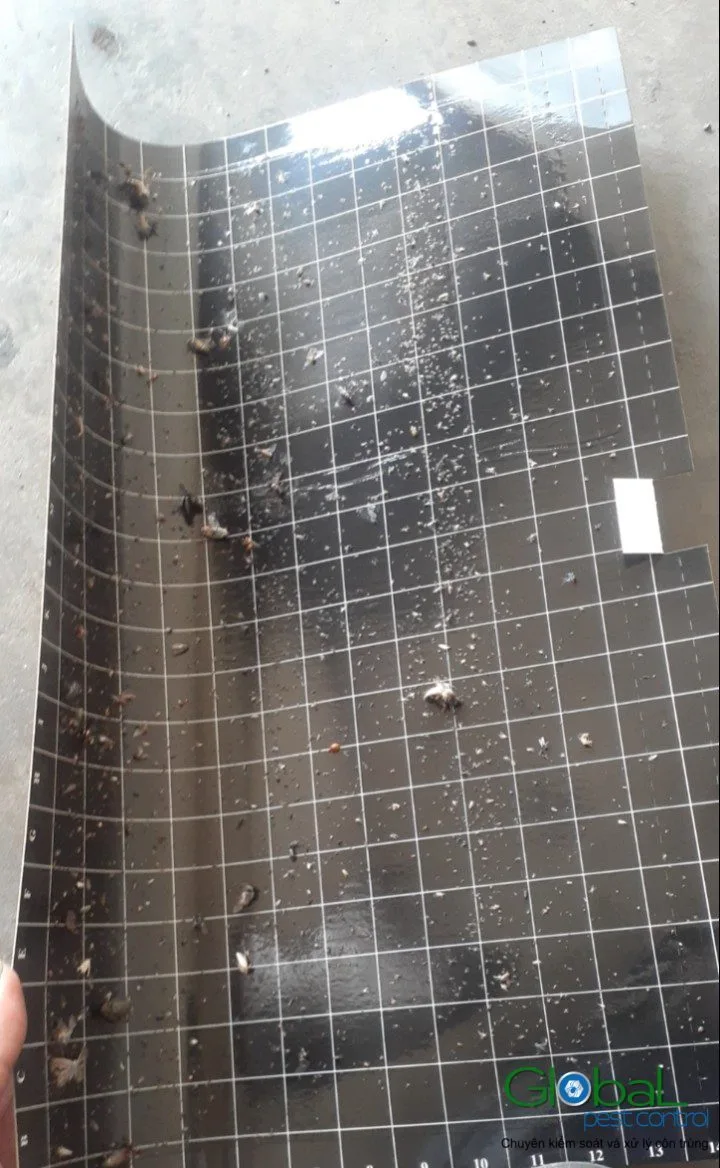
The recurring failure we see is a site that is well controlled and poorly documented, discovering three weeks before a group audit that it has twelve Vietnamese reports, no trend page and no corrective action log. The pest situation is fine; the file is not.
That is an avoidable and expensive kind of stress, and the entire prevention is one conversation with the contractor at the start of the contract.
One more expectation catches sites out at group level: evidence that the contractor has been assessed rather than simply engaged. Many parent companies require a documented supplier approval — a checklist covering registration, insurance, certification and references, completed and signed once and reviewed annually. It is half an hour of work and it is frequently the first document a group auditor asks for, before anything about pests at all.
What to write into the contract
Bilingual reports with findings and recommendations fields. Monthly trend analysis. An annual written review. Product documentation in English. A defined escalation contact and defined thresholds. Access to the contractor\x27s own records on request. Six lines, and they change what the relationship produces.
Related reading
See building a file from nothing, trend data and corrective actions. For contracts, what a factory contract should include and comparing two proposals fairly. Our parent company supports foreign-invested sites in Vietnamese and English through its factory and business programme.
Global Pest Control is the English-language arm of Khử Trùng Toàn Cầu. We report in English to a head office and work in Vietnamese on site, from the same visit.
Common questions
Our contractor is good but the paperwork is thin. Change or fix?
Fix, almost always. Technical competence is the hard part and documentation is a template change, so replacing a contractor who does good work because their form is inadequate usually trades a solvable problem for an unsolvable one. Ask for the changes in writing and give a date.
Do we need an international brand of contractor?
Not for documentation reasons. What you need is a contractor who will produce the documents, which is a question to ask directly rather than to infer from the size of the company. Several local contractors here produce better records than some international ones, because they were asked.
How do we handle a group standard that does not fit Vietnam?
Document the difference rather than ignoring it. Where a group standard specifies a product that is not registered here, or a frequency that does not match the local risk, write a short justified deviation with the local reasoning and get it approved once. An unapproved silent deviation is a finding; a documented approved one is not.