Droppings: Reading Age, Species and Route
Somebody opens a cupboard, finds droppings and clears them away immediately. That is a completely understandable reaction and it removes the three pieces of information that would have shaped the response.
Size tells you the species. Appearance tells you how old they are. Distribution tells you the route. Photograph first, then clear.
Size gives you the species
Rat droppings are 12 to 18 mm long and thick, with the Norway rat producing blunter ends and the roof rat more pointed ones. Mouse droppings are 3 to 6 mm, thin and pointed. Cockroach droppings are 1 to 2 mm, dark specks like ground pepper, and for larger species show fine ridges along their length.
Gecko droppings are frequently mistaken for mouse droppings and are distinctive once you know: a dark pellet with a white tip, which is the uric acid. That white tip is diagnostic and it saves a lot of unnecessary worry.
Appearance gives you the age
Fresh droppings are dark, moist-looking and soft, and they will smear if pressed with a stick. Within two to three days they dry, harden and lighten. Old droppings are pale grey, brittle, and crumble to dust when touched.
The practical version of this test: clear an area completely, note the date, and check again in three days. Anything present at the second look is current activity, and nothing is a strong sign that the area is not being used now. This single test resolves more uncertainty than any product.
Distribution gives you the route
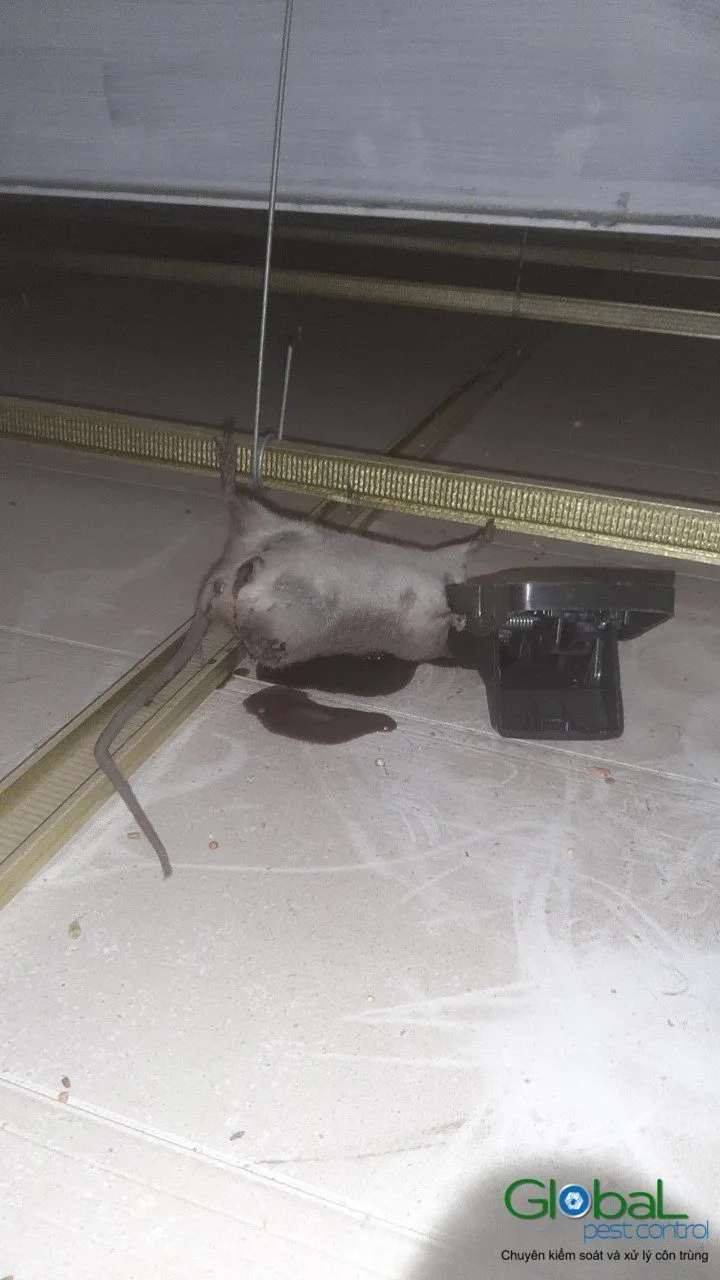
Rodents deposit as they travel, so the pattern maps the route. A line of droppings along the base of a wall is a run. A concentration in one corner is a feeding point or near a harbourage. Droppings on top of a shelf or a beam indicate a climbing species using a high route.
Scattered widely across a large area suggests mice, which deposit constantly while moving. Concentrated in a few places suggests rats, which use established routes and defined feeding points.
Quantity, roughly
A single mouse produces something in the region of fifty to eighty droppings a day and a rat perhaps forty. Those numbers are approximate and they are useful for scale rather than for arithmetic: a handful of droppings is consistent with one animal over a couple of days, and a heavy accumulation across several locations indicates either a longer period or several animals.
What that estimate is genuinely good for is distinguishing a single animal that entered last week from a population that has been present for months, which changes the plan substantially.
Handling them safely
Do not sweep or vacuum dry rodent droppings. Both create airborne dust, and rodent droppings and urine can carry pathogens including leptospira and, elsewhere in the world, hantavirus. The airborne route is the one that matters.
Wear gloves, spray the area with a disinfectant or a dilute bleach solution and leave it for a few minutes, then wipe up with damp paper and dispose of it in a sealed bag. Wash your hands afterwards. This is a genuine precaution rather than an abundance of caution.
What to photograph before you clear
A close shot with something for scale — a coin works well. A wider shot showing the location and the distribution. And a note of what is nearby: a pipe entry, a gap under a unit, a food source, a wall junction.
Those two photographs and one sentence usually let a technician identify species, estimate scale and predict where the entry point is before they arrive.
Insect droppings worth recognising
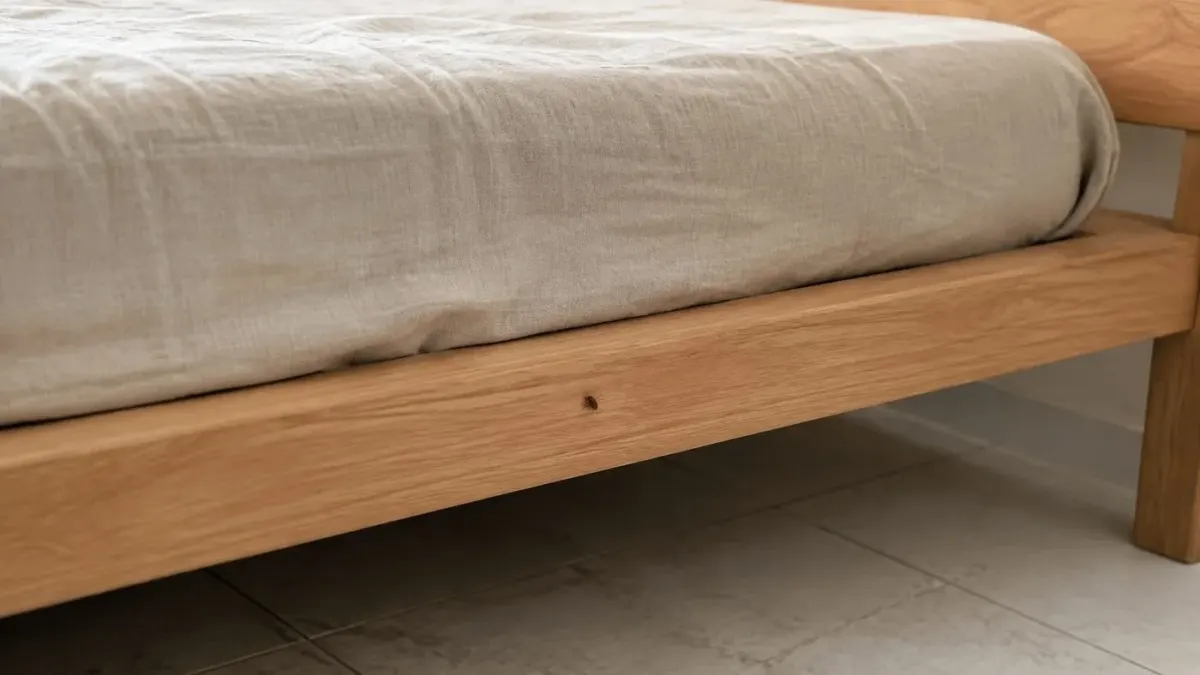
German cockroach droppings appear as fine dark specks concentrated in cabinet corners and along hinge lines. Drywood termite pellets are hard, six-sided and look like coarse sand. Bed bug droppings are dark spots that soak into fabric and spread slightly, unlike a solid speck sitting on the surface.
That last distinction is genuinely useful: a bed bug spot on a mattress seam has a slightly diffuse edge because it is digested blood absorbed into the fibre, and a cockroach speck sits on top and can be flicked off.
Related reading
See rats and mice compared and gnaw marks and runs. For insects, cockroach egg cases and bed bug evidence. Geckos are covered in house geckos. Our parent company runs the Vietnamese-language rodent control programme.
Global Pest Control is the English-language arm of Khử Trùng Toàn Cầu. Send a photograph with something for scale and we will usually identify it the same day.
Common questions
I cleared them before taking a photograph. Is that a problem?
Not fatal, and you have lost the age and distribution information. Do the clear-and-wait test instead: make sure the area is completely clean, note the date, and check in three days. Anything new is current activity, which is the question that actually mattered.
Droppings in a cupboard but nothing else. How urgent is it?
Do the three-day test before deciding. Old droppings from a past visit with nothing new is not urgent and may need only proofing. Fresh droppings reappearing within three days means an animal is currently using that cupboard, which is worth acting on quickly because a food cupboard is a contamination issue as well as a pest one.
How do I tell gecko droppings from mouse?
The white tip. Gecko droppings have a distinct chalky white end, which is uric acid, and mouse droppings are a uniform dark colour throughout. Geckos are also much more likely to leave them on a vertical surface or a shelf edge, since that is where they rest.