Bringing a Baby Home: Preparing a Nursery
Almost every call we get about a nursery comes after the baby is home, usually about mosquitoes. By then the room is furnished, occupied, and the range of things we are willing to do in it has narrowed considerably.
The useful window is the two months before. The room is empty, everything is accessible, nothing is urgent, and there is time to do the permanent work rather than the quick work.
What to do while the room is still empty
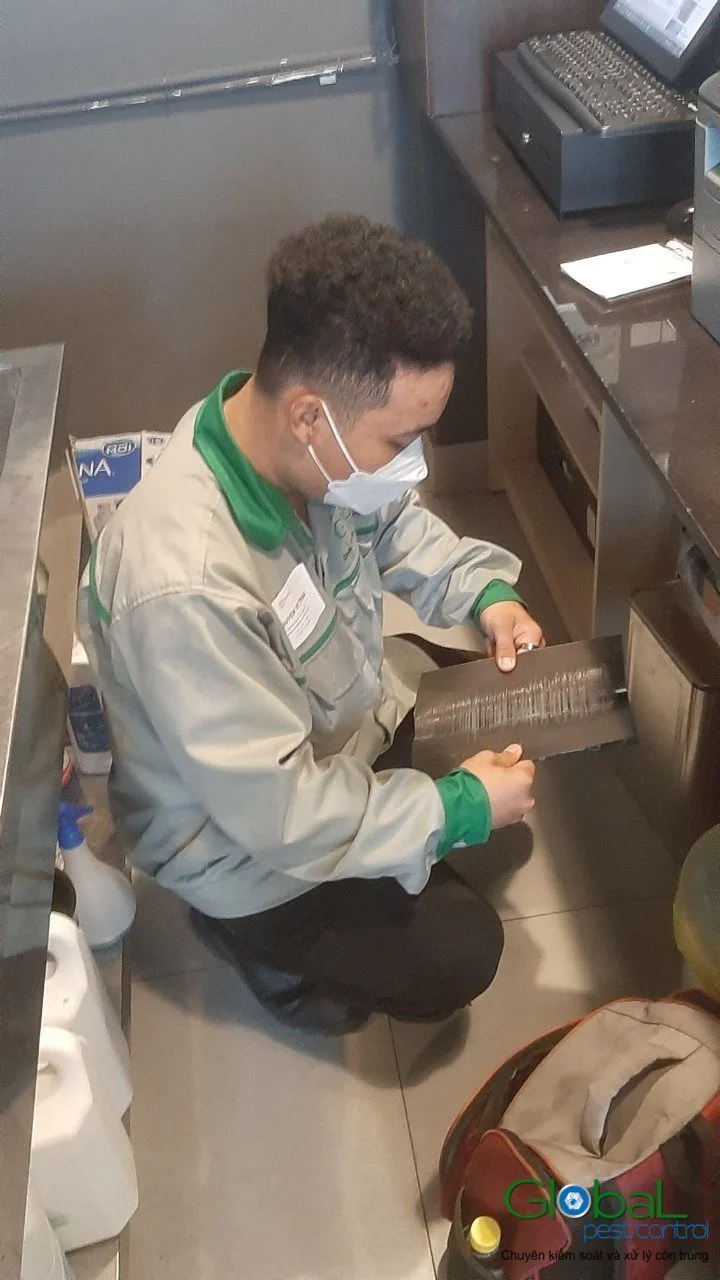
- Seal the gaps. Around pipe penetrations, at the air-conditioning wall hole, where the floor meets the wall behind where furniture will stand.
- Fit a screen to the window and to the balcony door if the room has one, and a brush strip to the door if the undercut is more than about 6 mm.
- Check the floor drain if the room or its bathroom has one, and make sure it seals.
- Deal with anything existing, now, while a treatment can be done properly on empty rooms.
Every item on that list is permanent, needs no product, and works whether or not anybody remembers to do anything later.
Mosquitoes are the real issue, and screens are the real answer
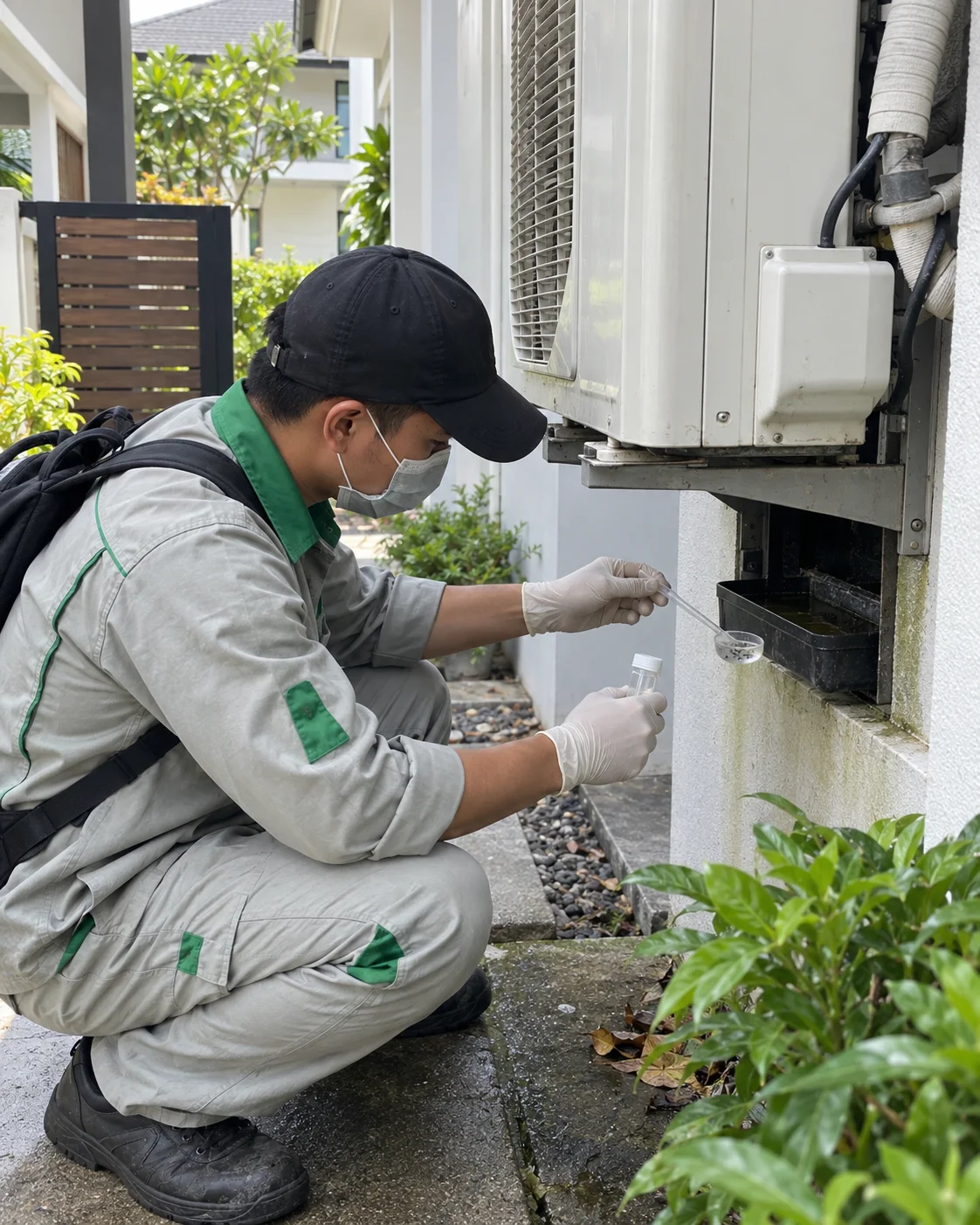
In Ho Chi Minh City the pest question that matters most for an infant is mosquitoes, because dengue is present here every year and because a baby cannot brush anything away. It is worth being clear-eyed about it without being alarmed: the risk is real, and it is also very substantially reducible by physical means.
A fitted window screen, a cot net that is properly tucked rather than draped, and no standing water on the balcony do more than any product. A ceiling fan helps more than it seems it should, because mosquitoes fly poorly in moving air.
What we will not use in a nursery
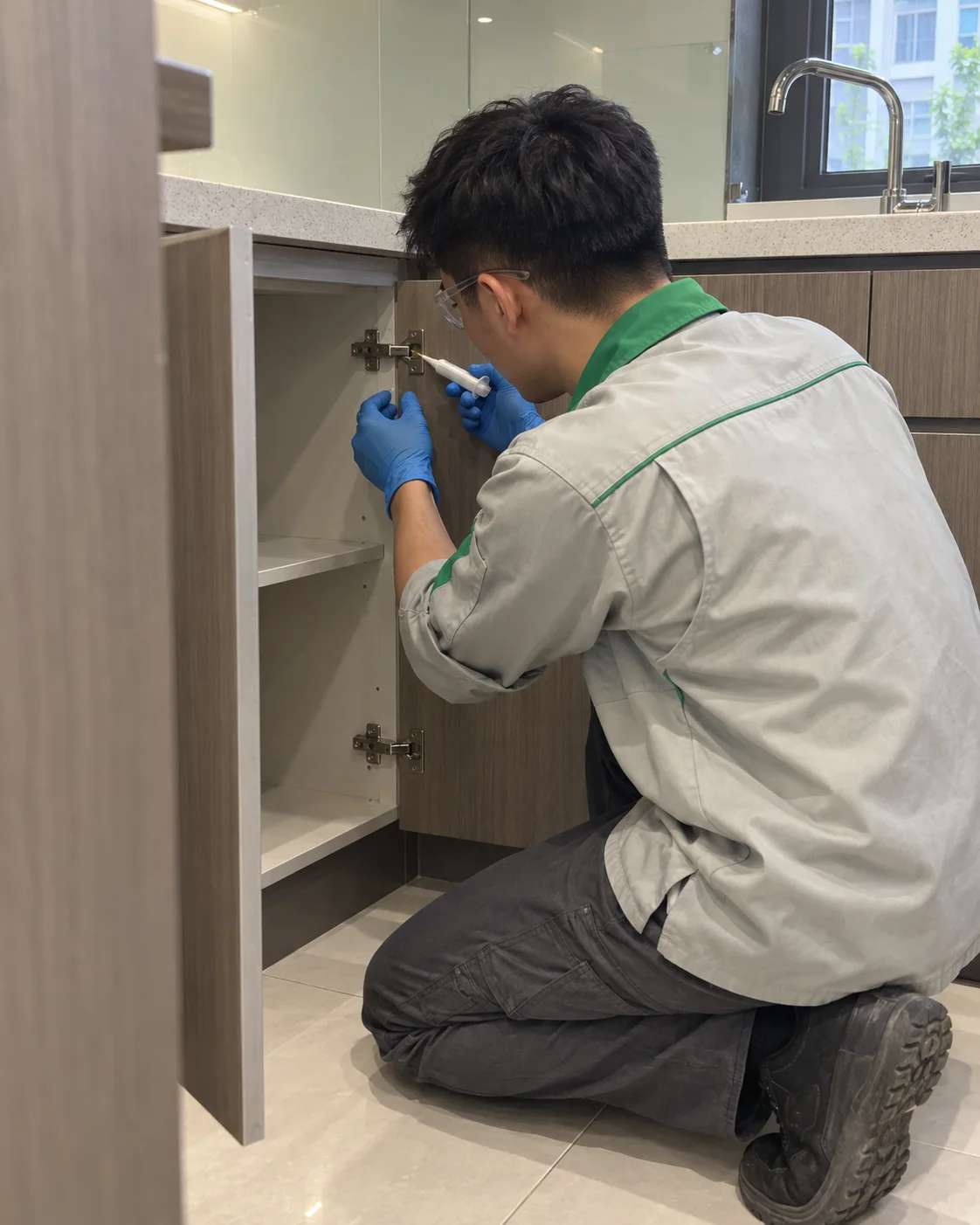
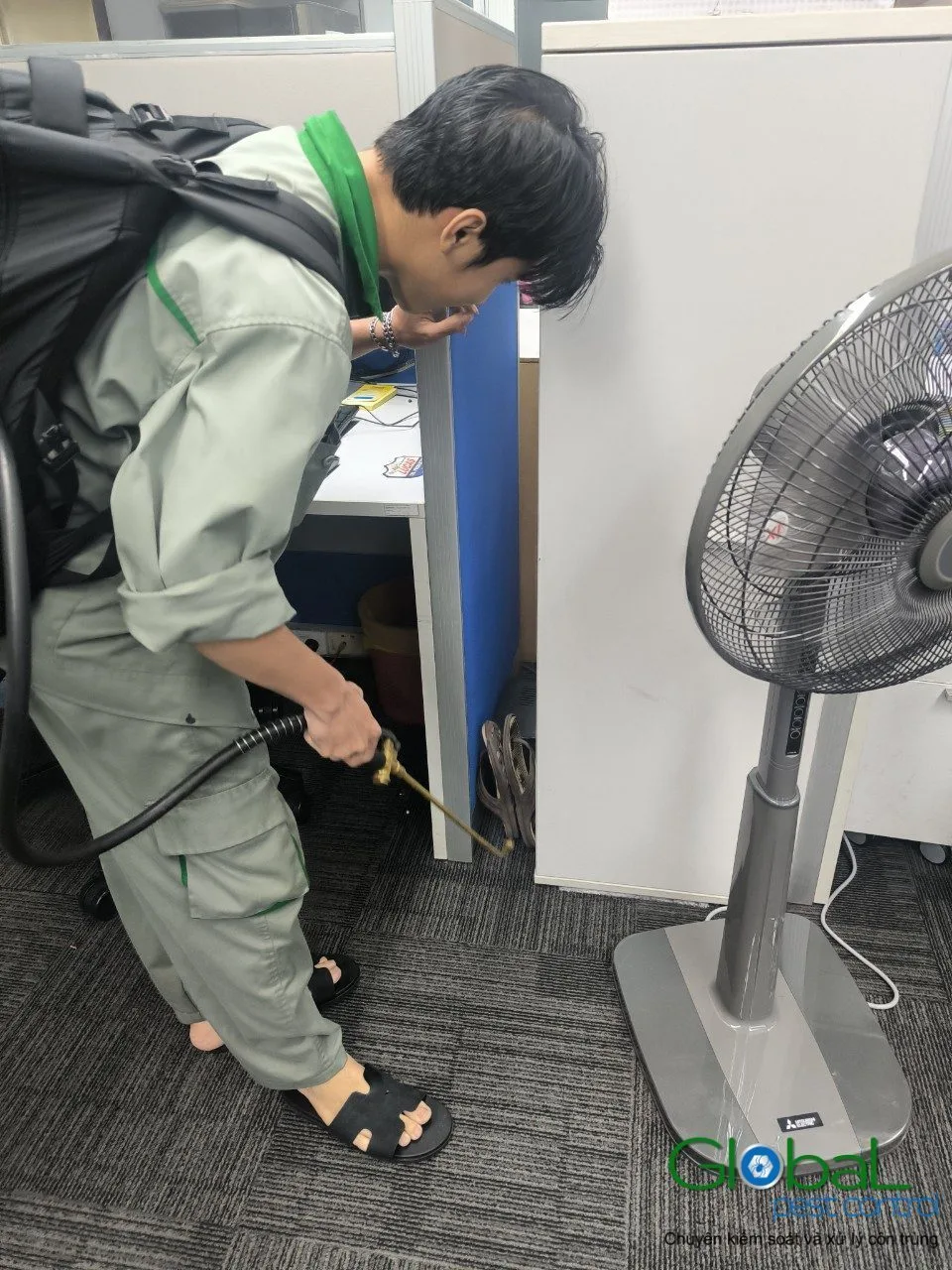
No residual surface treatment on floors, low walls, cot, changing surface or soft furnishings, at any dilution. No fogging or space spray in the room or in any space sharing air with it. No loose bait or monitor on a floor.
What remains is bait and dust placed inside structurally enclosed voids, monitors placed behind fixed furniture, and physical proofing. That is a narrower toolkit than most rooms get, which is exactly why the empty-room window matters so much.
Repellents and plug-ins around an infant
This is a question for a paediatrician rather than for us, and the honest position is that we do not give that advice. What we will say is that physical exclusion has no exposure question attached to it at all, which is why we push screens and nets first rather than as a supplement.
The practical timeline
Eight weeks out, inspect and deal with anything found. Six weeks out, do the proofing and fit the screens. Four weeks out, furnish. Two weeks out, a final look at the room with everything in place, because furniture creates new gaps and a cot against a wall changes what is accessible.
If that timeline has already passed and the baby is home, the work is still possible — it just becomes proofing, monitoring and physical measures rather than anything applied, and occasionally it means treating an adjacent room and leaving the nursery alone entirely.
What to tell visiting family
Grandparents arriving with suitcases from three hotels are the same bed bug question as any other guest, and the answer is the same: a luggage stand away from the bed, and a check of the guest room after they leave. It is worth doing precisely because nobody wants that conversation in a house with a newborn in it.
Related reading
The technical detail is in rooms used by children under three, and safety generally in safety with children, pets and pregnancy. For mosquitoes see breeding sites around your home and balcony planters. Proofing is covered in physical proofing. Our parent company runs the Vietnamese-language mosquito control programme.
Global Pest Control is the English-language arm of Khử Trùng Toàn Cầu, based in Thu Duc City.
Common questions
Is there a treatment that is safe for a newborn?
No product is meaningfully described as safe in that unqualified way, and we would be wary of anyone who says otherwise. What is achievable is a method where nothing is applied to any surface the baby can reach or breathe from, which removes the exposure route rather than arguing about the dose. That is the standard we work to in these rooms.
How soon after a treatment can the room be used?
For anything we would do in a nursery — bait in voids, dust in enclosed gaps, monitors — there is no re-entry period for the room, because nothing is placed anywhere accessible. Where a treatment genuinely needs a residual application, the room waits at least twenty-four hours and is cleaned before use, and we would normally suggest doing that work before the baby comes home rather than after.
Do we need a mosquito net if the windows are screened?
A properly fitted screen does most of the work, and a cot net is a sensible second layer for the hours the baby is asleep, particularly at dawn and dusk when the species that carries dengue is most active. The net has to be tucked rather than draped to do anything, which is the part most often got wrong.