Where Mosquitoes Actually Breed Around Your Home
A mosquito needs about a bottle-cap of water standing for a week. That is the whole problem, and it is why spraying gives a few quiet days and then nothing. Eleven places in and around a typical home in Ho Chi Minh City supply exactly that.
The eleven places
- Saucers under potted plants, indoors and out — the most productive site in most homes
- The condensate tray and drain line of an air-conditioning unit
- Roof drains, balcony outlets and gutters blocked by leaves
- Buckets, mop pails, watering cans and basins left standing
- The drip tray under a washing machine or water dispenser
- Water storage containers without a tight lid
- Decorative water features that have been switched off
- Bromeliads and similar plants that hold water at the leaf base
- Discarded tyres, paint tins and building material on a terrace or in a yard
- Pet water bowls left standing for more than a few days
- Any tarpaulin, cover or bin lid that collects rainwater in a dip
How to check them properly
Emptying is not enough on its own. Aedes eggs are laid on the wall of the container just above the waterline and survive drying for months, hatching when the container refills. That is why a saucer emptied every week can still produce mosquitoes.
Scrub the inside surface when you empty it. Ten seconds with a brush removes the eggs; tipping the water out does not.
The ones people always miss
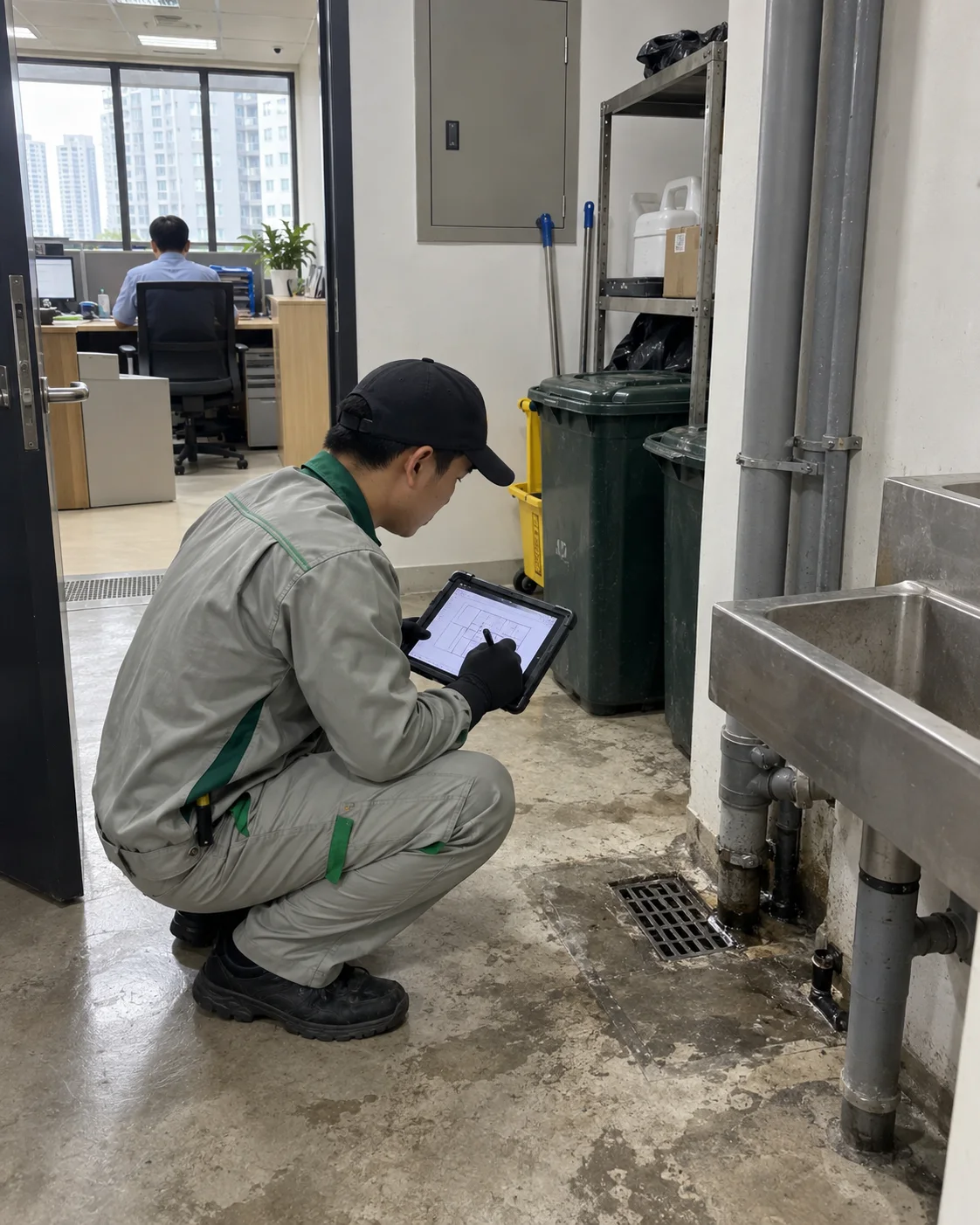
Air-conditioning trays and drain lines come first, because they are out of sight and permanently supplied. Roof and balcony drains come second, because they only fail when leaves accumulate and nobody looks until water stands.
The third is the plant saucer that is under a pot that is heavy. It gets skipped every time, and it is often the most productive one in the house.
When treatment is worth adding
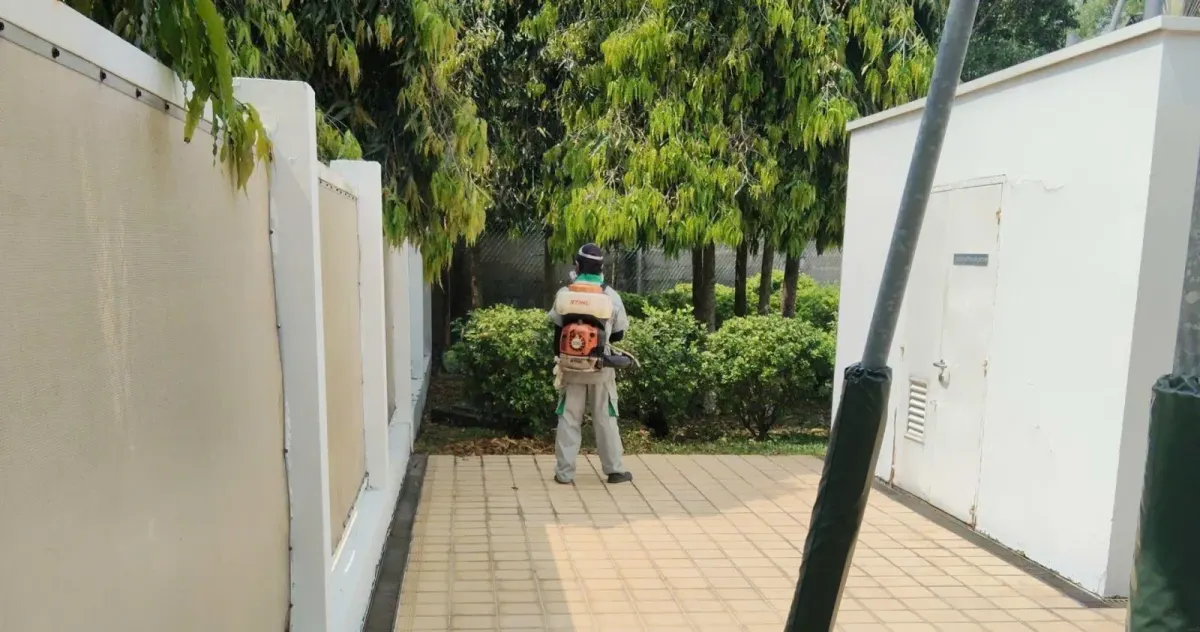
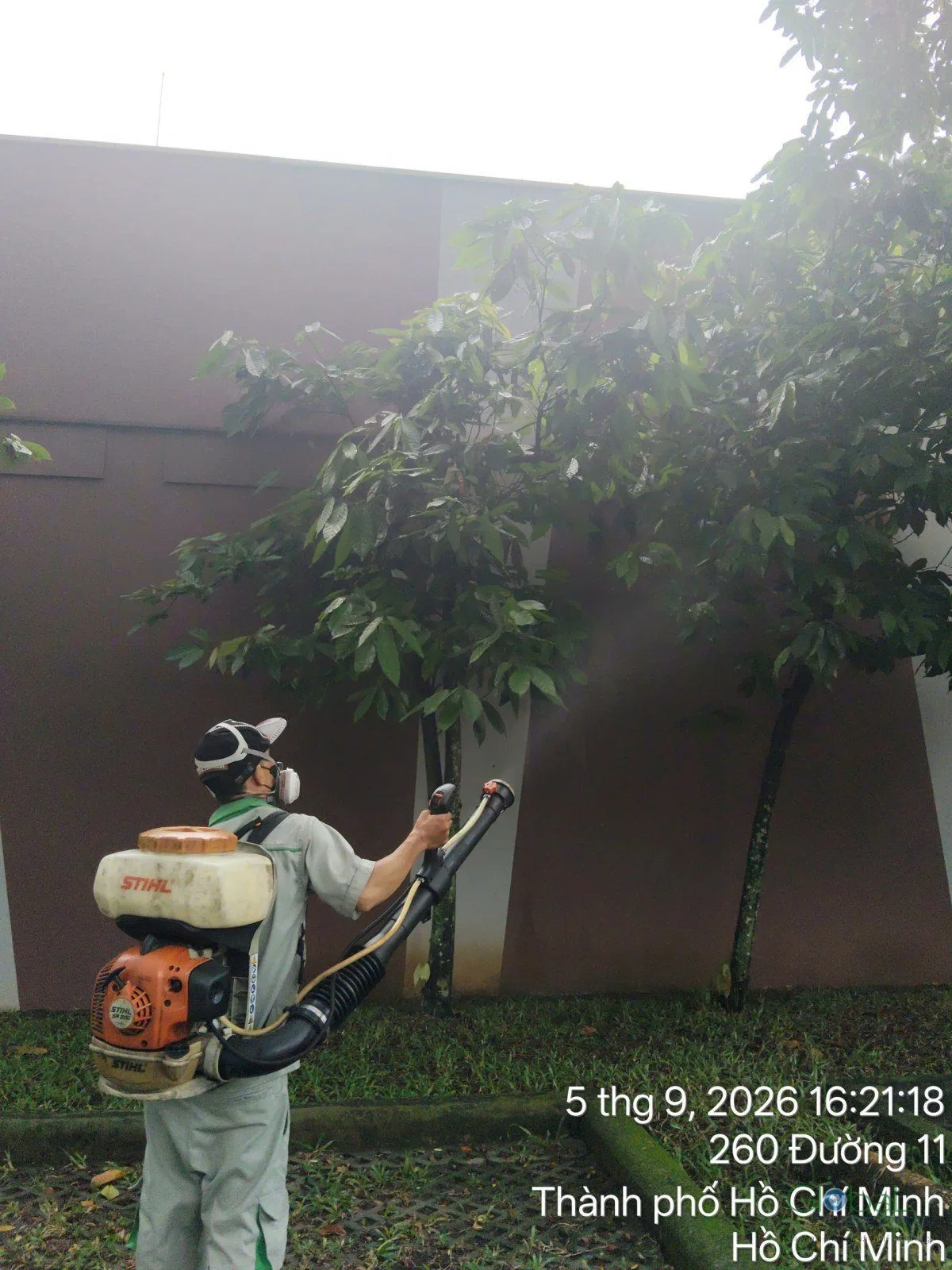
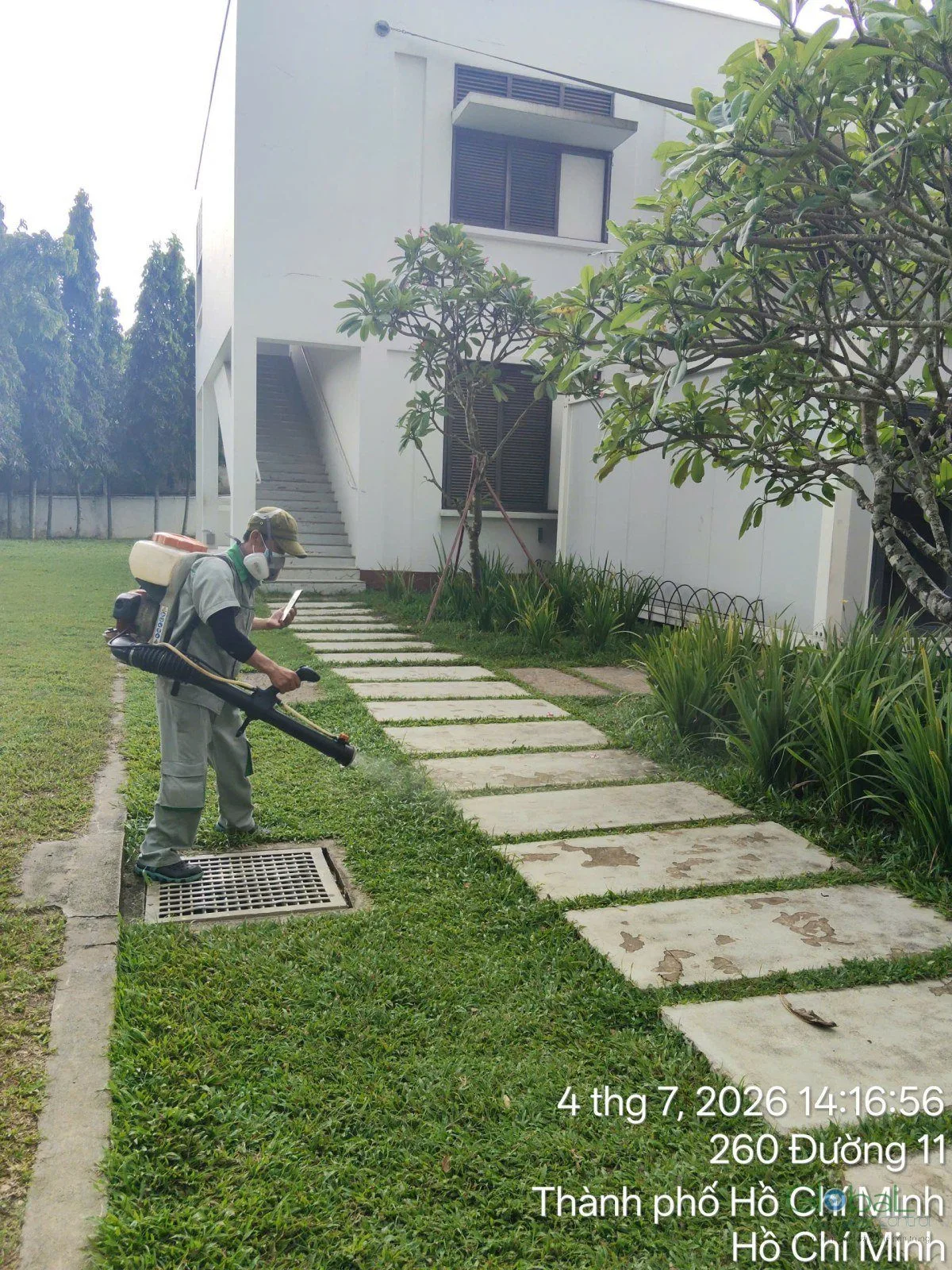
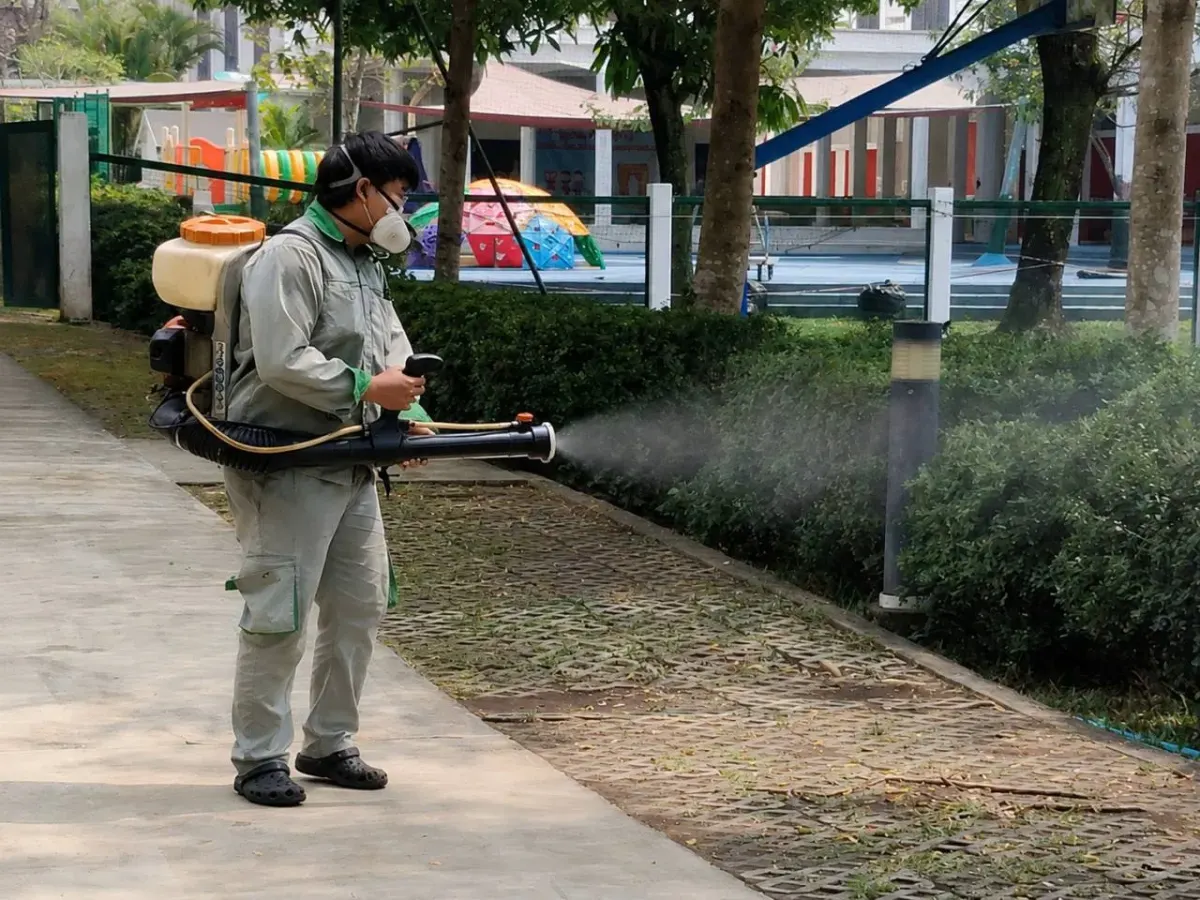
Source reduction is the foundation and it has limits: you cannot control the site next door, the shared podium garden or the canal at the end of the street. Where those exist, treatment of resting sites — shaded vegetation, stairwells, the underside of furniture, dark corners of a car park — reduces the adults that arrive.
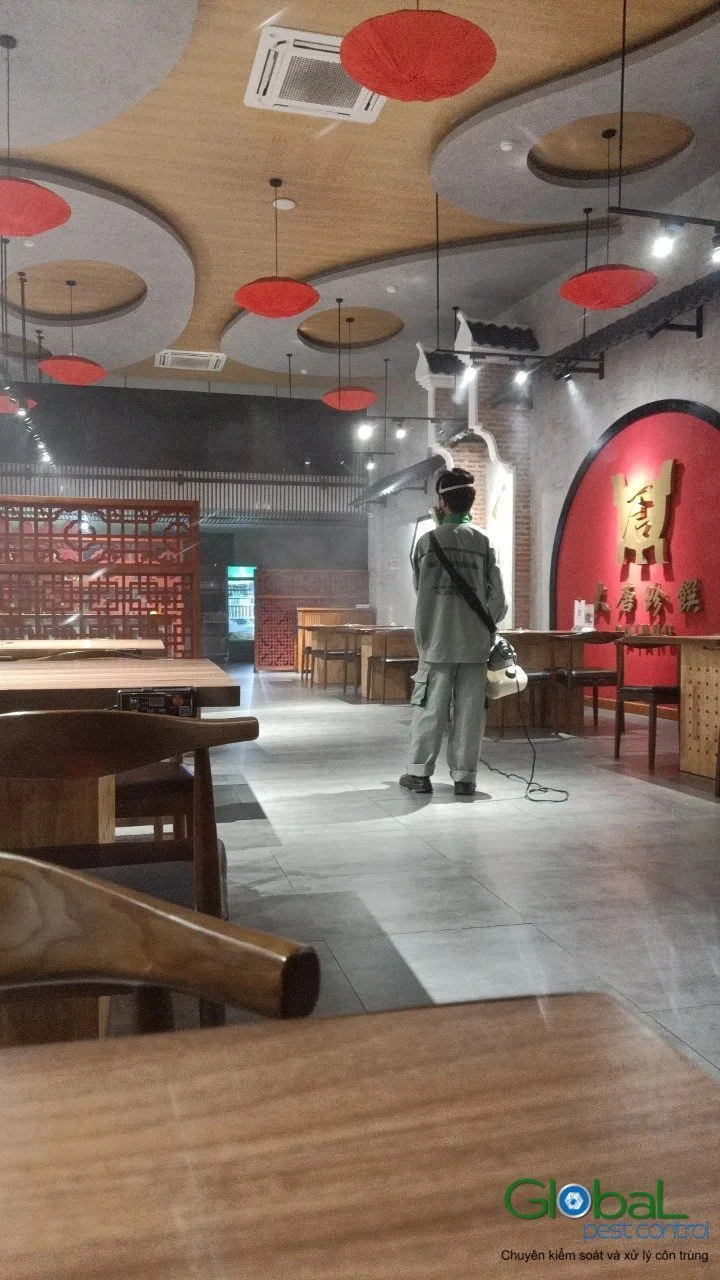
Larvicide is appropriate for water that cannot be emptied, such as an ornamental feature or a drainage sump. Fogging is for knocking down adults before an event or after a reported case, not as a standing programme.
A ten-minute weekly routine
Walk the balcony or garden with a brush and a bucket. Tip, scrub, replace. Check the air-conditioning tray, look at the drains, and turn over anything holding water. That is the entire method, and it outperforms any spraying schedule in a home.
Apartments: the four that apply on a balcony
A high-floor apartment has no garden and still has breeding sites. In practice four: plant saucers, the air-conditioning condensate tray or drain outlet, the balcony floor drain if it holds water in a dip, and anything left standing outside such as a mop bucket or a cool box.
Aedes mosquitoes readily use containers many floors up. Height is not protection, and a single neglected saucer on a balcony will supply a household.
Shared spaces you cannot control
- Podium gardens and landscaped decks with irrigation and planters
- Basement car parks with drainage sumps and standing water after rain
- Roof plant areas with cooling equipment and drip trays
- Construction sites next door, with formwork and material holding water
- Neighbouring properties with untended gardens
Where these exist, the household controls only its own boundary and the rest is a management conversation. It is a reasonable one to have, because the building has the same interest.
Screens, fans and repellent
Screens on windows and doors are the most reliable domestic protection and the least used. Where fitting them is not possible, a ceiling or standing fan is genuinely effective — Aedes are weak fliers and avoid moving air.
Repellent belongs on skin during the day rather than in the evening, which is the opposite of the habit most people bring from elsewhere. Daytime is when this particular mosquito bites.
Getting a building to act
Where the productive sites are in common areas, an individual complaint rarely moves anything. What does move it is a specific note: which location, what was seen, on what date, with a photograph.
"There are mosquitoes in the building" is not actionable. "Standing water in the drainage sump at basement level B2, photographed on 12 June, with larvae visible" is a maintenance item with an obvious response, and buildings deal with those quickly because they are cheap to fix and expensive to ignore.
A note on mosquito traps and repellent devices
Electric zappers kill mostly harmless night-flying insects rather than Aedes, which fly during the day and are not strongly attracted to light. Ultrasonic repellers have no demonstrated effect on mosquitoes at all.
Carbon dioxide traps do catch mosquitoes and can help in a garden, but they reduce adults without touching production. They are worth having as an addition to source reduction and are poor value as a replacement for it, which is how they are usually sold.
Global Pest Control is the English-language arm of Khử Trùng Toàn Cầu. The same technicians and the same programmes are described on our Vietnamese service pages.
Book an inspection
Site inspections are free of charge and carry no obligation. A technician walks the property, identifies the species and the harbourage, and sends a written quotation with the method and the schedule — normally within one working day.
Request an inspection · See indicative prices · All services