Outdoor Seating and Mosquitoes at Dusk
Outdoor and semi-outdoor seating is normal in this city, and so is losing it between six and eight in the evening because customers are being bitten. That hour is often the most profitable of the service, and the cause is nearly always within twenty metres of the chairs.
It is also the pest problem most often addressed with the least effective method, because fogging looks decisive and does almost nothing that lasts.
Where they are actually coming from
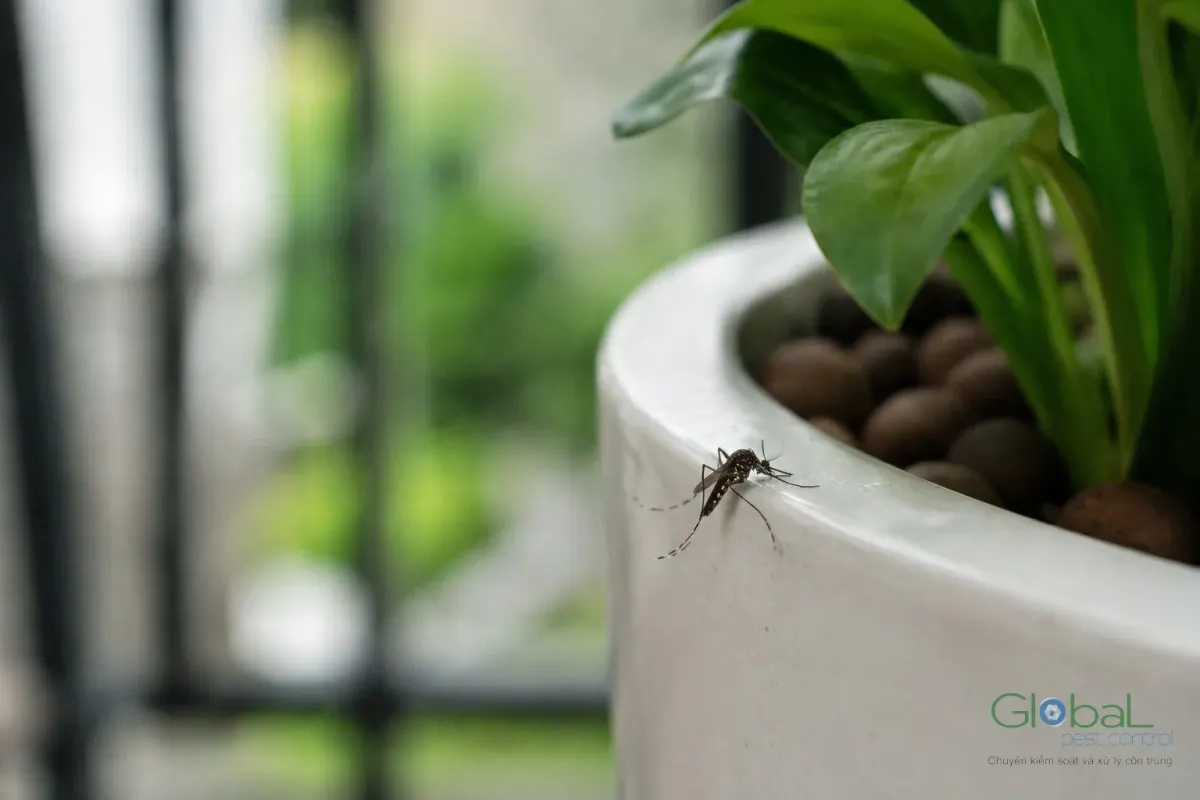
The mosquitoes biting your customers at dusk are mostly Aedes, and Aedes breeds in small, clean, still water — not in canals, not in drains that flow, and not in the river. It needs about seven days and a container the size of a saucer.
On a typical restaurant frontage the productive sites are: plant saucers under decorative pots, the hollow base of a parasol stand, a blocked drainage channel along the frontage, the tray under an outdoor fridge or ice chest, folded awning fabric, discarded cups in a planter, and the gap between stacked crates in the bin area. Five to eight complete breeding sites, all within a few steps, all of them emptiable.
What fogging does and does not do
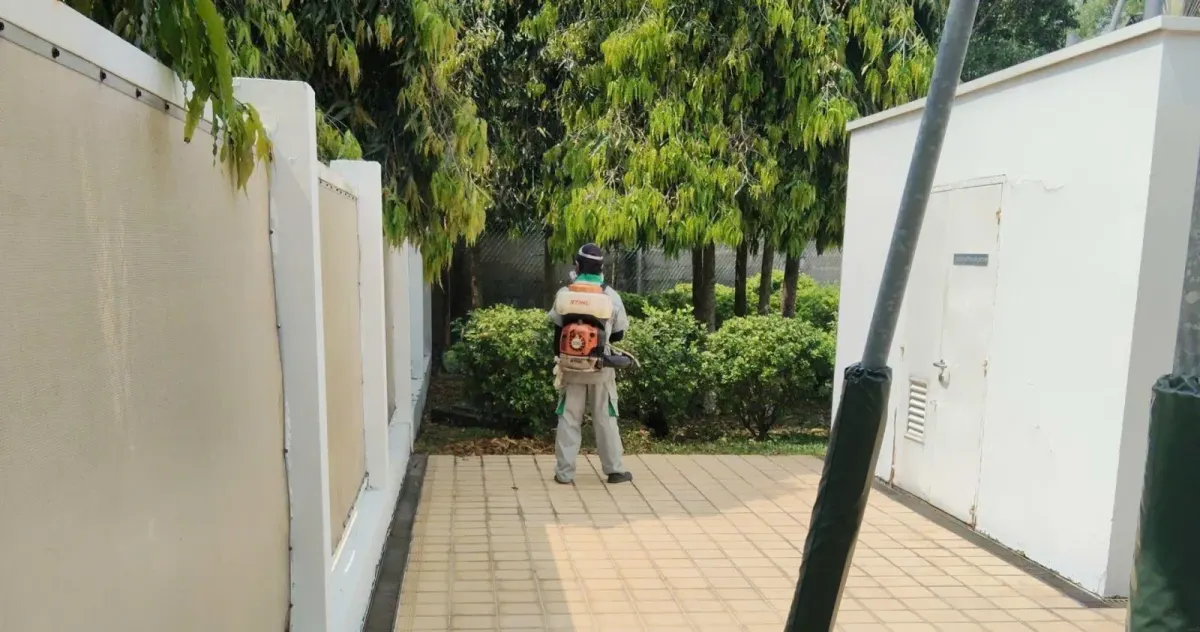
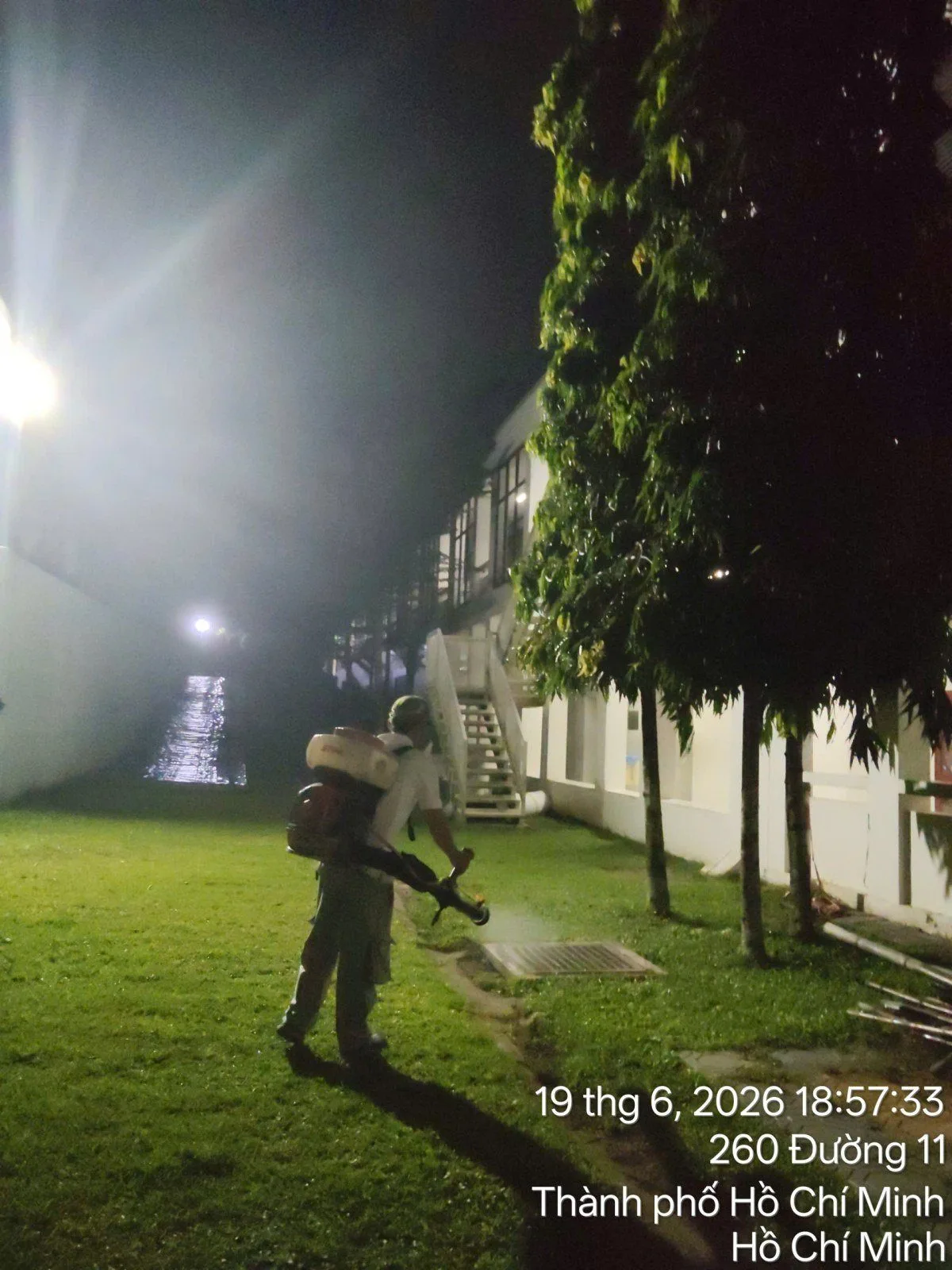
A fog kills the adults present at that moment. It leaves no meaningful residue outdoors, it does not touch larvae, and by the following evening a new cohort has emerged from the same containers. Fogged nightly it becomes an expensive way of buying one evening at a time.
There is one situation where it is exactly right: an hour before a specific event when you need the terrace clear tonight. Understood that way it is a useful tool. Sold as a monthly programme, it is a recurring cost with no compounding benefit.
The weekly ten minutes that does work
- Tip every plant saucer, or fill them with sand so they hold moisture for the plant without holding standing water.
- Drill a drainage hole in parasol bases and any hollow furniture leg that collects rain.
- Lift the frontage drainage channel cover, clear it, and check it actually falls.
- Empty and invert anything that held water — buckets, crates, ice chests — at close rather than in the morning.
- Check the awning after rain; folded fabric holds a surprising volume in the crease.
Treating the resting sites, which is the part worth paying for
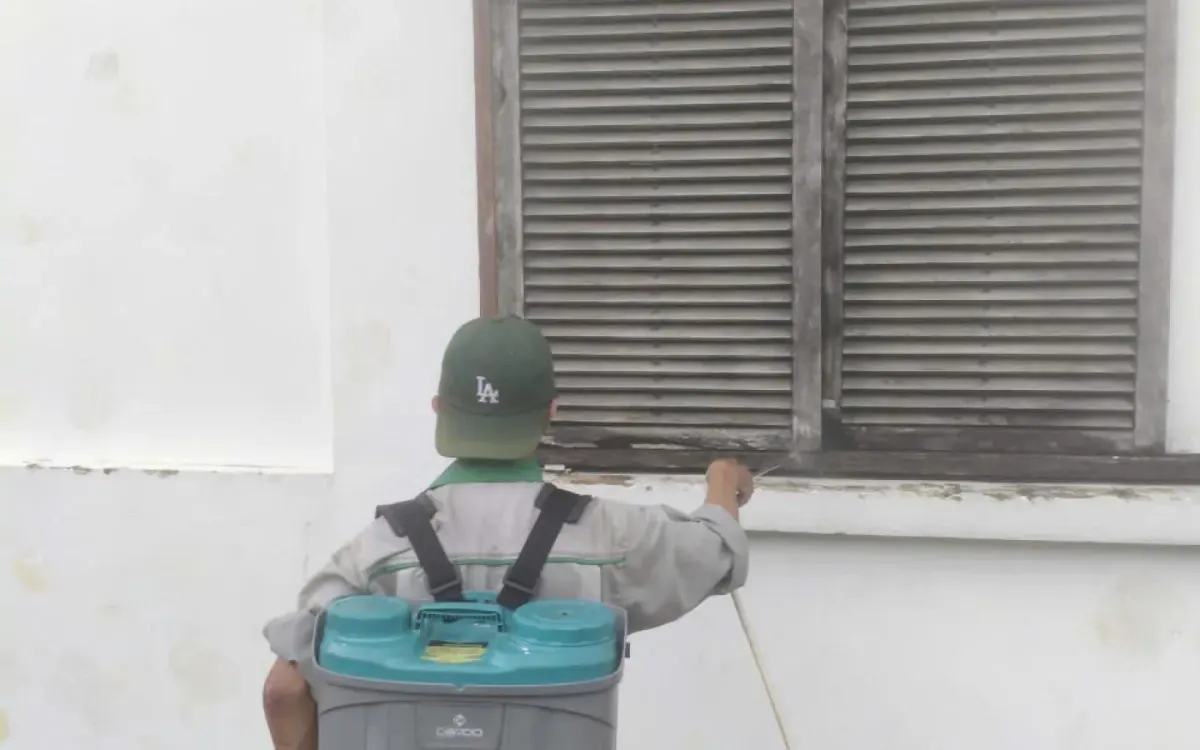
Adult mosquitoes spend the daylight hours resting in dense, shaded vegetation and on shaded vertical surfaces — the underside of hedging, the inside of a planter mass, the shaded wall behind the seating. A residual treatment applied to those specific surfaces, rather than fogged into the air, holds for weeks and reduces the number of adults that reach your customers at dusk.
That is the difference between a mosquito programme and mosquito fogging, and it is worth asking any contractor which one they are quoting for. Our approach is set out in how pest treatment works, and the breeding-site list in where mosquitoes actually breed.

The seasonal shape
Pressure rises from May and peaks around June to September, then falls through November. The useful consequence is that the preparation work — clearing channels, drilling drainage holes, sorting the planters — belongs in March and April, before the rains, not in July when you are already losing the terrace. See the pest year in Ho Chi Minh City.
What to tell customers
Repellent on tables reads as a considerate touch rather than an admission, and it works. Standing fans aimed low across the seating are genuinely effective because mosquitoes are weak fliers and stay near the ground. Both are cheap, and both are more use than a citronella candle, which has a demonstrable effect only within about half a metre.
Semi-enclosed terraces are a different case
A terrace with a roof, side screens or heavy planting on two sides behaves less like an outdoor space and more like a room. That is good news: a residual treatment on the shaded vertical surfaces holds far better than in the open, and a fan or two moves enough air to make the area unattractive to weak-flying insects. It is also the one outdoor situation where a carbon-dioxide trap is worth considering, because there is enough enclosure for it to compete with your customers as an attractant.
The trade-off is drainage. A covered terrace usually has a channel that receives roof runoff and then sits still between storms, which turns the most sheltered part of the seating into the most productive breeding site on the premises. Lift that cover monthly.
Related reading
For the frontage as a whole, see pest control for cafés and bakeries; for the species, see mosquitoes and rainy season pest control. Our parent company's Vietnamese-language mosquito programme for restaurants covers the same work.
Global Pest Control is the English-language arm of Khử Trùng Toàn Cầu, based in Thu Duc City.
Common questions
Our neighbours have standing water and will not deal with it. What can we do?
Treat your own resting sites and defend your boundary — a residual application to hedging and shaded surfaces on your side reduces what reaches the seating even when the source is next door. A dated report identifying the neighbouring source is also worth having if the matter ever goes to the building or the ward.
Do mosquito lamps and zappers help on a terrace?
Very little for Aedes. Electric zappers attract and kill mostly harmless night-flying insects, and carbon-dioxide traps work best in enclosed spaces rather than open frontages. Fans and treated resting sites give a far better return for the same money.
Is fogging safe with customers nearby?
It should never be done with customers present, and any contractor willing to do so is a reason to change contractor. Fogging is done before opening or after closing, with food and utensils covered and surfaces wiped afterwards.