What to Tell the Technician When They Arrive
A technician arriving at an apartment has no history. They can survey the property and they will find most of what is there, but you have been living in it and you know things a survey cannot recover: what time it happens, which room it started in, what changed recently.
Five minutes of that at the door does more for the outcome than any amount of extra product, and most people spend those five minutes apologising for the washing up.
The four things worth saying
- What you saw, with a photograph. Identification decides method, and a picture ends the question in seconds.
- Where, precisely. Not "the kitchen" but "on the wall behind the kettle, and once under the sink".
- When. Time of day and how long it has been going on. Afternoon ant trails and 11pm cockroach sightings mean different things.
- What changed. New neighbours, a renovation next door, a delivery of furniture, a trip away, a new pet.
That last one matters more than people expect
A very large share of residential problems have an event behind them, and the event is usually visible in hindsight. Construction next door displaces rodents. A neighbour\x27s treatment pushes cockroaches through a shared wall. A second-hand sofa arrives. A family returns from six weeks away.
None of that shows up in a survey. All of it changes what a technician looks for first.
What to have ready
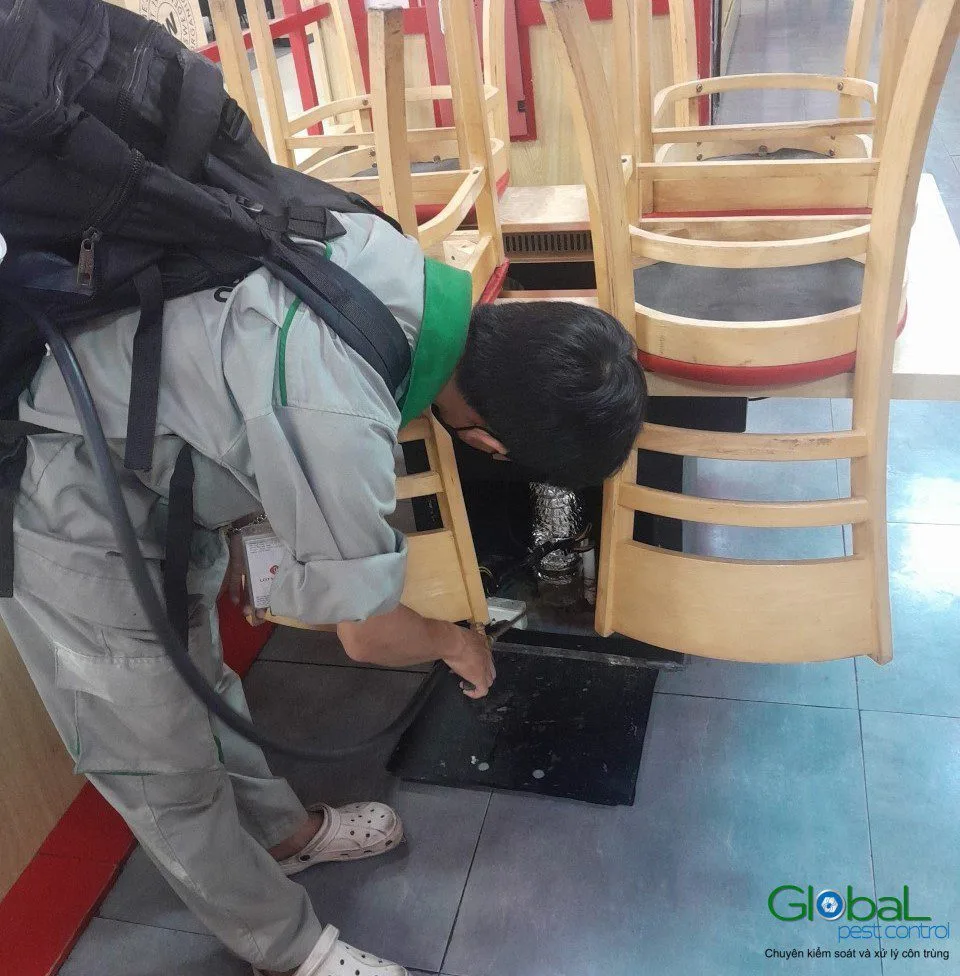
- Access to the space under the kitchen sink — cleared, not just unlocked.
- The ability to move the fridge and washing machine, or permission for us to.
- Any previous report, from us or from anybody else.
- Anyone in the household who has seen it, particularly a housekeeper, present if possible.
What not to do before the visit
Do not spray anything, do not deep clean the affected area, and do not clear away droppings or dead insects. All three feel like being helpful and all three destroy information. A repellent aerosol also scatters the population and leaves residue that stops bait working, which can add a fortnight to the job.
Cleaning the rest of the apartment is fine and welcome. It is specifically the evidence and the surfaces where treatment will go that should be left alone.
It is also worth saying what you have already tried. A household that has been using a supermarket spray for a month is in a different position from one that has done nothing, because the residue changes where bait can be placed and the scattering changes where the population now sits. Nobody will criticise you for it — it is the normal first response — but a technician who does not know will place bait on a surface that has been sprayed and it will simply be avoided.
Questions worth asking while they are there
Ask what species it is and how they know. Ask what is being applied and where. Ask what the re-entry period is for each room. Ask what you should expect to see over the next two weeks, because with bait the honest answer is often that activity increases first, and knowing that in advance prevents a worried phone call on day three.
Ask whether a follow-up visit is needed and whether it is included. That is the question that most often reveals a difference between two quotations.
Tell them about the household, not just the pest
Children, pregnancy, asthma, a cat, a fish tank, a bird, a housekeeper with a key, someone who works nights. Every one of those changes something about method, timing or aftercare, and none of them is visible from the doorway. A fish tank in particular matters, because pumps need to be switched off and the tank covered before anything is applied in that room.
Related reading
The visit itself is described in what happens during a pest control visit, and afterwards in before and after a treatment. For the language, see describing a problem in Vietnamese. The report is explained in understanding a service report. Our parent company runs the same visits in Vietnamese through its residential programme.
Global Pest Control is the English-language arm of Khử Trùng Toàn Cầu. We take the briefing in English and do the work in Vietnamese.
Common questions
I have not seen anything for a week. Should I cancel?
No, and this is worth saying because it happens often. Most species here are cryptic and go quiet for days at a time, particularly after weather changes, so a quiet week says very little. Keep the appointment and mention the quiet period — it is itself useful information.
Do I need to be there for the whole visit?
For the first fifteen minutes ideally, so the briefing happens with the person who has the information. After that a housekeeper or a family member is fine. For a follow-up visit, often nobody needs to be present beyond someone with a key, since the technician already knows the property.
How long does a normal apartment visit take?
Between forty minutes and two hours depending on the species and the size, and a visit that takes fifteen minutes has not moved the fridge. Most of a good visit is spent on the floor with a torch rather than spraying, which surprises people who expect to see continuous activity.