Understanding a Vietnamese Service Report
At the end of a visit somebody hands you a sheet of paper to sign. In Vietnamese it is a phiếu dịch vụ or biên bản nghiệm thu, and most customers sign it without reading it because it is in Vietnamese and the technician is standing there waiting.
It is worth reading, for two reasons: it is the only durable record of what was actually done, and for a business it is the document an auditor will ask for.
The fields you will see
- Khách hàng — customer. Địa chỉ — address. Ngày — date. Giờ — time.
- Đối tượng xử lý — target species. This should name the species, not just say côn trùng.
- Khu vực xử lý — areas treated, listed room by room.
- Phương pháp — method: phun spray, gel bả gel bait, bột dust, bẫy traps.
- Hóa chất sử dụng — products used, ideally with the active ingredient and concentration.
- Ghi nhận / Tình trạng — findings and current condition.
- Khuyến nghị — recommendations for the customer.
- Lần kế tiếp — next scheduled visit. Ký tên — signatures.
The three fields that carry the value
Findings, products and recommendations. A report that lists only the areas treated tells you somebody attended; it does not tell you what they saw or why they chose what they did.
Findings are what makes a series of reports useful over time. Three consecutive reports recording activity in the same corner of a store room is a trend, and a trend is what changes a programme. Reports that say đã xử lý — treated — and nothing else cannot produce a trend, which is why so many files look thick and prove nothing.
What an auditor looks for
For a food business under HACCP, BRC, ISO 22000 or a customer audit, the report is one of the primary documents. Auditors check that findings are recorded even when nothing was found, that recommendations have a corresponding action recorded somewhere, and that the dates form an unbroken series without gaps.
A gap of three months in an otherwise monthly series is a question you will have to answer, and the honest answer — the visit did not happen — is worse than a report saying nothing was found.
Signing it
Your signature normally confirms the visit took place and the areas were accessed, not that you accept the findings or that the problem is resolved. If you disagree with something, write the disagreement on the sheet before signing rather than declining to sign, and photograph it. A note in the customer\x27s handwriting on a service report is a strong document later.
What to do with it afterwards
Keep them together and in date order, in one place. For a household that means a folder in your email; for a business it means a physical or digital file that somebody owns. The most common failure we see at commercial sites is not missing reports but reports distributed across three people\x27s inboxes, which is functionally the same as not having them.
Photograph paper reports on the day. Paper in a Ho Chi Minh City kitchen has a short life.
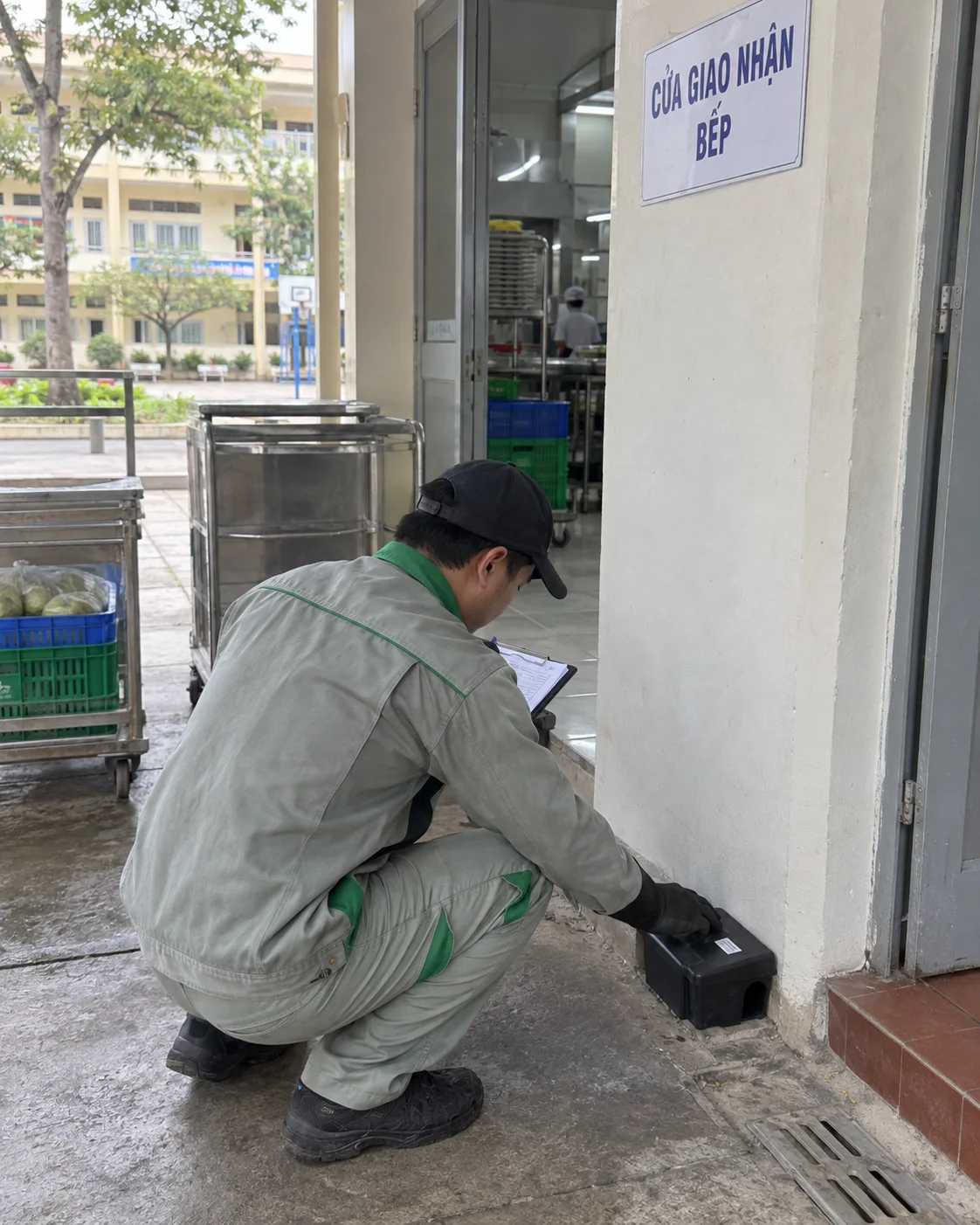
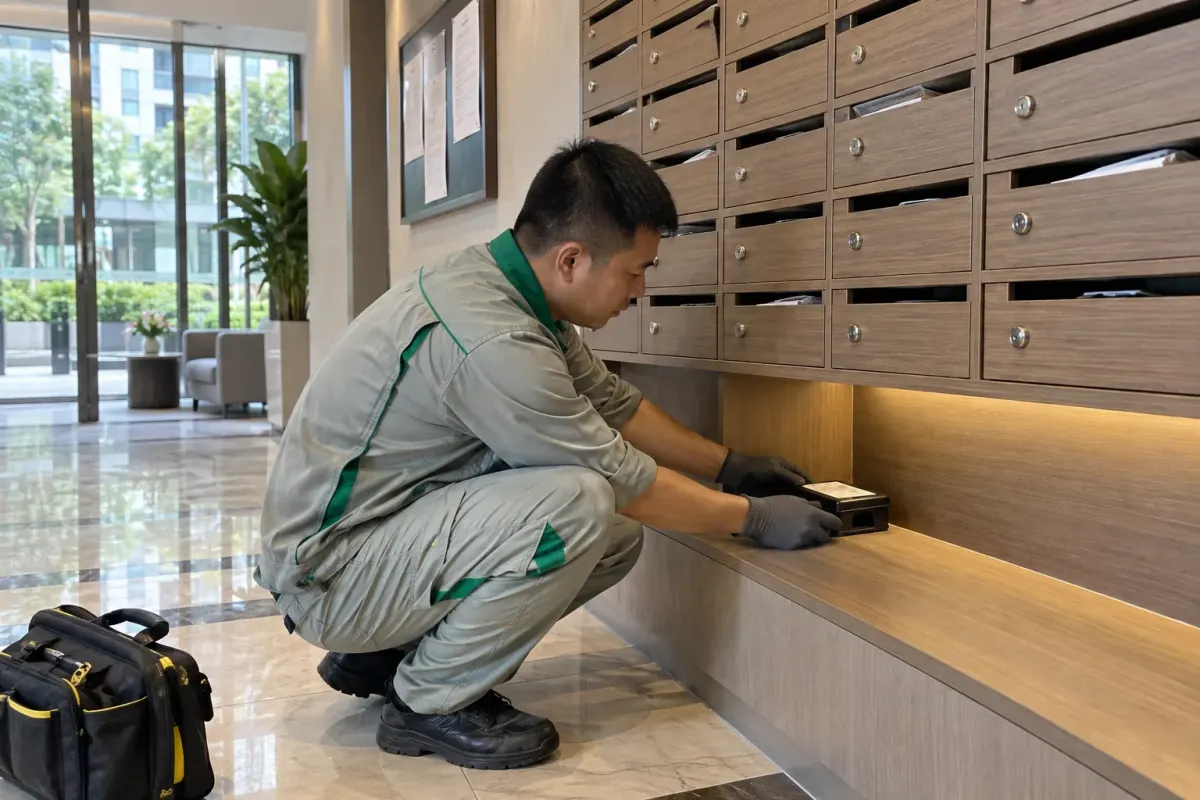
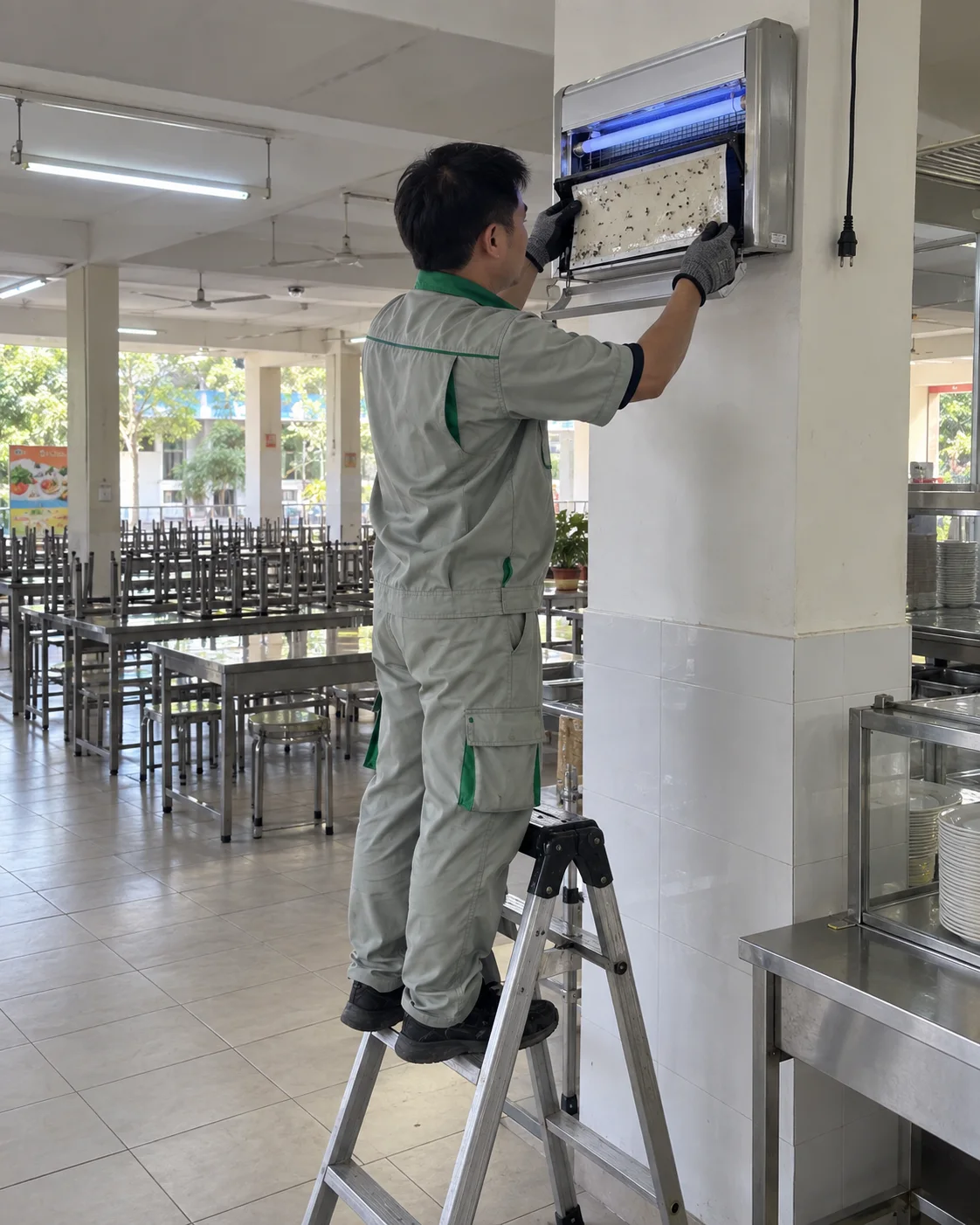
One field deserves particular attention on a commercial report: the device or station numbers. A site with numbered bait stations and insect light traps should have those numbers on the report with a condition against each, and that list should match the site plan on the wall. Where the numbers on the report and the numbers on the plan disagree, an auditor will find it, and the finding will be about the whole system rather than about one station.
When the report is only in Vietnamese
That is the norm here, and for a foreign-managed business it creates a real problem at audit time, because the auditor may be reading it in English and the manager cannot summarise it confidently. The straightforward answer is to ask the contractor for a bilingual template. It costs them nothing after the first time, and any established company will agree — we issue ours in both languages on the same sheet for exactly this reason.
Related reading
The vocabulary is in our glossary. For building a file see building a pest management file and trend data. Audit preparation is covered in the food safety audit file, and corrective actions in corrective actions. Our parent company issues the Vietnamese originals through its commercial programme.
Global Pest Control is the English-language arm of Khử Trùng Toàn Cầu, based in Thu Duc City.
Common questions
The report says "đã xử lý" and nothing else. Is that acceptable?
It is common and it is not adequate, particularly for a business. Ask for findings to be recorded at every visit including nil findings, because a report that only records action taken cannot show a trend and therefore cannot demonstrate that the programme is working. Most contractors will adjust their template if asked once.
Should I keep reports after the contract ends?
Yes. For a food business, keep at least two years and preferably three, because an audit may look back further than the current contract. When changing provider, ask for the complete historical file in writing before the final visit, since it becomes much harder to obtain afterwards.
Can I ask for the report in English?
Yes, and the practical request is a bilingual sheet rather than a translation, so the Vietnamese technician and the English-reading manager are signing the same document. Any established contractor here can do this, and a company that refuses is telling you something about how flexible the rest of the relationship will be.