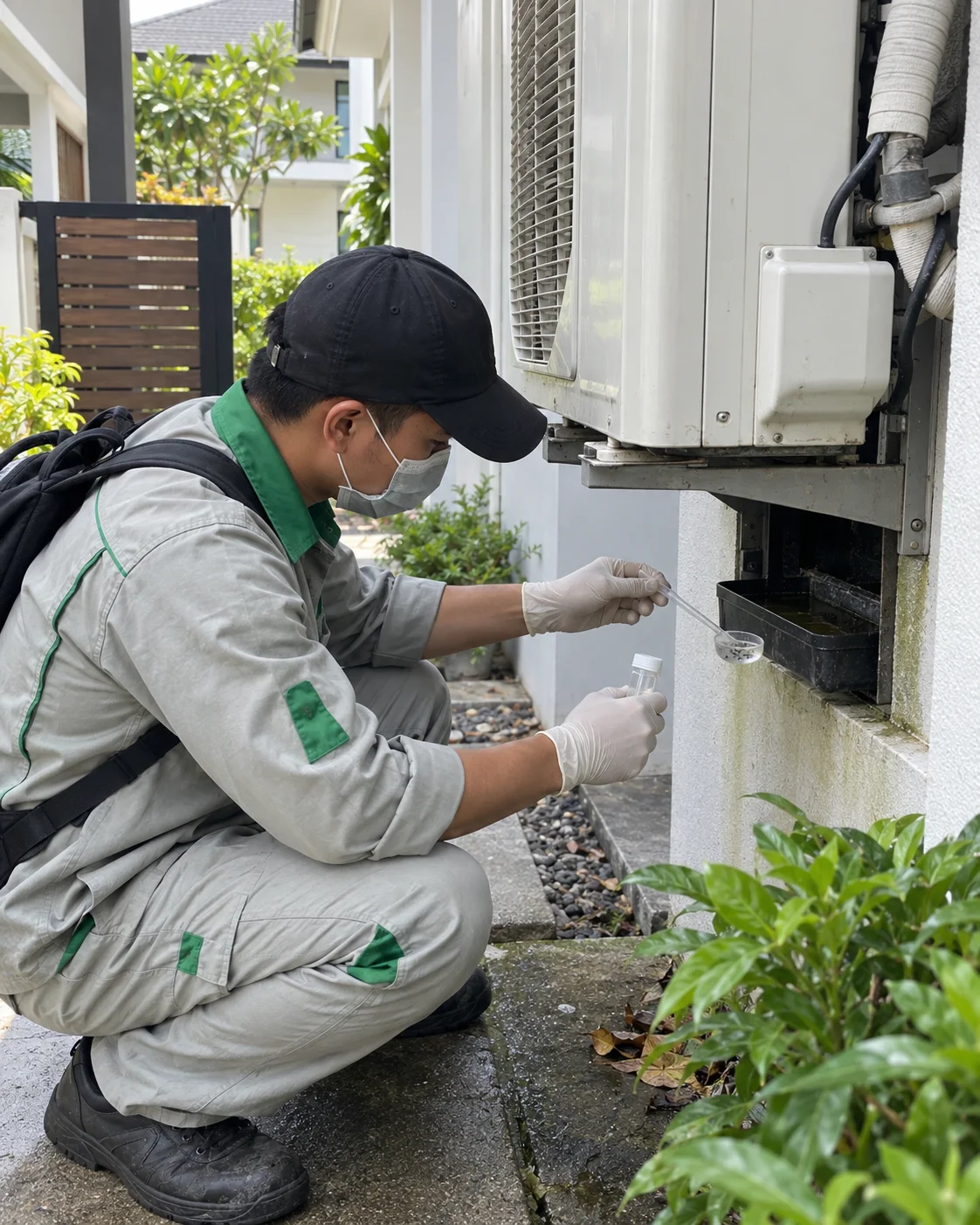
Insecticidal Dust: The Method You Never See
Ask most people what pest control involves and they say spraying. Ask a technician which method they would keep if they could only keep one for cockroaches in a building, and a good number would say dust.
It is invisible, it lasts far longer than anything applied to a surface, and in a home with small children it is frequently the lowest-exposure option available. It is also barely marketed, because nothing visible happens.
What it is
A very fine dry powder carrying an active ingredient — commonly a pyrethroid, a desiccant such as diatomaceous earth or silica, or boric acid — applied with a hand bulb or a powered duster into an enclosed space. The target is not a surface anyone uses; it is the inside of a void.
An insect walking through the deposit picks up particles on its cuticle, and either absorbs the active ingredient or, in the case of desiccants, loses water through the damaged waxy layer and dies of dehydration.
Why it lasts
A residual spray on a kitchen skirting is exposed to cleaning, humidity, sunlight through a window and foot traffic, and in practice its useful life is measured in weeks. A dust inside a sealed wall void experiences none of those. In a dry enclosed space it remains effective for months and frequently for years.
That is the whole argument. The same active ingredient placed where nothing can degrade it does far more work than the same amount placed where everything can.
Where it goes
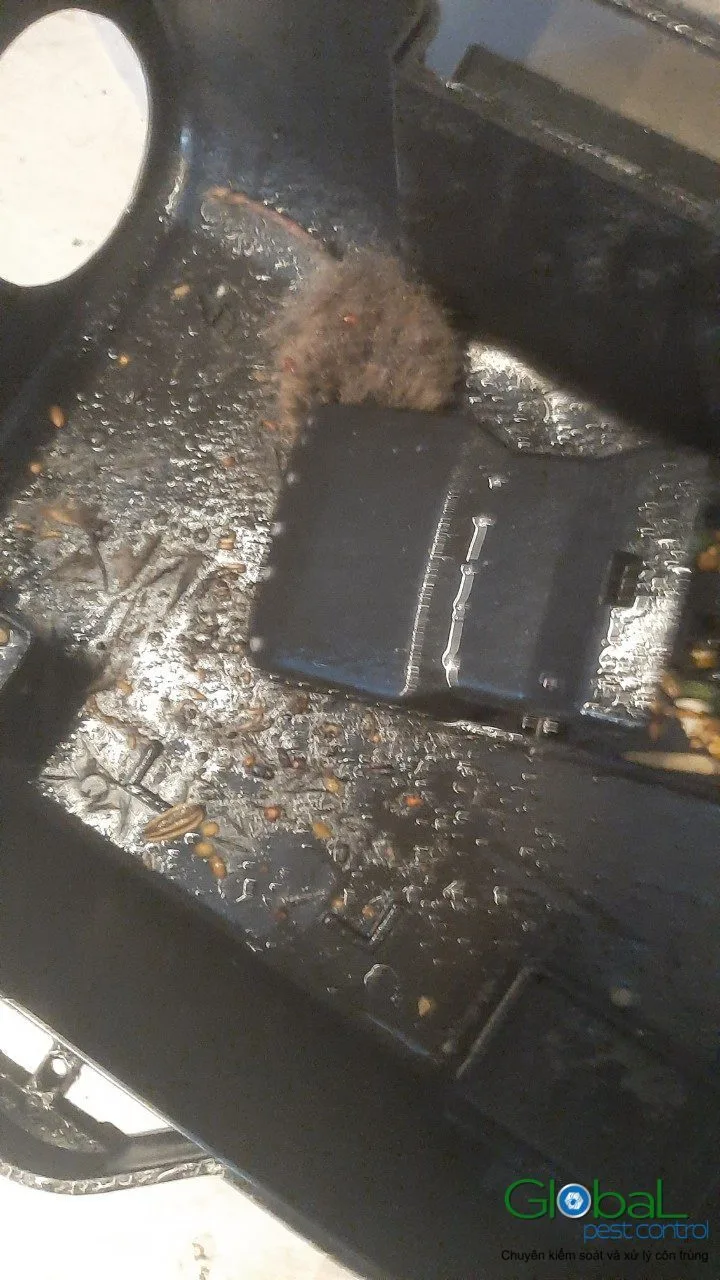
- The kitchen plinth void beneath base units.
- Behind fitted wardrobes and inside pipe boxing.
- Wall voids, through an existing gap, which is then sealed.
- Electrical back boxes and switch plates, where the power is isolated first.
- Ceiling voids and riser shafts in commercial buildings.
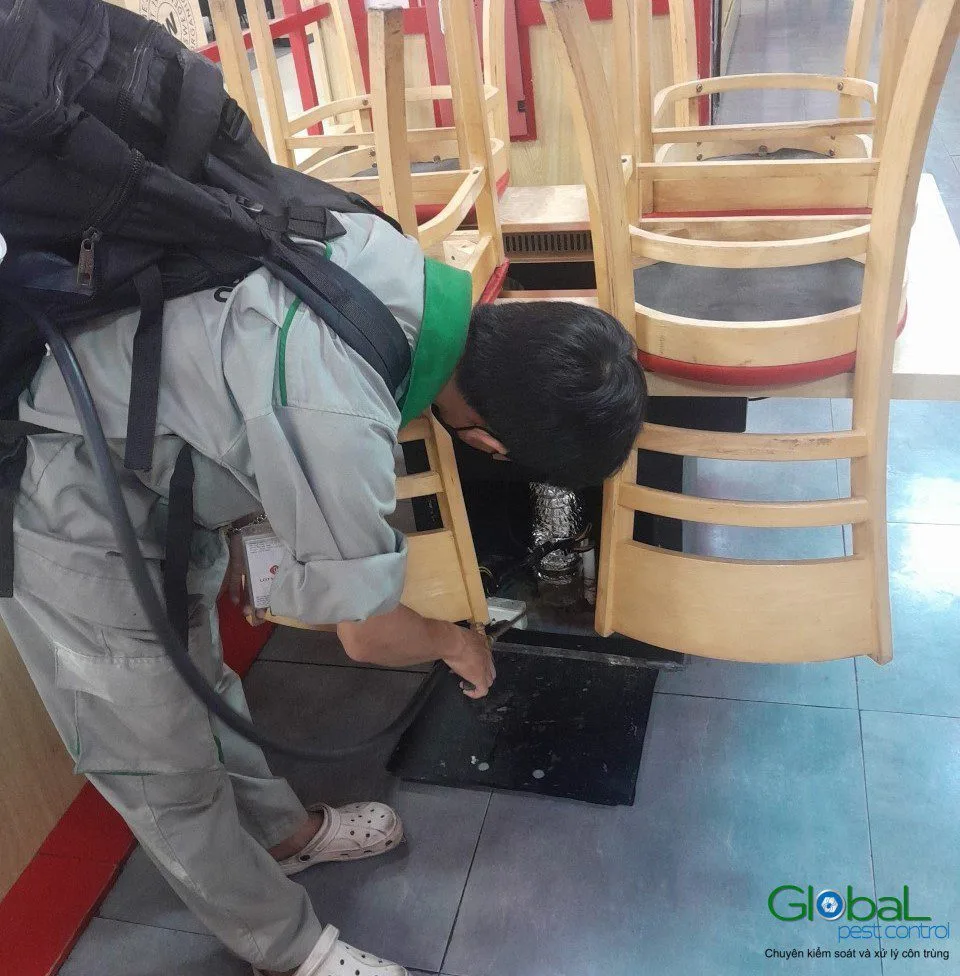
- Under and behind fixed equipment in kitchens, where liquid would simply bind to grease.
Why less is more
The commonest mistake with dust, including by professionals, is applying too much. A visible layer of powder is repellent — insects walk around it — and it also blocks the very gaps you were trying to treat. The correct application is a barely perceptible film, which requires a proper duster and some restraint.
This is also why buying a tub of powder and pouring it behind the fridge rarely works. The material is right and the application is wrong.
Safety, honestly stated
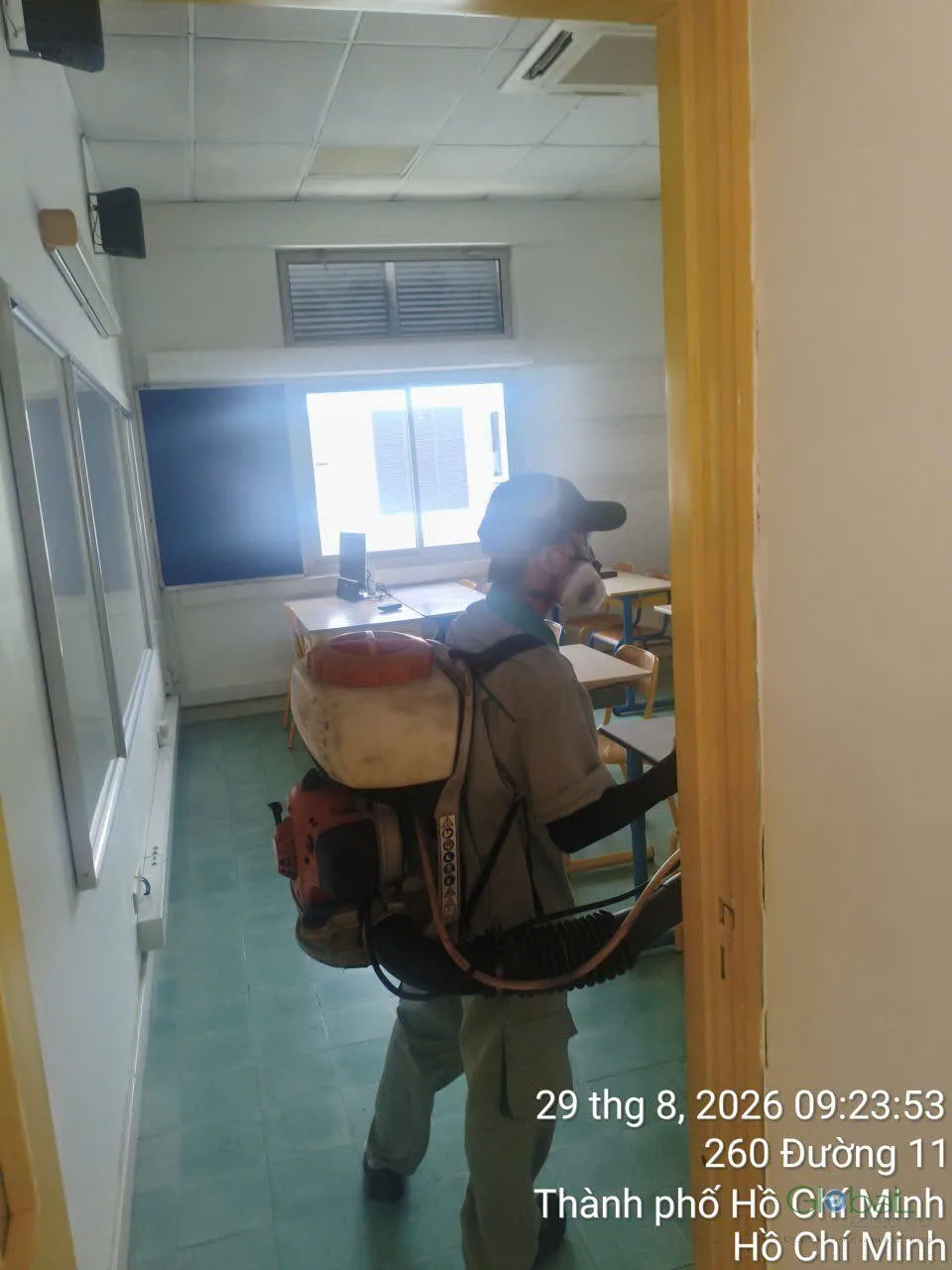
Dust is not inherently safer than any other formulation as a substance. What makes it the low-exposure option in practice is placement: inside a closed void, there is no accessible residue, nothing to touch, and nothing on a food-contact surface. In a nursery or a home with a crawling child, that is a genuinely different exposure profile from a residual applied to a skirting board.
What matters is that it stays where it was put. Dust applied loosely, or into a void that connects to a room through an open gap, can become airborne, and that is not acceptable in an occupied space. Correct application includes sealing afterwards where necessary.
Dust is also the method that survives a change of occupant. A residual sprayed on a kitchen skirting is gone within a month of somebody cleaning it properly; a dust placed inside the plinth void is still there when the next tenant arrives, which for a landlord with a recurring problem across tenancies is a considerable advantage. It is one of the few treatments worth thinking about in terms of years rather than weeks.
Where it does not fit
Damp voids, because moisture clumps the powder and it stops moving. Open surfaces, for obvious reasons. Air-handling spaces where it could enter a ventilation path. And anywhere the insect will not walk — dust only works where the target actually travels, so it depends entirely on knowing the harbourage rather than guessing at it.
Related reading
The voids themselves are described in skirting boards and hidden gaps and ceiling voids. Compare with why we rarely fog a home and baiting versus killing. For homes with children see safety with children and pets. Our parent company uses the same methods on its cockroach programme for homes.
Global Pest Control is the English-language arm of Khử Trùng Toàn Cầu, based in Thu Duc City.
Common questions
Is boric acid the same thing?
Boric acid is one of the active ingredients used in dust form, and it is slow-acting, cheap and effective against cockroaches when applied thinly in the right place. It is not harmless — it should not be accessible to children or pets — and the common domestic failure is applying a visible layer on an open floor, which is both ineffective and the one placement that creates exposure.
Can I apply dust myself?
You can buy it, and the two things that decide the outcome are placement and quantity. Get a proper hand duster rather than shaking it from the tub, apply until the surface looks barely dusted rather than white, and put it only into voids that are closed to the room. If a void opens into a room where a child crawls, leave it to somebody with a duster that can reach further in.
How long before it works?
Slower than a spray and that is expected: typically several days to two weeks for a noticeable reduction, because it depends on insects walking through it and returning to harbourage. Judging it at day three is the usual mistake. What you are buying is duration rather than speed.