Subterranean and Drywood Termites in Southern Vietnam
Termite treatment in southern Vietnam divides along one line, and almost every decision follows from it: does the colony live in the soil and travel to the wood, or does it live entirely inside the wood?
Subterranean termites do the first, drywood termites the second. They are treated differently, they cost differently, and they leave different evidence.
Subterranean termites, the ones that matter most
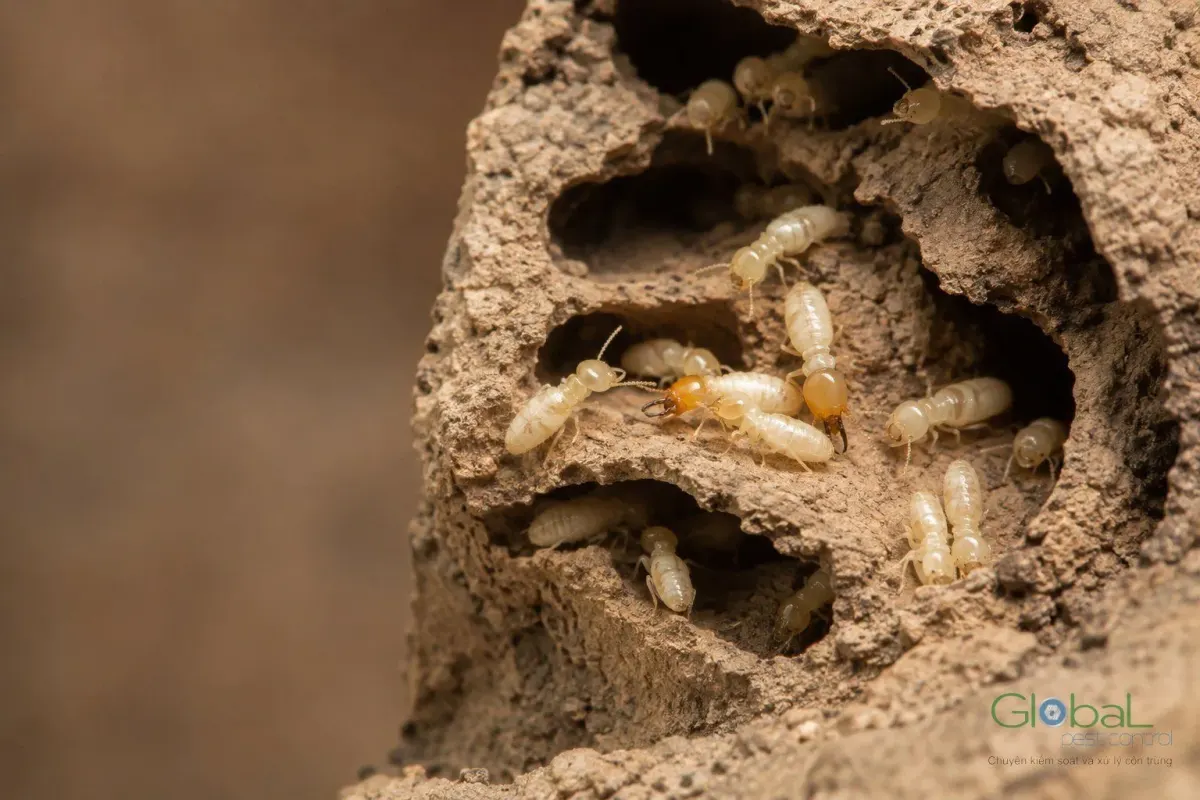
These are the dominant structural pest here, with Coptotermes species the most significant. The colony lives in soil, often at some distance from the building, and workers travel to and from the timber they are consuming.
They need moisture and they avoid open air, so they build mud tubes — pencil-width earthen tunnels — across any surface they must cross. Those tubes are the most visible sign they produce and the most commonly walked past.
Why soil contact is the whole story
Because the colony must maintain a connection to soil moisture, anything that breaks or treats that connection controls them. This is why treatment is a soil barrier or a baiting system rather than something applied to the wood, and why a house on the ground is at risk in a way that an apartment on floor eleven is not.
It is also why the highest-value preventive measures are structural: no timber in contact with soil, no soil or mulch piled above the damp-proof course, and no planting pressed against an external wall.
Drywood termites
These live entirely inside the timber, need no soil contact and no external moisture, and can therefore infest furniture, roof timbers, door frames and imported items with no connection to the ground at all.
They are far less common here than subterranean species and they produce a distinctive sign: small, hard, six-sided faecal pellets, often described as looking like coarse sand or coffee grounds, pushed out through tiny holes and accumulating below.
Telling the evidence apart
- Mud tubes on a wall or foundation — subterranean, essentially always.
- Small hard hexagonal pellets in a pile — drywood.
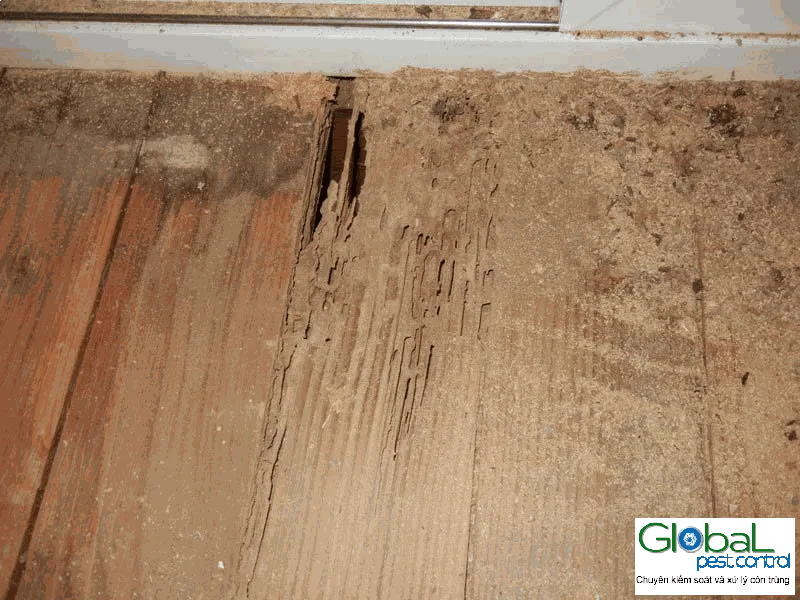
- Damage with soil and mud packed into the galleries — subterranean.
- Clean galleries inside a piece of furniture with no soil — drywood.
- Damage in a high-floor apartment with no ground contact — drywood, or an imported item.
What treatment looks like for each
For subterranean termites: in a building already in use, bait stations where the termites are active, checked over 7 to 14 days, then a transfer product the workers carry back to the colony, with a fine dust applied to the mud tubes. For new construction, treatment of the foundation surface at 3–5 litres per square metre before the slab is poured. Both aim at the colony rather than at the visible damage, which is why the timeline is measured in weeks to months.
For drywood termites: local treatment of the infested item, or for a piece of furniture, removing it, and we will tell you when replacing it is cheaper. We do not drill, inject or fumigate.
Prevention versus treatment
Vietnamese practice distinguishes clearly between phòng mối, prevention, and diệt mối, treatment of an existing colony, and they are separate jobs at separate prices. Prevention is a barrier applied during construction or renovation, governed by TCVN 7958:2017; treatment deals with a colony already present.
A quotation that blurs the two is worth querying, because the scope, the price and the warranty are all different.
What to do if you suspect either
Do not disturb the evidence. A mud tube broken open tells a technician whether the colony is currently active, and a swept-up pile of pellets tells nobody anything. Do not spray, because a repellent product diverts a subterranean colony to another route into the same building and removes the trail that would have led to it.
Photograph, then arrange an inspection. For ground-contact property in southern Vietnam this is one of the few situations where acting quickly genuinely saves money, because the damage continues quietly while the decision is being made.
Related reading
See mud tubes, the swarming season and our termite guide. For wood damage that is not termites, carpenter ants and wood. Our parent company covers termites in Vietnamese, including TCVN 7958:2017, at its termite programme.
Global Pest Control is the English-language arm of Khử Trùng Toàn Cầu, based in Thu Duc City.
Common questions
I am on the twelfth floor. Can I have termites?
Subterranean termites, effectively no, because they require a maintained connection to soil. Drywood termites in a piece of furniture, yes, and that is the usual explanation when damage appears in a high apartment. The item is the problem rather than the building, which makes it a much smaller job.
How long does a subterranean treatment take to work?
A liquid barrier begins working as soon as workers cross it and colony effects follow over weeks. A baiting system typically takes weeks rather than days to bring the colony down, because the material has to be carried back and distributed. Neither produces a dramatic visible result on the day, which is worth knowing before you judge it.
Is a termite warranty worth anything?
It depends entirely on what it covers. A warranty that covers re-treatment if activity returns is common and reasonable. A warranty that covers repair of new damage is rarer and considerably more valuable. Read which one you are being offered, and check what inspection obligations it places on you, since most are void if the annual inspection is skipped.