Mud Tubes: The Sign Most People Walk Past
On the outside of a boundary wall, up the side of a pillar, along the edge of a foundation, or behind a stack of stored items in a garage: a thin, irregular line of dried earth, perhaps five to ten millimetres wide, adhering to the surface.
Most people who see one assume it is dirt, a water stain or the mark of something that brushed the wall. It is a covered road, and it is the clearest evidence of subterranean termite activity that a building produces.
Why they build them
Subterranean termites lose water rapidly in open air and are vulnerable to predators, particularly ants. Rather than crossing an exposed surface, they construct a tunnel of soil, saliva and faecal material and travel inside it, maintaining the humidity they need.
So a tube is not decoration or a by-product. It is infrastructure, built because the colony needs to reach something on the other side of an exposed surface — which means the tube points at what they are eating.
Where to look
The junction where a wall meets the ground, inside and out. The face of a concrete pillar or pier. Inside a crawl space or a service void. Behind stored items in a garage or store room. On the outside of a boundary wall where it meets a garden bed.
Also worth checking: the back of a wardrobe standing against an external wall, the underside of a staircase, and any point where a plumbing or electrical service enters the building below ground level.
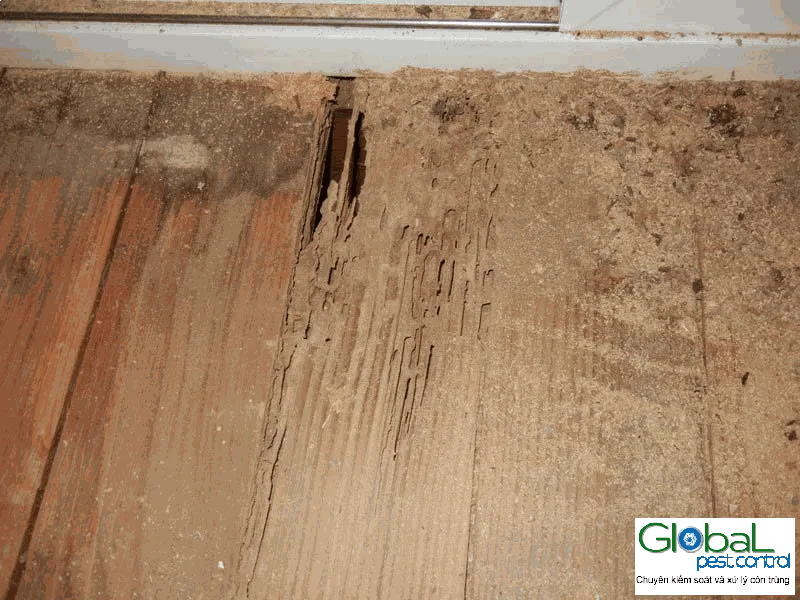
The four types
- Working tubes — the common kind, running between soil and timber, in continuous use.
- Exploratory tubes — extending upward from soil and stopping in mid-air, built while searching. Often abandoned.
- Drop tubes — suspended from timber down toward soil, indicating the colony has established in the wood above.
- Swarm tubes — temporary structures built for a nuptial flight, usually seen around April or May and then abandoned.
How to test whether it is active
Break a short section — one or two centimetres — out of the middle of the tube, and leave the rest intact. Note the date.
If the colony is active, the gap will be repaired within one to three days, sometimes within hours. If it is still open after a week, that section is not currently in use, which does not prove the colony is gone but does tell you that route is inactive.
What not to do
Do not remove the whole tube. It is the map, and a technician can follow it to the entry point and often to the general direction of the colony. Removing it makes the inspection substantially harder and delays the diagnosis.
Do not spray it. A repellent product applied to a tube diverts the colony to another route into the same building, which means the damage continues in a place nobody is now looking. Modern treatment relies on the termites continuing to use their routes, not on blocking them.
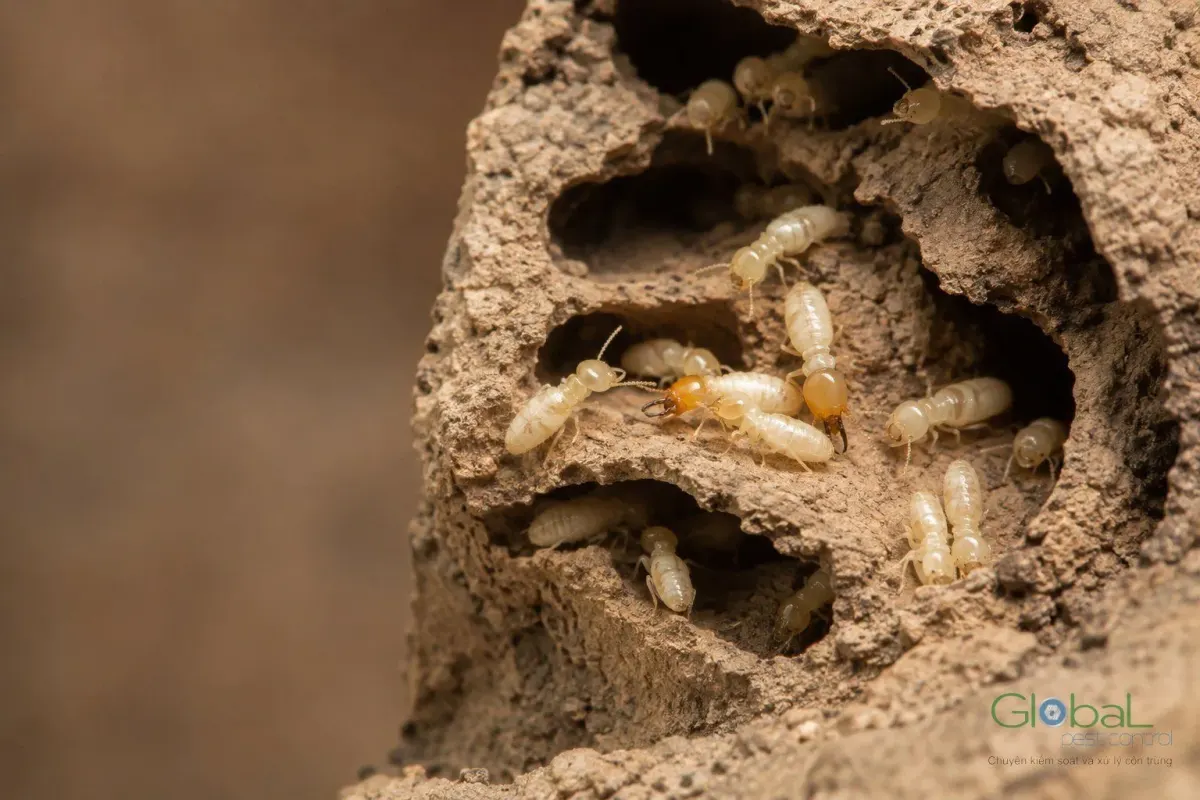
What a tube means about timing
Tubes do not appear early. By the time a colony is building covered roads across a visible surface, it has been foraging in that area for a considerable period, and there is usually damage somewhere that is not yet visible.
That is the argument for treating a discovered tube as urgent rather than as something to mention at the next opportunity. Nothing about it is an emergency in the sense of danger; it is urgent in the sense that every month of delay is more timber.
When there are no tubes and there is still termite activity
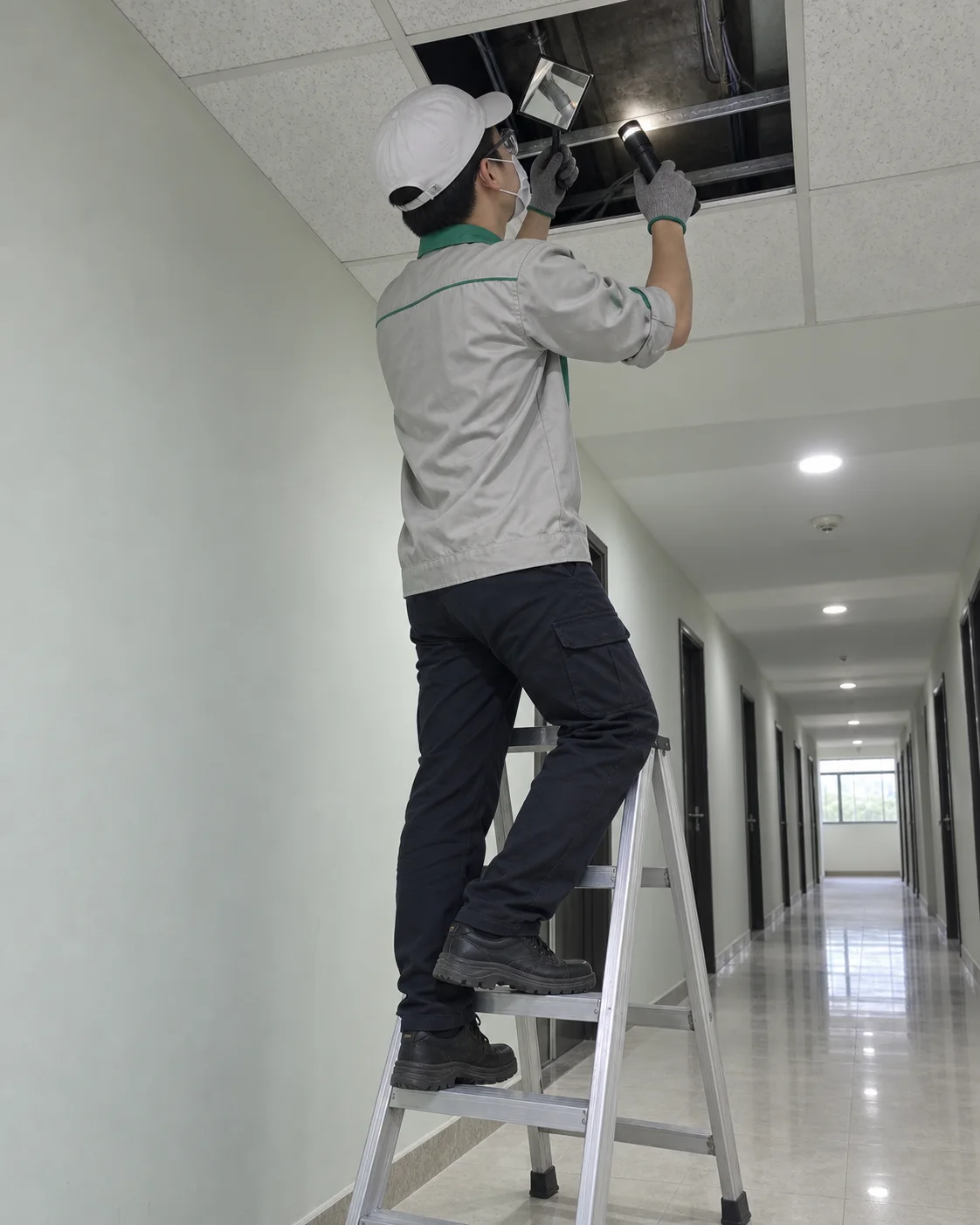
Tubes are built to cross exposed surfaces. Where a colony has a concealed route — a gap in a slab, a service penetration, a cavity wall, timber in direct soil contact — no tube is needed and none will be built. The absence of tubes is therefore not evidence of absence, which is why an inspection involves tapping timber and using a moisture meter rather than only looking at walls.
Related reading
See subterranean and drywood termites, the swarming season and our termite guide. For the property side, villas and compounds and insurance and pest damage. Our parent company covers the signs in Vietnamese at its termite programme for homes.
Global Pest Control is the English-language arm of Khử Trùng Toàn Cầu, based in Thu Duc City.
Common questions
I found a tube but no damage anywhere. Is that possible?
Common, in fact. Damage happens inside timber and the surface often remains intact until very late, so a building can have substantial internal damage with nothing visible. That is exactly why the tube matters — it is frequently the only external sign there is, months or years before anything else appears.
Can I seal the wall to stop them?
Not usefully. A colony that cannot use one route builds another, and sealing a visible tube usually just relocates the entry to somewhere concealed. Control comes from treating the soil the colony must cross or from baiting the colony itself, both of which depend on the termites continuing to forage normally.
The tube is on my neighbour\x27s wall. Whose problem is it?
The colony is in the soil and does not respect a boundary, so in practice it is both. A treatment on one side of a wall while the other is untreated gives a partial result. It is worth raising with the neighbour directly, and a joint treatment is usually cheaper for both than two separate ones.