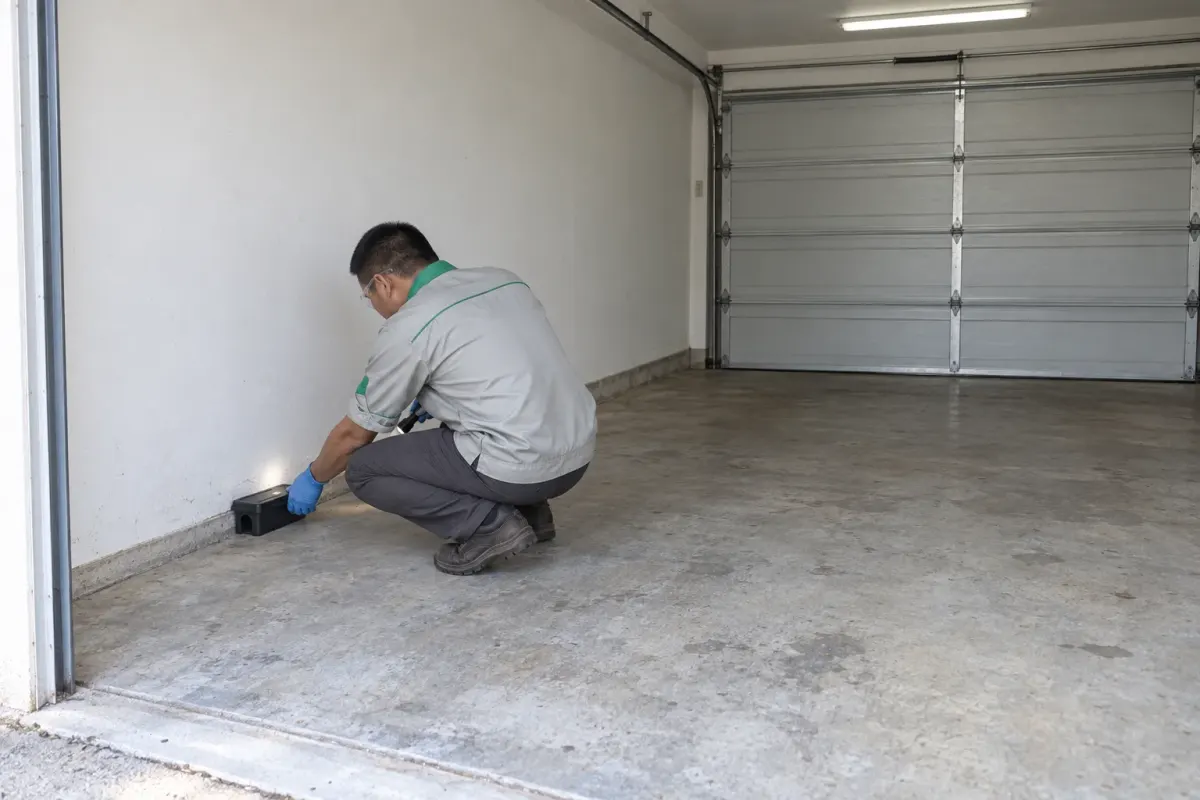
Skirting Boards, Plinths and the Gaps You Cannot See
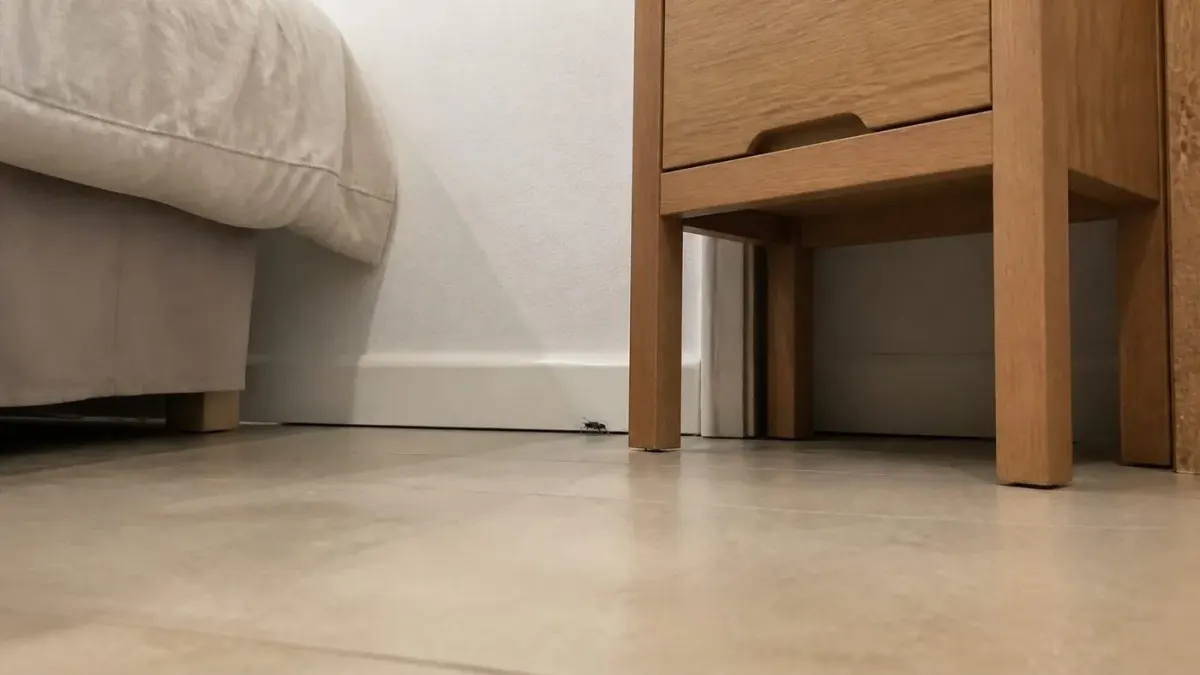
Buildings are not made to fit exactly. A tiled floor stops a few millimetres short of the plaster, a kitchen carcass stands on a frame that is set back from the door line, a door architrave covers a packed-out gap. Every one of those is closed with trim rather than with material, and behind the trim is a void.
Those voids are where the insects you see at night spend the day. That is why treating the floor achieves so little and why the phrase you will hear from any competent technician is "crack and crevice".
Harbourage is the target, not the sighting
A cockroach you see crossing a kitchen floor at 23:00 is foraging. It spends perhaps five per cent of its life doing that and the rest pressed into a gap of two to five millimetres, in contact with a surface on both sides, which is the condition the species actively seeks.
So the useful question when planning a treatment is never "where do you see them" — it is "where is the nearest place they can be touching two surfaces at once". Those two answers are often several metres apart, and treating the first one is the reason so many one-off treatments fail.
The gaps that matter in a Vietnamese apartment
- The kitchen plinth void beneath base units — continuous, warm, dark, and directly under the food preparation area.
- The skirting gap, especially at internal corners and where it meets a door frame.
- Behind and beneath fitted wardrobes, which are usually built against the wall with no back panel.
- The tile-to-wall junction in bathrooms, where grout has cracked.
- Around pipe boxing, which is almost always hollow and rarely sealed at the top or bottom.
Why dust is the right product here
Insecticidal dust is the method most people have never heard of and the one that fits this situation best. It is applied as a fine layer into a void where nothing will disturb it, it does not degrade the way a surface residual does, it remains effective for months to years in a dry enclosed space, and an insect walking through it picks it up on the cuticle and carries it back.
It is also invisible once applied and is nowhere anyone will touch, which is exactly why it suits homes with children better than the alternatives that look gentler.
What sealing does and does not achieve
Sealing a gap after treatment is genuinely valuable, because it removes the harbourage permanently rather than treating it repeatedly. Sealing it before treatment traps a population inside and pushes the foraging elsewhere, which is why we always treat first and seal second.
Silicone is fine for a wet junction, but for structural gaps a hard filler or a foam-and-sealant combination lasts longer. Anything soft enough to be chewed is not a rodent seal, whatever it does for insects.
The renovation opportunity
If you are having a kitchen fitted or a floor relaid, the two requests worth making are a sealed and coved plinth rather than a clip-on trim with an open void behind it, and full sealing at the tile-to-wall junction rather than a bead of silicone over a gap. Neither adds meaningfully to the cost during the work, and both remove a permanent harbourage from the room for the life of the fit-out.
What this means for how a visit looks
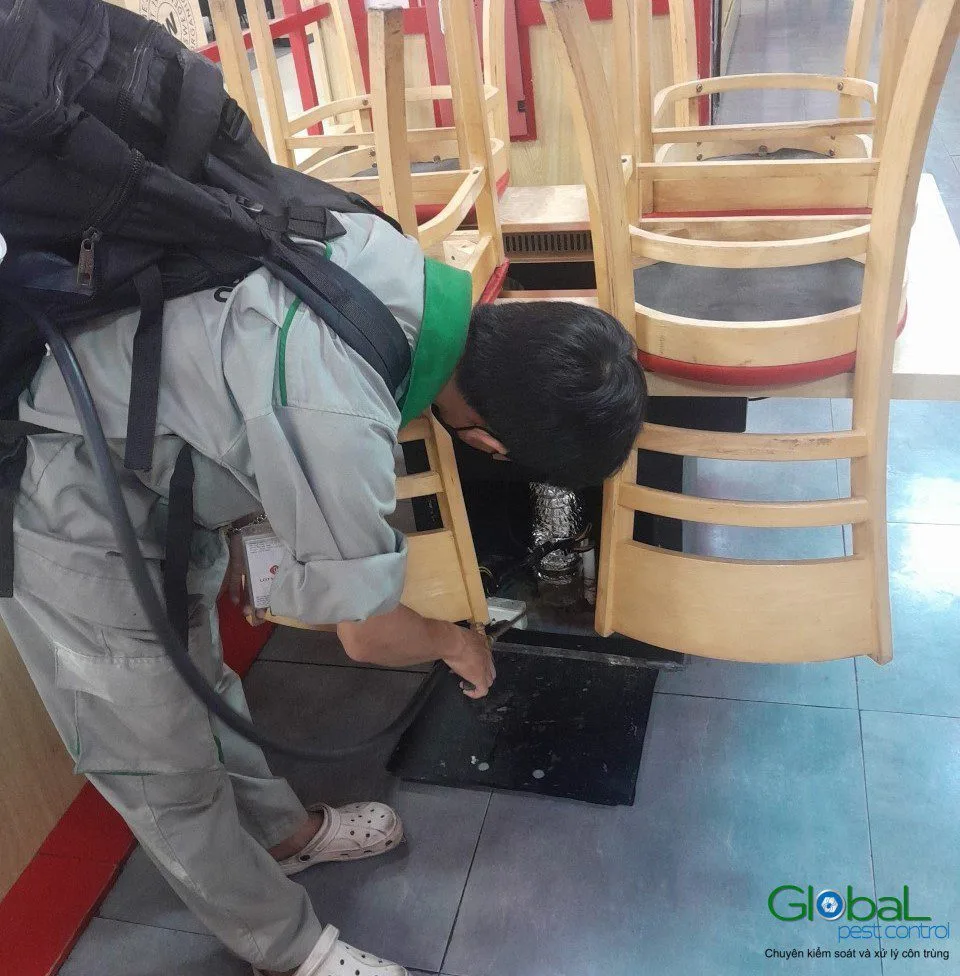
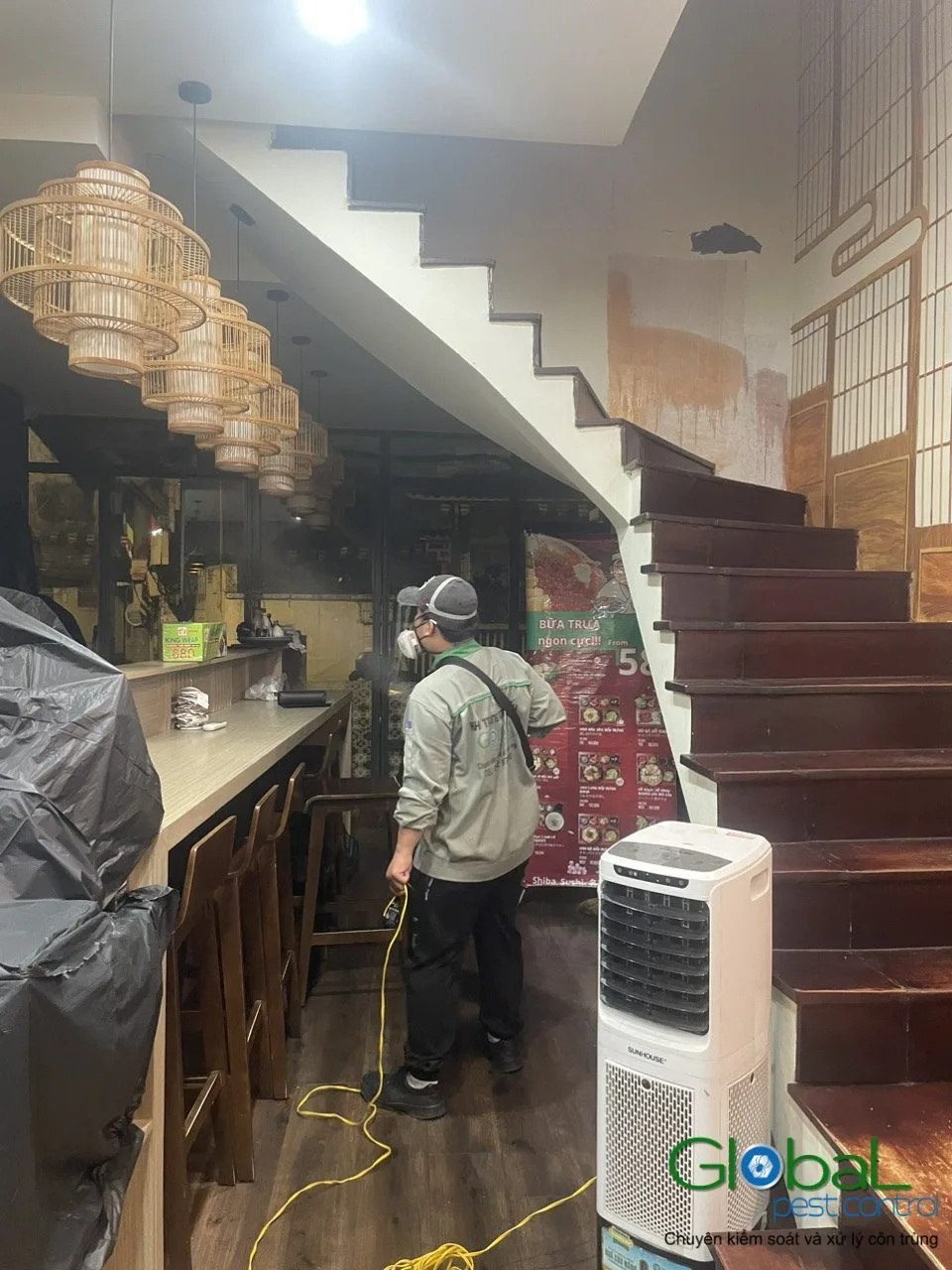
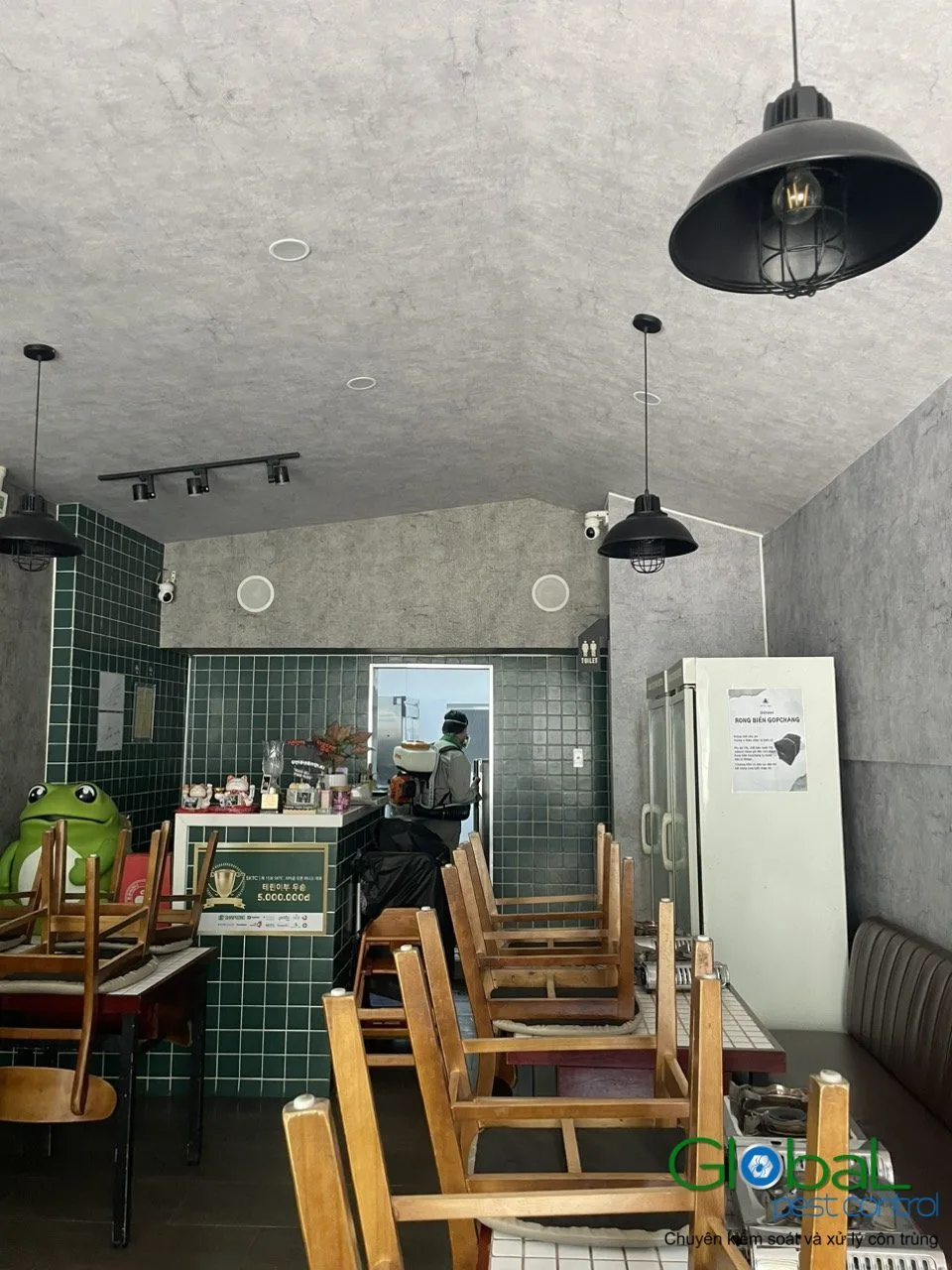
A treatment that consists of someone walking through the apartment with a sprayer, applying to open floors and skirting faces, is treating the ninety-five per cent of the environment where nothing lives. A treatment where the technician spends most of the visit on their knees with a torch, an applicator and a dust bulb looks slower, produces almost nothing visible, and is the one that works.
Related reading
The kitchen version is in the kitchen sink cabinet, and the commercial equivalent in chiller and freezer plinths. For the method see insecticidal dust and how pest treatment works. Proofing is covered in physical proofing. Our parent company runs the Vietnamese-language cockroach programme for homes.
Global Pest Control is the English-language arm of Khử Trùng Toàn Cầu, based in Thu Duc City.
Common questions
Should I fill every gap in the apartment myself?
Not before a treatment, and not all at once. Seal the gaps in wet areas and around pipe penetrations, which are entry points rather than harbourage, and leave the internal voids until after any treatment so that what is inside them has been dealt with first. Sealing a harbourage with a live population inside simply relocates the foraging.
Is dust safe to use in a home with a toddler?
It is placed inside voids that are closed to the room — behind a plinth, inside boxing, under a fitted unit — so there is no accessible residue, which is precisely why we prefer it in homes with small children over a surface treatment they could touch. What we would not do is apply it to any open surface or anywhere it could become airborne.
How long does a dust treatment last?
In a dry, undisturbed void, months and often longer, because there is nothing to degrade it — no sunlight, no cleaning, no moisture. That is the main advantage over a surface residual, which in a kitchen is effectively gone within weeks because the surface gets wiped.