Your First Month in a Vietnamese Apartment
You have the keys, the boxes are in the hallway, and the last thing on your mind is insects. That is exactly the right moment to spend twenty minutes on this, because the apartment is empty, you can see every wall and floor junction, and nothing has been decided yet.
What follows is the list we would work through ourselves. It is short, none of it costs anything, and it prevents most of what people telephone us about in month three.
One: find every floor drain and fill it
Vietnamese bathrooms, kitchens and service balconies have floor drains. Each has a water trap that stops sewer gas and sewer insects coming back up, and each trap dries out in this heat within a week or two of disuse. An apartment that has stood empty between tenancies has dry traps in every room.
Pour half a litre of water down each one today, and again in any room you do not use often. If a drain smells within a day of being filled, the trap is damaged rather than dry, and that is worth reporting to the landlord in your first week while goodwill is high.
Two: look under the sink
Open the cabinet under the kitchen sink and look at where the waste pipe passes through the back panel or the floor. In most apartments there is an oversized hole around that pipe. It is warm, dark, damp and next to food, and it is the most reliable cockroach harbourage in a Vietnamese home.
A tube of silicone and ten minutes closes it. Check the same detail under the bathroom basin and behind the washing machine.
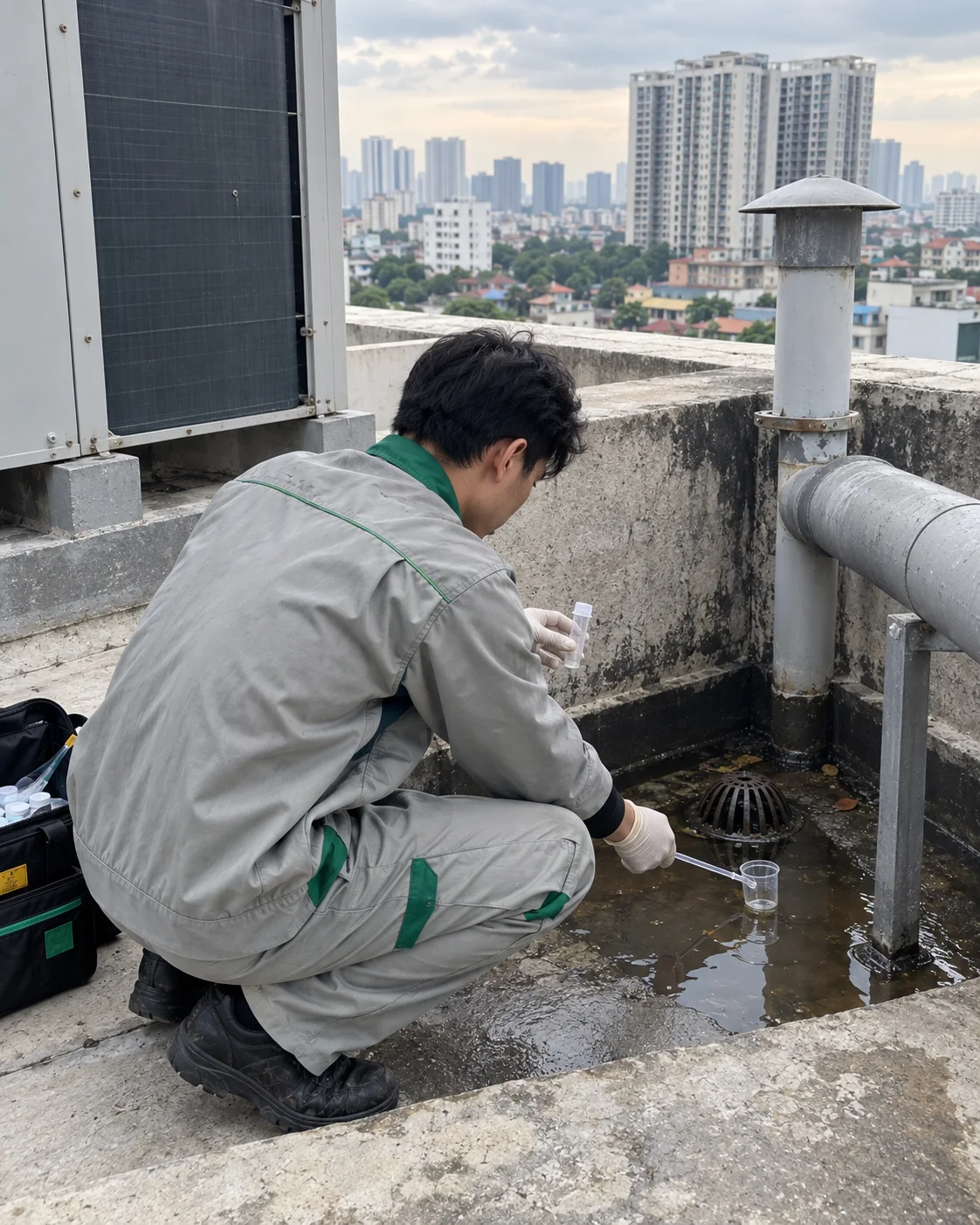
Three: check the balcony for standing water
Empty and wipe any saucer under a plant pot, tip out any bucket, and look at the tray under the air-conditioning outdoor unit. The mosquito species that matters in this city breeds in small volumes of clean water and completes a generation in about a week, so a saucer left from the previous tenant is a working nursery two metres from your door.
Wiping matters as well as emptying, because the eggs are laid on the container wall above the water line and survive drying.
Four: decide where food will live before you unpack it
Rice, flour, cereal, pet food and anything in a paper or thin plastic bag should go into rigid containers with gasket lids on the day you unpack, not eventually. Stored product pests arrive inside packaging from the shop rather than entering from the building, so this is the one category of problem you can prevent entirely at the point of purchase.
While you are still empty, look at these
- The gap under the front door. Anything above about 6 mm is worth a brush strip.
- Window screens — present, intact, and actually closing.
- The wall penetration behind the air-conditioner, usually visible above the indoor unit.
- Any sign the previous tenant had a problem: bait gel dots in cabinet corners, monitor traps left behind, a fresh painted patch of skirting.
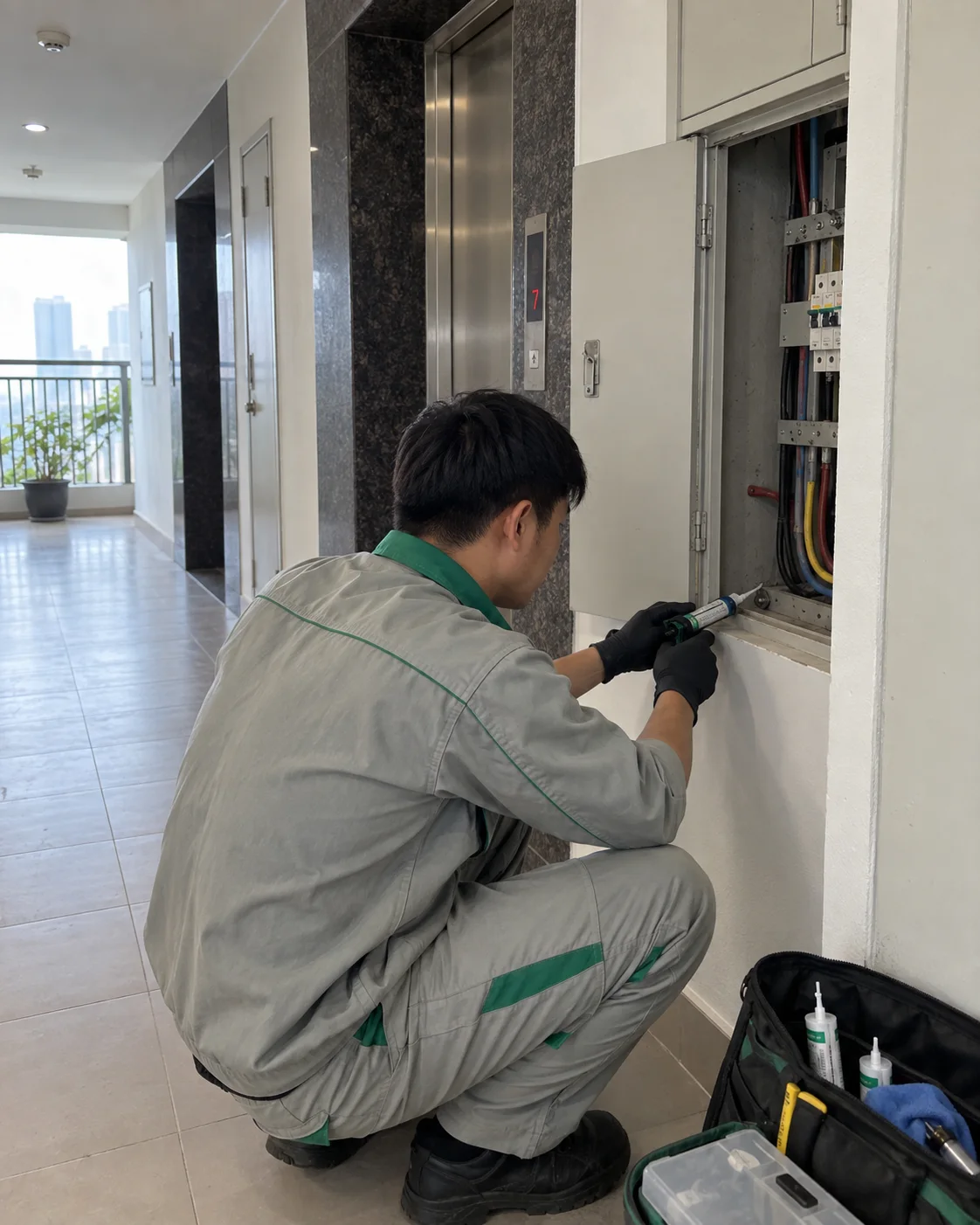
What is worth reporting to the landlord now
Anything structural, in writing, in the first fortnight. A damaged drain trap, a door that does not close, a missing screen, a gap where a pipe enters a wall. Photograph each one and send them in a single message. The point is not to be difficult; it is that a defect recorded at handover is a landlord repair, and the identical defect raised in month nine is a discussion about your deposit.
Vietnamese leases rarely say anything specific about pest control, which is why the written record of the condition at handover carries so much of the weight.
What not to do in your first week
Do not book a treatment before you have lived in the apartment. An empty flat gives you almost no information, and a preventive spray on clean empty surfaces achieves very little. Live in it for two or three weeks, note what you actually see and where, and then a treatment can be aimed at something real. The exception is if you find evidence at handover — droppings, egg cases, a smell from a drain that will not clear — in which case deal with it before the furniture arrives, because it will never be this easy again.
Related reading
Before you sign, see the pre-move-in inspection checklist and who pays, landlord or tenant. For the two rooms that matter most, the kitchen sink cabinet and bathroom floor traps. General context is in renting and moving in Ho Chi Minh City. Our parent company handles the Vietnamese side through its residential programme.
Global Pest Control is the English-language arm of Khử Trùng Toàn Cầu, based in Thu Duc City. We survey in English and report in English.
Common questions
The agent said the apartment was treated before handover. Should I believe it?
Ask for the report, not the assurance. A genuine treatment produces a dated document naming the company, the areas treated and the products used, and any real contractor will supply it within a day. If nobody can produce one, assume nothing was done and treat the flat as untreated — which is not a disaster, just a fact to plan around.
I have seen one cockroach in three weeks. Do I need a treatment?
Probably not yet. A single large brown cockroach in a bathroom is usually a visitor from the drainage system, and the answer is the water trap rather than a treatment. Small pale-brown ones in the kitchen, particularly more than one, are a different species and a different answer — those are worth acting on early because the population grows quickly.
Is it worth paying for a treatment before my furniture arrives?
Only if you found evidence at handover. When you did, this is genuinely the best moment there will ever be: the rooms are empty, every junction is reachable, and no possessions need moving. When you did not, the money is better spent later on a visit that has something specific to address.