Older Concrete Buildings and Their Hidden Voids
A building constructed in the 1970s or 1980s in Ho Chi Minh City has had forty years of alterations: rewiring, replumbing, air-conditioning added, partitions moved, kitchens refitted, telecoms cabling threaded through, and units subdivided.
Every one of those left an opening somewhere, and almost none of them are on a drawing. That accumulation is what makes an older building behave differently from a new one.
The voids nobody has a drawing for
Boxing built around pipework and then built around again. Old service routes abandoned in place when new ones were installed. Chases cut into walls and plastered over with the gap left inside. Suspended ceilings installed below earlier suspended ceilings.
These spaces are continuous, warm, dark and completely unreachable, and they are the reason a treatment in an older building often produces a good result that does not last — the population retreats into a space nobody knows exists.
Drainage of a certain age
Cast iron and early plastic drainage in buildings of this era is frequently cracked, poorly jointed, or has been repaired in ways that left gaps. Floor traps may have been installed without an effective water seal, or replaced with fittings that do not hold one.
Persistent phorid fly problems, recurring cockroach activity in wet rooms, and smells that return within a day of the trap being filled all point at drainage integrity rather than at anything a treatment will fix.
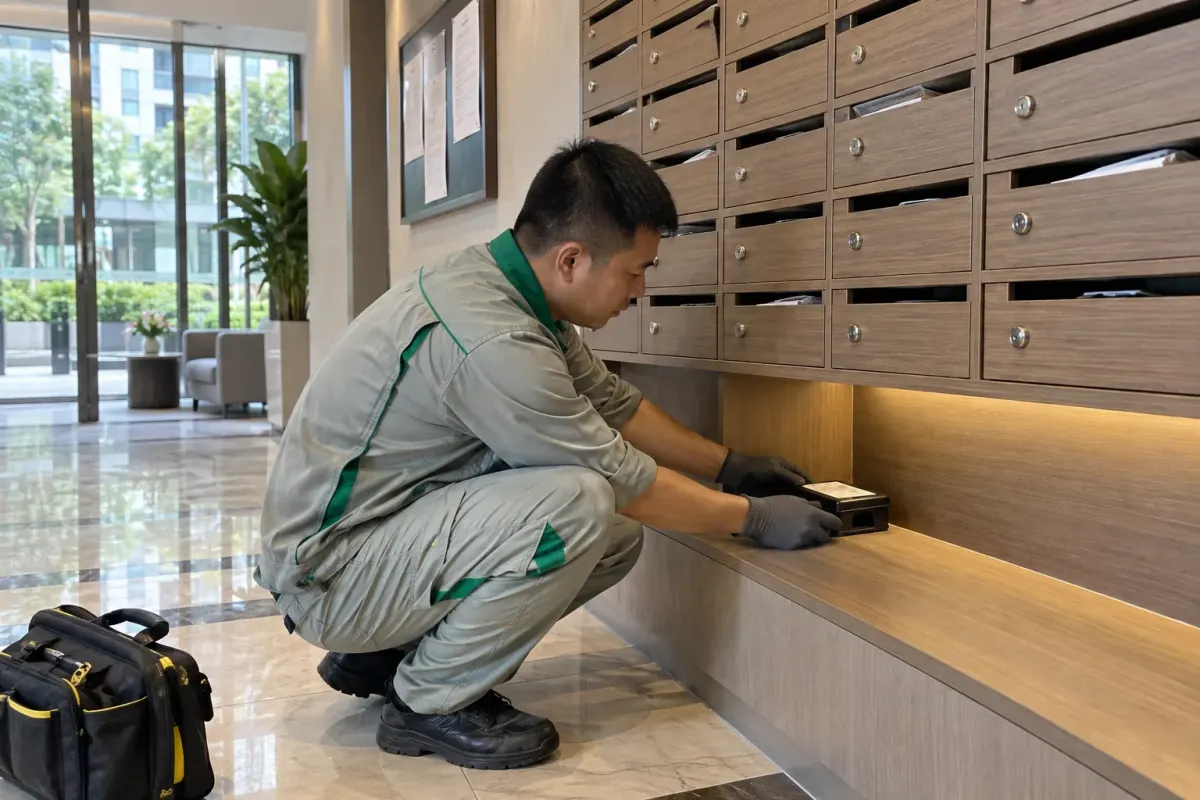
Subdivision
Many older apartments have been divided into smaller units, sometimes several times. Each subdivision added partitions that stop at ceiling level, doors cut into existing walls, and new plumbing runs threaded through existing structure.
The result is a floor plate where the legal boundaries and the physical ones do not correspond. Treating one unit is treating one part of a space that is continuous above the ceiling and inside the walls.
Where termites fit
Older buildings frequently have timber in places modern ones do not: door frames, window frames, roof structures, staircases and built-in furniture, often in contact with masonry that is in contact with soil. Where a building has stood for decades without an inspection, a colony has had time to establish and to do substantial damage before anything is visible.
For any older ground-contact building this is the inspection worth paying for, and it is worth doing before rather than during a renovation.
What can realistically be done
Accept that full exclusion is not achievable and aim at a defended unit rather than a sealed building. Seal what is reachable, apply residual treatment to the cracks, joints and drains that lead into the voids, place gel bait at the openings, and monitor so that recolonisation is detected early rather than discovered late.
Programmes in older buildings are usually more frequent and more monitoring-led than in new ones, and that is a reasonable adaptation rather than a contractor selling more visits.
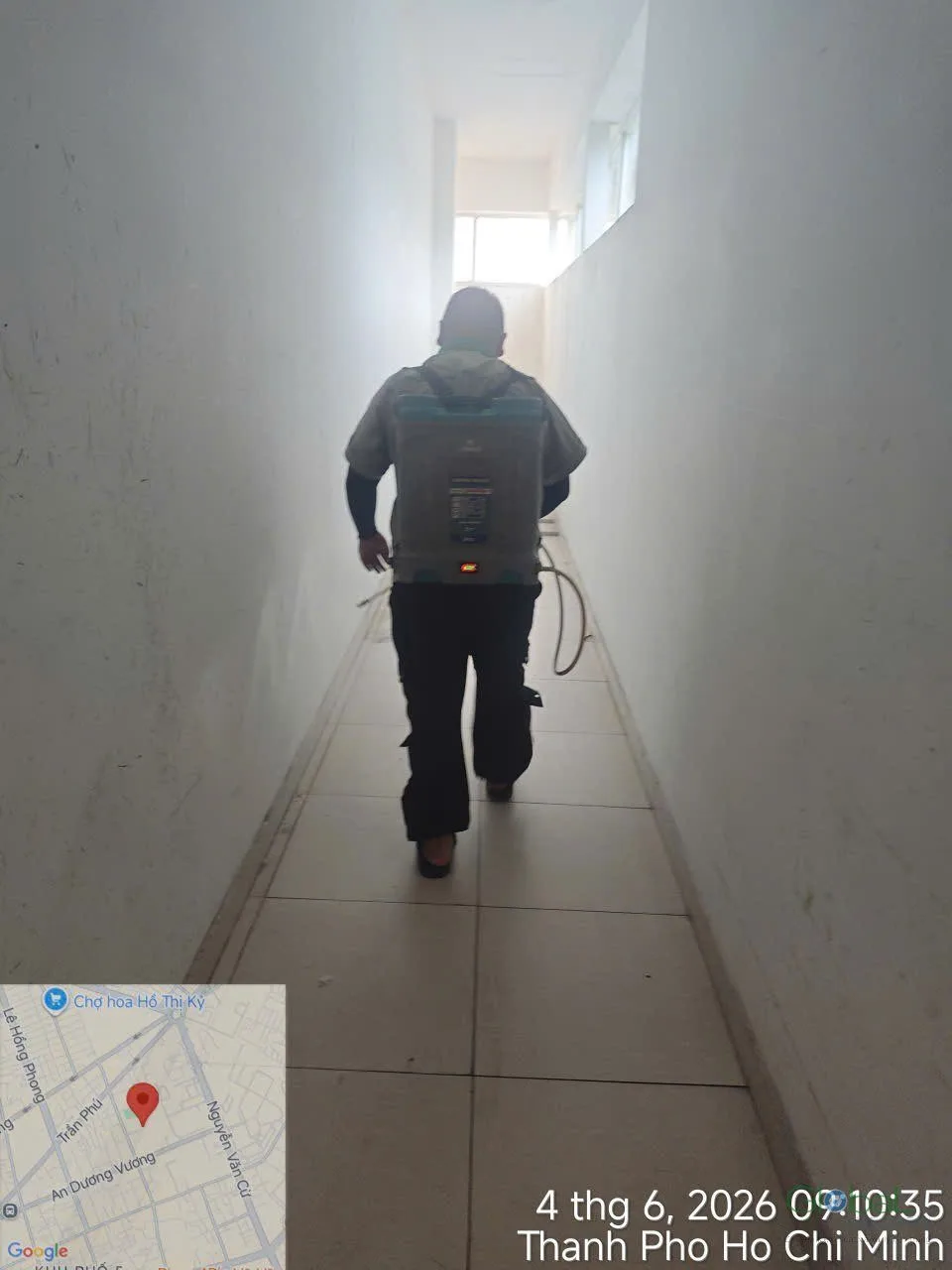
The renovation opportunity
When an older unit is being renovated, that is the one moment when the hidden voids are open. Sealing penetrations, closing abandoned service routes, replacing drainage and installing a properly sealed and coved kitchen plinth all cost very little while the walls are open and are close to impossible afterwards.
Anyone renovating an older apartment here should have somebody look at it while it is stripped. It is the highest-value hour available in the whole life of that unit.
Access is the other structural difficulty. Older buildings frequently have no inspection hatches at all, ceilings that were never designed to be opened, and boxing fixed with screws that have painted over. A survey that would take twenty minutes in a modern apartment can take an hour, and part of what a first visit to an older unit buys is simply finding out what can be reached.
What older buildings do well
They are usually better ventilated than modern sealed towers, with cross-ventilation and openable windows that reduce the damp problems newer buildings develop. Thick masonry walls are also a genuine barrier where they are intact, unlike lightweight partitions. The problems are concentrated at the penetrations rather than distributed through the structure, which at least means the work has a target.
Related reading
See older buildings and shophouses and party walls and roof junctions. On voids, ceiling voids and hidden gaps. Drainage is covered in how buildings here are drained. Our parent company runs the Vietnamese-language residential programme.
Global Pest Control is the English-language arm of Khử Trùng Toàn Cầu, based in Thu Duc City.
Common questions
Is an older building a bad choice?
Not at all, and many of the most pleasant apartments in this city are in older buildings. What differs is that the programme has to be adapted — more monitoring, more emphasis on sealing what is reachable, and realistic expectations about complete exclusion. Buildings are chosen for many reasons and this is one factor among them rather than a verdict.
We are renovating. What should we ask the contractor to do?
Seal every penetration you find rather than boxing over it, close off any abandoned service route, replace drainage that is visibly aged, fit a sealed coved kitchen plinth with removable access panels, and photograph everything before it is closed up. That photographic record is worth keeping, because it is the only drawing of the building that will ever be accurate.
Why does the treatment work for a month and then fail?
Usually because the population retreated into a void that could not be reached and then returned. In an older building that is the default explanation rather than an unusual one. The response is residual treatment and bait at every opening into the voids, monitoring to detect the return early, and sealing during any renovation opportunity.