Shared Kitchens in Coworking Buildings
Every coworking building we work in has the same pattern. The desks are clean, the meeting rooms are clean, and the kitchen has a problem that nobody can explain because everybody cleans up after themselves. They usually do. The problem is not the surface anyone can see.
A shared kitchen has forty users and no owner. Wiping a counter is somebody's job by default; pulling out the fridge is nobody's job by definition. That gap is the whole article.
The four places nobody in a shared kitchen looks
- Under and behind the fridge. The compressor coil is warm all year, spills run under the unit, and the unit is heavy. This is the single most productive harbourage in a coworking pantry.
- Inside and under the microwave. Splashes bake on, the base plate traps crumbs, and the vent slots are a sheltered gap two centimetres from a food source.
- The coffee machine drip tray and the grounds bin. Warm, permanently wet, sugar-rich. For fruit flies this is a complete breeding site.
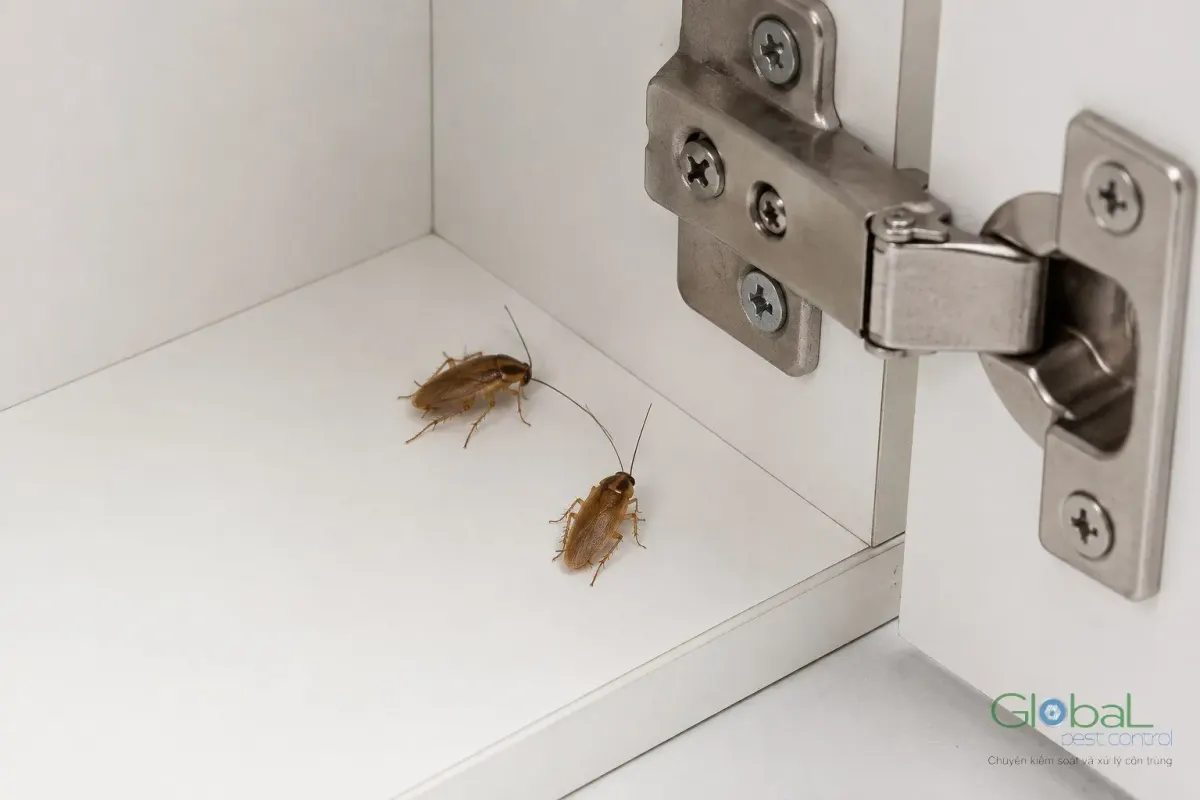
- The sink cabinet. Warm pipework, condensation, a bin, and cleaning cloths. Three of the four conditions cockroaches need, in one dark box.
Why the cleaning contract does not cover it
Read a typical coworking cleaning specification and it lists surfaces, floors, bins and glassware, at a frequency measured in times per day. It does not list moving appliances, because moving appliances takes two people and a risk assessment, and because the specification was priced on a walk-round that did not include it. So the appliance is wiped on its visible faces every day for three years, and the space underneath it is never touched.
This is worth saying plainly to a building manager who is frustrated that treatment keeps failing. The treatment is not failing; it is being applied to a space that is being restocked every day.
The fix is scheduled, not aspirational
A quarterly deep clean with the appliances moved, written into the cleaning contract as a named line item with a date, resolves more shared-kitchen pest problems than any product does. It has to be a line item because anything phrased as "when required" in a shared space is never required by anyone in particular.
The second structural fix is a bin decision: a lidded bin, emptied at a fixed time each evening rather than when full, and located away from the food prep counter. Coworking bins overflow around 17:00 and stay overflowing until the morning shift, which is exactly the window when the building is quiet and dark.
Member behaviour you can actually change
Asking forty adults to be tidier does not work and is not worth the sign. Two rules do work, because they are specific and enforceable. First, no food left in communal fridges past Friday evening, with a stated Friday clear-out. Second, no personal food storage in desk drawers, which is where pantry moths and ants establish in buildings where the kitchen itself is well run.
What treatment looks like here
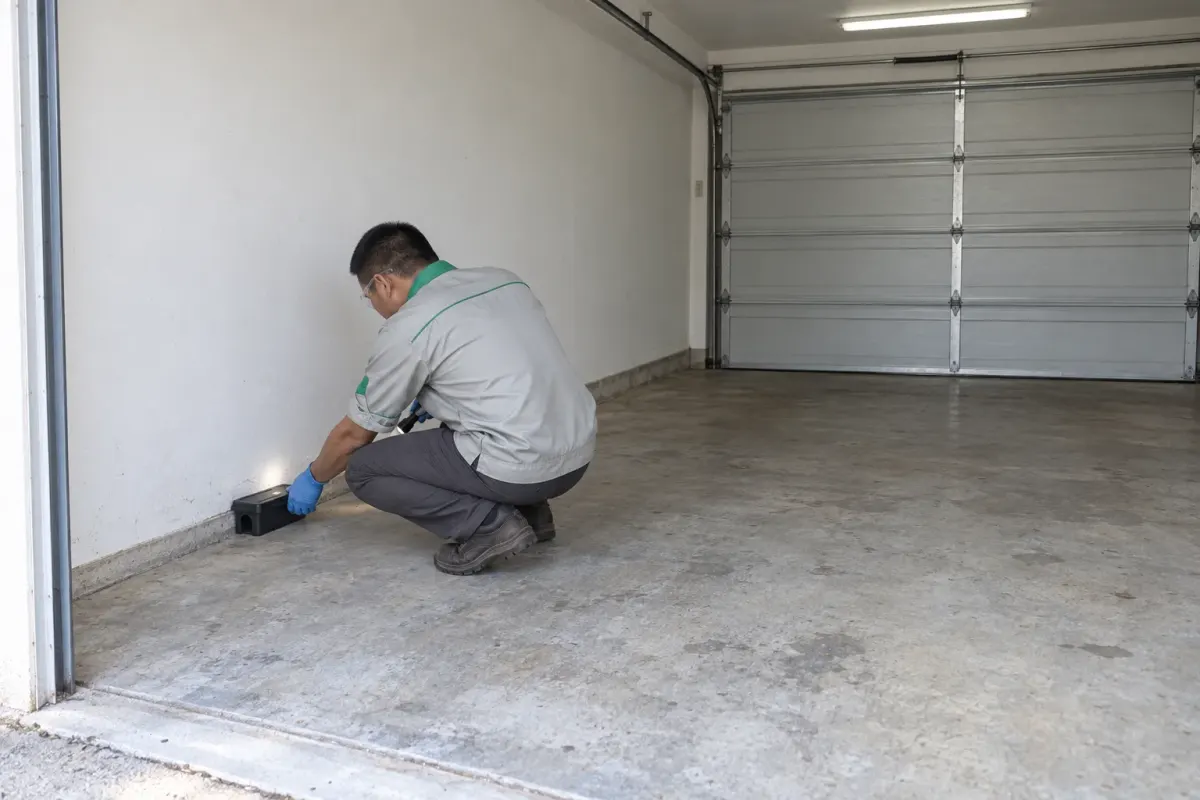
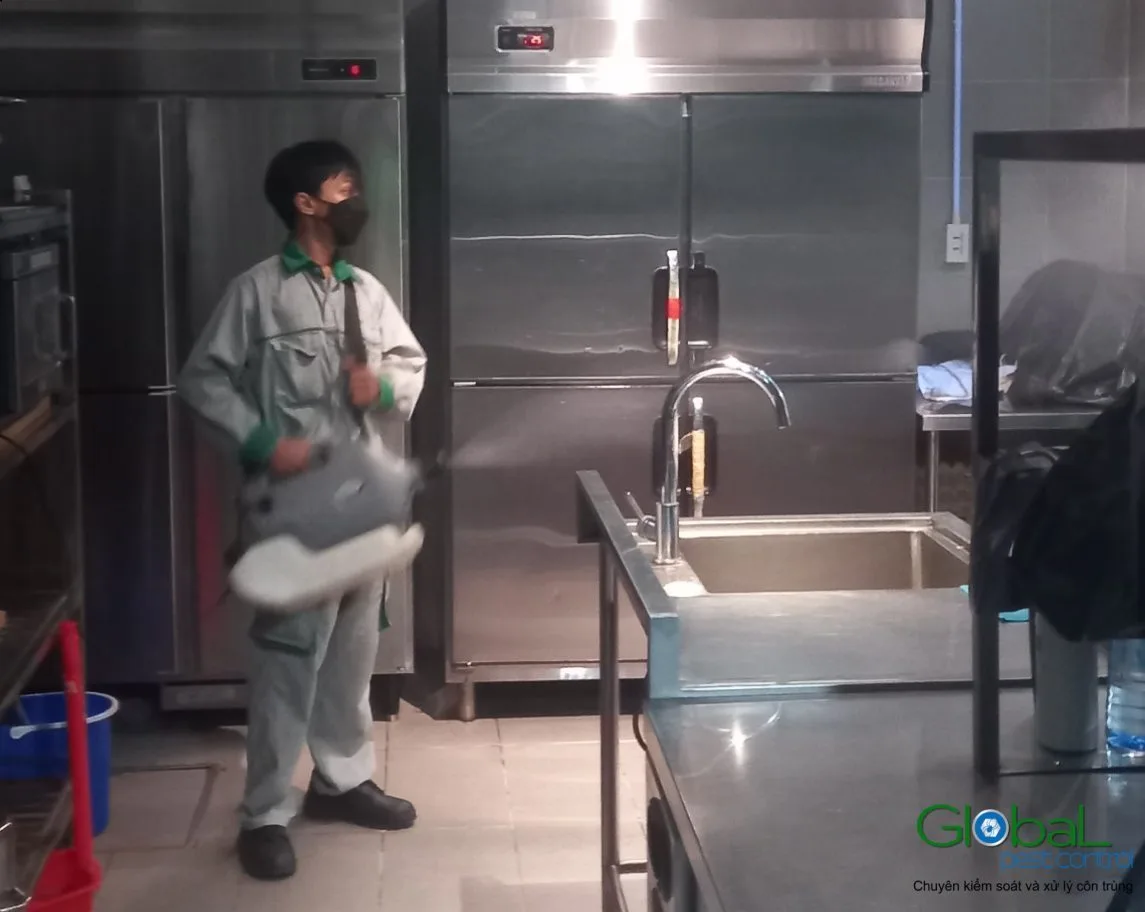
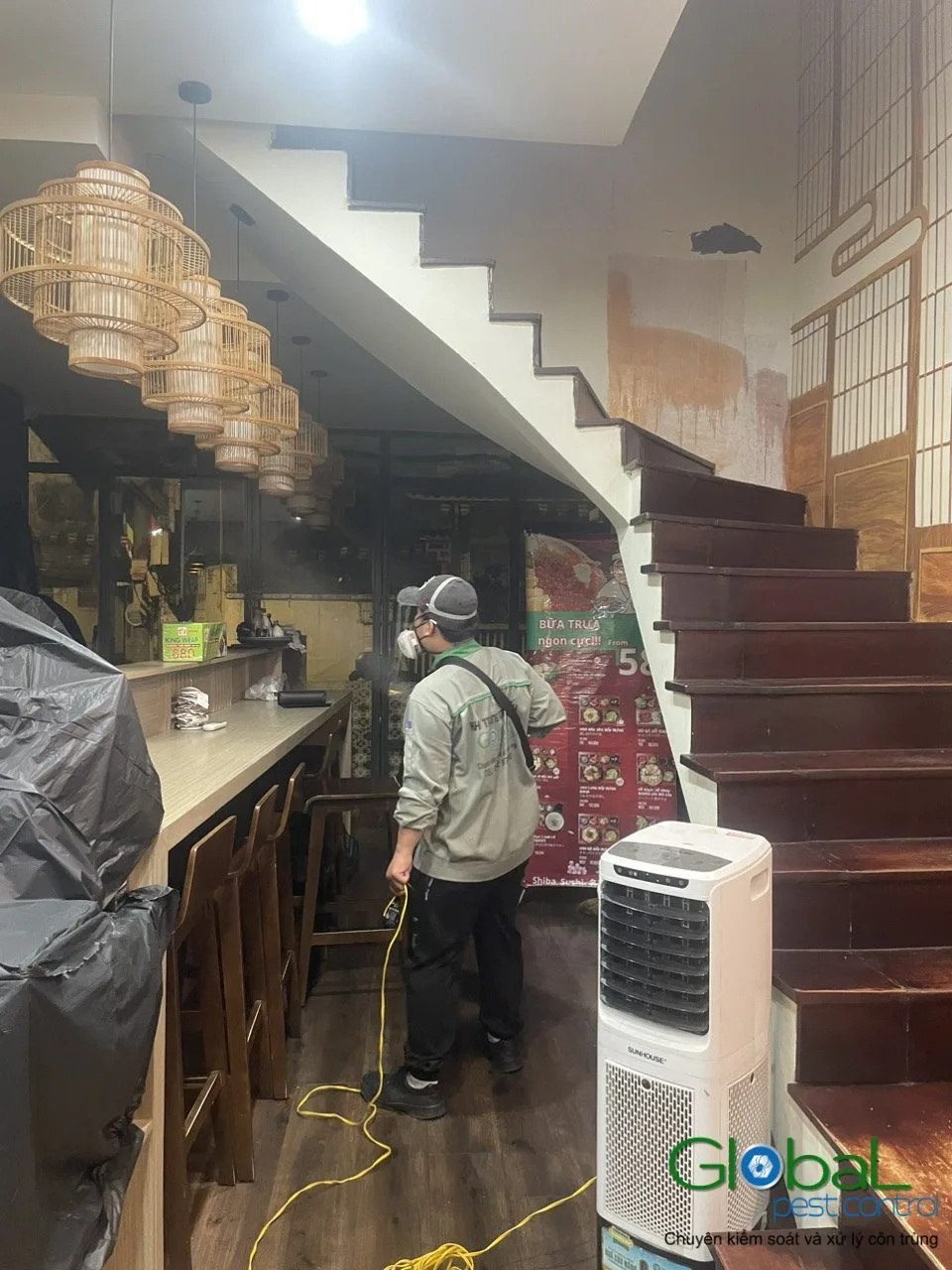
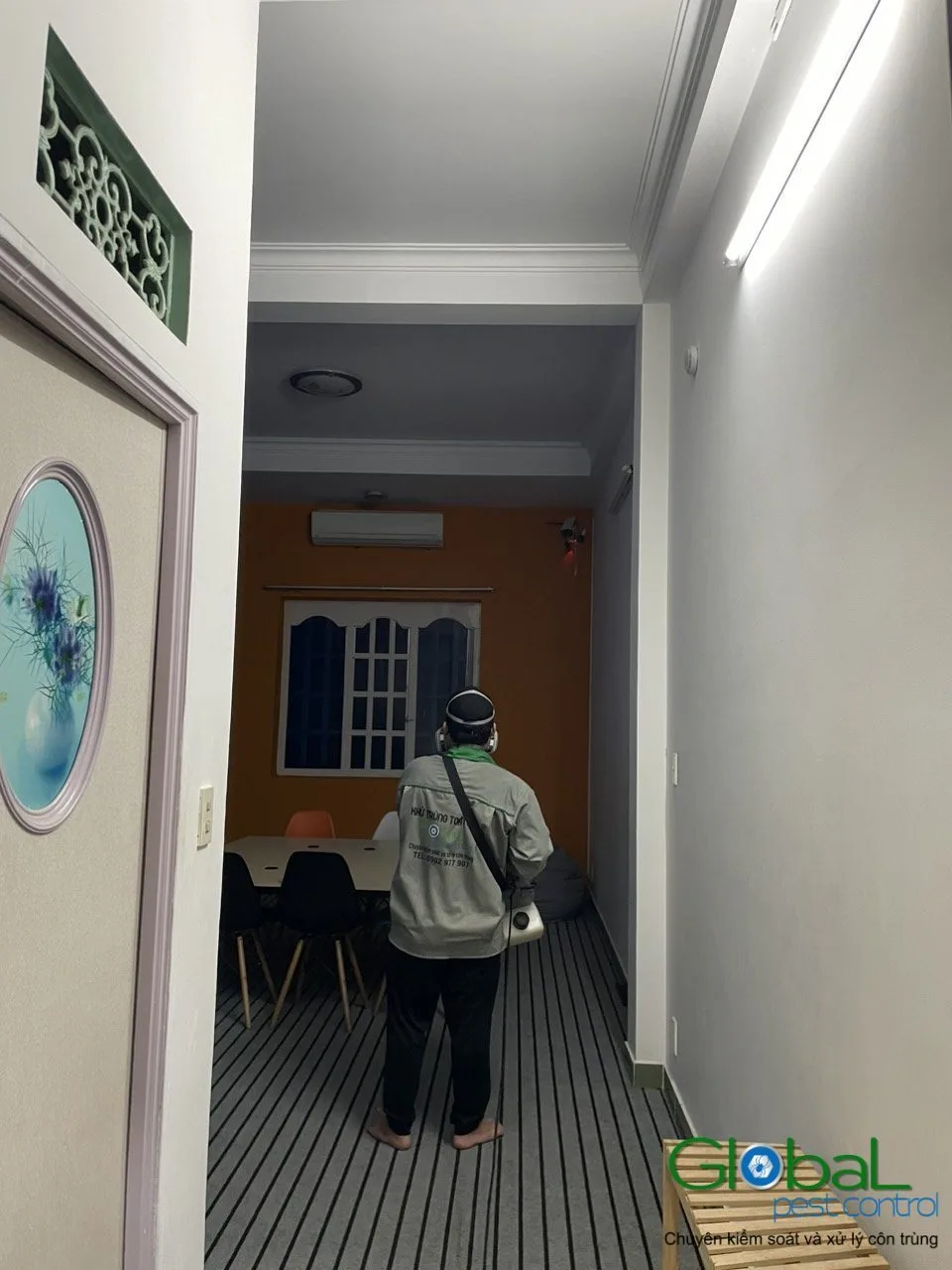
In an occupied shared kitchen we use gel bait in cracks and voids rather than spraying open surfaces, because the surfaces are food-contact and because spray on an accessible surface is both less effective and harder to justify to members. Monitors go behind the fridge, under the sink and inside the coffee station. If activity persists after two visits with clean bait uptake, the answer is almost never a stronger product — it is that the harbourage is above the ceiling and the kitchen is downstream of it.
The landlord and operator split
In most coworking buildings the operator holds the cleaning contract and the landlord holds the building fabric, which means the two halves of the fix sit with different parties. Getting the drain seals, the riser penetrations and the ceiling void into the same scope as the pantry deep clean usually needs one meeting with both present. That meeting is worth more than three additional treatments.
Related reading
For the office programme generally see coworking and small offices and office pantries. The route above the ceiling is covered in cable trays and risers, and the species background is in our cockroach guide. The property programme is the office programme. Our parent company runs the equivalent Vietnamese-language cockroach programme for offices.
Global Pest Control is the English-language arm of Khử Trùng Toàn Cầu. We can brief a cleaning contractor in Vietnamese so the deep-clean specification says what you meant.
Common questions
Members keep seeing cockroaches in the evening but never in the day. Why?
Because that is when the building goes quiet. German cockroaches are active in darkness and low disturbance, so a kitchen that has forty people in it until 18:00 shows nothing and then shows everything at 21:00. Evening sightings are not a different problem — they are the same population being observed at the only time it is visible.
Would an insect light trap help in the pantry?
For flies, yes, if it is sited away from the door and away from food prep. For cockroaches it does nothing, because they do not fly to light. A trap installed for cockroach reassurance is money spent on the wrong species, and it also becomes a maintenance item nobody services.
Can you treat while the building is occupied?
Yes. Gel bait and dust in voids need no evacuation and no re-entry period for the areas we treat, which is why they are the right methods for a space that runs sixteen hours a day. We would still schedule the pantry work for early morning so the coffee station is out of use for the shortest possible time.