Why We Rarely Fog a Home, and When We Do
A machine, a cloud of white smoke, a room you cannot enter for three hours. Fogging looks like the most thorough treatment money can buy, and customers who watch it happen feel they have received something substantial.
What they have received is a knockdown of the adult insects that were airborne or on exposed surfaces at that moment, and almost nothing else. Understanding why is the difference between spending sensibly and spending monthly.
What fogging actually is
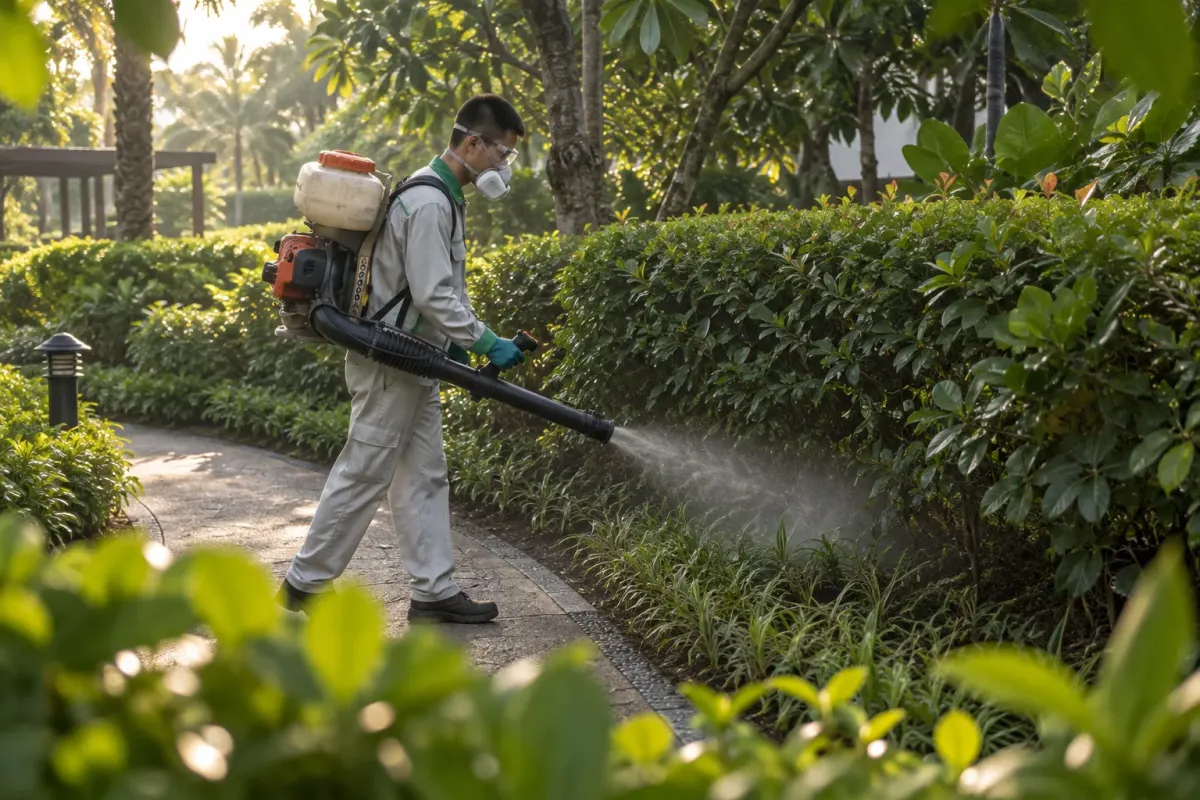
A space spray produces droplets small enough to stay suspended in air for a period. Insects flying through that cloud or resting on exposed surfaces receive a dose and die. When the droplets settle, the treatment is over — the deposit left behind is far too thin to function as a residual.
So the effect is measured in hours. Anything that was inside a wall void, under a cabinet, in a drain, inside a mattress seam or in an egg is unaffected.
Why that matters so much here
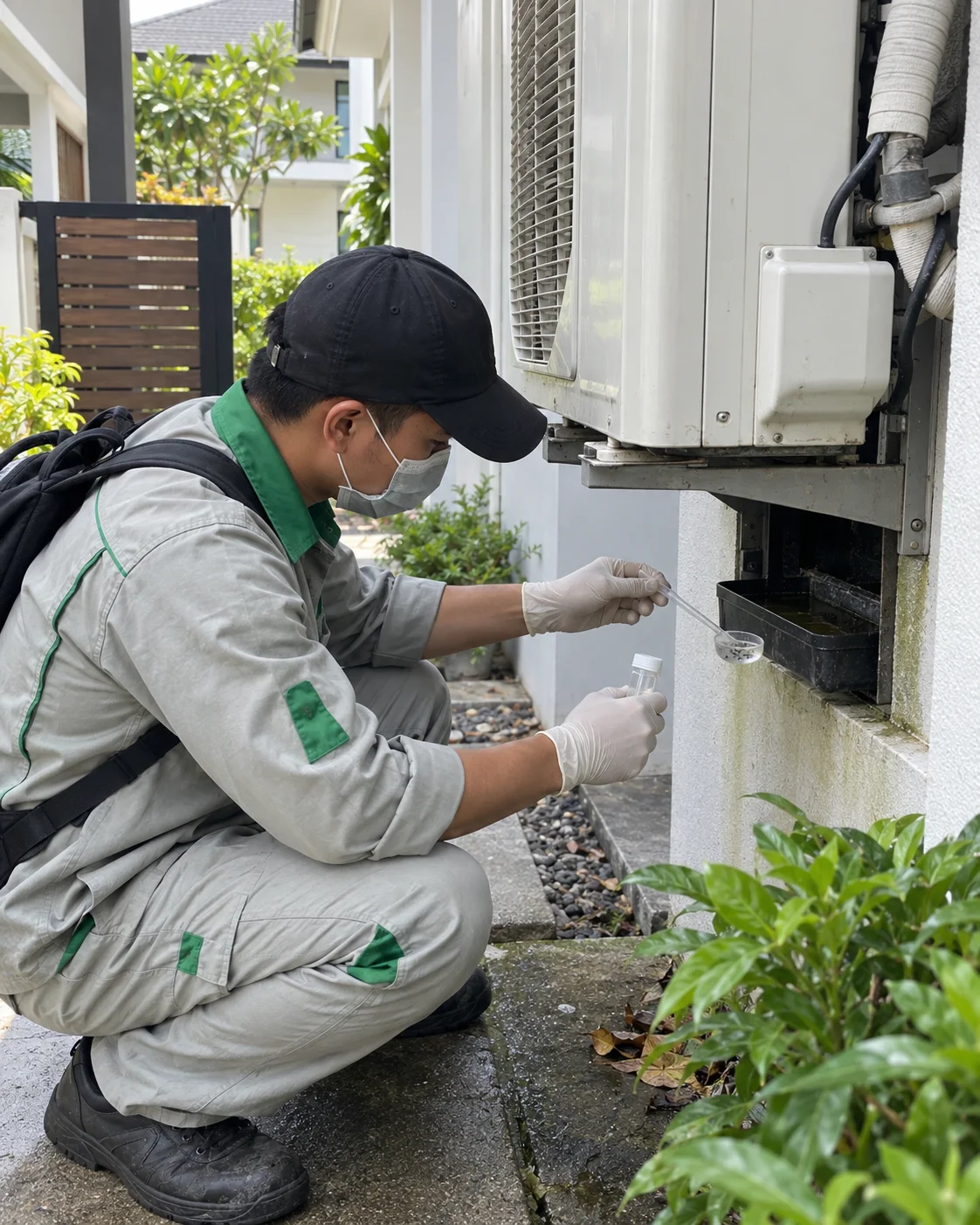
In Ho Chi Minh City the species that generate complaints breed in places a fog cannot reach. Mosquitoes breed in containers and drains. Cockroaches harbour in voids. Rodents are not insects at all. Fogging an apartment for mosquitoes removes the adults in the room and leaves every larva in the building untouched, which is why numbers return within one to two weeks.
This is also why buildings that fog monthly still have complaints, and why residents reasonably conclude that pest control does not work. It is not that pest control does not work; it is that this particular method is being asked to do something it cannot.
When fogging is genuinely the right tool
- A dengue outbreak response, where the objective is to break transmission by removing infected adult mosquitoes quickly. This is the strongest case and it is a public health measure.
- Large open spaces before an event — a garden, a marquee, an outdoor venue — where the objective is a few hours of relief and everyone understands that.
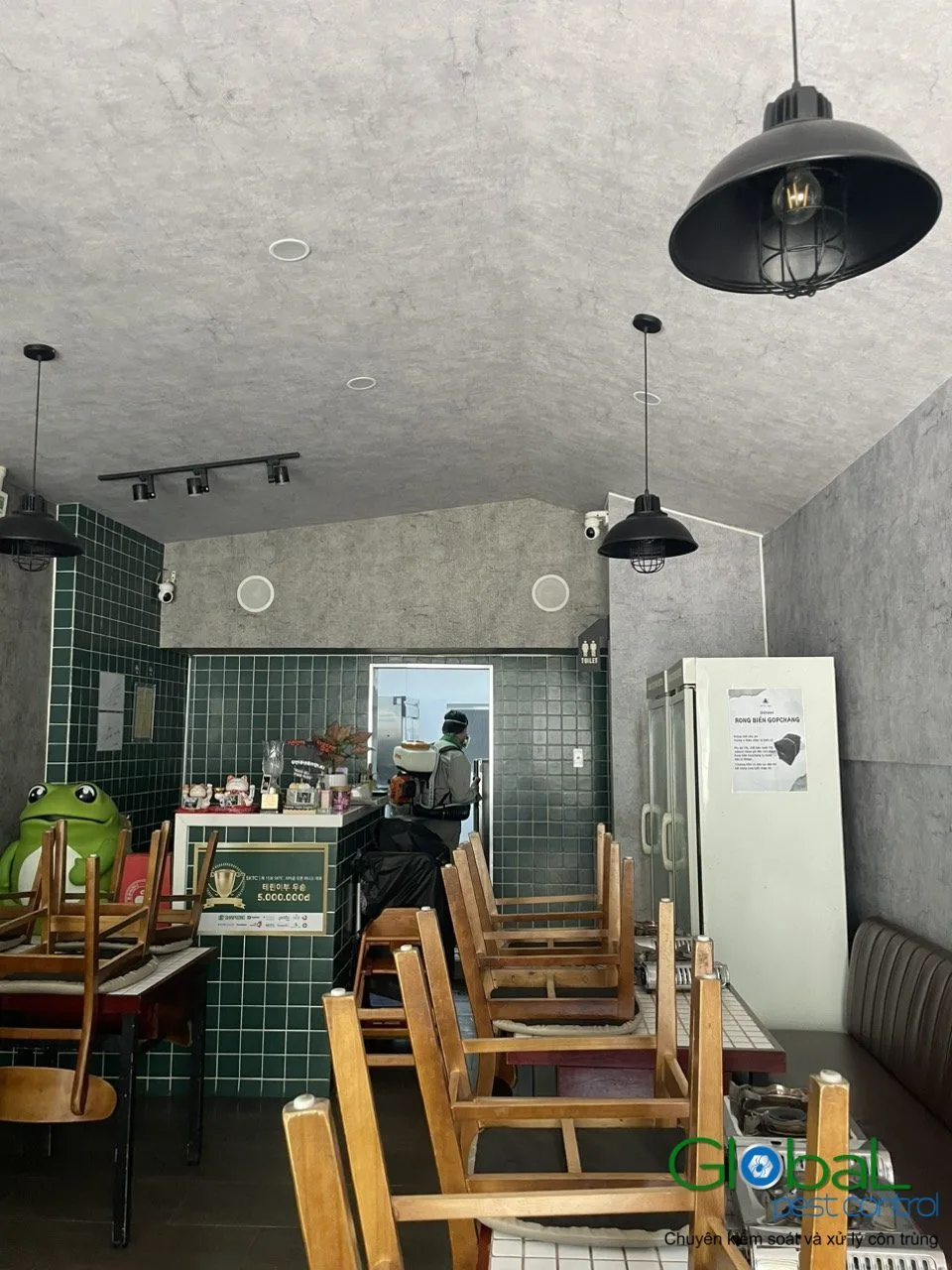
- An empty warehouse or factory space with a heavy flying insect population, as a knockdown before a proper programme starts.
- Alongside source reduction, never instead of it.
When it is the wrong tool
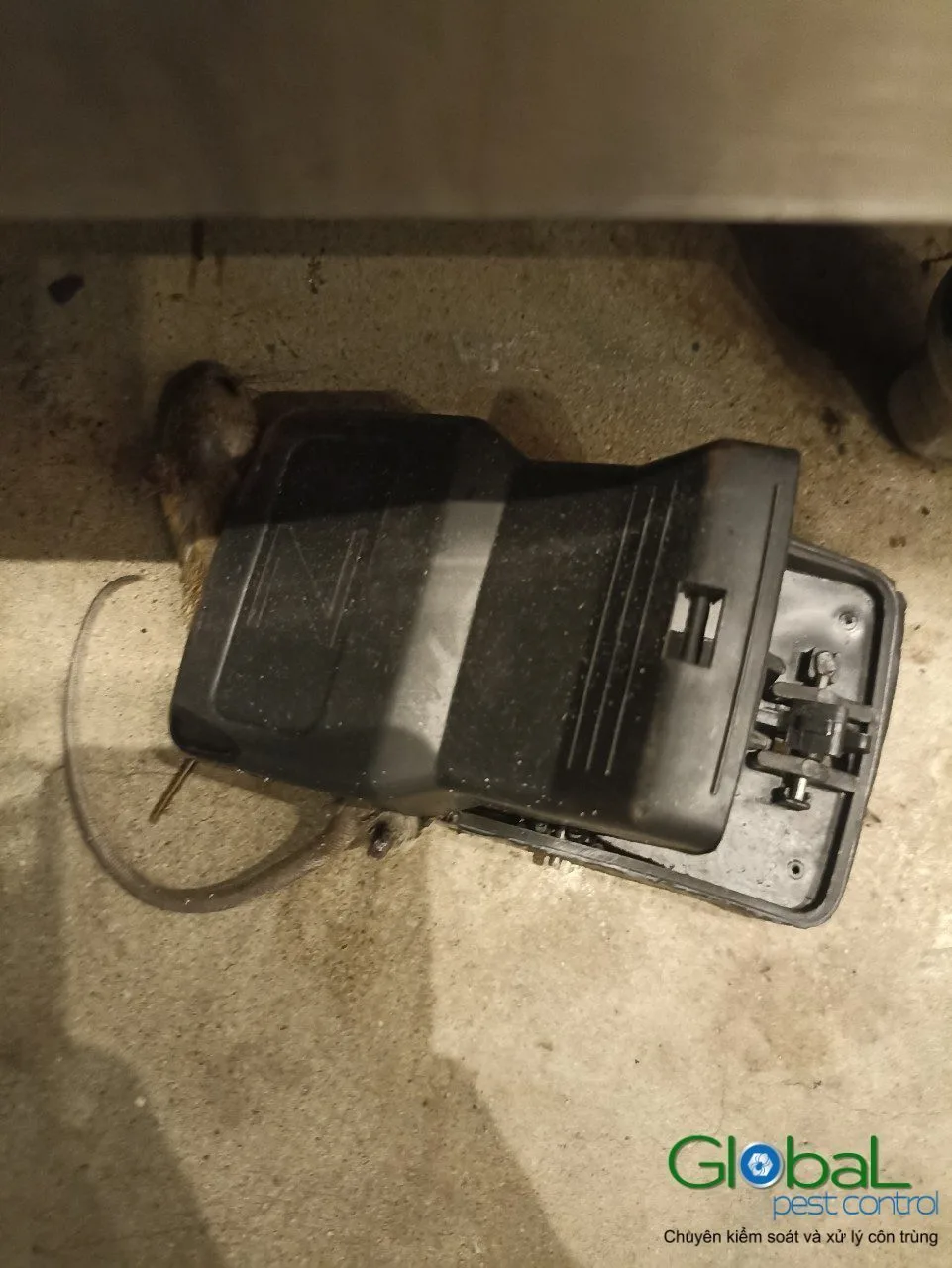
Routine monthly treatment of a residential building. Cockroach control of any kind. Bed bugs, where it disperses the population and pushes it into adjacent rooms. Rodents. And any occupied home where a targeted treatment would achieve more with a fraction of the exposure.
For bed bugs in particular it is actively harmful, because a repellent applied as a space spray scatters a localised population through a property. We have surveyed apartments where a fogging treatment turned one affected bedroom into three.
The exposure question
Fogging puts product into the air of a space where people live, which is a larger exposure event than placing a bait inside a cabinet void. That is worth weighing rather than assuming, particularly where there are children, a pregnancy, asthma, or an aquarium.
When we decline to fog a home, this is usually why. The method offers a short-lived benefit at a comparatively high exposure, and a better result is available by other means.
There is also a cost argument that customers rarely hear. A fogging visit is quick, needs one operator and very little diagnosis, which makes it cheap to deliver and easy to repeat every month. A targeted treatment takes longer, requires somebody to find the harbourage, and ideally makes itself unnecessary. Only one of those two is a good business model, and it is not the one that solves the problem.
What we do instead in a home
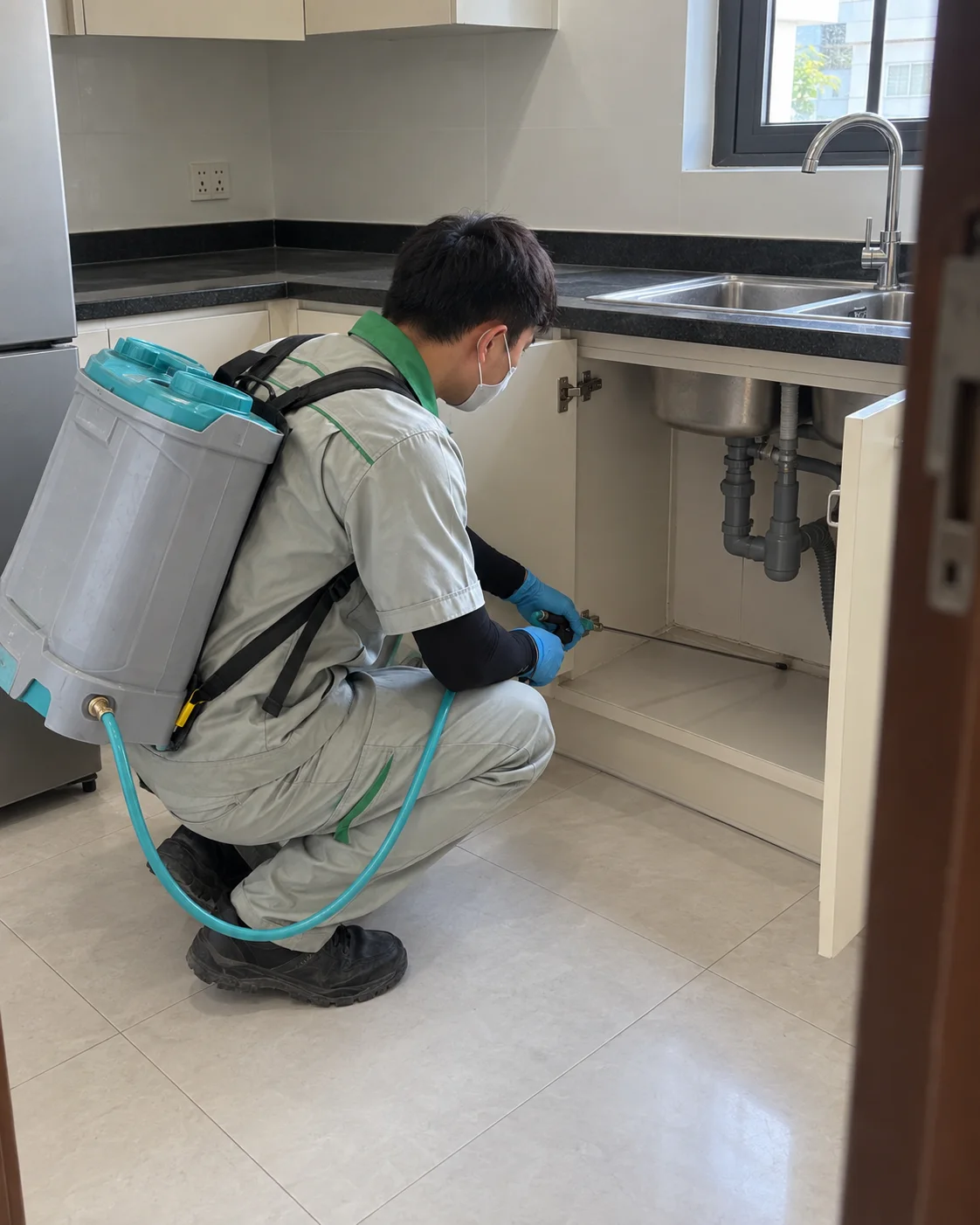
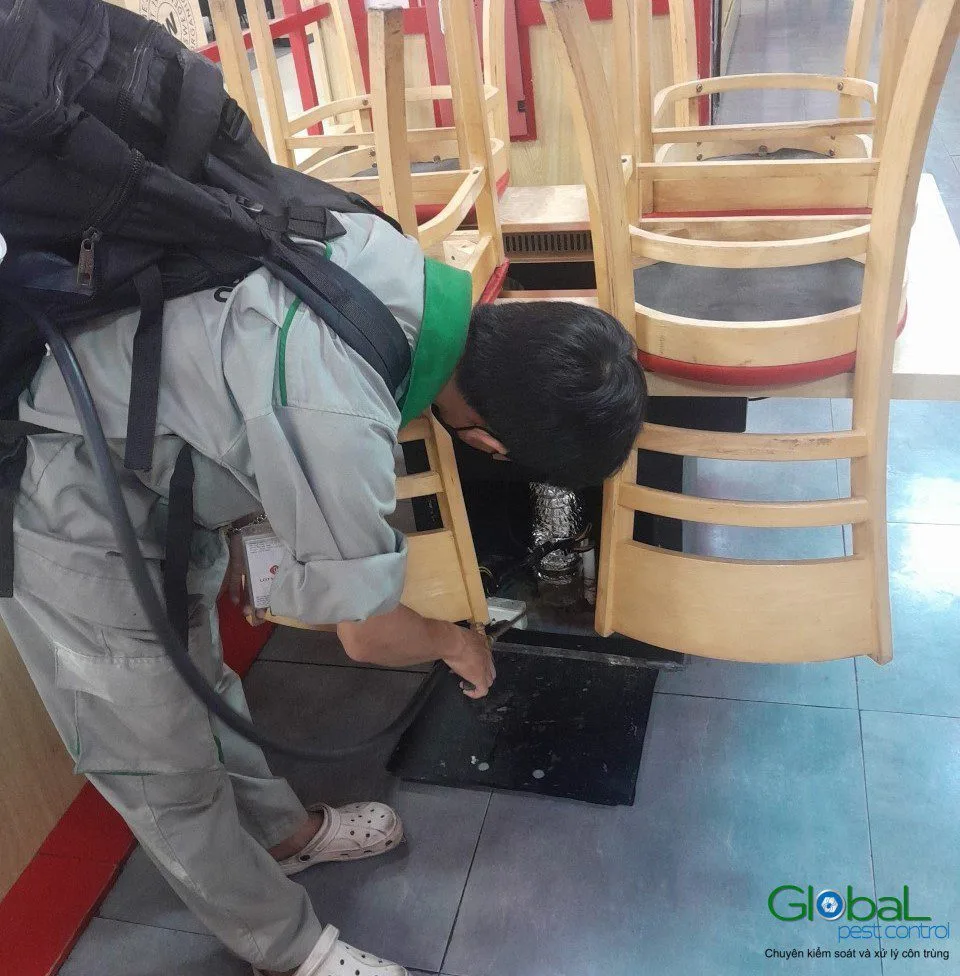
Find the harbourage and treat it directly: gel bait in cracks, insecticidal dust in enclosed voids, a residual applied to specific surfaces rather than broadcast, drain treatment where the drain is the route, and physical proofing so the route closes permanently. It looks less impressive and it is what actually changes the situation.
Related reading
For the alternatives see insecticidal dust, baiting versus killing and physical proofing. For mosquitoes specifically, breeding sites around your home. The general method is described in how pest treatment works. Our parent company sets out the same approach in Vietnamese on its mosquito control programme.
Global Pest Control is the English-language arm of Khử Trùng Toàn Cầu, based in Thu Duc City.
Common questions
Our building fogs monthly. Should we ask them to stop?
Not necessarily, because during outbreak season it does have a role and it is also visible reassurance for residents. What is worth asking is what else is being done — tank sealing, drain treatment, container reduction in common areas — because those are what change the underlying numbers. Fogging alongside source reduction is reasonable; fogging instead of it is money being spent to no purpose.
Is fogging dangerous for my cat?
Pets and people should be out of the treated space during application and for the stated re-entry period, and aquariums need to be covered with pumps switched off, since fish are far more sensitive than mammals to most of these compounds. Cats are more sensitive than dogs to some pyrethroids. If fogging is proposed in a home with animals, it is fair to ask why a targeted method is not being used instead.
What about thermal fogging versus cold fogging?
Thermal fogging uses heat to produce the visible white cloud, cold fogging uses pressure and produces a much less visible mist. The visible cloud is not a measure of effectiveness — it is a measure of droplet carrier. Both have the same fundamental limitation, which is that neither reaches harbourage.