Site Plans and Device Numbering
Every commercial pest programme has devices — bait stations, insect light traps, monitors — and every audit scheme expects them to be mapped and numbered. It is one of the easiest sections of a file to get right and one of the most commonly wrong.
The failure is rarely that no plan exists. It is that the plan, the physical labels and the reports have drifted apart over a year of changes.
What the plan has to show
A layout of the site with each device marked at its actual position and labelled with its number, distinguishing device types clearly, and including a date and a revision number so anybody can tell whether they are looking at the current version.
It does not need to be an architectural drawing. A clear hand-drawn or simply produced plan that matches reality is worth more than a beautiful CAD drawing that is eighteen months out of date.
The register that goes with it
A table listing each number, the device type, its precise location described in words, the installation date, and any subsequent move with a date. The words matter as much as the position on the plan: "external, north wall, 3 m east of the loading door" is unambiguous in a way a dot on a drawing is not.

Numbering conventions that survive contact with a site
Prefix by device type and keep the sequence continuous — for instance EB for external bait stations, IM for internal monitors, ILT for insect light traps. Never reuse a number when a device is removed, because a reused number makes historical data ambiguous and an auditor cannot tell whether EB07 in March is the same object as EB07 in September.
Number in a logical walking order around the site, which makes servicing faster and makes a missing device obvious during a walk.
The three things must agree
The number on the plan, the number physically written on the device, and the number on the service report. When these disagree, an auditor concludes the system is documented rather than operated, and that conclusion colours how the rest of the file is read.
Drift happens naturally: a station is moved during a refit, a light trap is replaced with a different model, a monitor is added and never mapped. The remedy is to walk the plan at every monthly visit and correct it on the spot.
Placement is a decision, not a distribution
Devices spaced evenly across a floor plate look thorough on a plan and catch very little, because rodents and crawling insects travel along edges rather than across open ground. External stations belong at the perimeter and at entry points; internal monitors belong at wall runs, bay ends, riser bases, behind equipment and near drains.
A plan that shows a neat grid is usually a plan drawn by somebody who has not walked the site. A plan that shows clusters along walls and at doors is usually a plan drawn from what the building actually is.
Insect light traps have their own rules
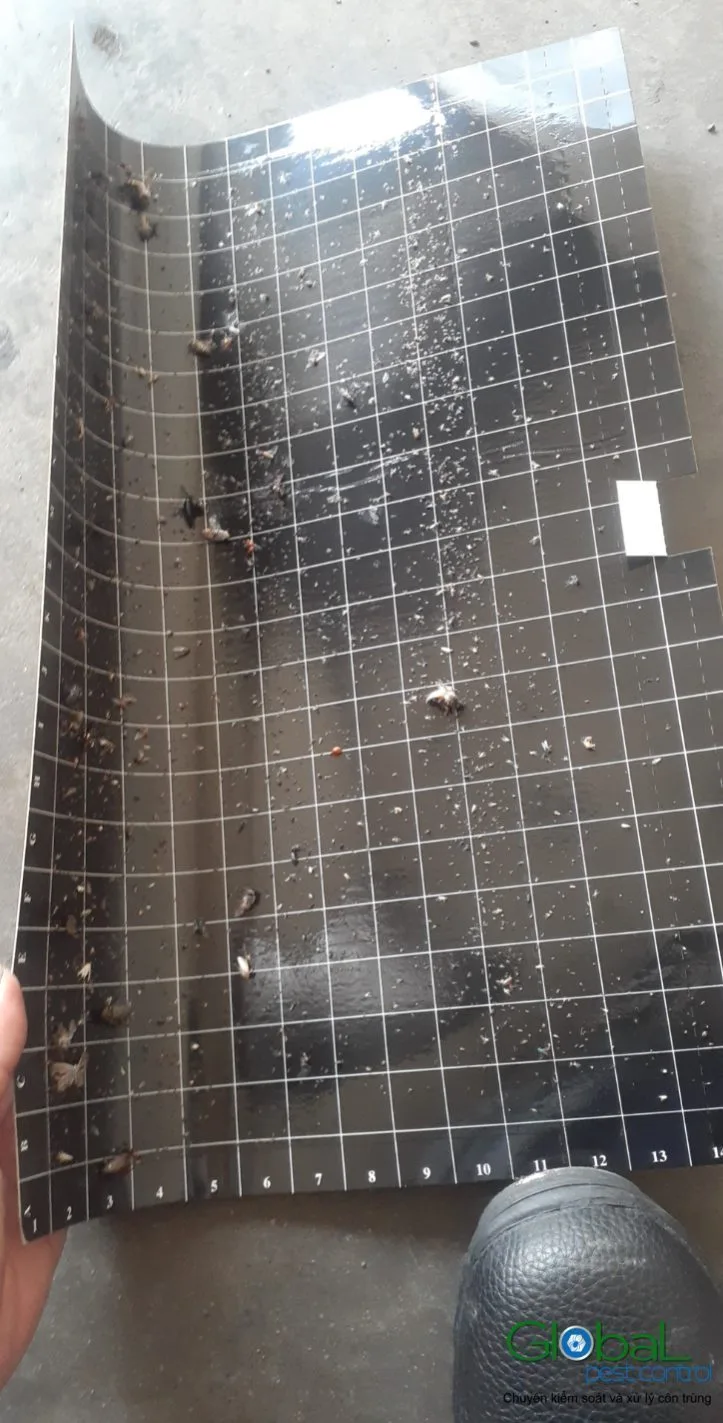
Sited away from external doors, because a trap near a door draws insects in from outside. Not directly above food preparation or open product, because the catch tray is a contamination risk. At the right height, generally around two metres, since that is where most flying insects travel.
A light trap in the wrong place is worse than none, and it is one of the few pest control mistakes an auditor can see at a glance without opening the file.
Keeping it current through changes
The plan should be revised whenever the site changes — a new store area, a relocated door, a refit. Attach a short revision note rather than replacing the old version silently, so the history remains readable. Where a device is removed, record the removal and the reason rather than deleting the row.
Related reading
See monitors and traps and trend data. The file structure is in building a file from nothing. For the audit, the food safety audit file, and for warehouses, pallet management. Our parent company maps and numbers to the same standard on its warehouse programme.
Global Pest Control is the English-language arm of Khử Trùng Toàn Cầu, based in Thu Duc City.
Common questions
How many devices should a site have?
There is no formula, and a number derived from floor area alone is a poor guide. It depends on the perimeter length, the number of entry points, the food risk and the layout. What matters more than the count is that each device has a stated reason for being where it is, because that is what an auditor will ask about a specific one.
Can the contractor hold the plan instead of us?
They can produce it and you should hold a copy on site, because an auditor asks the site rather than the contractor and because a change of provider should not take your plan with it. Keeping a copy also means somebody on your side notices when the plan and reality diverge.
We moved a station and nobody updated the plan. How bad is that?
A single undocumented move is a minor issue, easily fixed by updating the plan with a dated revision note. What turns it into a significant finding is a pattern — several devices that do not match, which suggests the plan is not used. Do the correction walk before the audit rather than explaining it during one.