Baiting Versus Killing: Two Ideas of Success
There are two fundamentally different strategies available, and confusing them is the source of most disappointment with professional treatment.
A contact insecticide succeeds when the insect it touches dies quickly. A bait succeeds when the insect survives long enough to walk back into the harbourage and share what it has eaten. Judged by the first standard, a bait looks like a failure for the first three days.
How bait actually works
A foraging insect eats the bait and returns to the harbourage. There, the active ingredient is passed to others through droplet exchange between individuals, through faeces, and through cannibalism of the dead — routes that vary by species but all reach individuals that never touched the bait themselves.
This is why bait can reach the nymphs deep inside a wall void that no spray will ever contact, and it is why the delayed action is deliberate. An active ingredient that killed on contact would leave a dead insect next to the bait and no transfer at all.
Repellent and non-repellent
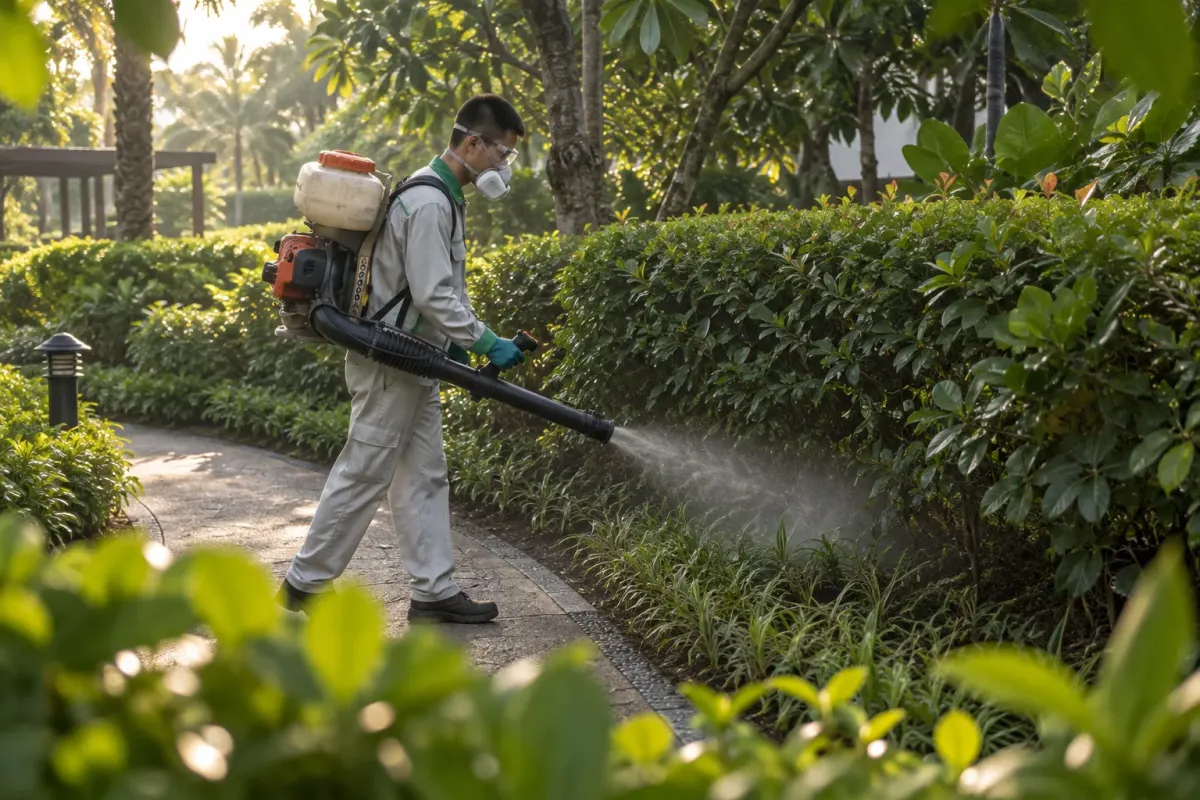
The other half of the distinction is whether the insect can detect the product and avoid it. Most pyrethroid sprays are repellent, which is useful at a threshold you want insects not to cross, and actively harmful around a harbourage — a repellent applied near a void scatters the population into new voids and often into adjoining rooms.
Non-repellent products are undetectable to the insect, so it walks through and carries the material back. For termites and for ants this is the whole basis of modern practice, and it is why a competent technician will decline to spray a trail you would like sprayed.
What each is for
- Bait — cockroaches, ants, termites. Anything social or aggregating, where transfer reaches individuals you cannot.
- Non-repellent residual — termite barriers, ant perimeters, situations where you want them to cross and carry.
- Repellent residual — thresholds and entry points, where the objective is exclusion rather than population reduction.
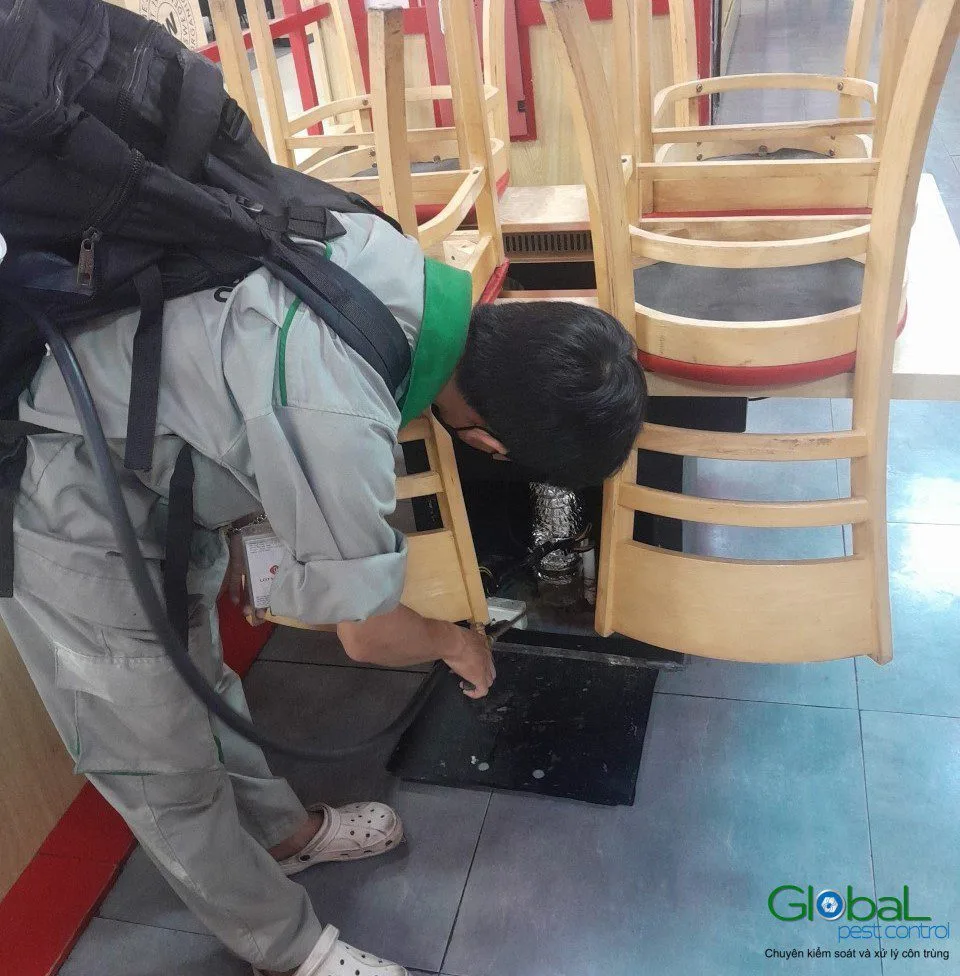
- Dust — voids that cannot be reached any other way.
- Contact spray — immediate knockdown, wasps and hornets, and situations where speed genuinely matters.
Why activity increases first
With ants especially, numbers on the trail rise for two to four days after baiting. This is the bait being found and recruited to, and it is the strongest indication available that the treatment is going to work.
It is also the point at which most people intervene. Someone sees more ants than before, concludes the treatment failed, and sprays the trail — which kills the foragers carrying bait back, destroys the pheromone route and leaves the nest intact and now wary. That single action is responsible for a very large share of failed ant treatments.
Why the two cannot be mixed carelessly
Insecticide residue near a bait point makes the bait unattractive or unreachable, so a household that has been using an aerosol for a month has contaminated exactly the surfaces where bait needs to go. This is why we ask people to stop spraying before a visit rather than after it.
A competent programme does use both, but it separates them in space: repellent at thresholds and entry points, bait and non-repellent at harbourage. Applying both to the same surface wastes the more expensive of the two.
Termite work is the clearest illustration of the principle. A modern non-repellent termiticide is deliberately slow and undetectable, so foraging workers pass through the treated soil, carry the material back and transfer it through the colony over weeks. A repellent barrier by contrast simply diverts them, and they find another route into the building — which is why repellent termite treatments were largely abandoned once the alternative became available.
What success looks like on each timeline
A contact spray produces visible results within hours and is largely finished within a fortnight. A bait produces an increase for three days, a noticeable decline in one to two weeks, and continued reduction for a month as the harbourage is affected. Judging a bait programme at day three, or a spray at week six, is measuring the wrong thing at the wrong time.
Related reading
See why ant bait looks worse first and reading an ant trail. On methods, gel bait or spray and insecticidal dust. For the general picture, how pest treatment works. Our parent company uses the same approach on its ant control programme.
Global Pest Control is the English-language arm of Khử Trùng Toàn Cầu, based in Thu Duc City.
Common questions
Can I put out bait and also spray, to be safe?
No, and this is the single most common self-inflicted problem we see. Spray near a bait point makes the bait unattractive and kills the foragers that would have carried it back, so the two cancel each other. Choose one approach per area, and where both are used, keep them physically separated.
How long should bait be left in place?
Until it stops being taken, which is usually two to four weeks for an active cockroach population and can be a few days for ants. Bait that has dried and hardened is no longer working and gets replaced at the follow-up visit. Bait that is disappearing is doing exactly what it should.
Why did the technician refuse to spray the ant trail?
Because spraying a trail kills the foragers and disperses the rest without touching the nest, and it also destroys the pheromone route that a bait needs in order to be found. Leaving the trail intact and baiting on it is slower to look successful and considerably faster to actually resolve.