Switching Providers Without Losing Your Records
A site decides to change pest contractor. Notice is given, the last visit happens, the new company starts, and six months later somebody looking for the history of a recurring problem finds that it begins on the changeover date.
The history belongs to the site rather than to the contractor, and the way to keep it is to collect it before the relationship ends rather than afterwards.
The order that matters
Collect first, then give notice. Once notice is served, a request for historical documents becomes a low priority for a company that is no longer being paid, and in the worst case it becomes a negotiating position.
This is not cynicism about contractors — most will help — it is simply that an email sent two weeks before notice is answered promptly and the same email sent two weeks after is answered eventually.
What to request
All service reports for the full period. The site plan and device register, in an editable form if possible. Any trend analysis produced. The list of products used with active ingredients and registration numbers. Any correspondence about outstanding recommendations. And a written statement of which devices on site belong to the contractor.
That last item prevents the most common practical dispute at handover.
Devices: who owns what
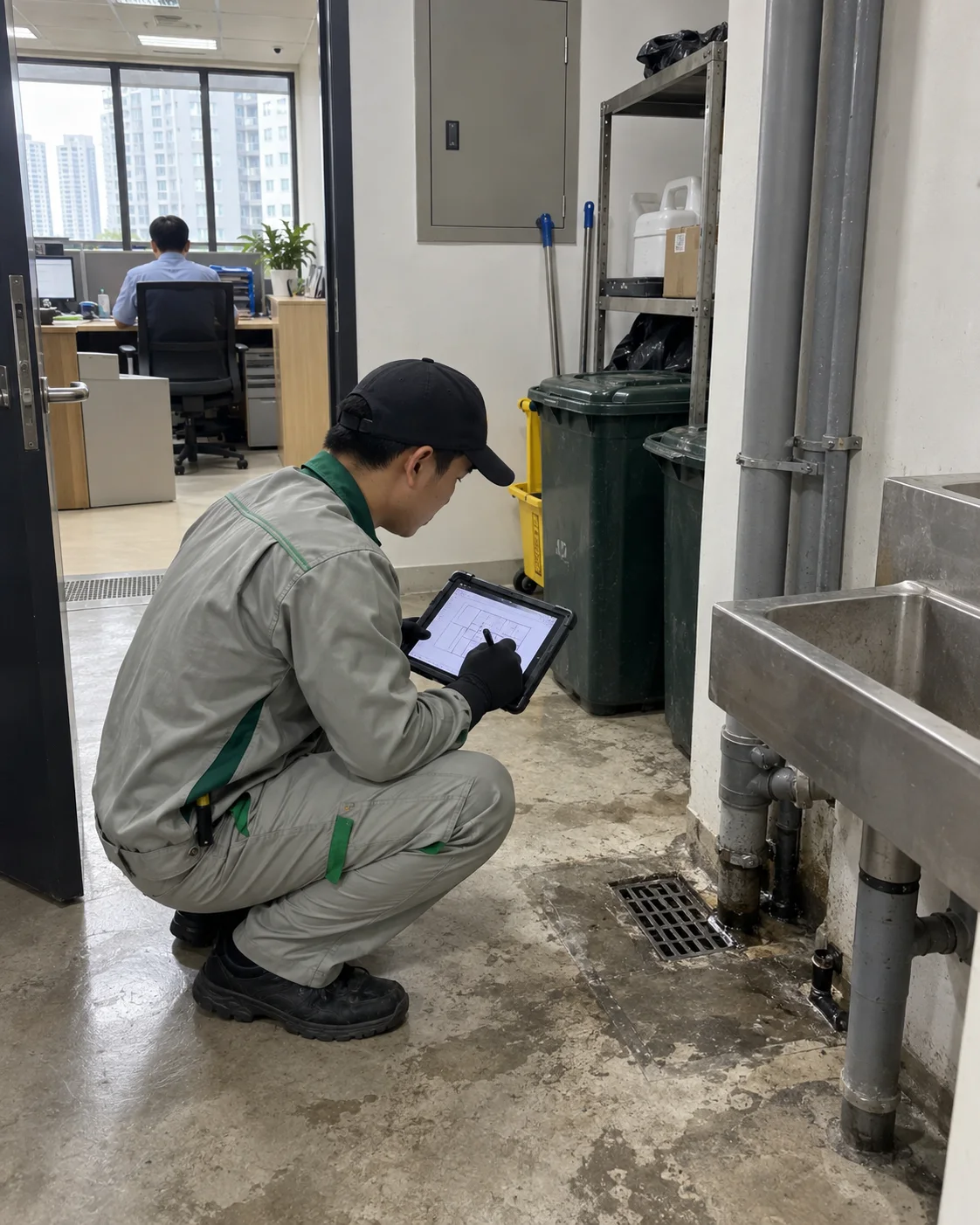
Bait stations, insect light traps and monitors are frequently the contractor\x27s property, supplied as part of the service, and they will be removed when the contract ends. A site that has not established this discovers on the last day that its numbered device network is leaving.
Either agree to purchase them, or plan for the incoming contractor to install their own — which means new numbering, an updated plan and a note in the file explaining the discontinuity. That note matters at the next audit.
Keeping the numbering continuous
Where the devices stay, keep the existing numbers even if the new contractor prefers a different convention. Renumbering breaks the link between historical data and physical positions, and it turns three years of trend data into a document nobody can use.
Where new devices are installed, map old numbers to new in a short table and keep it in the file permanently. It takes ten minutes and it preserves the comparison.
The overlap visit
The single most useful thing you can arrange is for the incoming contractor to survey the site before the outgoing one leaves, and ideally to walk it with them. It rarely happens because it feels awkward, and where it does happen the incoming company starts with a genuine handover rather than a cold start.
If a joint walk is not possible, at minimum have the incoming contractor survey while the existing devices are still in place, so their plan is drawn from reality.

Tell the new contractor the truth
Including why you changed. A new company that knows the previous programme never resolved a recurring issue in the dry store will look there first; one that is told everything was fine will spend two visits discovering it.
Hand over the history and the open recommendations. An incoming contractor that inherits an open list and closes it is worth considerably more than one that starts a fresh list.
Timing the change matters as well. Switching immediately before an audit means presenting a file with a discontinuity and a contractor who has been on site twice, which is a harder position than either the old or the new arrangement on its own. Where an audit is scheduled, either complete the change three months before it or wait until afterwards.
What to write in the file
A short note recording the date of the change, the reason in neutral terms, what documentation transferred, and any discontinuity in devices or numbering. An auditor encountering an unexplained break in a file asks about it; an auditor encountering an explained one does not.
Related reading
See comparing two proposals fairly and how to choose a company. On records, how long to keep records and building a file from nothing. Devices are covered in site plans and device numbering. Our parent company handles transfers of Vietnamese-language records through its commercial programme.
Global Pest Control is the English-language arm of Khử Trùng Toàn Cầu. When a site leaves us we hand over the complete file without being asked, because it was never ours.
Common questions
Can a contractor refuse to hand over reports?
They are your service records and any reputable company supplies copies on request. Where one refuses, the practical position is that you should already hold every report because each was issued at the time — which is the argument for keeping your own copies as they arrive rather than relying on the contractor archive.
Should we tell the outgoing contractor why we are leaving?
Briefly and neutrally, yes. It is professional, it occasionally produces a useful response, and it keeps the handover cooperative. What is not worth doing is a detailed critique, which changes nothing and reduces the chance of getting the documents you still need.
How long should the transition take?
Allow four to six weeks between deciding and the new contractor\x27s first visit, which gives time to collect the documents, arrange an overlap survey and sort out device ownership. A change made in a week usually loses something, and what it loses is almost always the history rather than the service.