Shipping Furniture and Containers Into Vietnam: The Pest Risks
A sea container is a sealed, dark, humid box that sits for four to six weeks. Whatever goes in alive generally arrives alive, and often in larger numbers. For people relocating to Vietnam with household goods, three risks are worth knowing about before the container is opened in a new apartment.
Wood-boring insects in furniture and crating
Solid timber furniture, particularly older or reclaimed pieces, can carry beetle larvae inside the wood with no visible sign except small round exit holes. Wooden crates and pallets are a bigger risk because they are made from low-grade timber that was never kiln dried.
This is why international rules require wooden packaging in trade to be heat treated or fumigated and stamped accordingly. The stamp is a small mark burned into the timber showing a country code, a treatment code and a registration number. If your consignment includes wooden crates, that mark should be there.
Cockroaches in packing materials
The same cardboard problem that applies to a local move applies at a larger scale. Boxes that sat in a warehouse before packing, and paper wrapping used as padding, can carry egg cases. Weeks of warm humid transit is close to ideal incubation.
The practical response is the same: unpack at the door, take the cardboard out of the building immediately, and put monitoring traps in the kitchen for the first fortnight.
Condensation, mould and what feeds on it
Containers sweat. Warm humid air is sealed in at one port, the container crosses cooler water, and moisture condenses on the roof and runs down onto the contents. Cardboard absorbs it, mould grows, and mould-feeding insects such as psocids multiply in the boxes.
They are harmless but alarming — thousands of very small pale insects across papers and book pages. They disappear once the humidity drops, which is why the right response is drying and ventilation rather than insecticide.
What to do when the container arrives
- Open it outdoors or in a loading area, not inside the apartment, and let it air for twenty minutes
- Look at the underside of the roof for water marks, and at box tops for damp or mould
- Unpack wooden furniture outside where you can look at joints and undersides in daylight
- Check for fine powder or small round holes in timber — both indicate wood-boring activity
- Remove all packing material from the building the same day
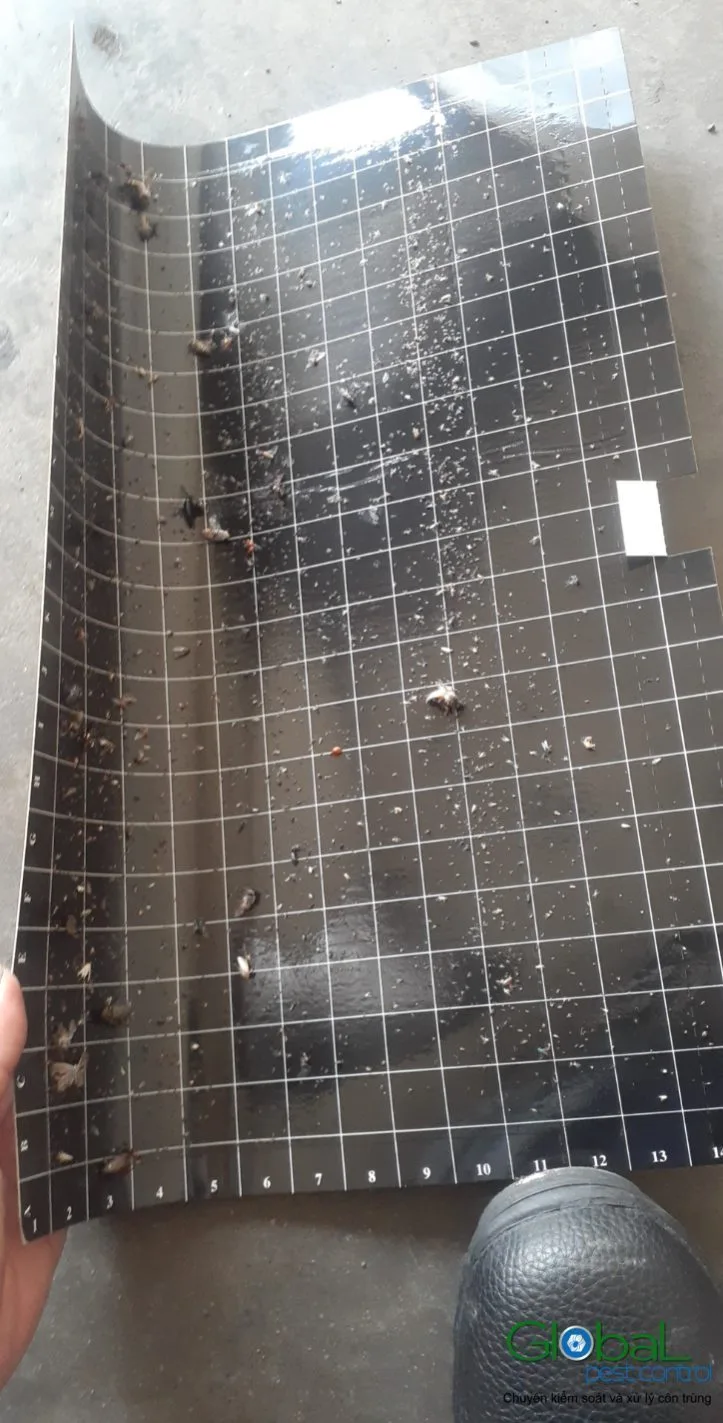
- Set monitoring traps in the kitchen and in any room where boxes were stored
When fumigation is the right answer, and when it is not
Fumigation is a specialised treatment carried out on a sealed load by licensed operators. It is appropriate for a container or a consignment of timber. It is not something to apply to a furnished apartment, and no reputable company will offer to fumigate an occupied home as a routine service.
For household goods already delivered, the correct approach is inspection, targeted treatment of the affected item, and in some cases heat treatment. If a single piece of furniture is the problem, treating that piece is far better than treating a home.
What quarantine actually checks
Vietnamese plant quarantine is concerned with wooden packaging and plant material rather than with household insects. Wooden crates and pallets must carry the international treatment mark, and untreated wood can result in the consignment being held, treated at your cost, or refused.
Plant material, seeds and soil are the other common problem. A potted plant travelling with household goods is a straightforward way to have a shipment delayed.
Before the container is packed at origin
- Ask the packing company to use treated and marked timber for any crating
- Vacuum upholstered furniture thoroughly and inspect seams and frame joints
- Empty and clean kitchen appliances before they are wrapped
- Do not pack food, seeds, soil or live plants
- Photograph anything wooden that is already showing small round holes, and consider leaving it
A note on bed bugs and international moves
Mattresses and upholstered furniture crossing borders are a recognised route for bed bugs, and a sealed container for six weeks does not kill them. If the origin property had any history at all, the sensible options are to leave the mattress behind or to have upholstered items heat treated before packing.
Heat treatment at origin costs far less than dealing with an established population in a new home, and it removes the one risk on this list that is genuinely difficult to reverse.
Storage between arrival and moving in
Household goods frequently sit in a storage facility for weeks between clearing customs and the tenant taking possession of a property. Warehouse storage in this climate adds two risks: humidity, which continues the mould and psocid problem, and whatever else is stored in the same building.
Ask what the facility is like before agreeing to it. A sealed, air-conditioned unit is very different from a shared warehouse with an open roller door. Where a long gap is unavoidable, it is worth paying for the better storage rather than for the treatment afterwards.
Global Pest Control is the English-language arm of Khử Trùng Toàn Cầu. The same technicians and the same programmes are described on the Vietnamese description of these services.
Book an inspection
Site inspections are free of charge and carry no obligation. A technician walks the property, identifies the species and the harbourage, and sends a written quotation with the method and the schedule — normally within one working day.
Request an inspection · See indicative prices · All services