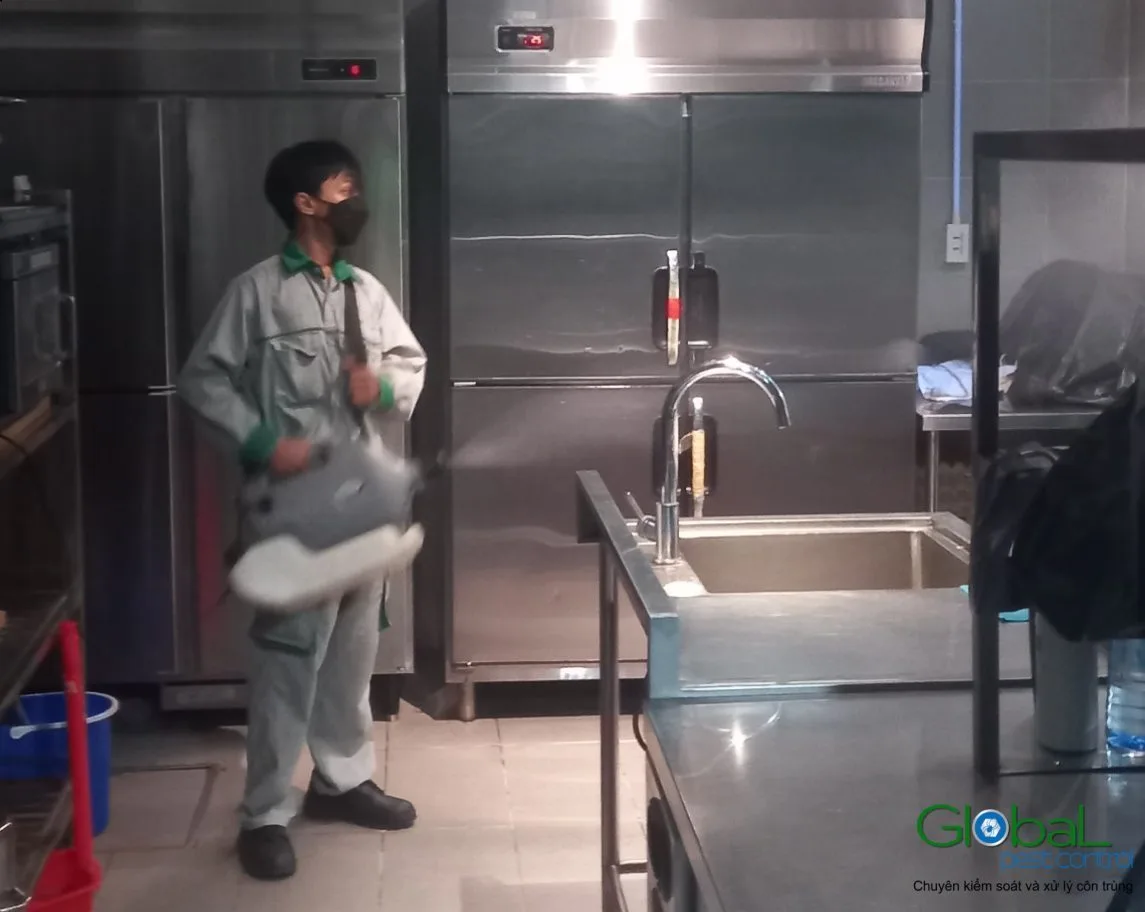
The Kitchen Sink Cabinet: Why It Is the First Place We Look
Open the cupboard under your kitchen sink and you are looking at the most productive square metre in the whole apartment. In eight years of inspections in this city it is where we find evidence first, and the reason has nothing to do with how carefully the kitchen is cleaned.
Three conditions in one cupboard
A German cockroach needs warmth, moisture, food and somewhere enclosed to sit out the daylight. The sink cabinet supplies all four within arm's reach of each other. The waste pipe sweats in a room that runs at 30 °C for most of the year. The joint where the pipe passes through the cabinet base is almost never sealed, so there is a permanent gap to the void behind. And the bin usually lives in there too.
Nothing about that list is a hygiene failure. It is how the cabinet was built, and it is the same in a new tower in Thu Thiem as in a forty-year-old flat in District 3.
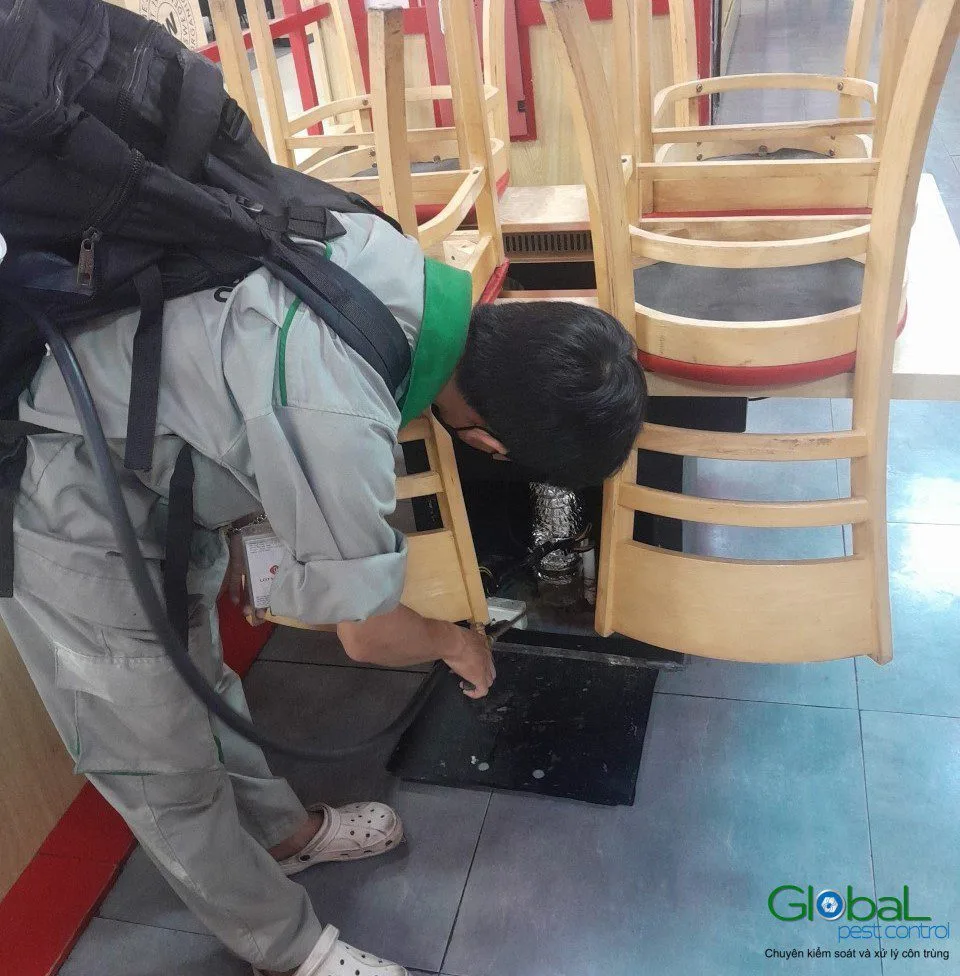
What we actually find
- The pipe collar. A 10–20 mm gap around the waste pipe where it drops through the cabinet floor. This is the entrance, and it connects to the space under the units.
- The rear corners. Cabinet carcasses are rarely backed. The corners open into the wall cavity, which in an apartment block runs to the neighbouring unit.
- Under the bin. Liquid that escapes a bin liner collects under the bin, not in it. That film is a complete food supply.
- The hinge recesses. Small, dark and never wiped. Egg cases are often stuck there rather than in the open.
- Stored cloths and sponges. Damp textile in a closed cupboard is both shelter and moisture.
Why spraying it does almost nothing
A residual spray on the cabinet floor treats a surface the insects cross for a few seconds a night. It does not reach the void behind the carcass, where they actually live, and it puts product on a surface where you keep cleaning materials. Gel bait placed as small dots in the hinge recesses, along the rear corners and beside the pipe collar reaches the harbourage instead, because the insects carry it back there themselves.
That is also why the aftercare instruction matters so much here: do not wipe the inside of that cabinet for two to three weeks. Wiping it is not a small deviation — it removes the treatment.
The four fixes that outlast any treatment
- Seal the pipe collar with silicone or an expanding collar. Ten minutes, and it closes the main route permanently.
- Lift the bin off the floor or put it on a tray you can wash. Most of the food supply disappears with the film underneath.
- Store cloths and sponges outside the cabinet, or dry them on a rail. Damp textile is shelter you can remove for free.
- Check the joint between the worktop and the wall behind the sink. If the silicone has failed, water is running into the cabinet from above.
What it means if you also see them in the bathroom
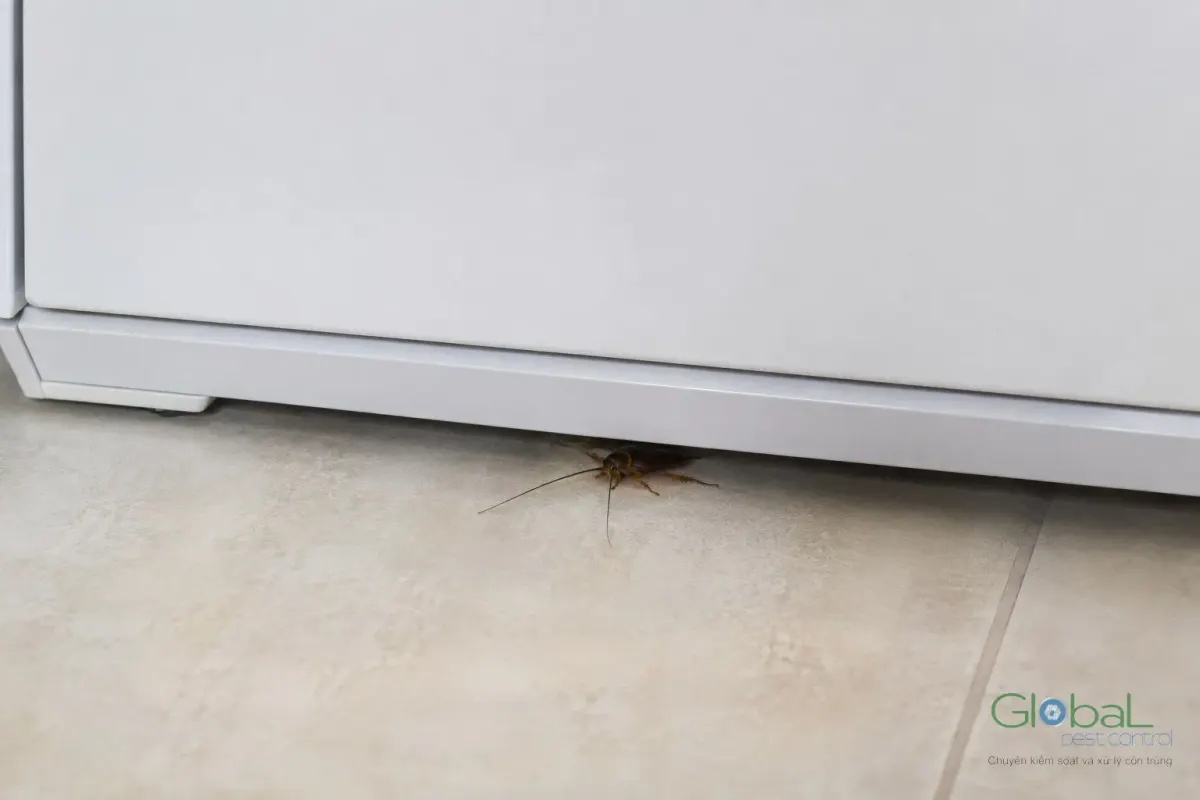
German cockroaches from a sink cabinet stay near food and rarely travel far. Large cockroaches appearing in a bathroom as well usually means a second, unrelated problem: American cockroaches coming up a dry floor trap from the building drainage. The two need different work, so it is worth naming which one you have before anybody treats anything. Our page on cockroaches sets out the difference, and gel bait or spray explains why the method follows the species.
When to call someone
One cockroach in a month is not an infestation. What justifies a visit is any of these: insects seen in daylight, small ones under 15 mm (which means breeding on site rather than wandering in), egg cases, or a smear of dark specks in the hinge recess. If you are unsure, photograph what you found and send it — identification costs nothing and decides everything about the method. See how pest treatment works and the indicative price list.
Global Pest Control is the English-language arm of Khử Trùng Toàn Cầu, based in Thu Duc City. The inspection is free and in English; Vietnamese-language services are at khutrungtoancau.vn.
Common questions
Should I empty the cabinet before a treatment?
Yes, and it makes a real difference. An empty cabinet lets the technician see the pipe collar, the rear corners and the hinge recesses, which is where the work goes. Leave the contents out for a few hours afterwards so the gel is not knocked while it is still soft, then put back everything except damp cloths.
Is it safe to keep cleaning products in there after gel bait is placed?
Yes. The gel goes into cracks and recesses, not onto surfaces where bottles stand, and it is placed in quantities measured in fractions of a gram. What matters more is not wiping those recesses for two to three weeks, because that is the treatment.
We are renting. Is this the landlord's problem?
The gap around the pipe is a defect in the fabric of the property, so sealing it is usually the owner's cost; routine treatment is usually the occupier's. A dated report naming the gap makes that conversation short. See who pays for pest control for the longer answer.