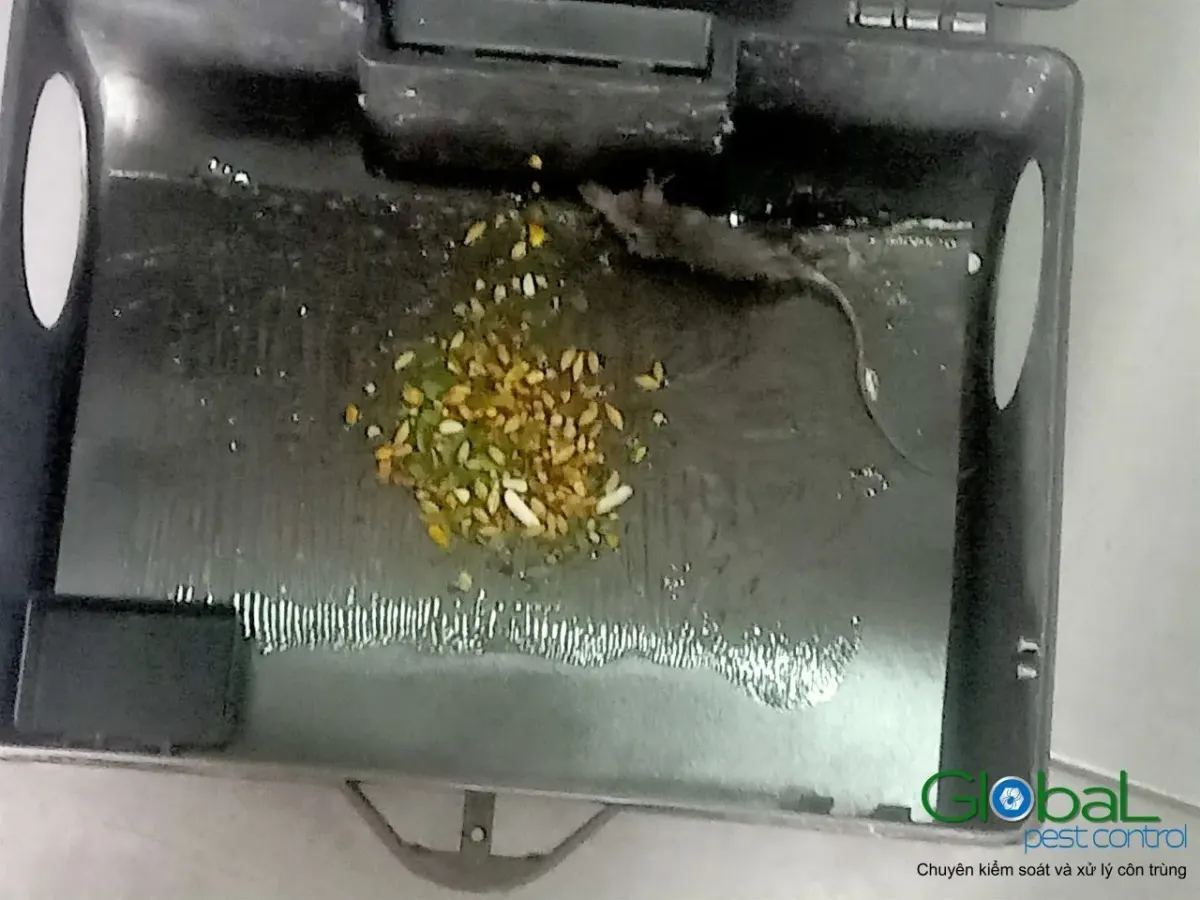
Office Pantries: The Smallest Room With the Biggest Problem
In almost every office we survey in this city, the same five square metres produces most of the complaints. The pantry has a sink, a fridge, a microwave, a bin and food residue — everything a restaurant kitchen has — used by fifty or a hundred people who each reasonably assume that somebody else is responsible for cleaning it.
It is also the one room in an office that facilities management tends to treat as a staff matter rather than a building matter, which is exactly why it drifts.
Why it behaves worse than a home kitchen
A domestic kitchen has one household with a shared standard. A pantry has no owner. Nobody wipes under the microwave because nobody put it there. The fridge accumulates containers that belong to somebody who left the company. Sugar sits in an open packet in a cupboard for months. And the bin is emptied on the cleaning contractor's schedule rather than when it is full.
The result is a small, warm, permanently supplied environment with no daily disturbance — which is the description of an ideal German cockroach harbourage.

The five places we find evidence
- Under and behind the microwave, especially the vent slots and the turntable recess.
- The sink cabinet, around the waste pipe collar and in the hinge recesses.
- Behind and beneath the fridge, including the drip tray at the back.
- The cupboard where dry goods live — coffee, sugar, instant noodles, biscuits — particularly the back corners.
- The bin surround, and the floor underneath the bin rather than inside it.
The five fixes, in order of return
First, a closed bin emptied daily, which is a contract change rather than a purchase. Second, a monthly fridge clear-out with a published date — announced, not enforced, so people remove their own containers. Third, sealed containers for anything communal: sugar, coffee, biscuits. Fourth, the microwave and the fridge pulled out and cleaned behind quarterly, which is a cleaning specification item, not a staff task. Fifth, no cardboard stored in the pantry, ever.
Four of the five cost nothing beyond deciding whose job it is, which is usually the actual obstacle.
When it is not the pantry's fault
If large cockroaches appear in an office rather than small ones, the pantry is probably not the source. American cockroaches come from the building drainage and enter through dry floor traps and unsealed pipe penetrations, often in a bathroom or a cleaner's cupboard rather than the pantry. Treating the pantry harder will not touch them. See cockroaches for the distinction and bathroom floor traps for the route.
Ants deserve a separate mention
Ant trails in an office almost always lead to the pantry and almost never start there. They enter along a window frame, a cable route or a wall penetration and follow a scent path to whatever sugar is available. Wiping the visible trail removes the path for a few hours. Following it back to the entry point and sealing that, plus removing the food, ends it. See why ants always appear in the kitchen.
What a treatment looks like here
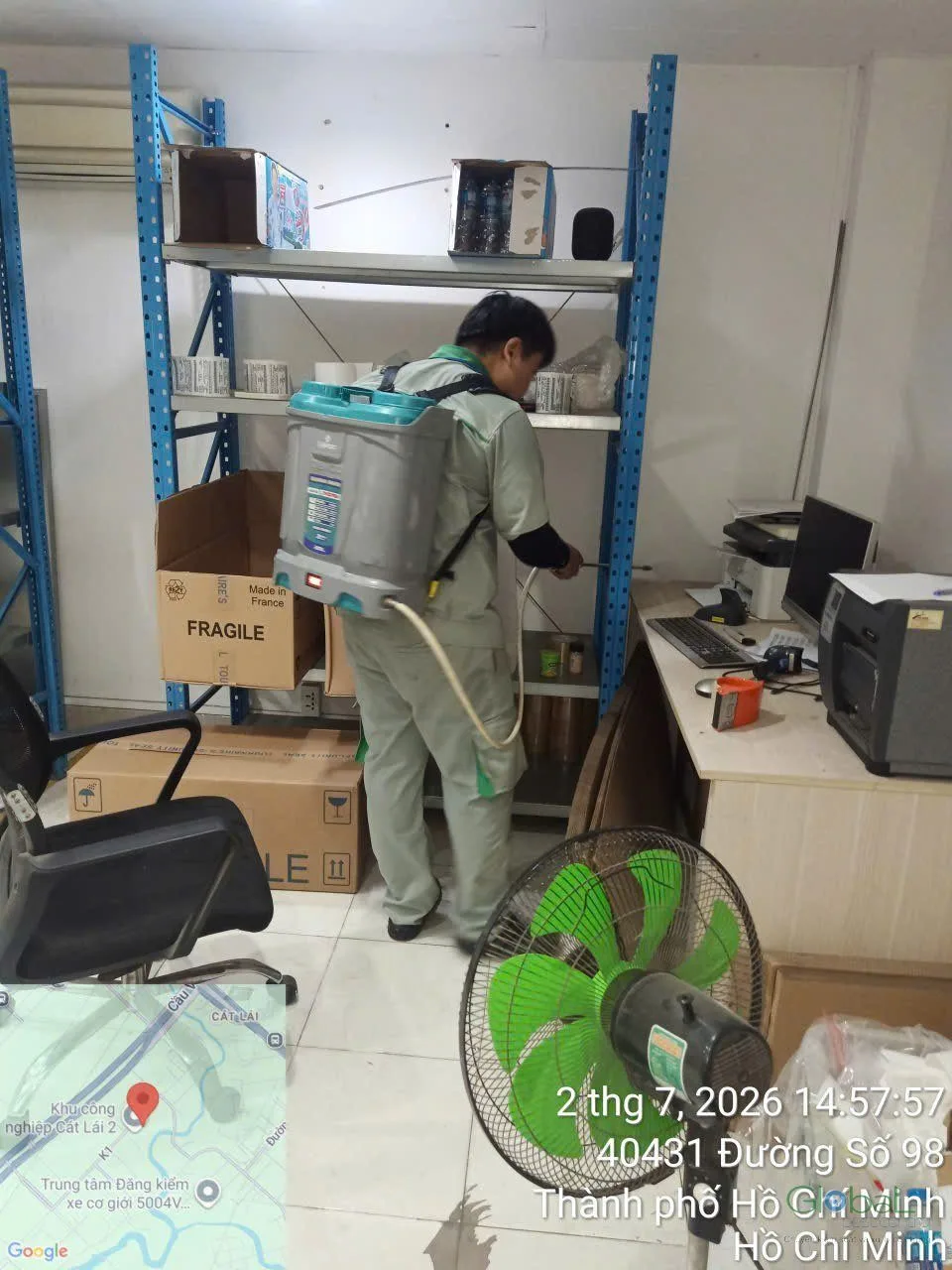
Gel bait in the appliance voids, the sink cabinet and the cupboard corners; a monitor left in place and read at the next visit; and no residual spraying of worktops or anywhere people put food. Work is scheduled outside office hours as standard. The programme detail is in the office programme.
Multi-tenant buildings and the shared bin room
In a building with several tenants, your pantry is connected to everyone else and their pantry through the refuse room, the risers and the shared corridors. A tenant two floors down with a poorly managed pantry raises the pressure on yours, and no amount of treatment inside your suite changes that. This is the point at which a complaint should go to building management rather than to your own contractor.
What to ask for specifically: how often the refuse room is treated, whether the chute or bin store is on a cleaning schedule, and whether the building treats risers and service voids or only visible common areas. Those three answers tell you whether the building is managing the shared half of the problem or leaving it to the tenants.
The pantry in a small serviced office
Small serviced offices and coworking floors run a harder version of the same problem, because the pantry serves more people, is used across a longer day, and has no single occupier who feels responsible. In those settings the only arrangement that holds is a daily bin collection written into the operator service specification and a weekly clear-out with a published time. Anything relying on goodwill drifts within a month.
Related reading
For shared buildings, see shared kitchens in coworking buildings and what building management covers. For the technical spaces nearby, see cable trays, risers and server rooms. Our parent company's Vietnamese-language cockroach programme for offices covers the same work.
Global Pest Control is the English-language arm of Khử Trùng Toàn Cầu, based in Thu Duc City.
Common questions
Our cleaning contractor says the pantry is not in scope. Is that normal?
It is common and it is the root of the problem. Cleaning specifications usually cover surfaces and floors, not behind appliances or inside cupboards. Adding those three items explicitly — behind the fridge, behind the microwave, inside the dry goods cupboard — on a quarterly cycle costs very little and removes most of the recurring issue.
Can we just remove the pantry?
Removing the kitchen rarely removes the food; it distributes it to desks, which is worse. A small, well-specified pantry that is cleaned properly is far better than no pantry and a hundred desk drawers with snacks in them.
Do we need to close the office for treatment?
No. Gel bait has no odour and needs no re-entry period, so the pantry can be treated during working hours if necessary. We normally schedule out of hours anyway, purely so the technician can move appliances without working around people.