Cockroach Egg Cases: What They Look Like and Where
People photograph cockroaches. Almost nobody photographs the small brown capsule in the corner of a cabinet, which is a shame, because the egg case tells you more than the insect does.
It identifies the species, it indicates whether a population is established or transient, and after a treatment it is one of the clearest signals of whether the work is holding.
What an ootheca is
A hard protective capsule containing multiple eggs, produced by the female and either carried until close to hatching or deposited in a sheltered place. It is a single object rather than a cluster of eggs, and it is considerably tougher than it looks.
That toughness is the reason a follow-up visit exists. Most insecticides penetrate an egg case poorly, so eggs present on the day of treatment hatch afterwards — typically within one to four weeks — and the second visit exists to catch that generation.
The German cockroach case
About 6 to 9 mm long, light to mid brown, with a distinctly ridged or segmented appearance along one edge. It contains roughly thirty to forty eggs.
The critical behavioural detail is that the female carries it protruding from her abdomen until shortly before hatching, which means it is protected by her movements and rarely exposed to a residual treatment. It is also why finding deposited German cockroach cases usually means a substantial and mature population.
The American cockroach case
Larger — 8 to 10 mm — darker, almost black-brown, and more angular, with a purse-like shape. It contains around fourteen to sixteen eggs.
The female deposits it early, often gluing it into a crevice near a food or moisture source, which means these are the cases most often found by people. Finding one in a bathroom or a basement is normal; finding several suggests a genuine breeding site nearby rather than transient visitors.
Where to look
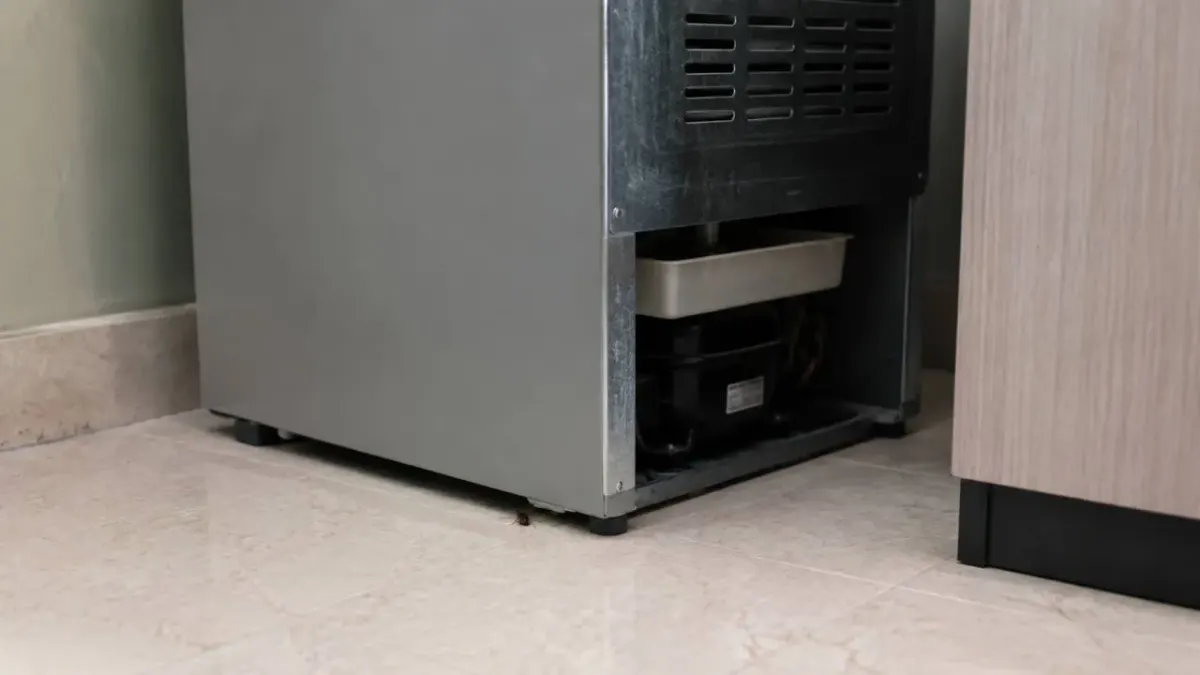
For German cockroaches: inside cabinet corners, along hinge lines, behind the fridge and under its base, in the microwave base, in the gap behind a splashback, and inside the plinth void.
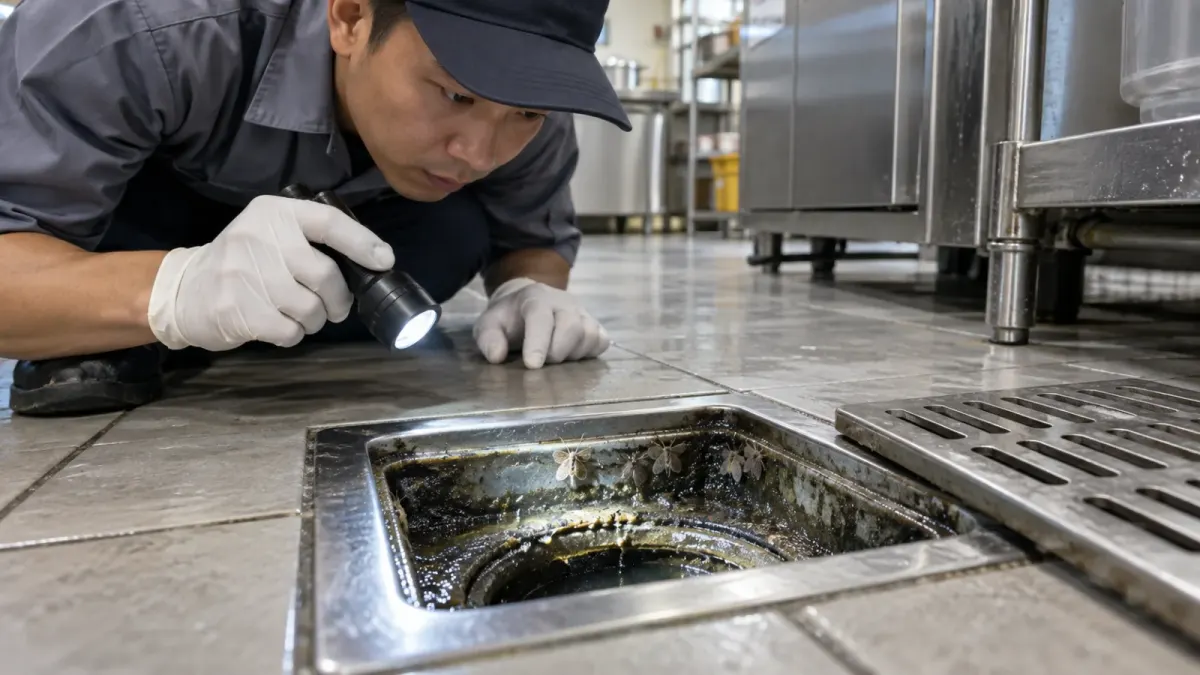
For American cockroaches: near floor drains, in basement corners, in service voids, under the bath, and in the gap behind a toilet cistern.
How to tell hatched from viable
A hatched case is split open along one edge and is hollow and light. A viable case is closed, firm and heavier for its size. Both are useful information and they mean different things.
A cabinet containing several hatched cases and no live insects two months after a treatment is a history of the problem rather than a current one. The same cabinet with closed cases is a current problem, and finding fresh closed cases six weeks after a treatment means reproduction is continuing and the treatment has not reached the harbourage.
What to do when you find one
Photograph it in place before touching it, because the location matters as much as the object. Then remove it — into a sealed bag, into the outdoor bin, not into the kitchen bin.
Do not spray it. Insecticide has very little effect on an intact egg case, and spraying the area contaminates surfaces where bait would otherwise go.
One further detail is worth knowing because it changes what a technician does. German cockroach females carry the case almost to term, so a residual applied to a surface reaches the case only through the mother, and the population is protected in a way that other species are not. American cockroach cases are deposited and glued into crevices, which is why a residual treatment along those crevices, and bait placed beside them, reaches the young as they hatch. Two species, two egg strategies, two different treatment plans.
Why this is the best follow-up indicator
Live insects fluctuate for reasons that have nothing to do with the treatment — weather, disturbance, time of day. Egg cases accumulate, do not move, and record what happened. Checking the same three locations at each follow-up visit and counting cases gives a much steadier read on whether reproduction has stopped than counting sightings does.
Related reading
See German and American cockroaches compared and our cockroach guide. For where they hide, the kitchen sink cabinet and behind your refrigerator. On treatment timing, why pests come back. Our parent company covers the same species in Vietnamese on its cockroach programme for homes.
Global Pest Control is the English-language arm of Khử Trùng Toàn Cầu, based in Thu Duc City.
Common questions
I found one egg case. Do I have an infestation?
For an American cockroach case near a drain, not necessarily — a single female can deposit one while passing through. For a German cockroach case in a kitchen cabinet, effectively yes, because that species does not pass through, and a deposited case means a female has been living there long enough to produce one.
Does freezing or boiling water kill them?
Boiling water poured directly on a case will kill it, and freezing works if the item can be sealed and frozen for several days. Neither is practical as a treatment, since the productive cases are inside voids you cannot reach. Removing what you find and treating the harbourage is the workable approach.
How long after treatment should I stop finding new cases?
Fresh closed cases should stop appearing within about four to six weeks of an effective treatment, allowing for eggs that were already present. Hatched cases may keep turning up for months as you clean out places you had not reached. Finding new closed cases at week eight is a reason to call the contractor back.