Guest Room Turnover and Bed Bug Prevention
Bed bugs do not walk into a hotel. They arrive inside luggage, in a laptop bag, in the seam of a jacket, and they arrive at reception with a paying guest. Nothing a hotel does at the perimeter changes that, which is why perimeter thinking is the wrong frame for this particular pest.
What a hotel does control is the turnover: the twenty to forty minutes between one guest leaving a room and the next one entering it. Everything that happens in that window either contains a localised problem or distributes it along the linen route to the rest of the floor.
The turnover is a containment decision, not a cleaning task
Most housekeeping procedures treat the turnover as cleaning with an inspection attached. It is more useful to invert that. The room is being reset for a stranger who will sleep in it, and the single question that matters is whether anything leaves this room that should not. Cleaning is how you answer the question; it is not the question itself.
That reframing changes small things that turn out to matter. Linen is bagged in the room rather than carried loose to the trolley. The trolley does not sit half inside the doorway. Vacuum heads are not moved from a suspect room to a clean one without emptying. None of these cost time once they are habit, and each of them is the difference between one affected room and four.
Which rooms deserve more than the standard turnover
- Long-stay rooms at check-out, because a population has had weeks rather than nights to establish.
- Rooms adjacent to, above and below any room that has previously had a confirmed incident, for at least three months afterwards.
- Rooms where a guest changed room mid-stay without giving a clear reason, which is sometimes the only warning a property receives.
- Rooms that have stood empty for several weeks — an unfed population goes quiet, and a quiet room reads as a clean one.
Where the evidence actually shows up
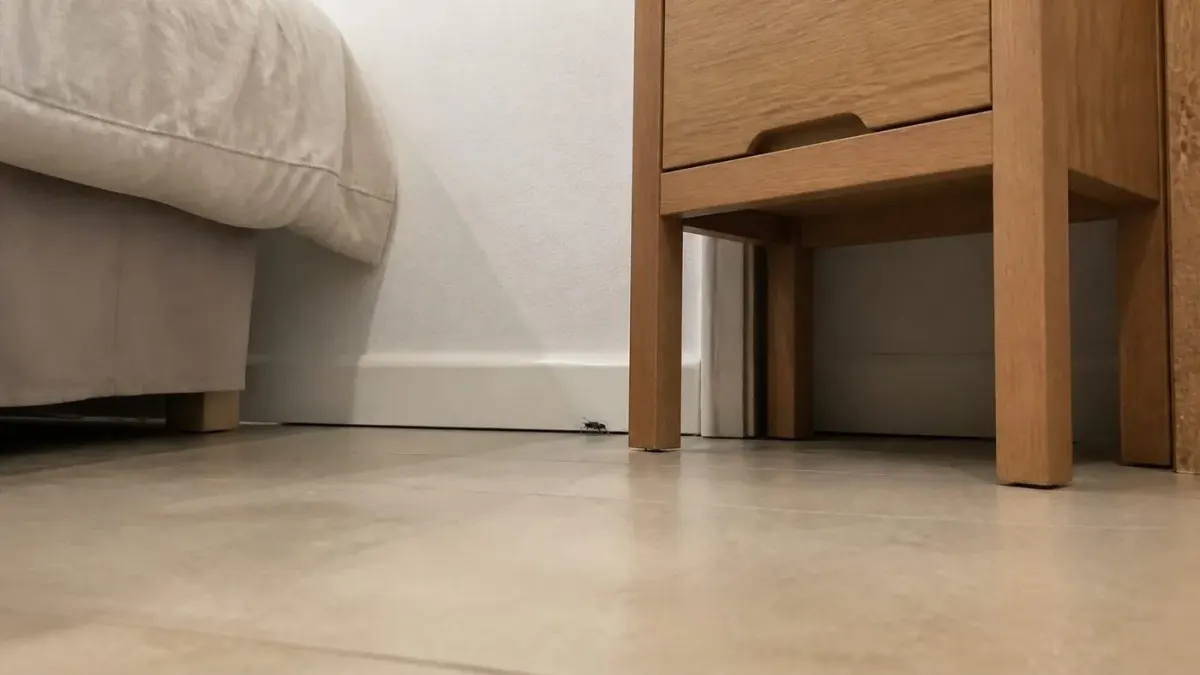
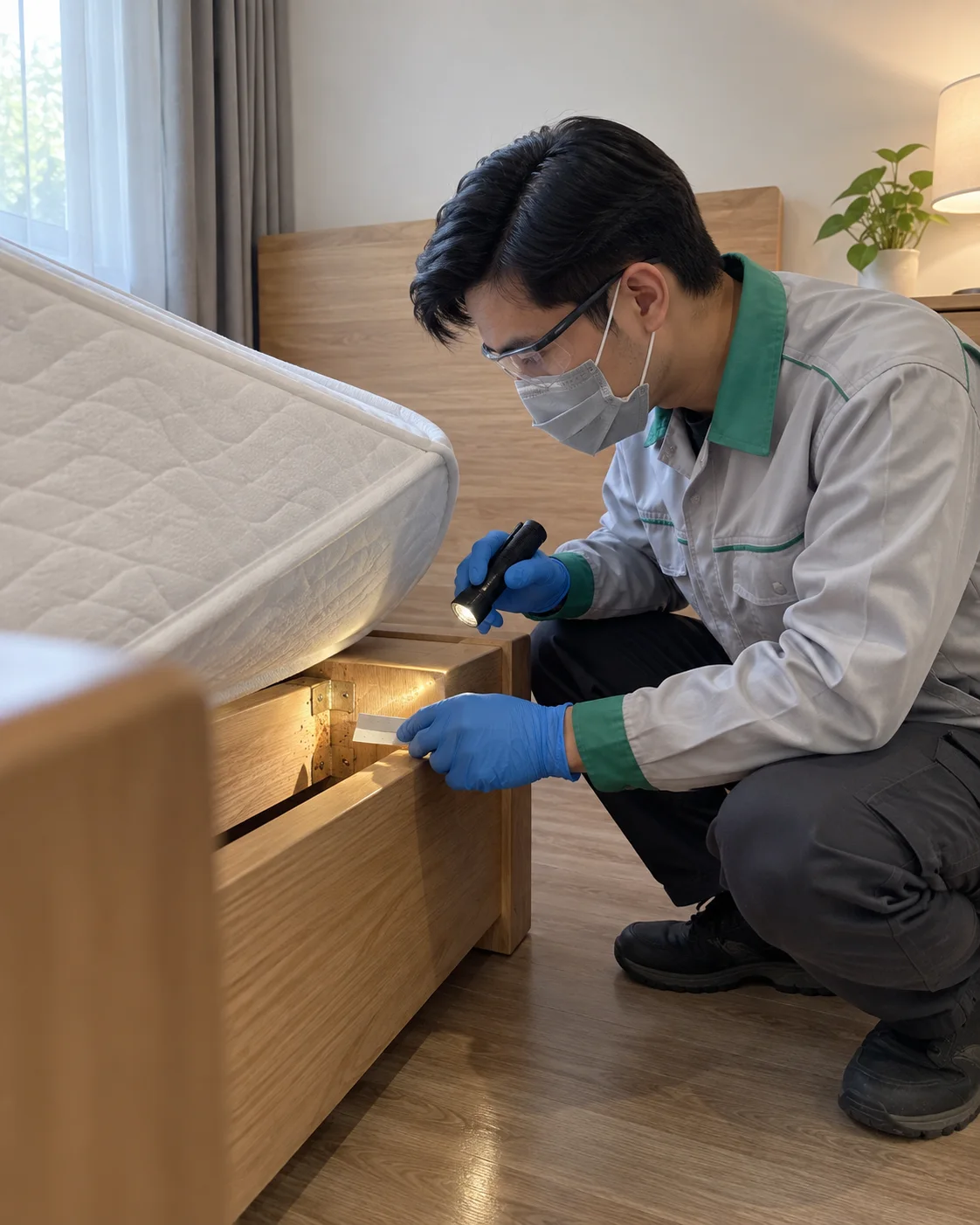
In the properties we survey in Ho Chi Minh City, evidence appears behind the headboard more often than on the mattress. Headboards are fixed to the wall, are almost never moved, and sit exactly where a feeding insect wants to be: close to a sleeping person, dark, undisturbed. Mattresses get changed, protected and turned; headboards get painted around.
The second most common location is the bed frame joint where the base meets the side rail, and the third is the underside of the bedside table drawer runner. A turnover check that looks only at bedding is looking at the least likely of the four.
The luggage rack question
A luggage rack is a genuinely useful piece of pest control equipment, but only if it is placed away from the bed and only if guests use it. A rack tucked against the wall beside the bed, which is the usual layout, keeps the suitcase within a metre of the harbourage it might have travelled to reach. Moving the rack to the far side of the room costs nothing and is one of the few room-design decisions that has a measurable effect.
Hard-shell racks with webbing straps are also easier to inspect than upholstered benches, which is why we suggest them whenever a property is refurbishing.
What to do when the turnover finds something
Stop. The room stays as it is: bed unstripped, curtains closed, door shut, room blocked in the property management system with a code that does not tell the whole shift what has happened. Photograph the evidence where it sits. Linen goes into a sealed bag inside the room and stays there until a technician has seen it. Nobody carries anything through the corridor.
The instinct to clean immediately is strong and it is wrong twice over. It removes the evidence that decides the diagnosis, and it moves material that may be carrying eggs through the part of the building you were trying to protect.
Blocking the neighbours
When a room is confirmed, the four adjacent rooms should be inspected before they are re-let, not after. Bed bugs move through service penetrations, along skirting voids and under doors, and in a hotel corridor the rooms either side are close enough that this is a routine finding rather than an unusual one. Blocking four rooms for one night is cheaper than treating five rooms next month, and considerably cheaper than a review that names the property.
Making the record worth having
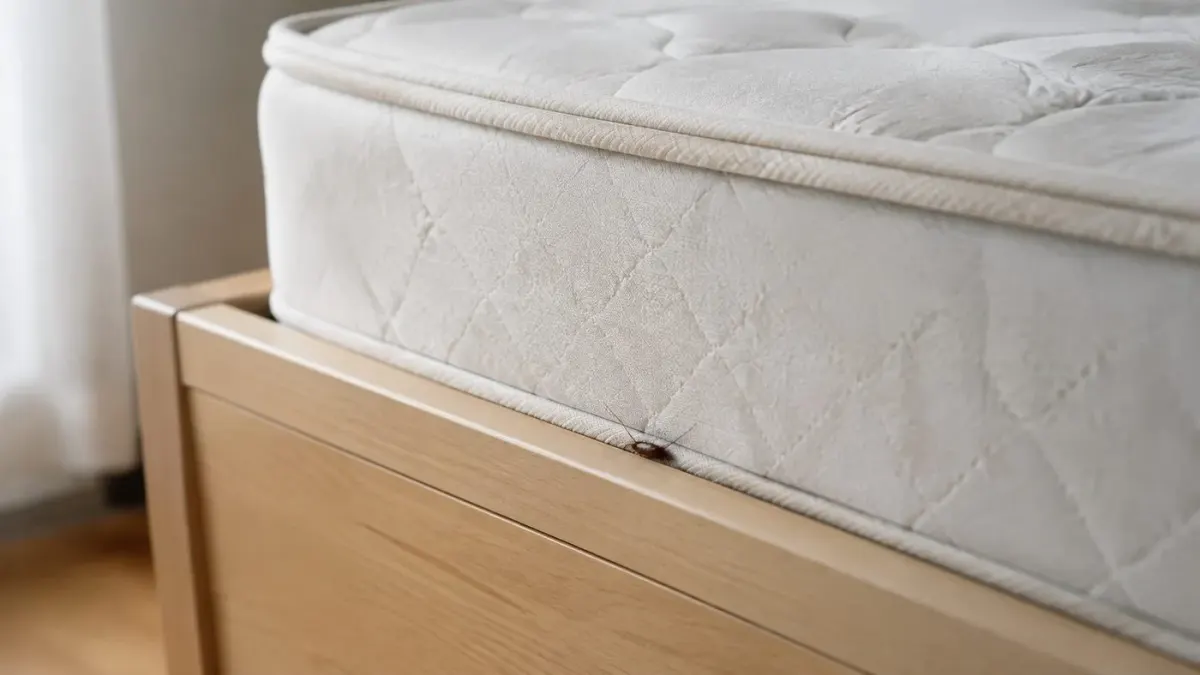
Every turnover check that finds nothing is still data. A property that logs the room number, the date and the result builds a picture of which floors and which room types carry the pressure, and that is what lets a programme stop being a monthly blanket treatment and start being targeted work. Auditors read the trend, not the individual reports, and so do we when we plan a year.
Related reading
The room-by-room detail is in our six-point housekeeping check, and the linen route is covered in hotel laundry and linen. If a guest has already raised it, read handling guest pest complaints. Background on the species is in bed bugs in Ho Chi Minh City, and the property programme is the hotel programme. Our parent company runs the same treatment work in Vietnamese as its bed bug treatment service.
Global Pest Control is the English-language arm of Khử Trùng Toàn Cầu, based in Thu Duc City. We write the housekeeping card in both languages so the shift that uses it can read it.
Common questions
Do we have to treat every room on the floor?
No, and a company that proposes it without inspecting first is selling volume. Treat what is confirmed, inspect the adjacent rooms and the rooms above and below, and monitor the rest. Blanket treatment of a floor is occasionally the right answer for a mature infestation, but it should follow an inspection, not replace one.
How long is a room out of service after treatment?
For a conventional treatment, typically four to six hours before the room can be made up, and we normally advise leaving it unsold for one night so the follow-up inspection happens on an undisturbed room. A second visit at ten to fourteen days is standard, because eggs present at the first visit hatch inside that window.
Can we prevent bed bugs entirely?
No property can, because the vector is the guest and every hotel has guests. What a property can do is find them at one room rather than five, which is entirely a function of how the turnover is run and how safe staff feel about reporting.