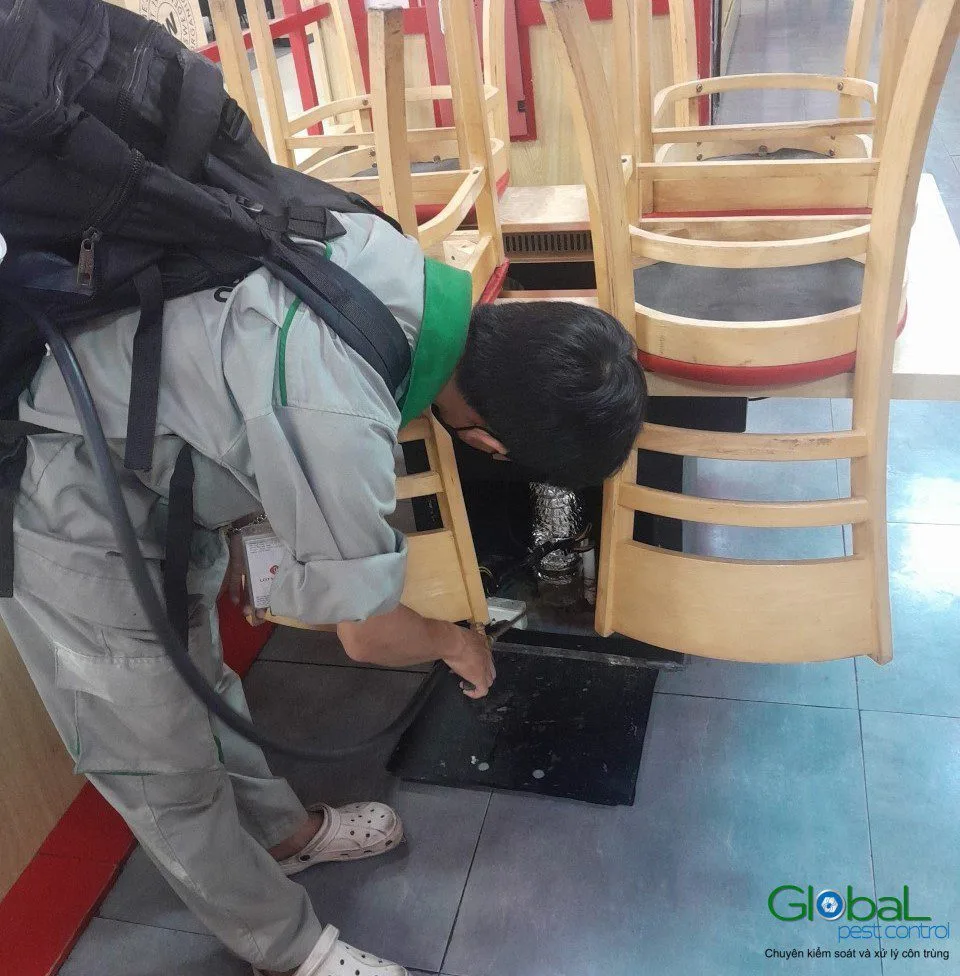
Lift Shafts, Stairwells and How Insects Move Up
A common assumption among people renting high in a tower is that height is protection. It is partly true — subterranean termites and most soil-associated species genuinely cannot reach floor twenty.
For everything else, the building supplies several vertical routes, and one of them is a lift full of people carrying shopping.
The lift pit
At the bottom of every lift shaft is a pit, below the lowest floor level. It is dark, undisturbed, usually contains a small sump with standing water, and it collects debris that falls down the shaft over years.
That combination makes it one of the more productive spaces in a building for American cockroaches and drain flies, and it is entered only by lift engineers, who are not looking for pests and have no reason to report what they see.
The shaft as a route
A lift shaft is a continuous vertical space from the pit to the motor room, with openings at every floor around the door mechanisms. Insects use those openings, and the air movement generated by a moving lift car assists dispersal upward through the shaft.
It is not the main route in most buildings — risers usually are — and it is the one that is never inspected, which is why it accounts for a disproportionate share of unexplained findings on upper floors.
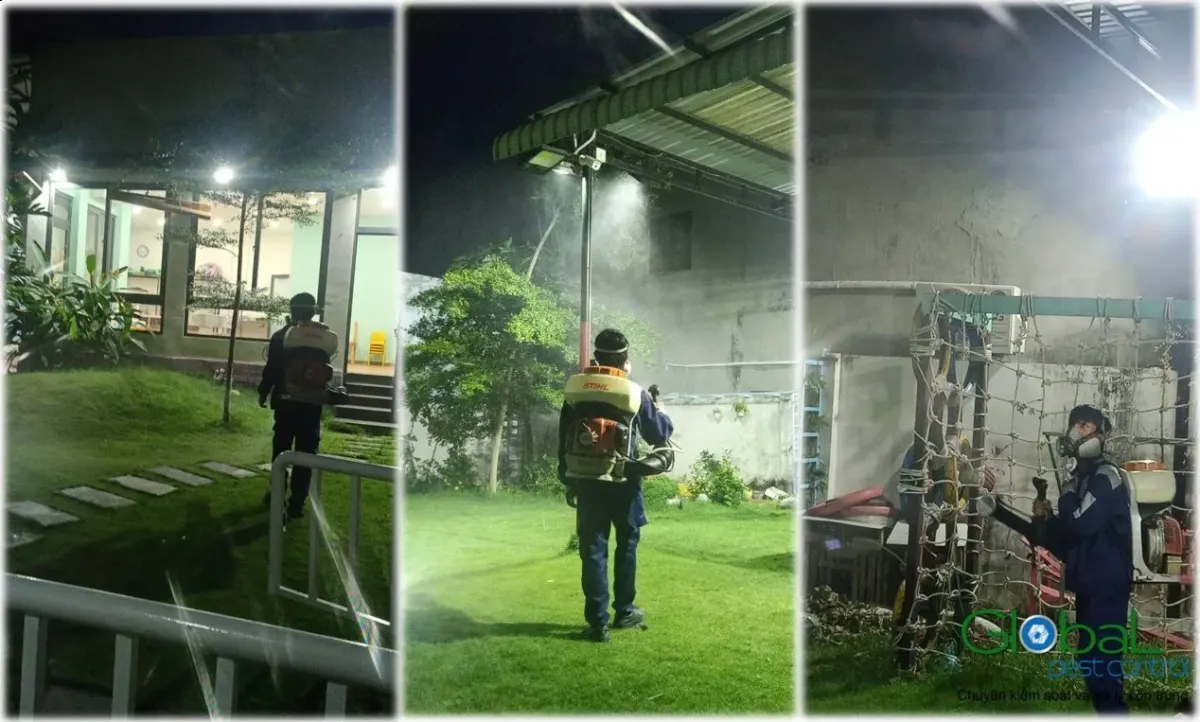
Stairwells
Fire stairs are continuous, poorly lit, rarely cleaned beyond the treads, and often have doors that do not seal at the bottom. They also collect litter on landings and behind doors, and in many buildings the ground-floor stair door opens directly to an external area or a bin store.
For rodents a stairwell is a straightforward route up, and for insects it is a sheltered corridor connecting every floor to the ground.
Refuse chutes
Where a building has one, it is a smooth vertical shaft coated with the residue of everything that has been dropped down it, with an opening on every residential floor. It is both a food source and a route, and it is the most direct connection between the bin store and floor eighteen that a building has.
The route nobody thinks about
People. German cockroaches arrive on high floors in cardboard boxes from supermarkets, in delivery packaging, in bags from markets, and in second-hand appliances. Bed bugs arrive in luggage. Neither species climbs anything.
This is the most common explanation for a problem in a well-managed tower and it is the hardest to address structurally, because the route is the front door.
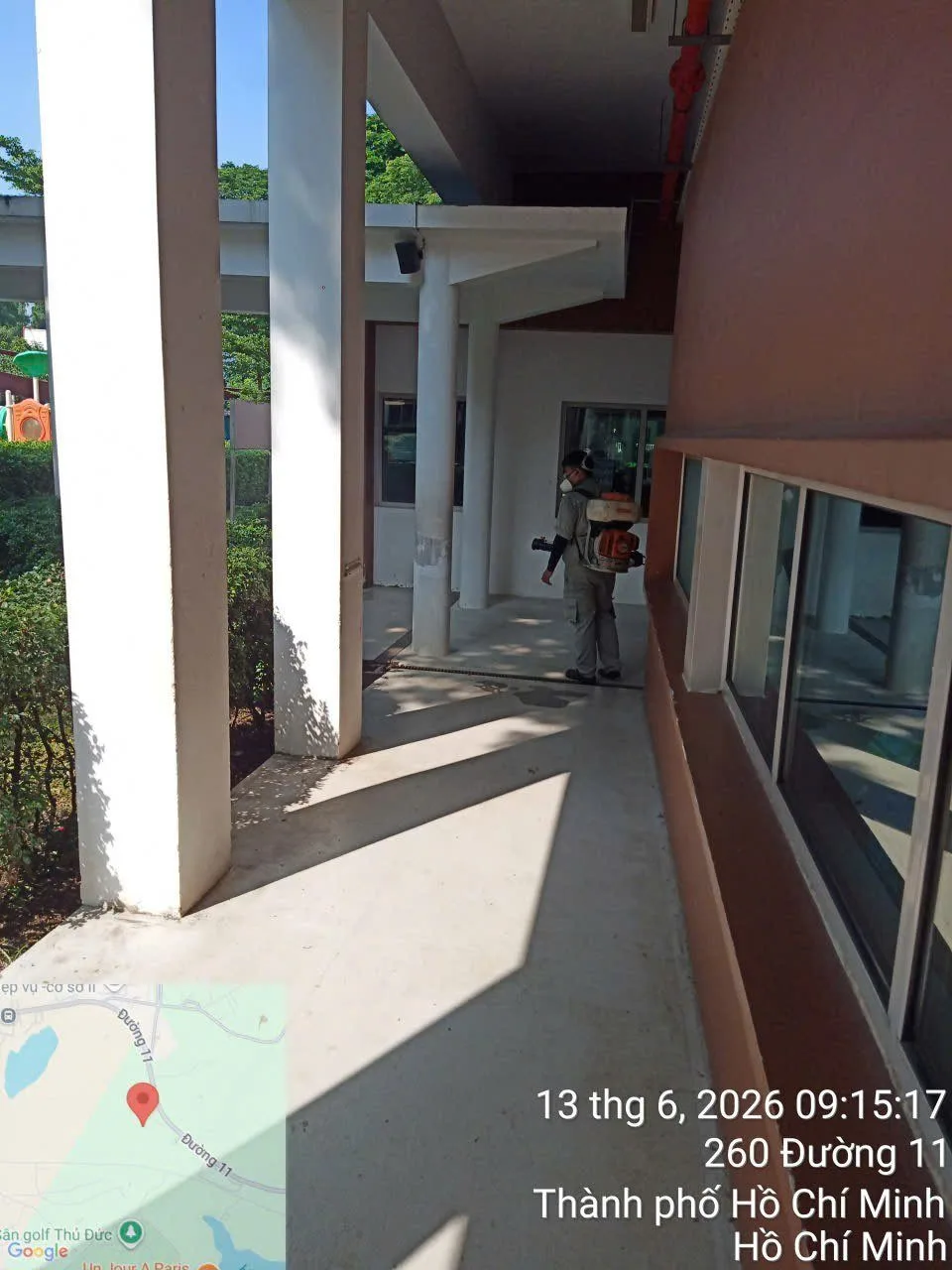
What this means for a high-floor apartment
Height genuinely removes the soil-associated risks: subterranean termites, ground-level ant nesting, millipedes, snakes and most of the perimeter pressure. It does not remove drainage-associated species, anything using risers, or anything that arrives with people.
So the programme for a high apartment concentrates on the drains, the penetrations into the unit, and what comes through the door — which is a shorter list than a ground-floor unit, and not an empty one.
Corridors deserve a mention of their own. In many towers the residential corridor is air-conditioned, carpeted in places, and connected to every apartment by a door with an undercut. A bag of rubbish left outside a door for an hour, or a delivery left on the mat overnight, is a food source on that floor, and a corridor with several such habits becomes a horizontal route to match the vertical ones.
What a building should inspect
The lift pit, at least twice a year, coordinated with the lift maintenance visit since that is when access is available anyway. The stairwell landings and the base of the stair core. The chute and its hopper doors. And the riser base at basement level.
Those four are the vertical infrastructure of the building, and in most buildings none of them are on the pest inspection route because nobody thought to add them.
Related reading
See why pests reach high-floor apartments and service risers. For the bin system, refuse rooms and chutes, and for the basement, basement car parks. What management covers is set out in what building management covers. Our parent company runs the Vietnamese-language cockroach control programme for residential towers.
Global Pest Control is the English-language arm of Khử Trùng Toàn Cầu, based in Thu Duc City.
Common questions
Can a cockroach really travel from the basement to floor twenty?
Not in one journey, and it does not need to. Populations establish at intervals — the lift pit, a riser landing, a wet room on a middle floor — and expand from each. What reaches floor twenty is usually the edge of a population that established on floor seventeen, not an individual that climbed the whole way.
Should the lift pit be part of our pest contract?
It should be on the inspection route, and access has to be arranged with the lift contractor rather than by the pest technician alone. The practical arrangement is a joint visit twice a year timed to lift maintenance. Most buildings have never asked for this and most lift contractors have no objection to it.
We are on floor twenty-two with a new German cockroach problem. Where from?
Almost certainly something carried in, and cardboard is the classic route. Second-hand appliances are the other one — the motor housing of a fridge or a microwave is a well-sheltered container. It is worth thinking back over recent deliveries and purchases, because identifying the introduction usually explains the timing exactly.