Refuse Rooms and Rubbish Chutes
A residential tower generates a great deal of food waste, and all of it converges on one room. In most buildings here a rubbish chute delivers it there, which means there is a smooth, enclosed, permanently soiled vertical shaft with an opening on every residential floor.
It is simultaneously the building\x27s largest food source and one of its best travel routes, and it is managed by a contractor most residents never meet.
What a well-run refuse room looks like
- A self-closing door with an intact bottom seal, not propped open with a bin.
- Lidded bins, and enough of them that the lid can close.
- A washable floor with a drain, and a drain that holds water.
- Daily removal, and a hose-down at least weekly.
- Nothing stored in the room other than bins.
If four of those five are true, the room is doing its job. In practice the door and the bin lids are the two that fail most often, and they are the two that matter most.
The chute is the part nobody cleans
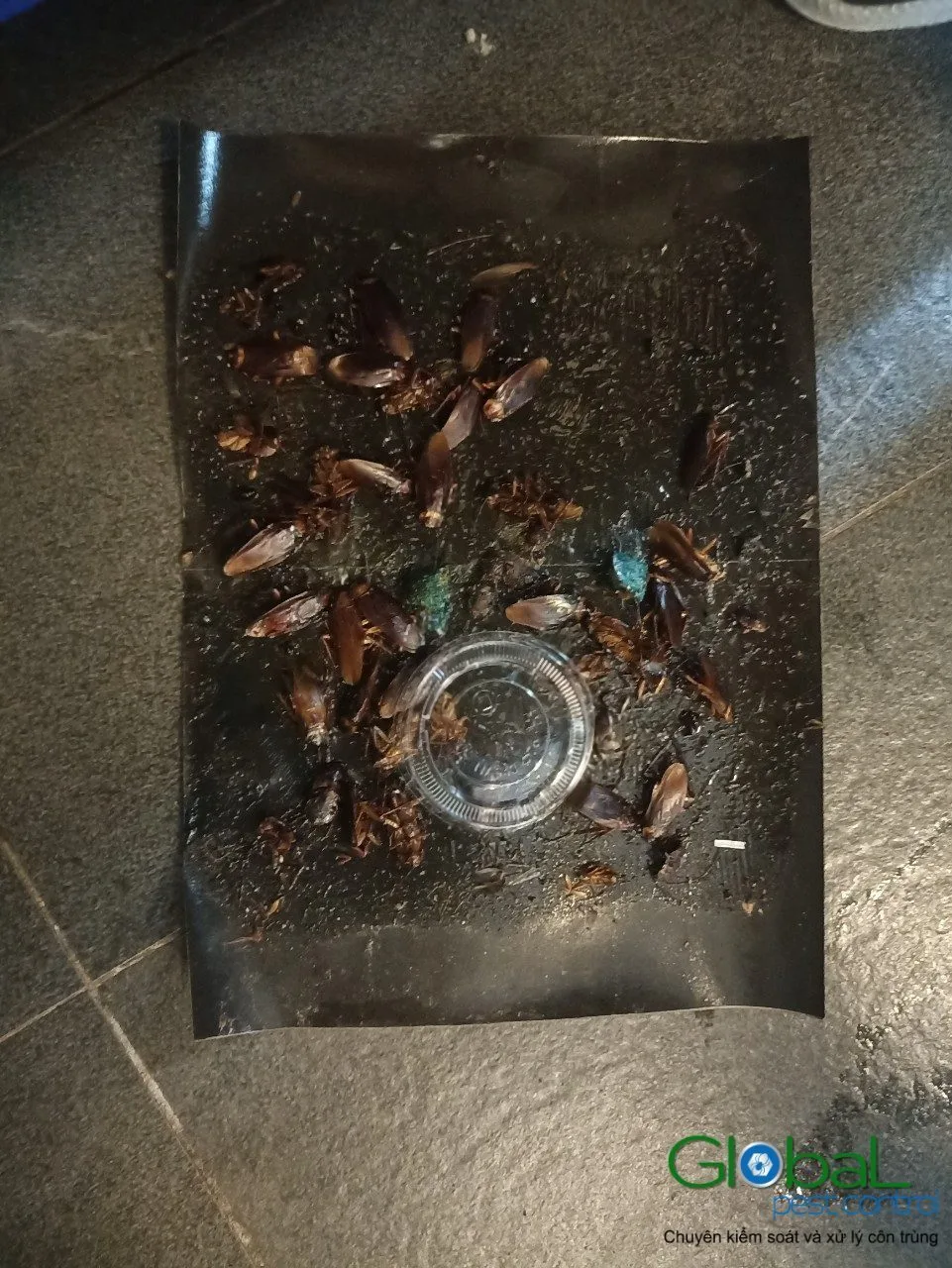
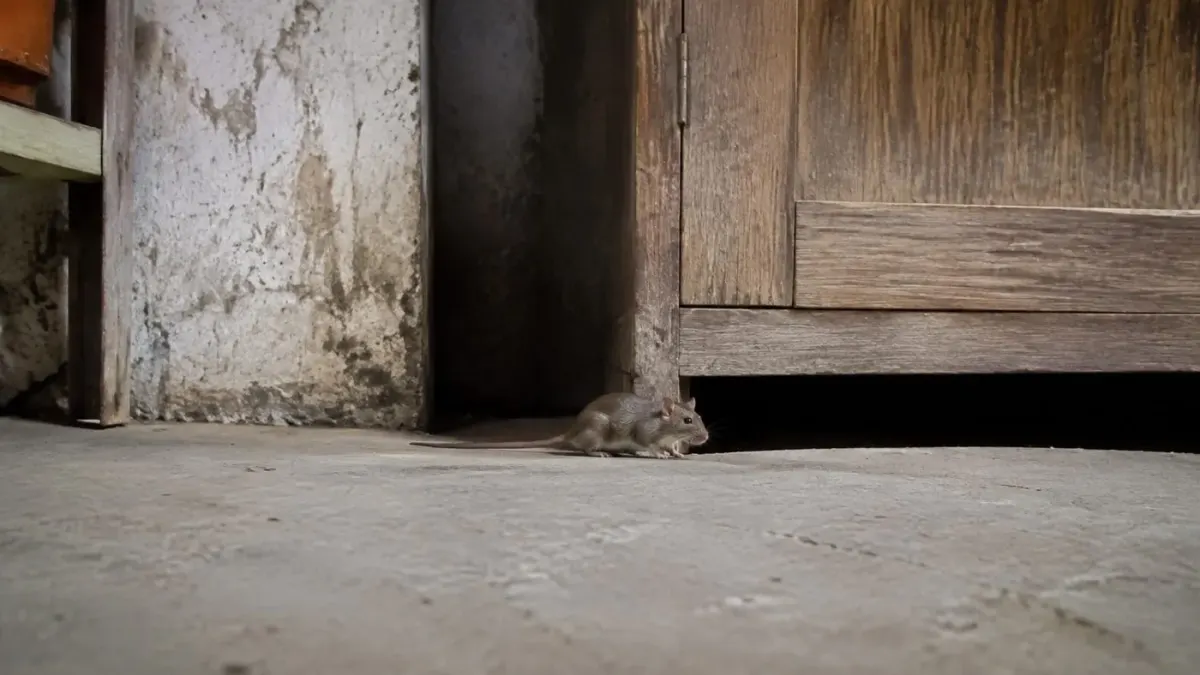
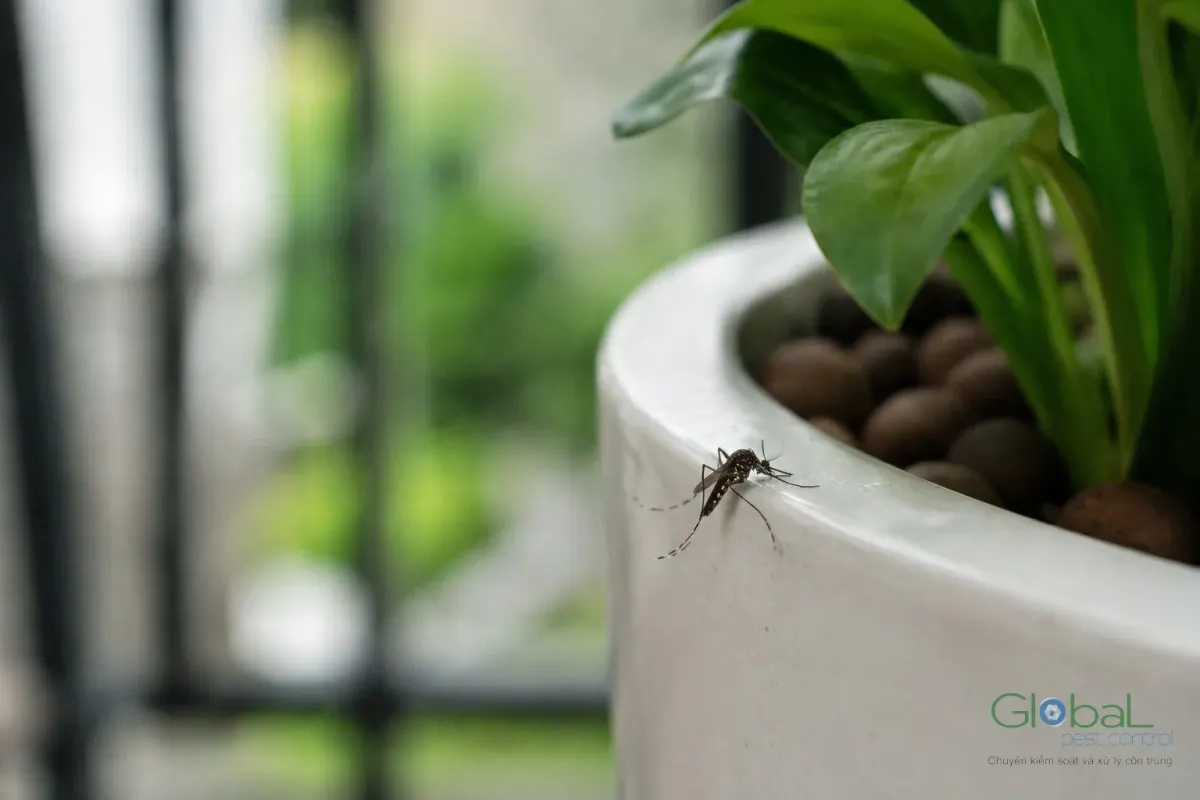
A chute is a steel or concrete shaft coated internally with the residue of everything that has gone down it. It is warm from the building, it is dark, and it is undisturbed except for a few seconds several times an hour. Cockroaches, flies and rodents all use it, and in the case of flies it is a breeding site rather than just a route.
Chutes need periodic mechanical cleaning — a brush head lowered on a cable, or a high-pressure system — typically two to four times a year. Very few buildings in Ho Chi Minh City do it on schedule, and it is one of the more reliable things to ask about when a building has an unexplained fly problem on middle floors.
The hopper door on your floor
The chute opening on each floor has a hopper door that should close fully and seal. When the gasket perishes or the counterweight fails, that floor gets a permanent opening into the shaft, and the smell and the insects follow. This is a small maintenance item with a visible symptom, which makes it one of the few things a resident can report precisely.
What residents actually control
Two things, and both are more useful than they sound. Bag waste properly and tie it, because loose food waste in a chute coats the shaft rather than travelling down it. And do not leave bags outside the chute door or in the corridor, even briefly, because a bag left in a corridor overnight is a food source on a residential floor and it teaches a rodent that the floor is worth visiting.
Bulky waste is the other recurring failure. Buildings rarely provide anywhere for a mattress, a broken chair or a dismantled wardrobe, so those items are left beside the bin room for days or weeks. A discarded mattress in a communal area is worth treating as urgent rather than untidy, because it is one of the few objects that can carry bed bugs from one apartment to a shared space.
Recycling and returnables
Many buildings now have a separate collection point for cans, bottles and cardboard, and those points are frequently unmanaged. Uncrushed drink cans with residue in them are a sugar source, cardboard is harbourage, and both sit for a week before collection. The fix is a lidded container and a shorter collection interval, and it is worth raising because these points are usually newer than the waste system and were added without the same thinking.
Treatment in a refuse room
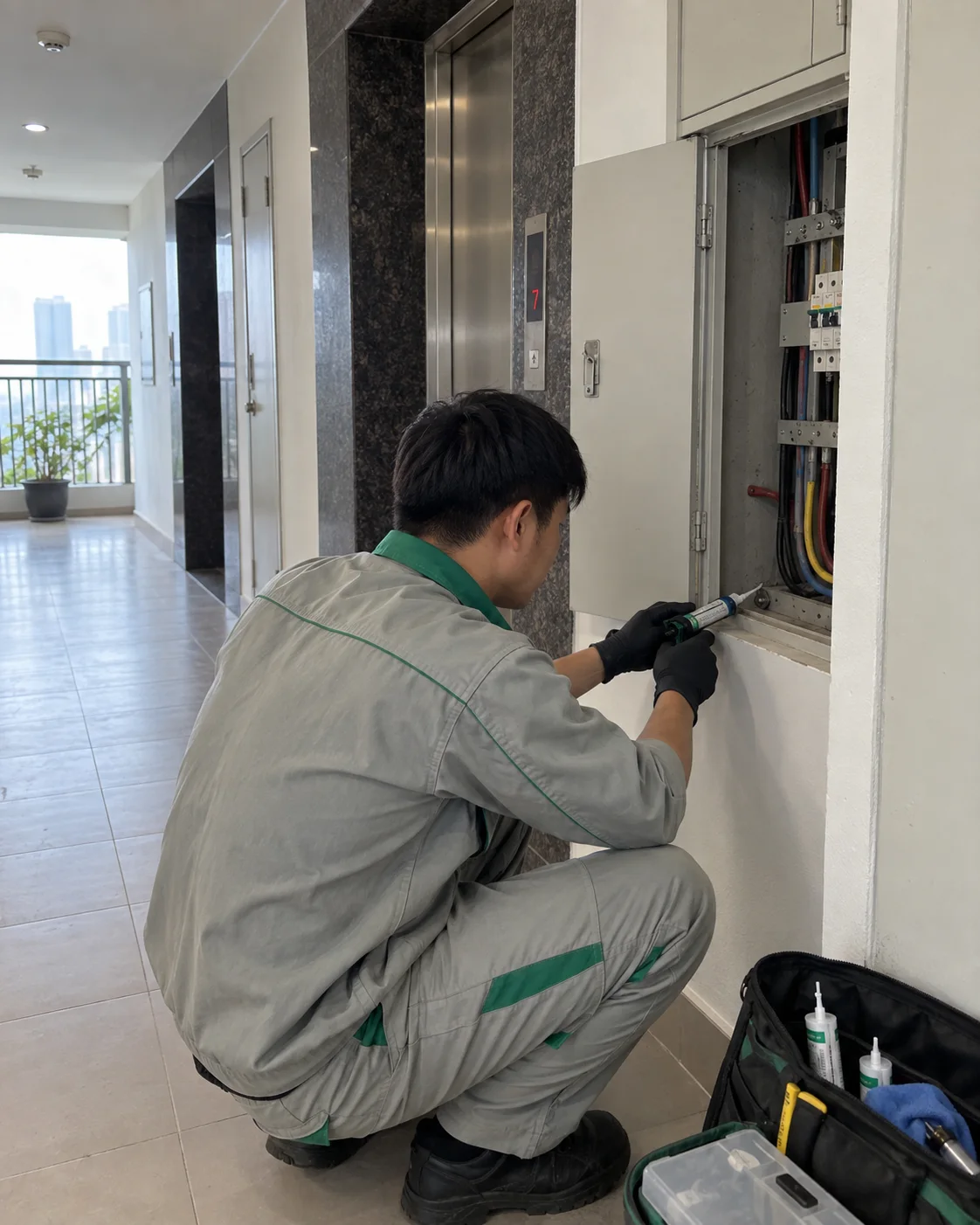
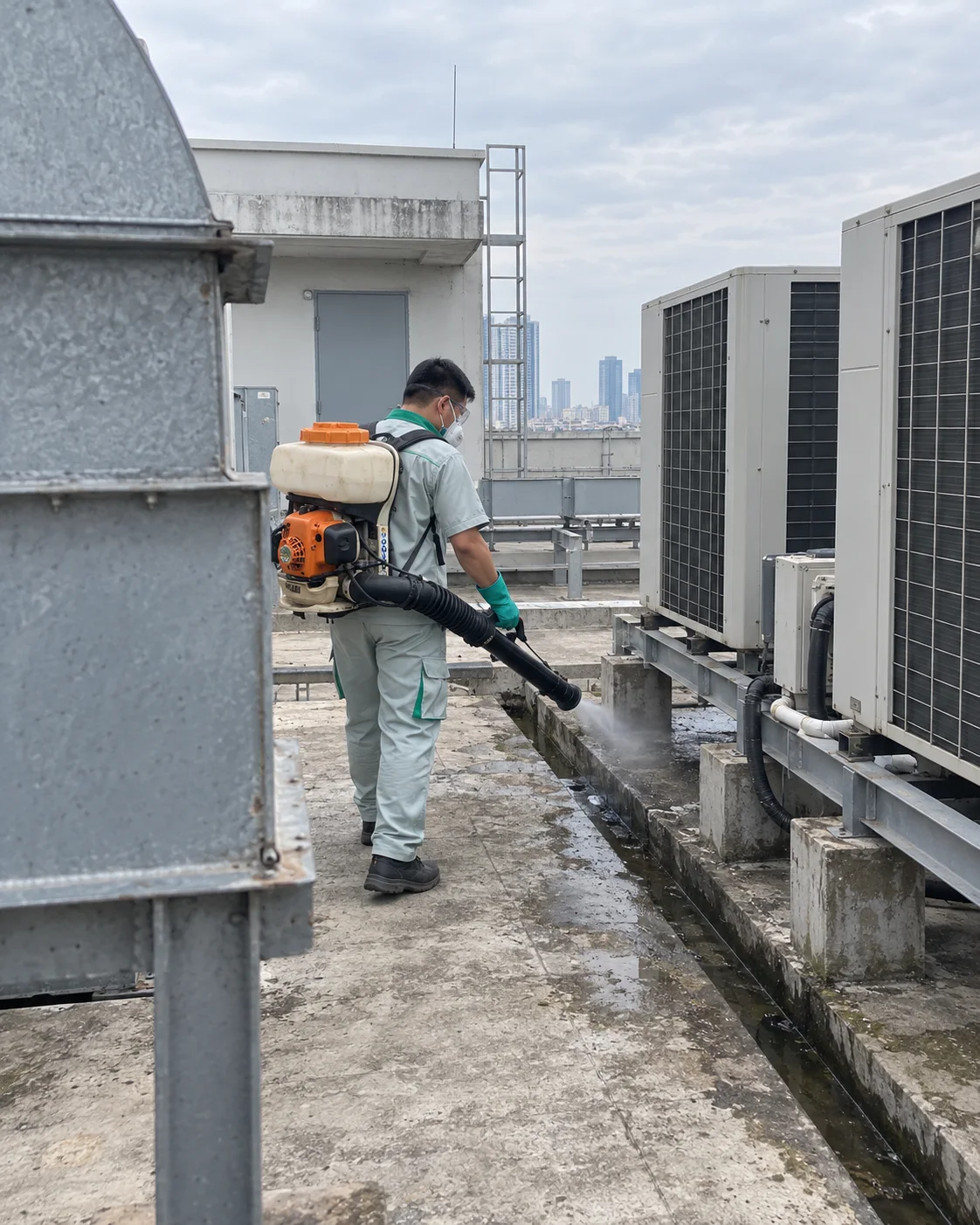
This is one of the few residential spaces where a residual treatment on the structure is appropriate, because there is no food preparation, no soft furnishing and no child access. In practice we use a combination: residual to the wall and floor junction, gel bait in structural cracks, drain treatment for the floor gully, and a secured rodent station outside the door rather than inside. The room is treated at every visit rather than on report, because it is the source rather than a symptom.
Related reading
For the level it usually sits on see basement car parks and bike storage, and for the routes upward, service risers. Fly identification is covered in telling flies apart, and responsibility in what building management covers. The building programme is our whole-building programme. Our parent company runs the Vietnamese-language cockroach control programme for these areas.
Global Pest Control is the English-language arm of Khử Trùng Toàn Cầu, based in Thu Duc City.
Common questions
There is a smell from the chute door on our floor. Who fixes that?
Building management, and it is a maintenance defect rather than a pest problem — usually a perished gasket or a hopper door that no longer closes flush. Report it as a defect with the floor number, because that routes it to the right contractor. Reporting it as a smell tends to produce an air freshener.
Can our building close the chute and use bins instead?
Some buildings have, and it does reduce the vertical route substantially. It also moves the waste into corridors and lifts unless the collection is well organised, which can be worse. If it is being considered, the deciding factor is whether there is a workable collection rhythm, not whether the chute is a problem.
How often should the refuse room be treated?
Every routine visit, as a fixed item rather than on request. It is the source area for the building, so it gets attention whether or not anyone has reported anything, and the record of those visits is what lets you see whether the cleaning contract is holding up.