Gardens, Ponds and Pests in Villa Compounds
A garden is an advantage and a liability at the same time. It makes a house pleasant to live in and it puts a permanent population of insects within a few metres of every door. Most compound pest problems can be traced to four or five specific places outside.
Where mosquitoes actually breed
Not usually in the ornamental pond. A pond with fish, movement and depth is a poor breeding site. The productive sites are small, still and overlooked:
- Saucers under potted plants — the single most common source in any compound
- Drainage channels around a terrace, where leaves block the fall
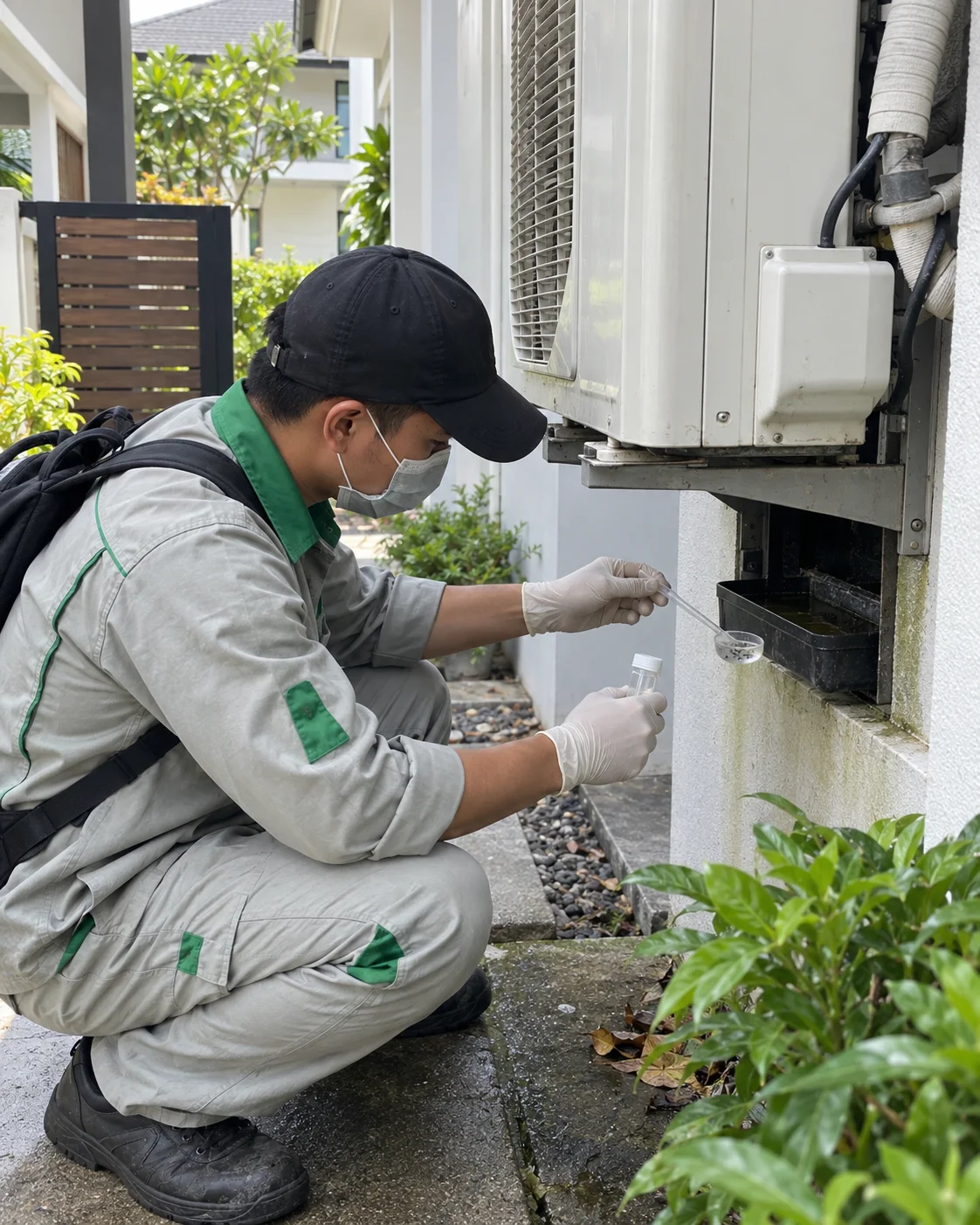
- The tray or drip line beneath an outdoor air-conditioning condenser
- Water features that have been switched off but not emptied
- Bromeliads and other plants that hold water in the leaf axils
- Buckets, watering cans, wheelbarrows and pool equipment left uncovered
Emptying and turning these over weekly does more than any spraying programme, because it removes the production rather than the product.
Ants come in from planters, not from the kitchen
Planters against a house wall are effectively a nest box: warm, moist, undisturbed soil with a solid surface alongside for foraging. Colonies establish there and forage indoors through the nearest door or window frame.
Moving planters twenty or thirty centimetres away from the wall breaks the direct route and makes a visible difference. Where that is not possible, treating the planter itself is more useful than treating the kitchen counter where the trail is seen.
Pools, filters and the equipment area
The pool itself is chlorinated and not a breeding site. The equipment area beside it often is — backwash pits, pump housings and the space under decking hold water and shelter. It is also the least visited part of a garden.
Rodents and the compost heap
Composting is worth doing and it needs managing. An open heap with kitchen scraps is a food source with cover. A sealed bin raised off the ground is not. The same applies to bins for garden waste and to any feed kept for pets or birds.
Snakes: less common than the anxiety about them
Snakes appear in compounds occasionally, usually following rodents or frogs. The prevention is the same as for rodents: remove cover close to the house, keep grass short near walls and paths, clear piles of building material or firewood, and do not leave pet food out.
The advice is not to attempt removal. Most bites in Vietnam happen while someone is trying to catch or kill the animal.
A monthly walk around the boundary
Twenty minutes once a month, checking the drainage line, the plant saucers, the condenser trays, the compost area and the strip of ground along the house wall, will find nearly everything that matters while it is still small.
Households that do this need far less treatment than those that do not, and the difference is entirely in the water and the cover.
Planting choices that reduce the work
Dense planting directly against a house wall holds moisture, shades the ground and gives insects a route indoors at first-floor level. A gap of half a metre between planting and the wall, kept clear and dry, removes a surprising amount of pressure.
The same applies to ground cover. Thick low planting against a path or terrace is a habitat; gravel or a mown strip is not. This is not an argument for a bare garden — it is an argument for a clear margin.
Where treatment belongs in a compound
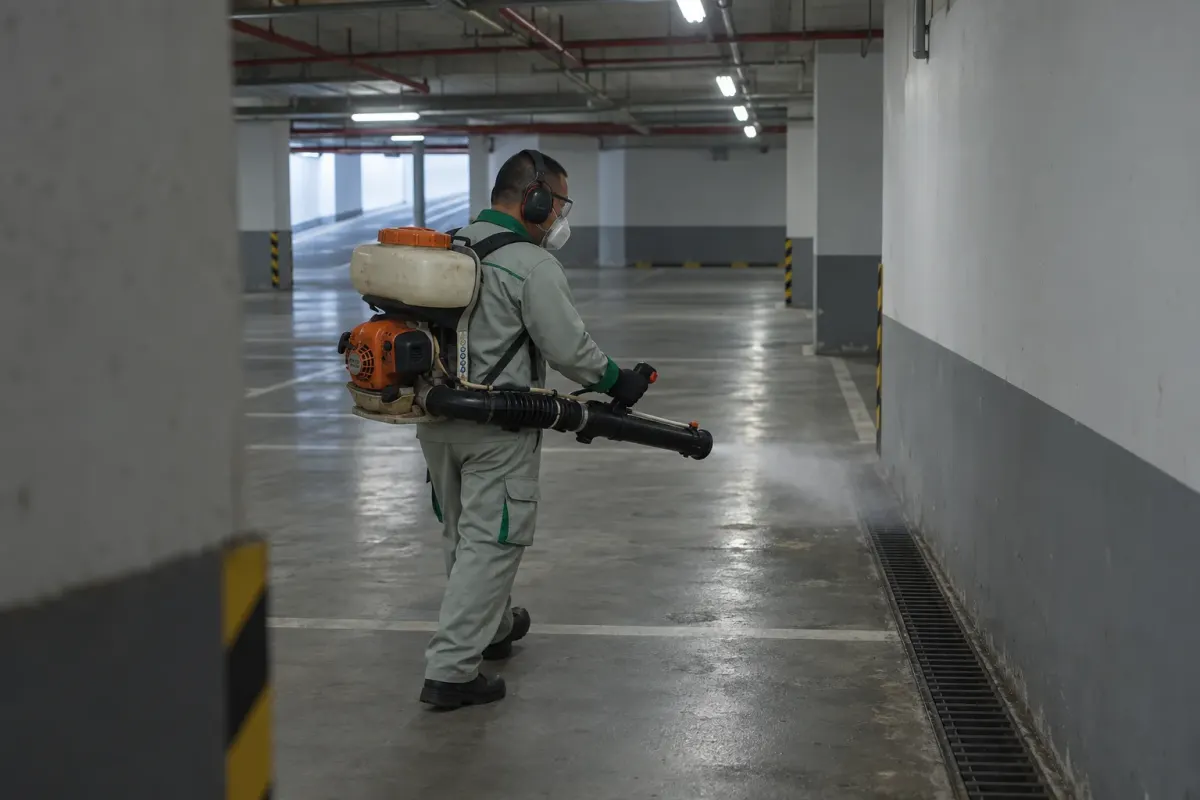
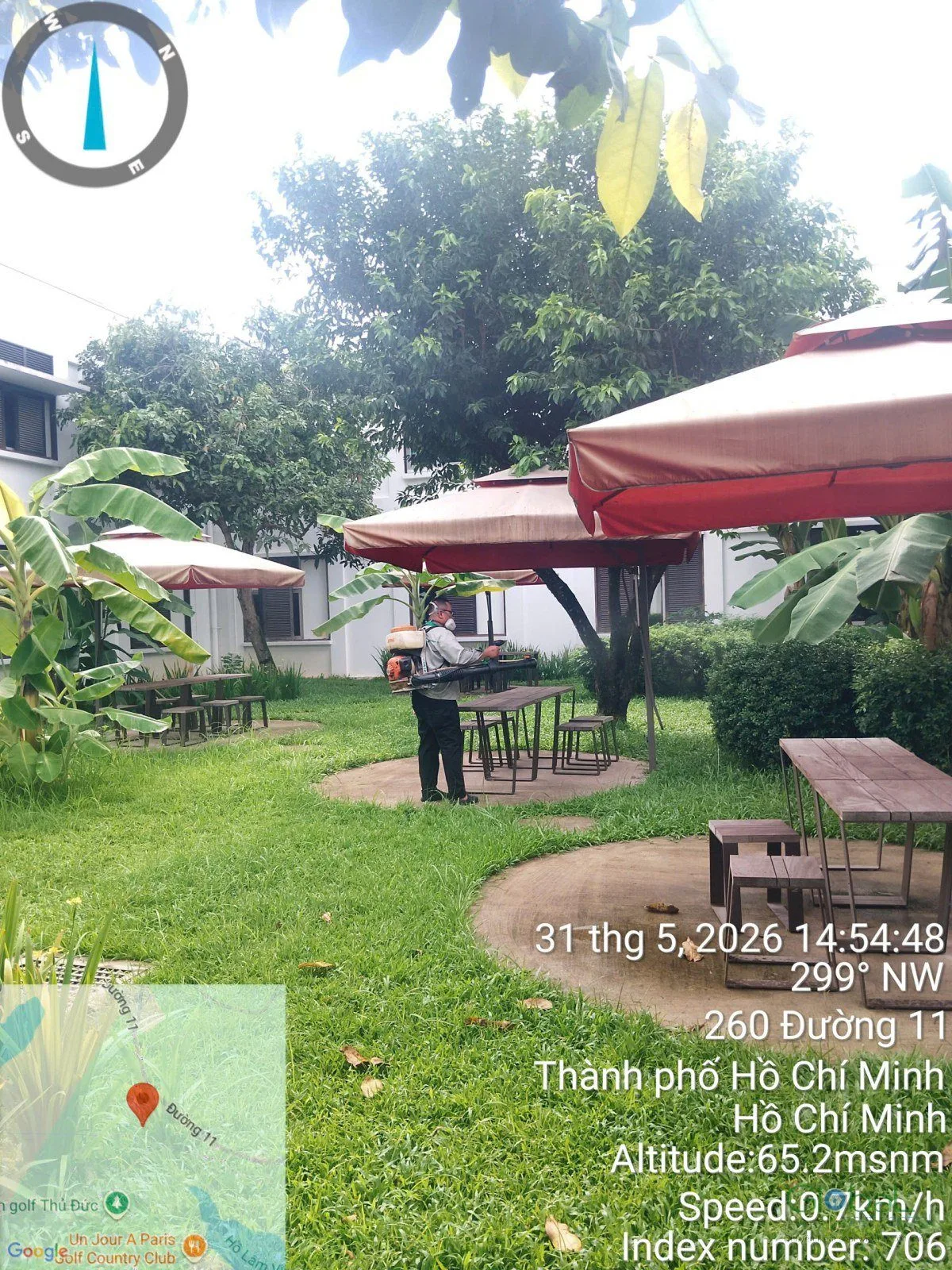
- A perimeter treatment at the base of external walls, renewed more often in the rains
- Targeted treatment of shaded vegetation where mosquitoes rest during the day
- Bait stations at the boundary rather than near the house, so rodents are intercepted early
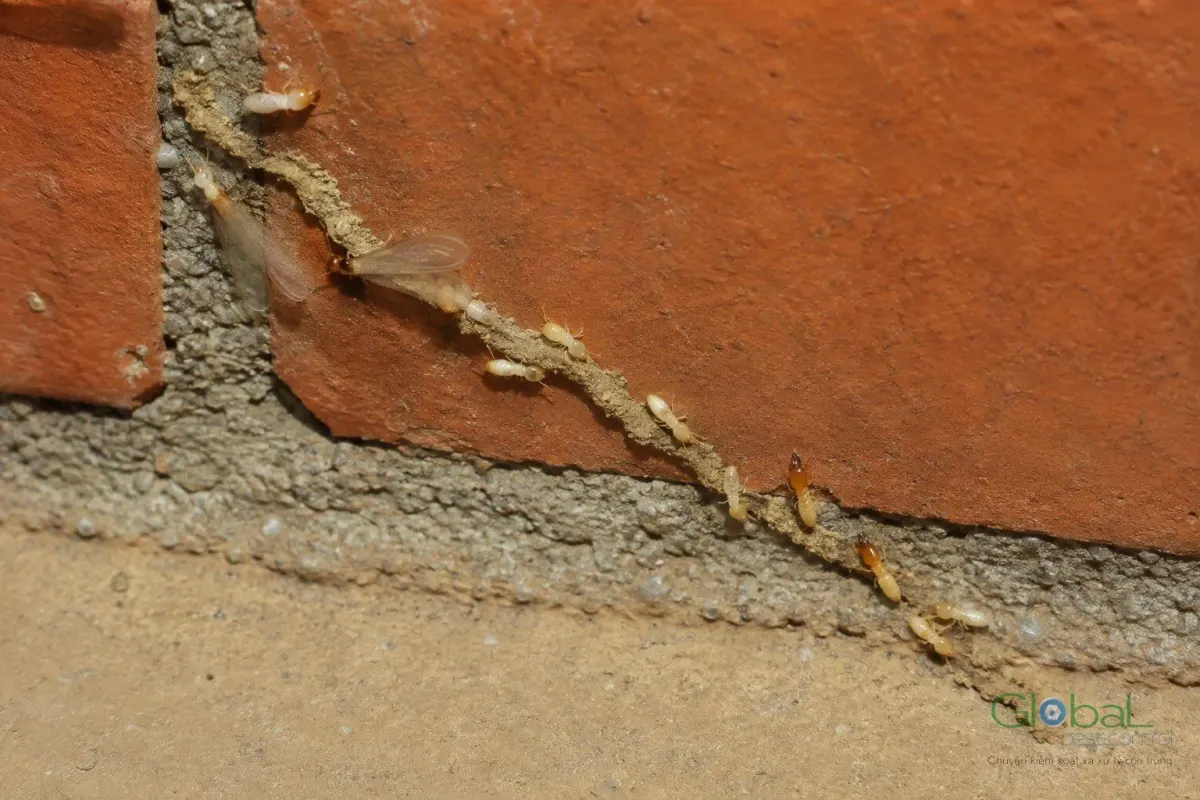
- Termite monitoring where any timber structure meets soil — decking, pergolas, fencing
- Larvicide only in water that genuinely cannot be emptied
Pets change the plan
Dogs and cats in a garden rule out several standard approaches. Loose rodent bait is unacceptable; bait must be in tamper-resistant stations placed where an animal cannot reach. Treated vegetation needs a re-entry interval that is actually observed, which means keeping animals indoors for a stated period rather than for as long as anyone remembers.
Ticks are the other pet-related issue in compounds with grass and shade. Treating the animal and treating the garden are separate jobs, and doing only one of them is the usual reason the problem persists.
The boundary with the neighbouring property
In compound housing the fence line is frequently the source: an unoccupied villa next door with a neglected garden, a building site, or a communal area nobody maintains. Treatment inside your boundary will hold the pressure down and will not remove it.
Where the compound has management, this is worth raising with figures rather than as a complaint — an untended plot is a shared cost because it affects every house around it. Where there is no management, a boundary treatment line and rodent stations along the fence are the practical answer.
Global Pest Control is the English-language arm of Khử Trùng Toàn Cầu. The same technicians and the same programmes are described on our Vietnamese-language services.
Book an inspection
Site inspections are free of charge and carry no obligation. A technician walks the property, identifies the species and the harbourage, and sends a written quotation with the method and the schedule — normally within one working day.
Request an inspection · See indicative prices · All services