Food Safety at Home After a Kitchen Treatment
A kitchen is the room most people worry about, and it is also the room where a correctly executed treatment is the least concerning, because nothing should be applied to any surface that touches food.
That principle does most of the work here. The rest is preparation and a short list of things to wash.
Where treatment goes in a kitchen
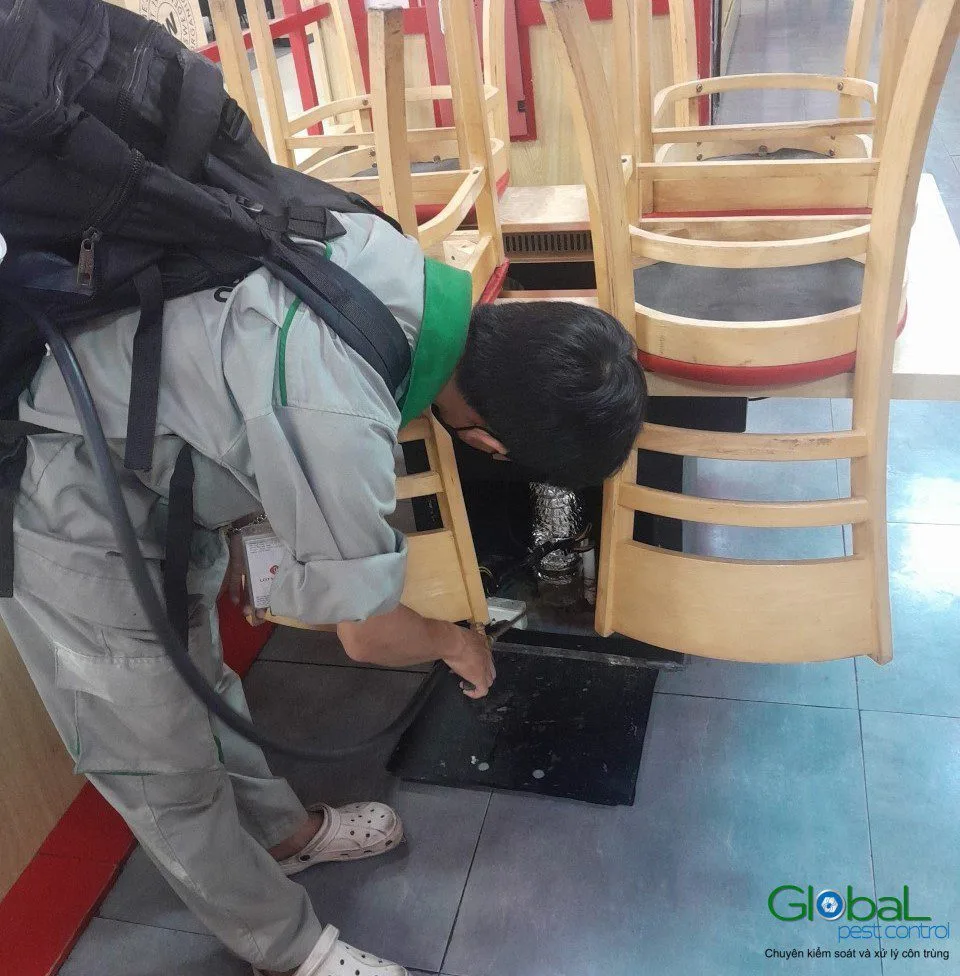
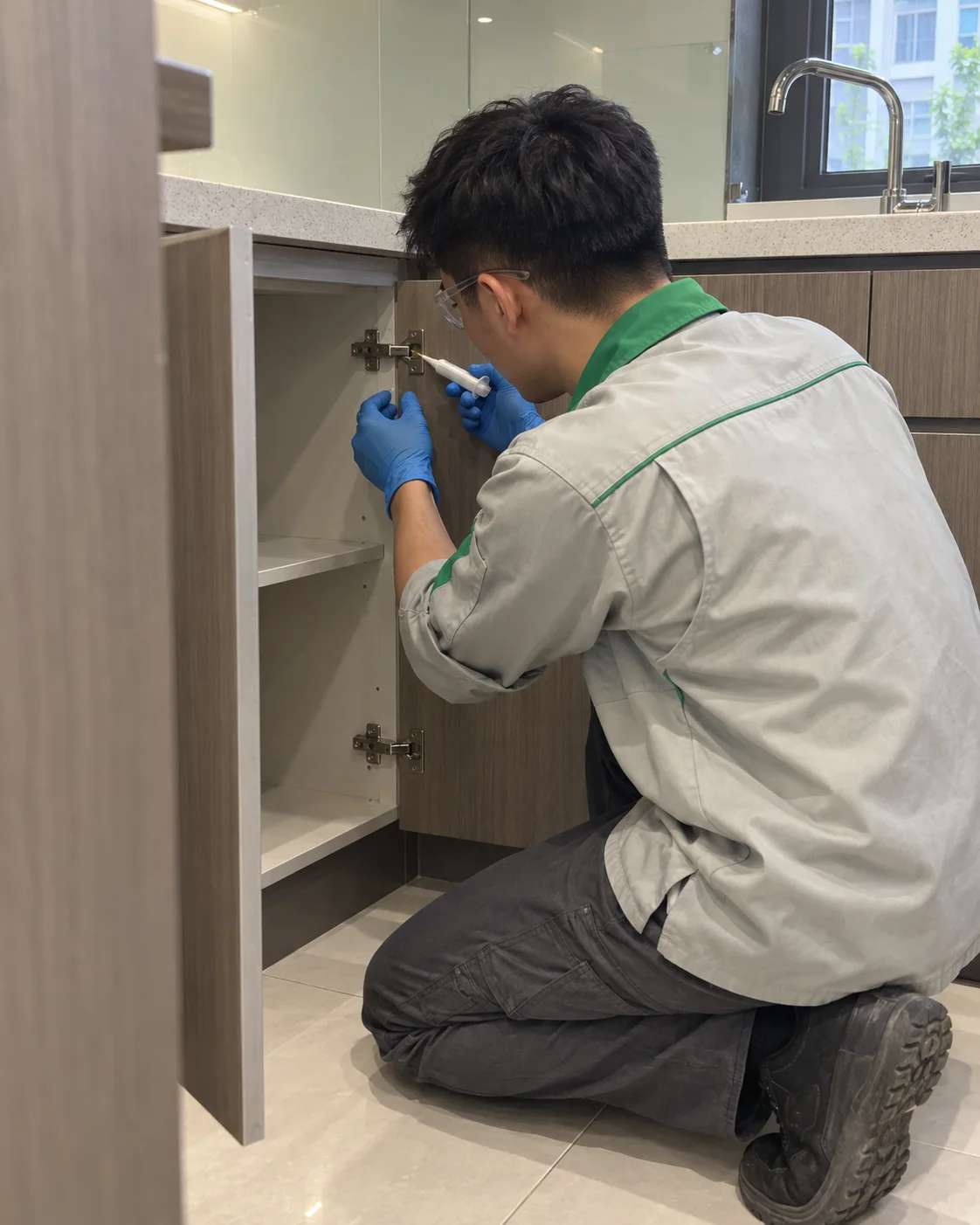
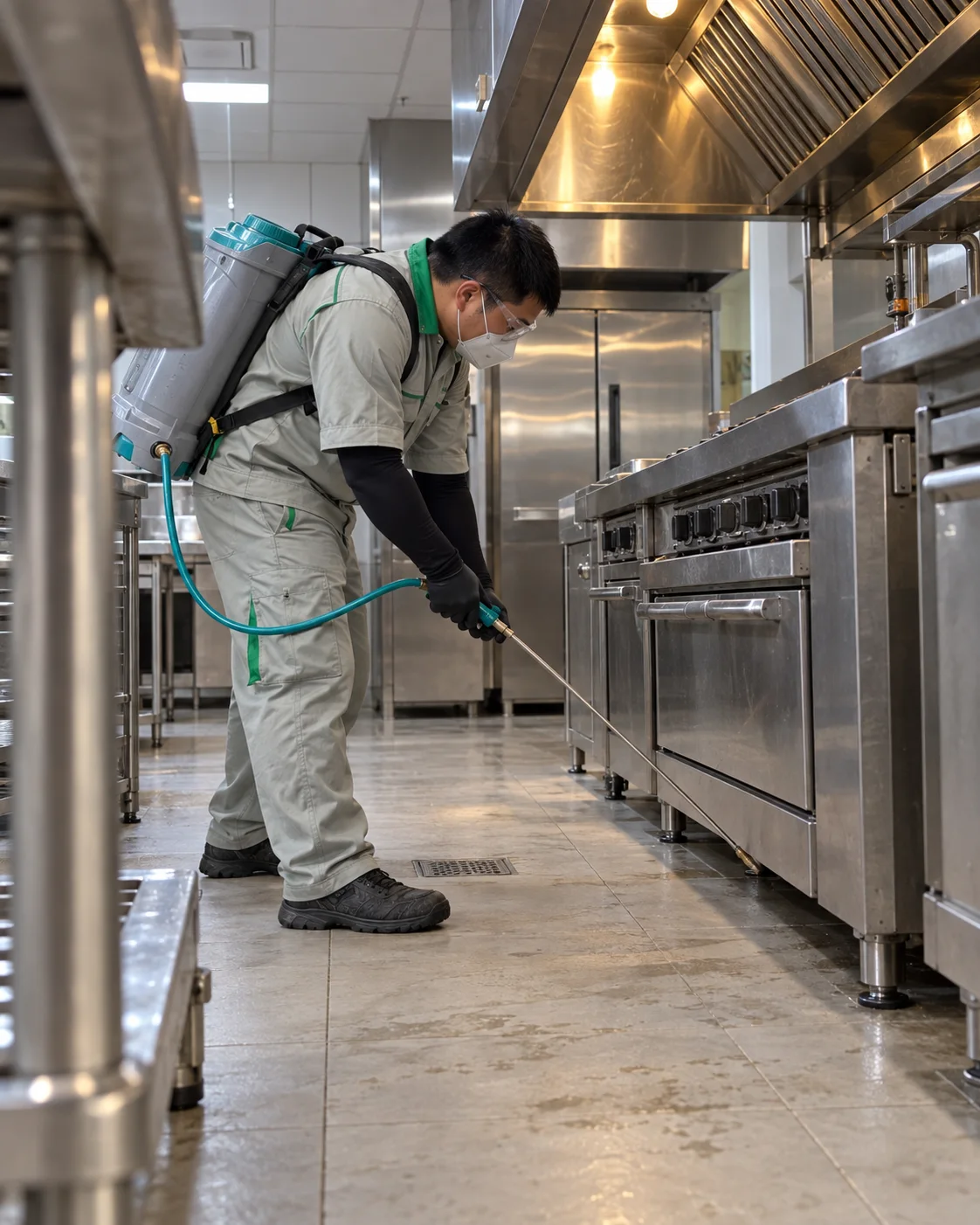
Gel bait into cracks and voids: cabinet corners, hinge recesses, the plinth void, the gap behind a splashback. Residual treatment into cracks and the joints between cabinets and walls. Drain treatment into the floor gully. Monitors behind and under appliances.
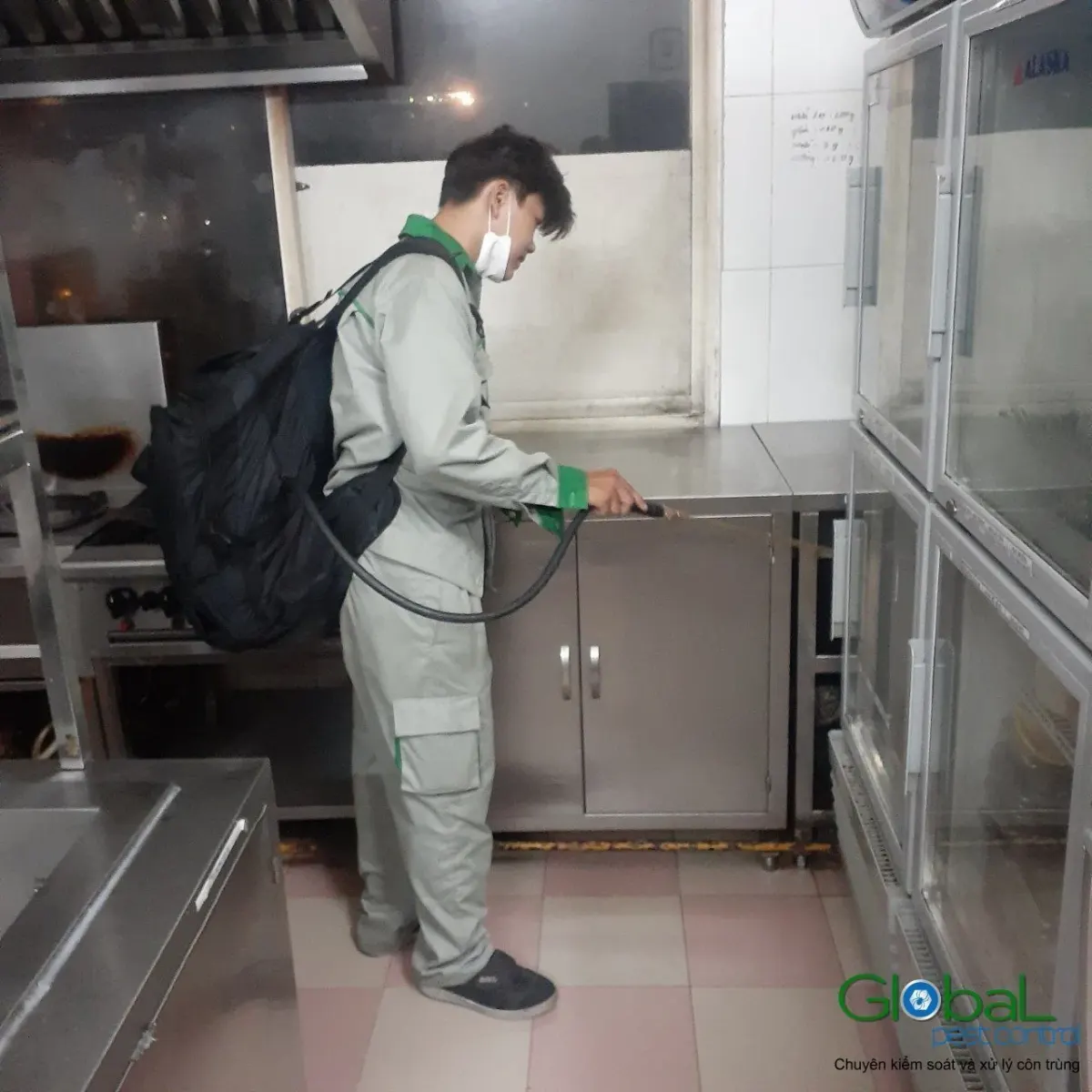
What should not happen is a residual sprayed across worktops, the inside of food cupboards, a sink, a draining board or a dining table. If that is what is being proposed, ask why.
Before the visit
Clear the worktops and put loose food away. Cover or remove anything that cannot be washed — a fruit bowl, a bread bin, an open packet, a chopping board. Move the pet bowls out of the room and empty them.
Clear the space under the sink and pull out the microwave and kettle if you can, because those are the places the technician needs and clearing them saves visit time.
What to wash afterwards
Worktops, the sink, the draining board, the dining table and anything a child touches — even though these should not have been treated. It is a reasonable precaution and it costs a few minutes.
Any crockery or utensils that were left out. Cutting boards. Pet bowls, which should be washed and refilled before the animal returns.
What not to wash
The inside of cabinets where gel bait was placed. The skirting and wall-floor junction. Behind and under appliances that were moved for the treatment. Any visible bait dot.
This is where treatments most often fail — a household cleans the kitchen thoroughly two days later out of an entirely reasonable instinct, and removes what was applied. Ask the technician to mark on the report exactly which surfaces to leave, so the person who cleans knows without having to guess.
The bait question, answered directly
Cockroach gel bait is placed as small dots inside cracks and voids, not on open surfaces. It is not applied where food is prepared or stored, and it is designed to stay where it is put rather than to migrate.
It should not be within reach of a child or a pet. If you can see a bait dot somewhere a toddler could touch it, that is a placement error rather than an inherent property of the method, and it is worth saying so.
One further point about timing. A kitchen treatment is best done in the morning rather than the evening, so the surfaces dry, the room airs and the wiping happens well before anyone cooks. A treatment at six in the evening compresses all of that into the hour before dinner, which is when mistakes are made.
Food stored in cabinets that were treated
Sealed packaging is unaffected — a treatment inside a cabinet corner does not penetrate a closed container. Open packets should have been removed before the visit, and anything left open in a treated cabinet is worth discarding rather than reasoning about.
This is the practical argument for rigid sealed containers, which also solve the stored product pest problem entirely. One purchase, two problems removed.
Two situations deserve a specific note. If your kitchen has an open pet food bowl, it should be lifted and emptied overnight for the treatment period, because a permanently available food source competes directly with the bait and slows the whole job. And if you keep a compost bin or a food-waste caddy on a balcony, tell the technician, since it is a food source and a fly breeding site that sits outside the kitchen and outside the usual survey route.
Where our expertise stops
If anyone has ingested a bait or a product, that is a medical matter and the product data sheet is what a doctor or a poison information line will want. We supply it the same day and we can tell you exactly what was used and where. We do not give medical advice.
Related reading
See what not to clean afterwards and re-entry times explained. On the kitchen, the sink cabinet and extract hoods. For households with children, safety with children and pets. Our parent company runs the Vietnamese-language kitchen and food preparation programme.
Global Pest Control is the English-language arm of Khử Trùng Toàn Cầu, based in Thu Duc City.
Common questions
Do we need to empty the whole kitchen?
No. Clear the worktops, put loose food away and cover what cannot be washed. Emptying every cupboard is unnecessary for a properly targeted treatment and it slows the visit considerably. What genuinely helps is clearing under the sink and making the appliances movable.
Can we cook that evening?
Yes, once the stated period has passed and the surfaces have been wiped. For a treatment that used only gel bait in closed voids there is no waiting period at all for the room. Where a residual was applied to the skirting, allow it to dry, ventilate, wipe the food surfaces and carry on.
A bait dot is somewhere our child can reach. What should we do?
Tell us and we will move it, and in the meantime remove it with a damp cloth rather than leaving it. Placement within reach of a child is an error rather than a normal outcome — the correct placements are inside cabinet corners, hinge recesses and voids that are closed to the room.