Talking to Your Landlord Without an Argument
The risk in telling a landlord about a pest problem is not that they refuse. It is that the conversation turns into an implicit discussion of how you keep the apartment, and once it has gone there it rarely comes back.
That outcome is almost entirely avoidable, and the technique is the same one that works with building management: describe a physical defect, not an infestation.
Lead with the cause, not the insect
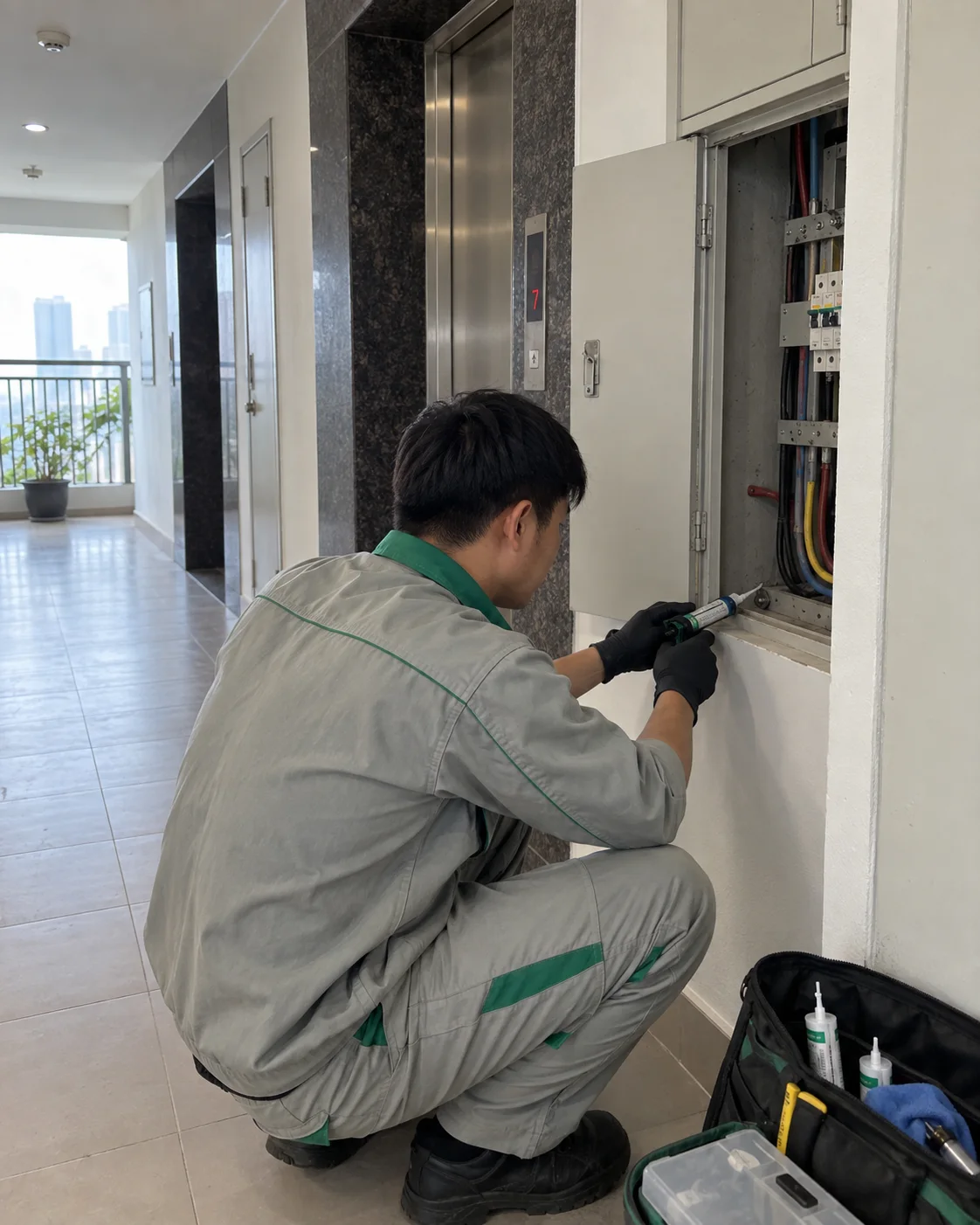
Compare two messages. "There are cockroaches in the kitchen" invites a reply about cleaning. "The waste pipe under the kitchen sink passes through an unsealed hole, and the floor drain in the second bathroom has no water seal" invites a plumber.
Both describe the same situation. The second one names something the landlord owns, can see in a photograph, and can have fixed for very little.
What is normally the landlord\x27s side
- Structural gaps and unsealed penetrations where pipes and cables enter the property.
- Drainage, including damaged or missing floor trap seals.
- Doors and windows that do not close, and missing or torn insect screens.
- Termite activity, which is always a building issue and never a tenant one.
- Anything in the building outside your unit, which the landlord can raise with management more effectively than you can.
What is normally yours
Food storage, waste, anything arising from a pet, and anything you brought in. Being straightforward about that half makes the other half much easier, because a tenant who says "the dry goods were my mistake and I have dealt with it, but the drain trap is broken" is obviously not simply pushing costs across.
Put it in writing, always
Zalo or email, with a photograph, even after a phone conversation. Not because you expect a dispute, but because a defect reported in writing in month three is a defect the landlord knew about, and a defect discussed verbally is a defect that never happened.
A one-line follow-up after a call — "just to confirm what we discussed, the floor drain in the second bathroom" — costs nothing and changes the position entirely if the tenancy ends badly two years later.
Writing it so it can be forwarded
Many landlords here forward tenant messages straight to a handyman or a management office. A message written in English only stalls at that point. Adding two lines of Vietnamese means it moves without anyone having to translate it: Ống nước dưới bồn rửa bếp có lỗ hở chưa bịt kín. Nhờ anh chị cho người kiểm tra giúp.
When the landlord says it is your problem
Sometimes they are right, and sometimes they have simply answered quickly. The productive next step is an independent inspection report, which converts an exchange of opinions into a document. A report describing an unsealed penetration and a dry trap, with photographs and a date, is difficult to argue with and usually costs less than the treatment being disputed.
What does not work is escalating in tone, because the relationship has to survive the rest of the tenancy and because the deposit sits on the other side of the table.
The offer that usually settles it
Where a landlord is hesitant about cost, splitting it frequently resolves the matter in a day — you pay for the treatment, they pay for the repair. That division is also the correct one on the merits: the treatment addresses the current population, which is partly a function of how the flat is lived in, while the repair addresses the route, which is the building.
Related reading
Responsibility is set out in who pays, landlord or tenant, and the lease side in writing a pest clause into a lease. For the building rather than the landlord, see talking to building management. Deposits are covered in insurance, deposits and pest damage. Our parent company issues Vietnamese-language inspection reports through its residential programme.
Global Pest Control is the English-language arm of Khử Trùng Toàn Cầu. Our reports come in English and Vietnamese on one page, so you can forward them unchanged.
Common questions
My landlord says it is normal in Vietnam and I should accept it. Is that fair?
Partly. Some background level of insect activity is genuinely normal in a tropical city and no treatment removes it entirely, so a single large cockroach occasionally is not a defect. A German cockroach population in a kitchen or termite damage in a door frame is not normal, and the distinction is worth making explicitly rather than accepting the general claim.
Can I deduct the cost from the rent?
Not unilaterally, and doing so in Vietnam will almost certainly cost you more of the deposit than the treatment did. Agree it in writing first, even by message. Most landlords here agree to a reasonable, evidenced request, and the ones who do not are unlikely to accept a deduction either.
The apartment is managed by an agent, not the owner. Does that change anything?
It usually slows things down and makes written communication more important, because the agent has to relay everything and will relay what is written rather than what was said. Keep messages short, factual and in both languages, and ask the agent to confirm what they have passed on.