Grease Traps and the Flies They Produce
A kitchen team can clean every surface twice a shift and still have small flies at the pass every evening. When that happens the source is almost never on a surface — it is inside the grease trap, the floor gully or the drain line, and those three are where the work has to go.
The distinction matters because it changes who fixes it. Surface flies are a cleaning issue. Breeding flies are a maintenance issue, and treating them as a cleaning failure demoralises a team that is already doing the right things.
Why a grease trap breeds rather than stores
A grease trap holds a floating layer of fats at the top, water in the middle and solids at the bottom, and it is warm, still and permanently fed. That upper crust is the ideal medium for drain flies and phorid flies: soft, organic, undisturbed and out of the light. A female lays into it, the larvae develop inside the layer, and the adults leave through the lid seal, the access cover or the pipe run.
This is why emptying a trap on a schedule reduces flies and cleaning the kitchen does not. The population is inside the vessel, not on the floor around it.
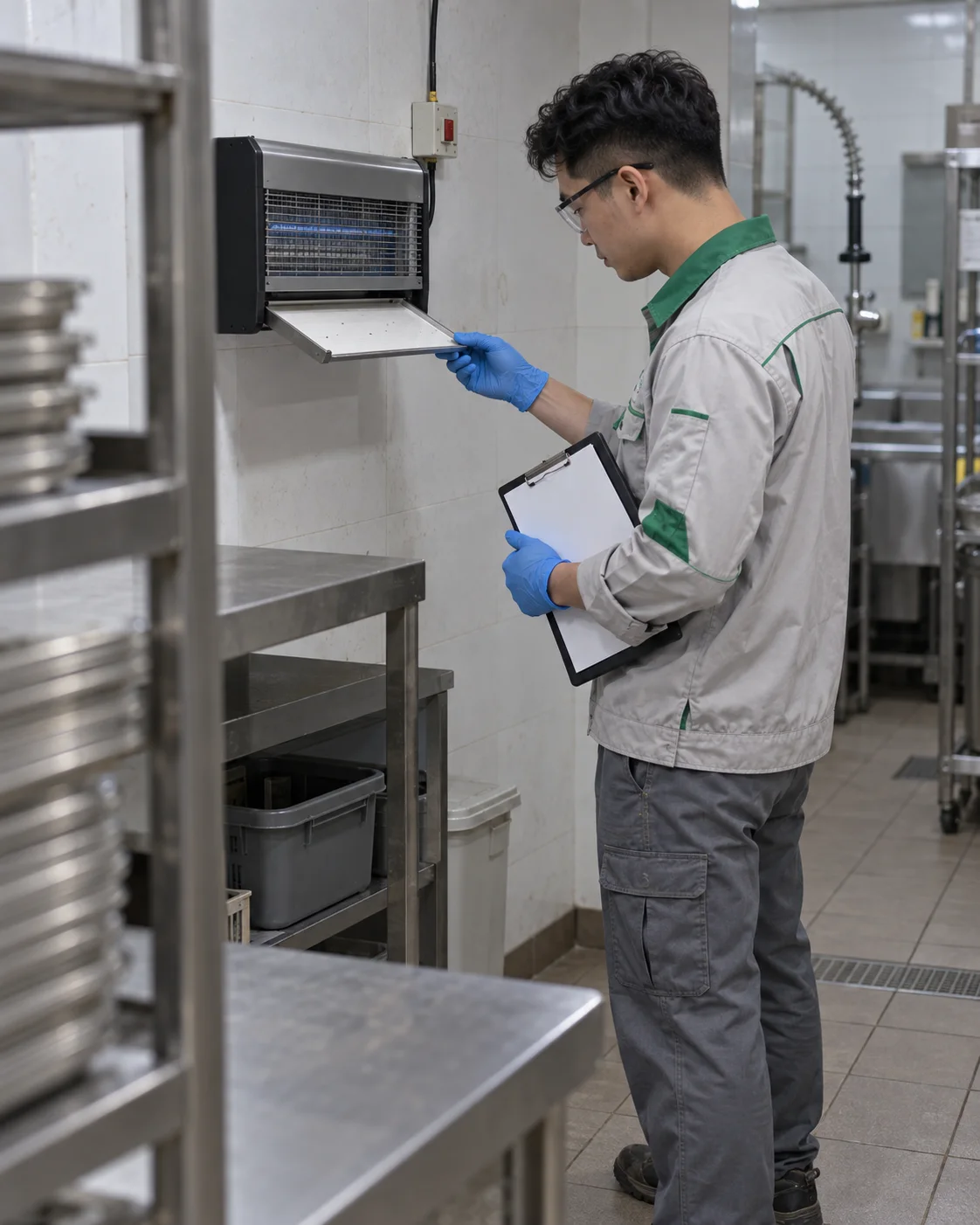
Telling the three small flies apart
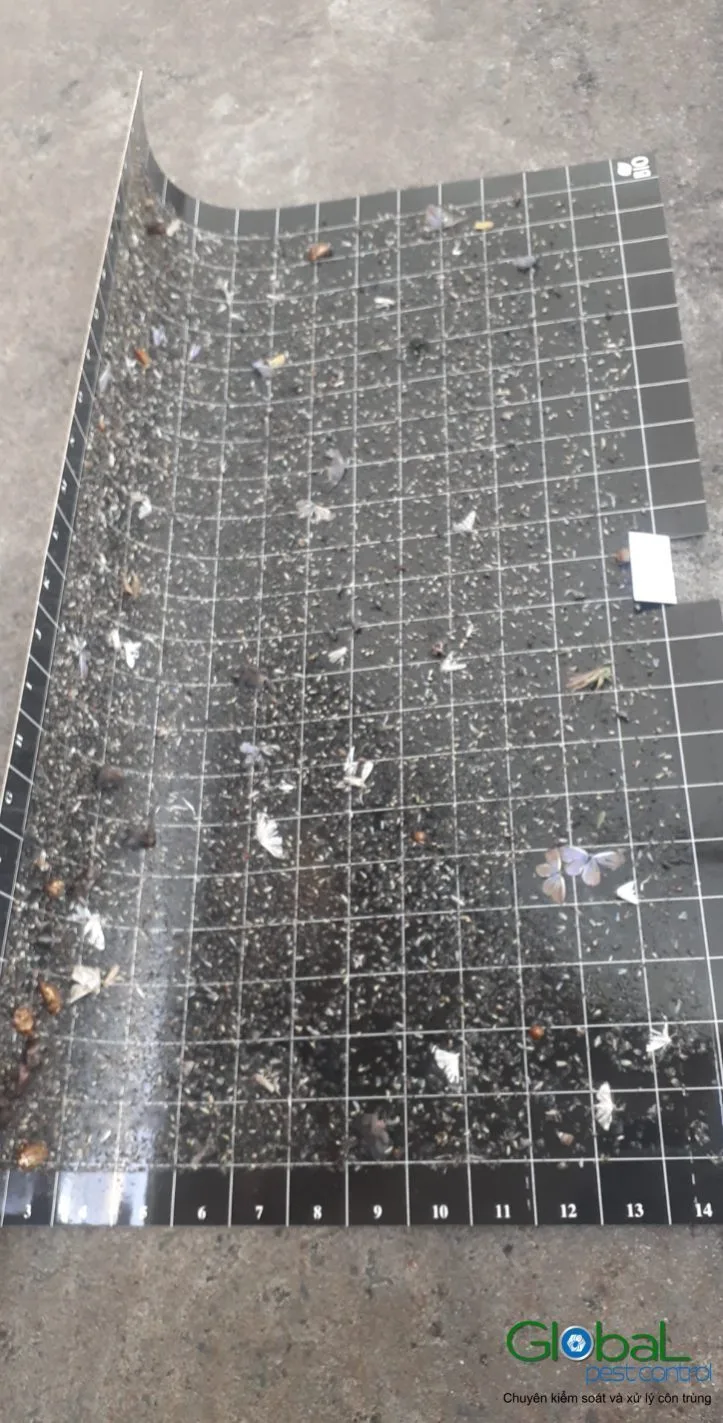
Getting this right decides the method, and it takes ten seconds. Drain flies are 2–5 mm, fuzzy, moth-like, and rest on walls with wings held over the body like a tent; they come from the film inside drains and traps. Phorid flies are similar in size but run in short erratic bursts on a surface rather than flying, and they indicate organic matter under or behind something — a cracked drain, a spill under a sealed plinth, sometimes a dead rodent. Fruit flies are rounder, often with red eyes, and hover around fermenting sugar: drip trays, pourers, fruit crates, mop buckets.
If they run rather than fly, stop looking at the drains and start looking for something wet and organic under a fixed unit.
What a treatment actually does here
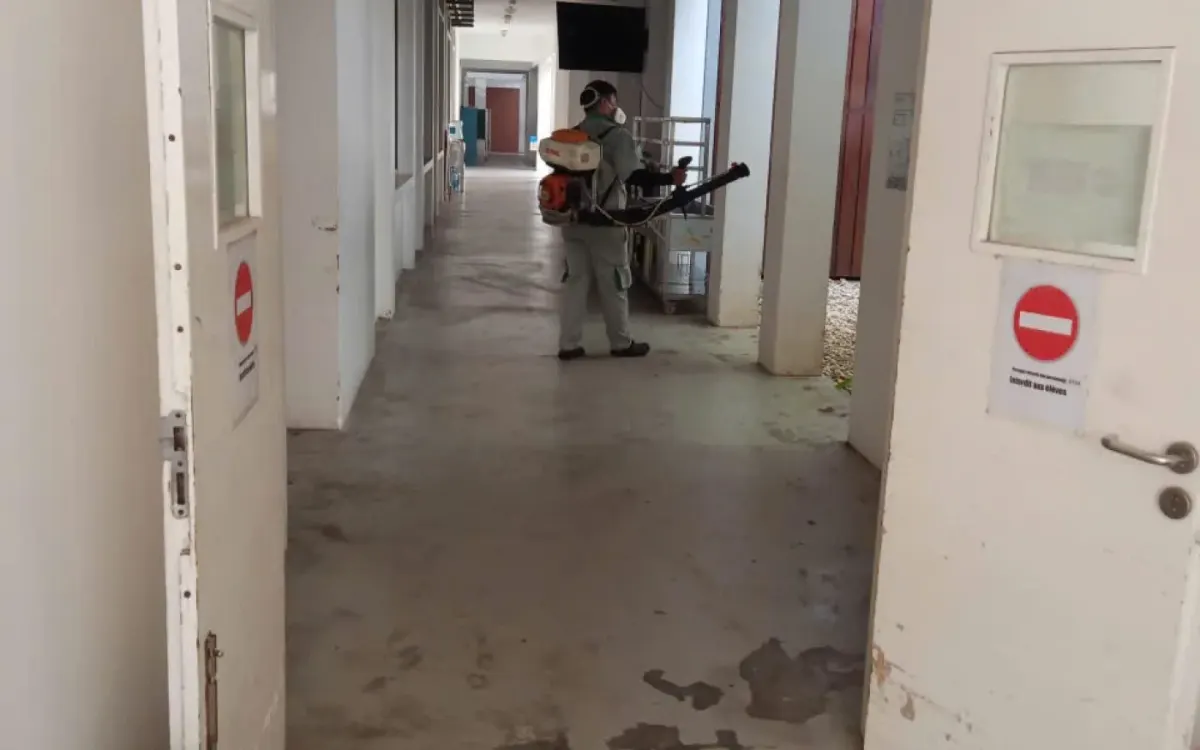
A biological drain treatment — enzymes or bacterial culture — digests the film that the larvae live in. It is slow, it works, and it needs to be applied on a cycle rather than once. An insecticidal fog kills the adults in the room that evening and has no effect on what is developing inside the trap, which is why a kitchen that fogs weekly still has flies weekly. Where an adult knock-down is needed for a specific evening, it should be understood as cosmetic and scheduled as such.
The maintenance cycle that actually holds
- Grease trap emptied on a contract, at an interval set by volume rather than by smell. A trap that is emptied when it smells has been breeding for weeks.
- Floor gullies lifted and the baskets washed weekly, including the ones under equipment nobody moves.
- Drain lines treated on a fortnightly or monthly cycle with a biological product, applied at the end of the shift so it is not immediately flushed away.
- The area under the trap lid wiped, and the seal checked — a lid that does not seat is the exit route.
- Mop buckets emptied and inverted overnight. A standing bucket is a complete fruit fly site.
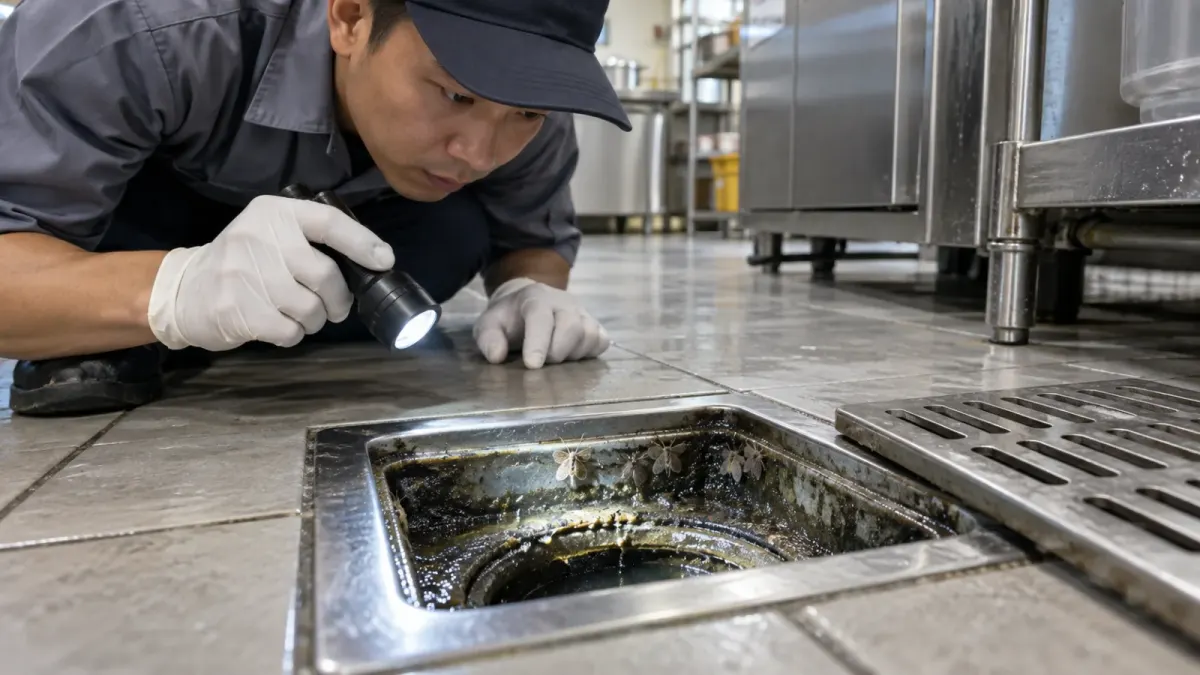
What to check before blaming the trap
Four other sources produce the same complaint and are easier to fix. A cracked or unsealed drain under a fixed unit, where waste has been seeping into the screed for months. A cold room condensate line discharging into an open gully inside the kitchen. A dishwasher waste hose that sags, holding standing water in the loop. And a floor drain in a rarely used part of the kitchen whose trap has dried out — which also lets in American cockroaches from the building system.
Timing the work
Fly pressure here rises sharply in the rains, roughly May to November, because the drainage system runs fuller and warmer. If you are going to put a drain programme in place, start it in March or April rather than in July: the population you are trying to prevent has not built up yet, and the biological treatment has time to establish. See the pest year in Ho Chi Minh City and rainy season pest control.
Related reading
For the full kitchen programme see the restaurant programme; for a counter-only operation see cafés and bakeries. The records side is covered in HACCP pest control records, and why pests come back after a treatment explains the pattern when a source is never removed.
Global Pest Control is the English-language arm of Khử Trùng Toàn Cầu, based in Thu Duc City. Reports in English, conversations with your waste contractor and building management in Vietnamese. Vietnamese-language services are at khutrungtoancau.vn.
Common questions
How often should a grease trap be emptied?
By volume rather than by calendar: when the combined fat and solids layers reach roughly a quarter of the trap depth. For a busy kitchen that is often monthly; for a café it may be quarterly. Ask your waste contractor to record the depth at each visit, and the right interval becomes obvious within three visits.
Do enzyme drain treatments actually work?
Yes, for the film that small flies breed in, and no, for anything else. They digest organic build-up on the pipe wall over weeks. They are not an insecticide, they will not clear a blockage, and they need to be applied on a cycle. Used as a monthly maintenance item they remove most persistent drain fly problems.
We fog every week and still have flies. Why?
Because fogging kills adults in the air at that moment and does nothing to larvae developing inside a trap or a drain line. The population regenerates from the same source within days. Fogging has a place before a specific event; as a routine control for breeding flies it is money spent on the symptom.