What to Check for Pests Before You Sign an Apartment Lease
Fifteen minutes during a viewing will tell you more about an apartment's pest history than any question you can ask the agent. Most of the evidence is in places nobody stages before a viewing, and none of it requires equipment.
This matters more in Vietnam than in many countries because responsibility after you move in is often unclear. It is far easier to raise a problem before signing than to argue about it in month three.
Start under the kitchen sink
Open the cabinet and look at the back wall where the pipes pass through. You are looking for three things: an unsealed gap around the pipe, dark smear marks along the corner where the wall meets the base, and small dark specks that look like ground pepper.
The specks are cockroach droppings. If they are present in a freshly cleaned apartment, there is an established population somewhere in the unit or the stack.
Then the floor drains
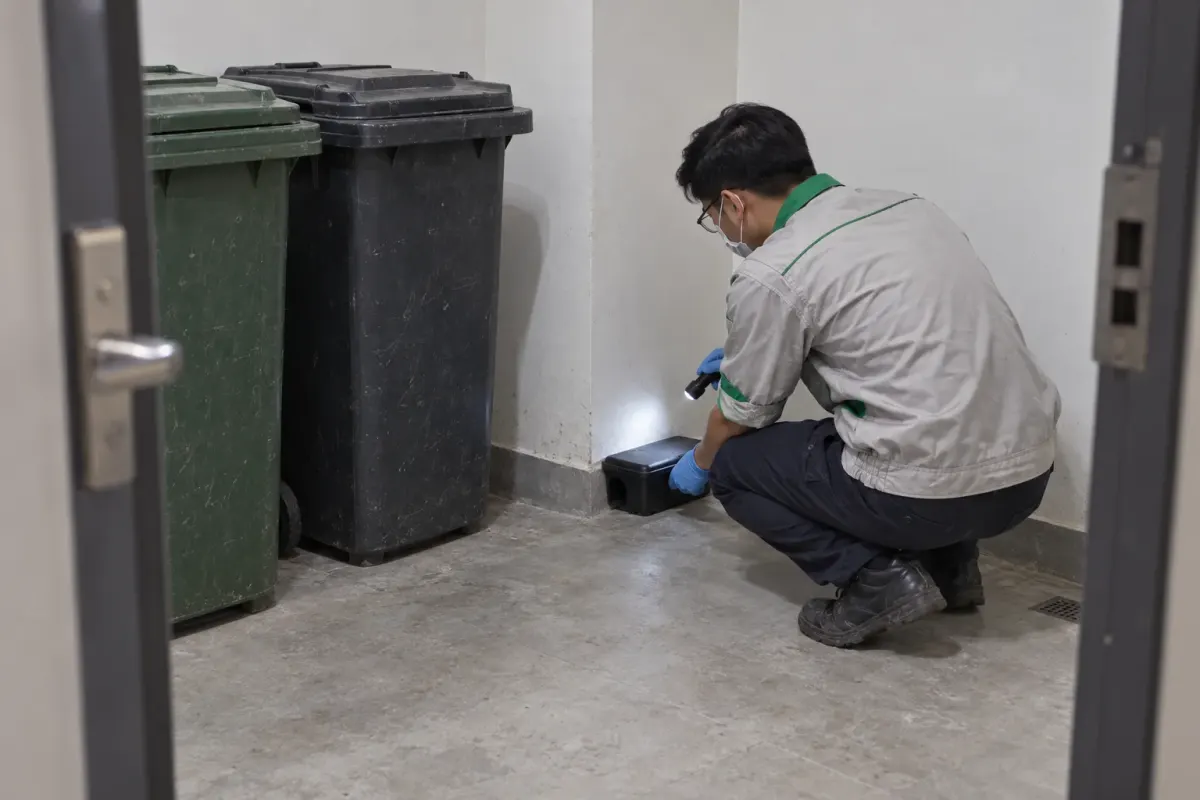
- Look into every floor gully in bathrooms, the kitchen and any utility area
- A dry gully means the water seal has gone and the pipe is open to the rest of the building
- A missing or broken grille is worse: it is an unrestricted opening
- A strong smell from the drain usually means the same thing
The entrance door and service door
Crouch and look at the gap under the door with the corridor light behind it. A gap you can see daylight through is a gap a mouse can use. Check the service door to the refuse chute or back stair the same way, since that is the side pests arrive from.
Twelve checks, in order
- Under the kitchen sink: gaps around pipes, smear marks, droppings
- Behind and under the refrigerator if you can see the gap
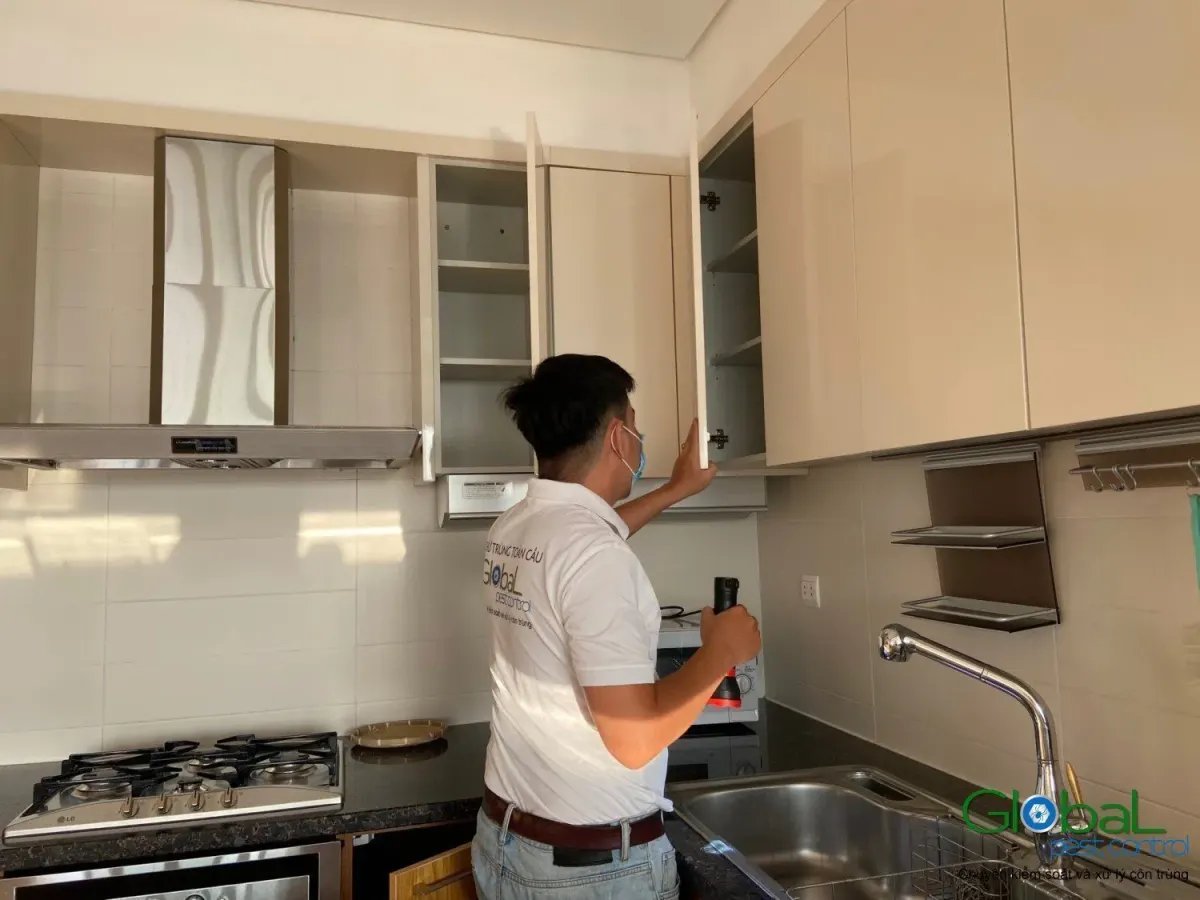
- Inside the cabinet under the hob, along the top edge of the door
- Every floor gully: water seal present, grille intact
- Gap under the entrance door and under any service door
- Air-conditioner drain line where it passes through the wall
- Window and balcony door seals, particularly at the corners
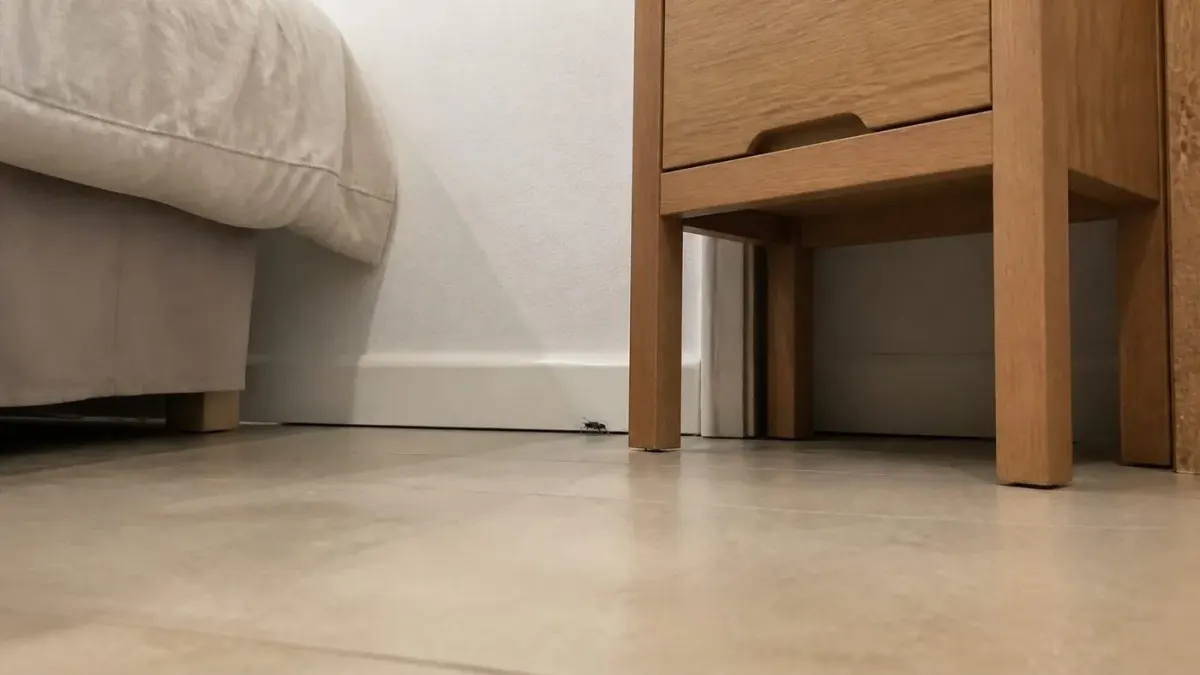
- Skirting boards for gaps, and for a hollow sound when tapped
- Wardrobe interiors, particularly built-in units against an outside wall
- The balcony: standing water in plant saucers, drains, unused containers
- The ceiling void access hatch, if there is one
- The refuse room on your floor, on the way out
Questions worth asking, and what a straight answer sounds like
Ask whether the building has a pest control contract, how often the common areas are treated, and whether individual units are included. A building with a proper programme will answer with a frequency and a company name. A building without one will answer that they treat "when there is a problem", which tells you the treatment is reactive.
Also ask whether the unit has been treated in the last six months and what for. A landlord who says yes and names the pest is being straightforward. A landlord who says the building has never had any pests at all is describing something that does not exist in this city.
If you find evidence
It is not necessarily a reason to walk away. Most apartments here will show something, and most of it is fixable. It is a reason to get the treatment and the sealing work written into the agreement before you sign, with a date, rather than raised as a complaint afterwards.
What the building tells you on the way in
The unit is staged for viewing; the building is not. Walk to the apartment rather than taking the lift straight up, and look at the refuse room on the floor, the service stair, and the bin area at ground level.
Bags left beside a chute rather than in it, an unlit refuse room, or a bin area with standing water and no lids all tell you about management. Those areas feed every unit in the stack, and no amount of treatment inside your apartment changes them.
Two questions for the neighbours
If you meet anyone on the floor, two questions are worth asking: have they had any pest problems, and does the building treat the common areas. Neighbours answer honestly far more often than agents do, and a consistent answer from two units is reliable.
This is also the fastest way to learn whether a problem is unit-specific or stack-wide, which changes who should be paying to fix it.
Putting it in the agreement
- A treatment before handover, with a dated report provided
- Specific sealing work: pipe penetrations, door sweeps, drain grilles, named room by room
- Who pays for treatment during the tenancy, and the distinction between a unit problem and a building problem
- A note of the condition found at handover, with photographs attached to the agreement
None of this is unusual to ask for, and a landlord who has kept the unit well will not object. The photographs are the part people skip and the part that settles arguments later.
Global Pest Control is the English-language arm of Khử Trùng Toàn Cầu. The same technicians and the same programmes are described on the same services described in Vietnamese.
Book an inspection
Site inspections are free of charge and carry no obligation. A technician walks the property, identifies the species and the harbourage, and sends a written quotation with the method and the schedule — normally within one working day.
Request an inspection · See indicative prices · All services