Re-Entry Times Explained
A technician leaves and says four hours. Nobody explains what happens in those four hours, so people either treat it as an absolute safety threshold and panic when a child goes in at three, or ignore it entirely.
It is neither. For most residential work it is a drying time, and understanding that makes the whole question much easier to handle sensibly.
What the waiting period is for
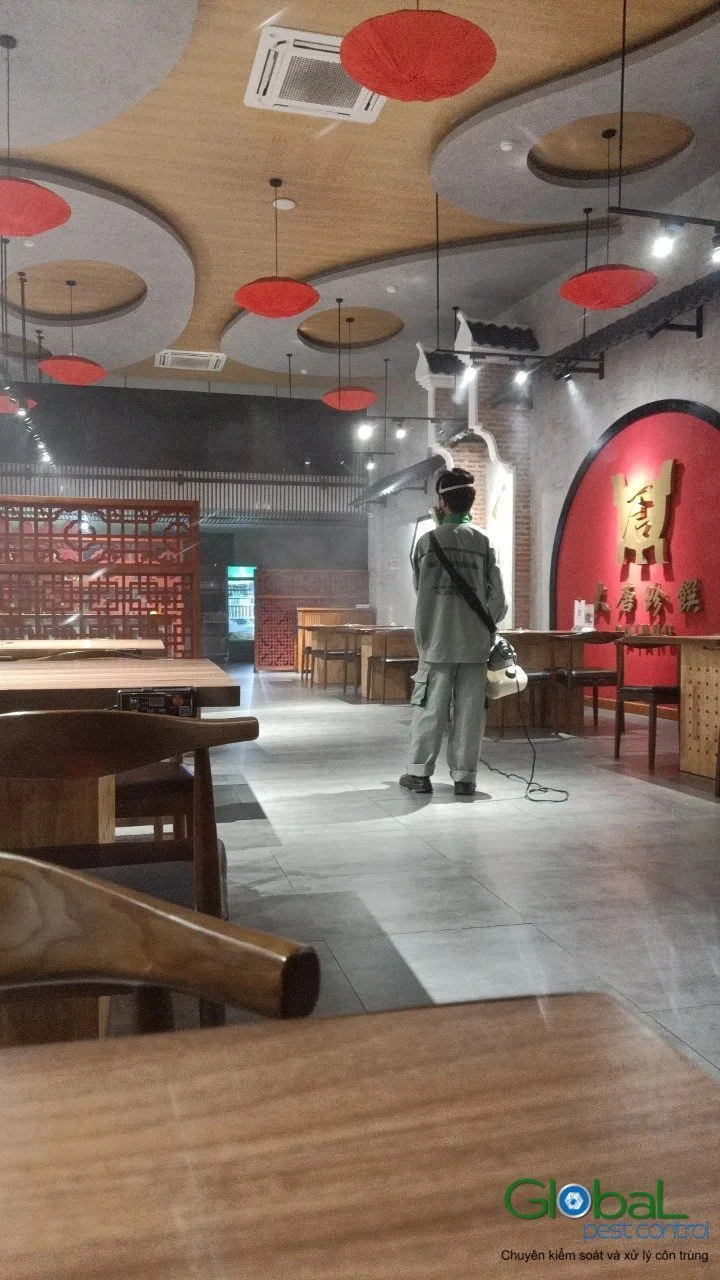
A liquid residual is applied wet. While it is wet it can transfer to skin, to a pet\x27s paws and to anything placed on the surface, and the droplets or vapour from the application are still in the air of a closed room. Once it has dried, it is bound to the surface and behaves quite differently.
So the period covers two things: air clearing and surface drying. In a Ho Chi Minh City apartment with the air-conditioning off and windows closed, drying takes longer than the same application would take in a dry climate, which is why the times quoted here tend to be at the longer end.
Typical periods by method
- Gel bait in cracks and voids — no re-entry period. It is enclosed and nothing is airborne.
- Insecticidal dust in enclosed voids — no re-entry period, provided it is properly placed and the void is closed.
- Monitors and traps — none.
- Liquid residual to surfaces — typically two to four hours, until fully dry.
- Flea treatment of floors and soft furnishings — usually four to six hours, longer because more surface area is treated.
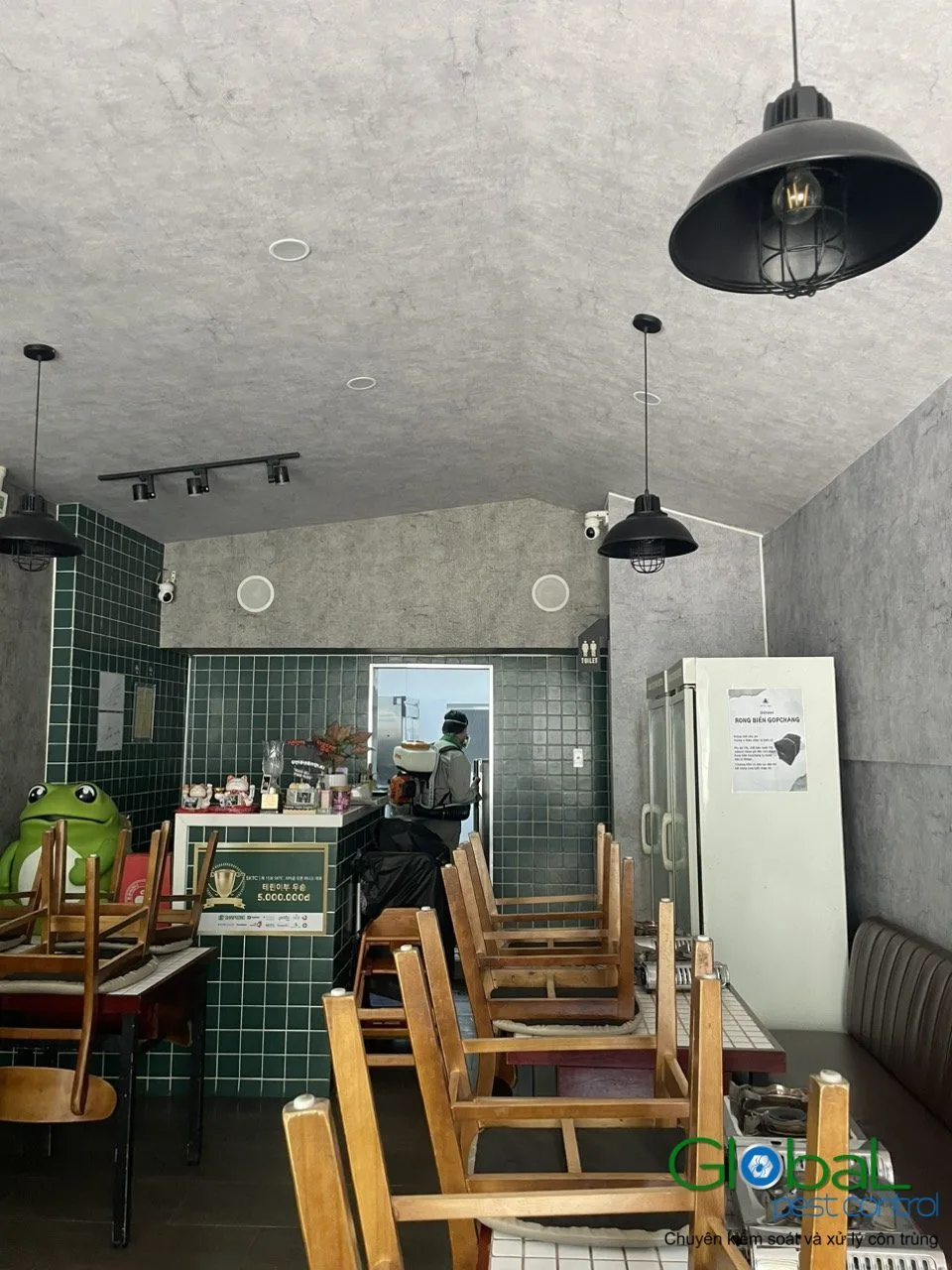
- Space spray or fogging — commonly three to six hours plus ventilation before re-entry.
It is per room, not per property
This is the part most often lost in translation. If gel bait went into the kitchen cabinets and a residual was applied to one bedroom, the kitchen is usable immediately and the bedroom is not. Being told "four hours" for the whole apartment when only one room was sprayed is a communication failure rather than a technical requirement.
Ask which rooms, and ask for it on the report. A good report states the areas treated and the re-entry period against each, which also means anyone who was not there — a housekeeper, a partner arriving later — can read it.
Who needs longer
Infants, anyone pregnant, anyone with asthma or a respiratory condition, and elderly household members are usually advised to allow additional time beyond the stated minimum, and to have the room ventilated before returning. That is a precaution rather than a calculated threshold, and it costs nothing.
Pets vary more than people expect. Cats are more sensitive than dogs to several pyrethroids because of how they metabolise them. Fish and other aquatic animals are the most sensitive of all, which is why aquariums must be covered and pumps switched off during application in that room, and why we ask about tanks before we start.
What to do when you come back
Open the windows and let the room air for twenty minutes or so. Wipe down food preparation surfaces and anything a child will put in their mouth, which should not have been treated in any case but is worth doing. Then leave the treated surfaces alone — skirting boards, the backs of cabinets, the perimeter of a room — because wiping those removes the treatment you paid for.
Normal cleaning of everything else resumes immediately. There is no reason to leave a home untouched for a week.
If nobody told you
Ask, and ask specifically what was applied and where. Any technician can answer both, and a company that cannot is a company with a record-keeping problem. If you cannot reach them and you have a child or a pregnancy in the household, four hours with the windows open is a reasonable default for anything sprayed, and gel and dust need no wait at all.
Related reading
Aftercare is covered in what not to clean after a treatment and before and after a treatment. For households with children see safety with children, pets and pregnancy and sleeping in a treated room. Methods are compared in how pest treatment works. Our parent company applies the same standards on its residential programme.
Global Pest Control is the English-language arm of Khử Trùng Toàn Cầu, based in Thu Duc City. Our reports state the re-entry period room by room, in English and Vietnamese.
Common questions
What if we went back in early by accident?
For an ordinary residential residual treatment, walking through a room an hour early is very unlikely to cause any harm, particularly for a healthy adult. Ventilate the room, wash hands, and wash any skin that contacted a wet surface. If a child or a pet spent time on a wet treated floor, wash them and mention it to a doctor or vet if anything seems wrong, but the realistic risk is low.
Can we sleep in the apartment the same night?
Almost always yes, provided the stated period has passed and the rooms have been aired. Where a bedroom itself was treated with a residual, we would normally suggest sleeping elsewhere that night if it is easy to do — not because it is required, but because it costs little and removes the question.
Why does the time differ between companies for the same job?
Partly product and formulation, partly caution, and partly that some companies quote a single figure for everything because it is simpler than explaining. A shorter time is not necessarily a corner being cut, and a longer one is not necessarily thoroughness. What matters is whether they can tell you what was applied and where.