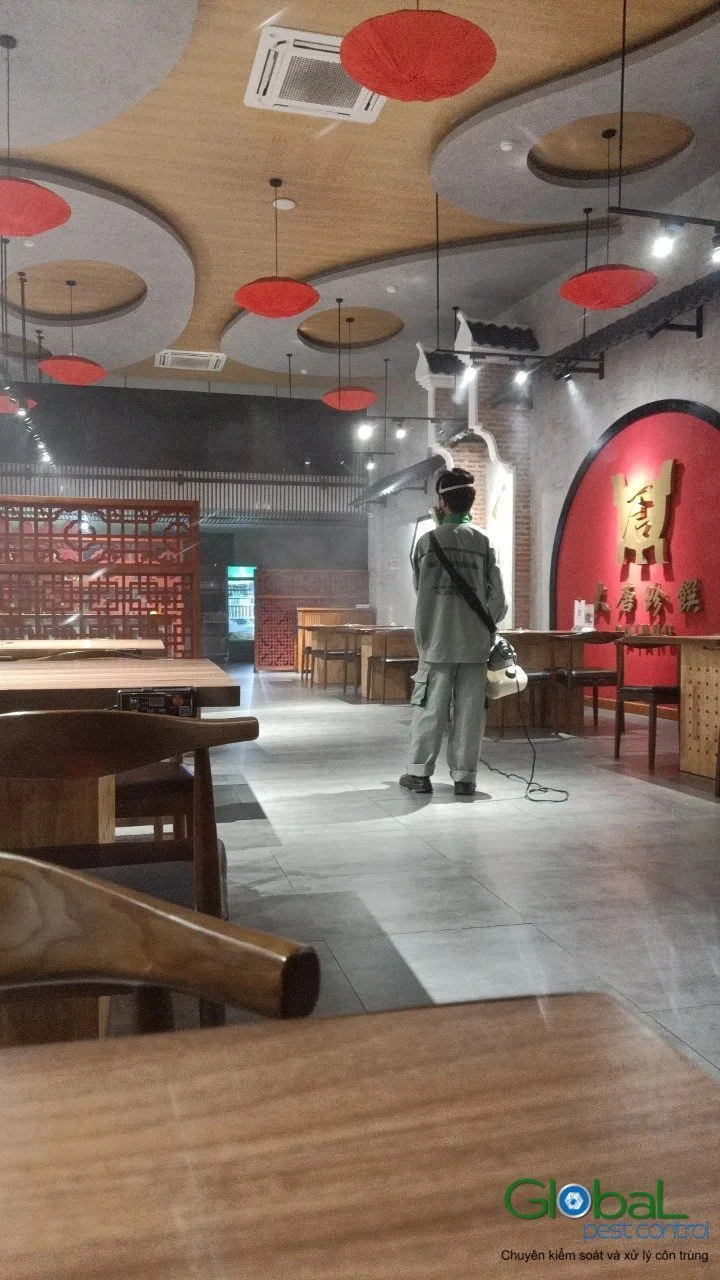
Extract Hoods and the Grease Behind Them
Every kitchen extract system takes hot air loaded with vaporised fat and moves it through a duct that is cooler than the air. The fat condenses on the way, and it condenses first on the filter, then on the inside of the hood body, and then along the duct itself.
The filter is the part you can slide out and put in a dishwasher, so it is the part that gets cleaned. The other two are the parts that matter.
Why grease is such a good food source
Cooking residue is energy-dense, chemically stable, and does not dry out into something unusable the way a spill of juice does. A film of it inside a hood body will support a cockroach population indefinitely, and it is warm, dark and structurally sheltered at the same time. In restaurant kitchens the hood canopy is one of the two or three most productive harbourages in the building; in a home it is a slower version of the same thing.
It is also why a kitchen that is genuinely clean at surface level can still have a persistent problem. The residents are cleaning the parts that are visible, which are not the parts that are feeding anything.
Where the population actually sits
- Inside the hood body above the filter, particularly the corners and the flat plenum surface.
- The gap between the hood and the wall or the ceiling, which is warm and never wiped.
- The first metre of ductwork, where most condensation occurs.
- The fan housing, which is warm when running and sheltered when not.
What a domestic kitchen actually needs
For a home, two things. Wash or replace the filter monthly rather than annually, because a saturated filter passes more grease into the body behind it. And once a year, remove the filter and clean the inside of the hood body itself with a degreaser, which takes twenty minutes and is the part that essentially never happens.
Recirculating hoods without a duct — common in apartments where no external vent exists — need the carbon filter changed on schedule, otherwise the unit is simply a warm box full of fat above your stove.
What a commercial kitchen needs
Full canopy and duct cleaning by a specialist, at a frequency set by cooking volume — typically quarterly for heavy frying and grilling, six-monthly for lighter operations. This is normally driven by fire risk rather than by pests, which is useful, because the fire argument has a budget and an insurer behind it while the pest argument does not.
What we ask for on top of that is access panels in the duct at intervals, so cleaning is possible without dismantling, and a dated cleaning certificate kept in the same file as the pest reports.
The link with flies
Grease deposits combined with moisture support small flies as well as cockroaches, and in kitchens with a persistent phorid or drain fly problem the extract system is worth checking once the drains have been ruled out. Organic film in a cool section of duct where condensation collects behind a bend is a plausible breeding substrate and is almost never inspected.
Treating around cooking equipment
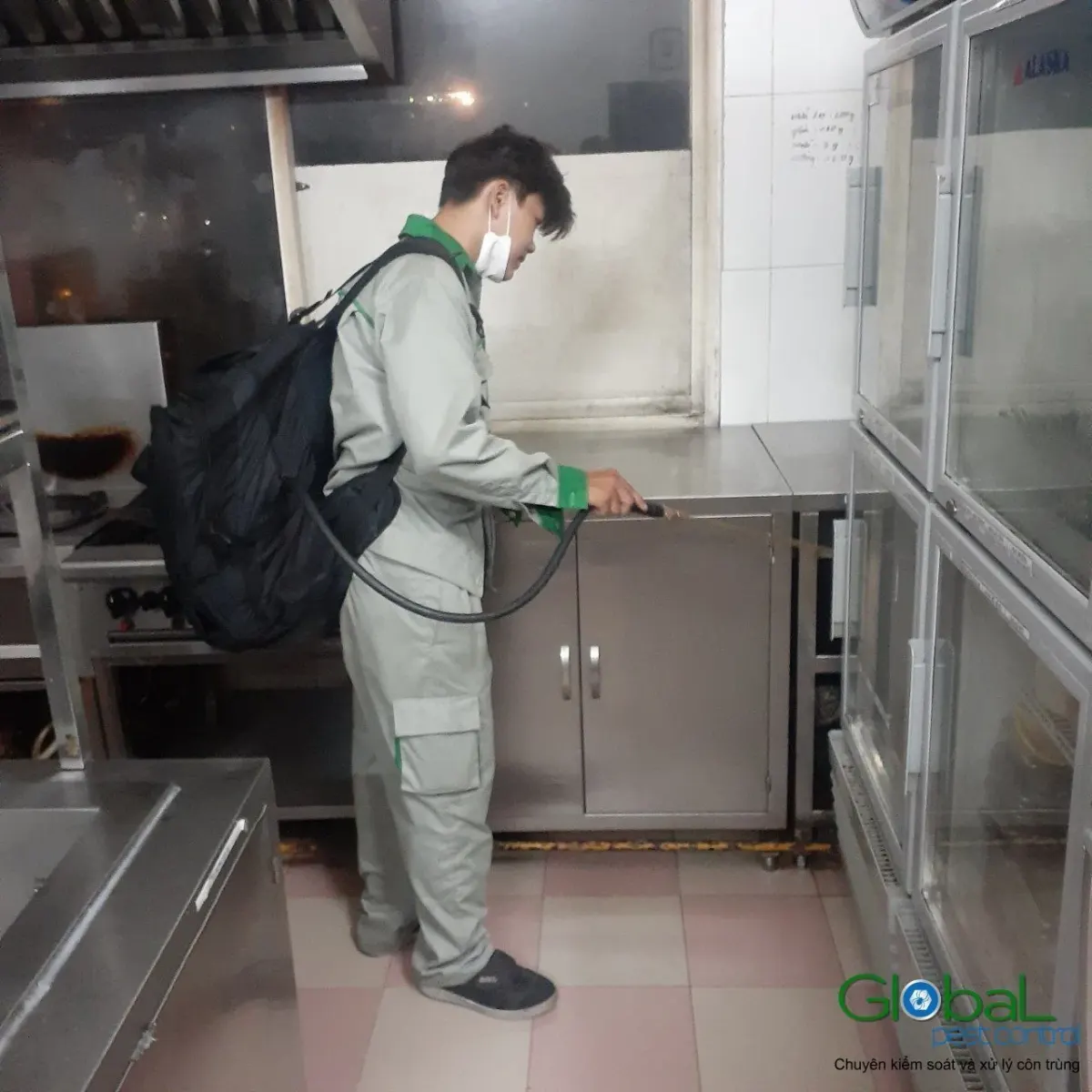
Inside and around an extract system we use gel bait in cracks and dust in enclosed voids, never liquid spray onto surfaces that will be heated. Beyond the obvious food-safety reason, a residual applied to a greasy surface binds to the grease and stops working almost immediately, which is why spray treatments in kitchens so reliably fail. Cleaning first and baiting second is the sequence that works, and doing it in the other order wastes both visits.
Related reading
The commercial version is covered in grease traps and the flies they produce, and the appliance next to it in what lives behind your refrigerator. For the species see our cockroach guide, and for the kitchen as a whole, the kitchen sink cabinet. The restaurant programme is our restaurant and kitchen programme. Our parent company runs the Vietnamese-language kitchen and food preparation programme.
Global Pest Control is the English-language arm of Khử Trùng Toàn Cầu, based in Thu Duc City.
Common questions
Can you clean the duct as part of a pest treatment?
No, and any company that offers to is doing one of the two jobs badly. Duct cleaning is a specialist trade with its own equipment and its own certification, and it is priced accordingly. What we do is identify that it is the source, treat what is accessible, and tell you plainly that the problem will return until the duct is cleaned.
My hood has no duct, it just recirculates. Is that better or worse?
Worse for grease accumulation and better for pest routes. There is no duct running to the outside, so nothing can travel in that way, but all the grease that would have gone outside stays in the unit. Monthly filter cleaning matters considerably more on a recirculating hood.
How do I know if the hood is the source?
Turn off the kitchen light, wait twenty minutes, then look at the hood and the wall above the stove with a torch. Cockroach activity concentrates where the food is, and if the hood body is the source you will see movement at its edges rather than at floor level. Photographing that is more useful to us than any description.