What Odourless Actually Means
"Odourless" and không mùi appear on a large proportion of pest control marketing in Vietnam, and customers reasonably read it as a claim about safety.
It is a claim about the carrier. Odour and toxicity are unrelated properties, and understanding why is useful when comparing two proposals that differ mainly on this point.
Where the smell comes from
Most of the characteristic insecticide smell comes from the solvent used to carry the active ingredient, not from the active ingredient itself. Older emulsifiable concentrate formulations use petroleum-based solvents with a strong odour; newer suspension concentrate and microencapsulated formulations use water-based systems and smell of very little.
The active ingredient in both may be the same compound at the same concentration. Changing formulation changes the smell and does not change the chemistry doing the work.
What low-odour genuinely buys
Comfort, which is not nothing. A treated bedroom that does not smell is a room people will return to on schedule rather than avoiding for two days, and for anyone whose asthma is triggered by strong smells, the reduction in odour is a real benefit in itself.
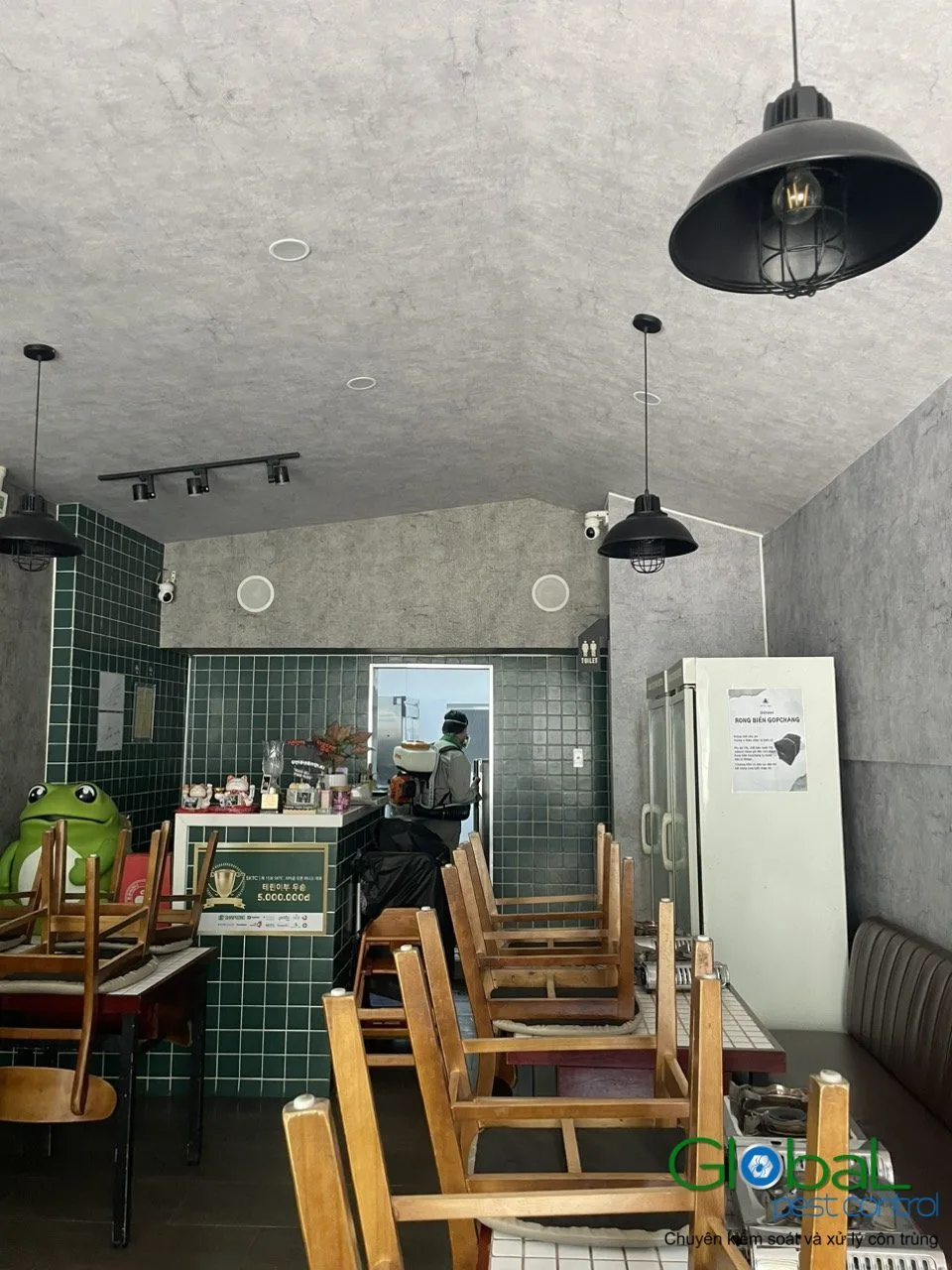
In a restaurant, a hotel or an office, low odour is also an operational requirement rather than a preference, because a space that smells of solvent cannot be used.
What it does not buy
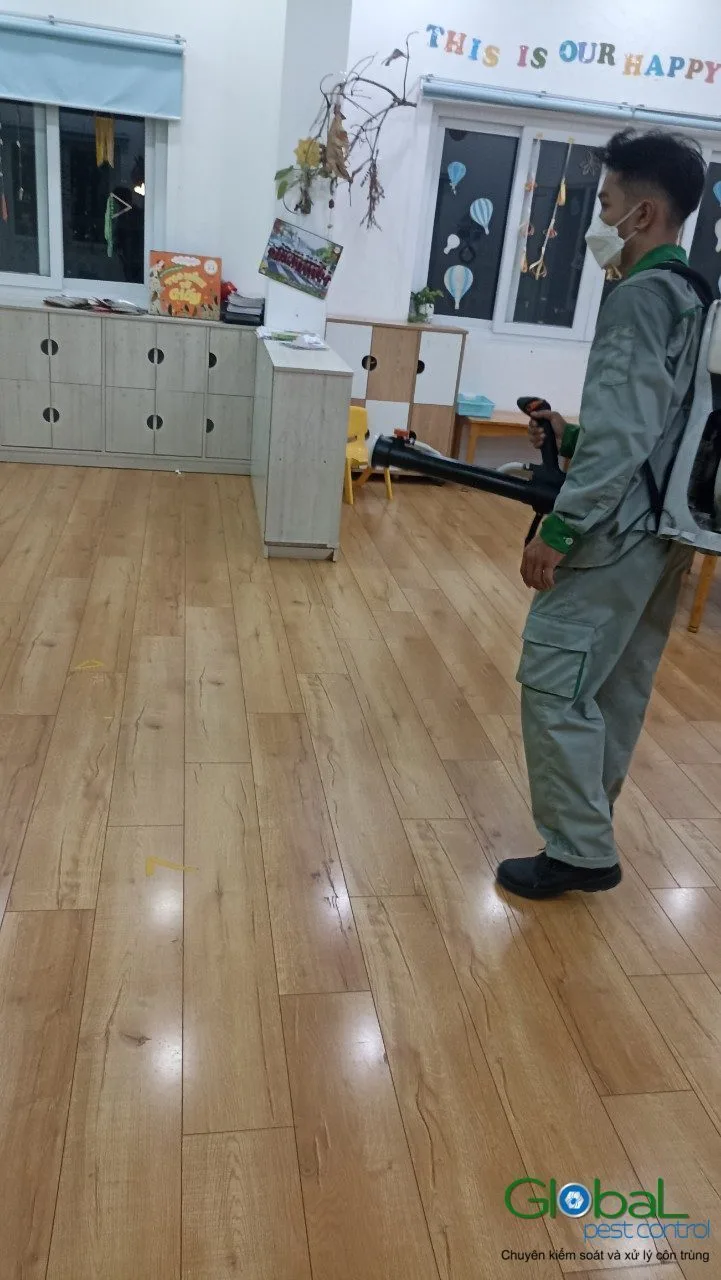
Lower toxicity. A low-odour pyrethroid is a pyrethroid. The re-entry period is set by drying time and by the active ingredient rather than by how the room smells, and a room that smells of nothing an hour after application is not therefore ready an hour after application.
This is the substitution worth watching for. "It is odourless so you can go straight back in" merges two unrelated things, and it is a common sales line here.
Where formulation genuinely matters
Beyond smell, formulation affects performance in ways worth knowing. Suspension concentrates and microencapsulated products perform better on porous surfaces such as unpainted concrete and plaster, because the active ingredient sits on the surface rather than being absorbed into it.
Wettable powders leave a visible residue and last longer on absorbent walls, which is why they still appear in warehouses and rarely in living rooms. A technician choosing between these is making a real decision, and it is a better question to ask than whether the product smells.
The other odour, which is a symptom
Worth separating: a musty smell in a kitchen can indicate an established German cockroach population, and a strong ammonia smell in an enclosed space indicates rodents. Both are diagnostic rather than chemical, and both are worth mentioning to a technician.
A sewer smell after a holiday is a dry floor trap. None of these have anything to do with what was applied.

How to use this when comparing proposals
If one company emphasises odourless and the other does not, ask both for the active ingredient and the formulation type. Frequently they are proposing the same chemistry, and one has chosen to lead with the comfort feature.
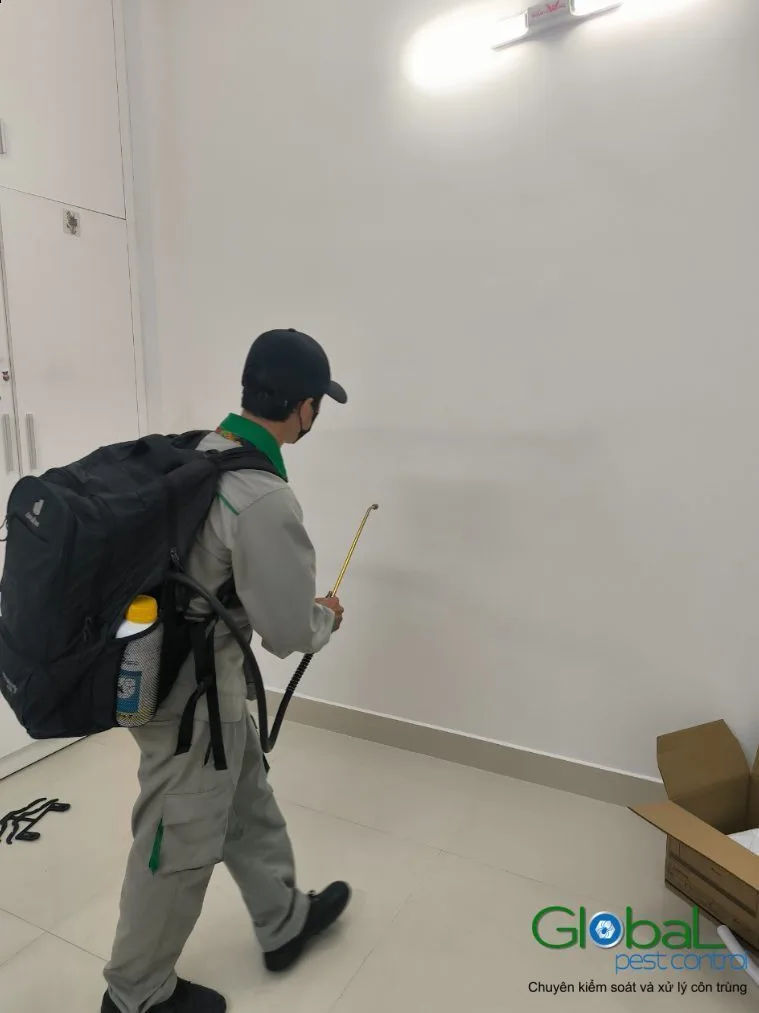
What is genuinely worth paying for is placement — bait in cracks and residual into joints rather than over open surfaces — because that changes exposure rather than perception. Ask about that instead.
It is worth noting that some products used in this market are deliberately given a scent rather than having one removed. A faint marker odour tells a technician where a surface has been treated and tells a household which areas to leave alone, which is genuinely useful in a large site. So a mild smell is occasionally a design decision rather than a sign of an older formulation.
If the smell bothers you afterwards
Ventilate rather than clean. Opening windows and running a fan clears residual solvent odour within a few hours, whereas wiping the treated surfaces removes the treatment you paid for. If the smell persists beyond a day, tell the contractor, because that is unusual with modern formulations and worth knowing about.
Related reading
See reading a Vietnamese product label and low-toxicity options. On timing, re-entry times explained and sleeping in a treated room. For products generally, products used in Vietnam. Our parent company lists what it uses in Vietnamese at khutrungtoancau.vn.
Global Pest Control is the English-language arm of Khử Trùng Toàn Cầu, based in Thu Duc City.
Common questions
If I cannot smell anything, is the treatment still working?
Yes. Modern residual products are designed to be effective without a detectable odour, and there is no relationship between how a room smells and whether the deposit is present. This is worth knowing because customers occasionally conclude that a low-odour treatment was weak, and ask for a stronger one they do not need.
Is a strong smell a sign of an old or cheap product?
Often it indicates an emulsifiable concentrate formulation, which is older technology and cheaper, and which is still perfectly effective. It is a formulation choice rather than a quality verdict. What it does tell you is that the room will be unusable for longer, which matters more in a bedroom than in a warehouse.
Can you use an odourless product in our restaurant?
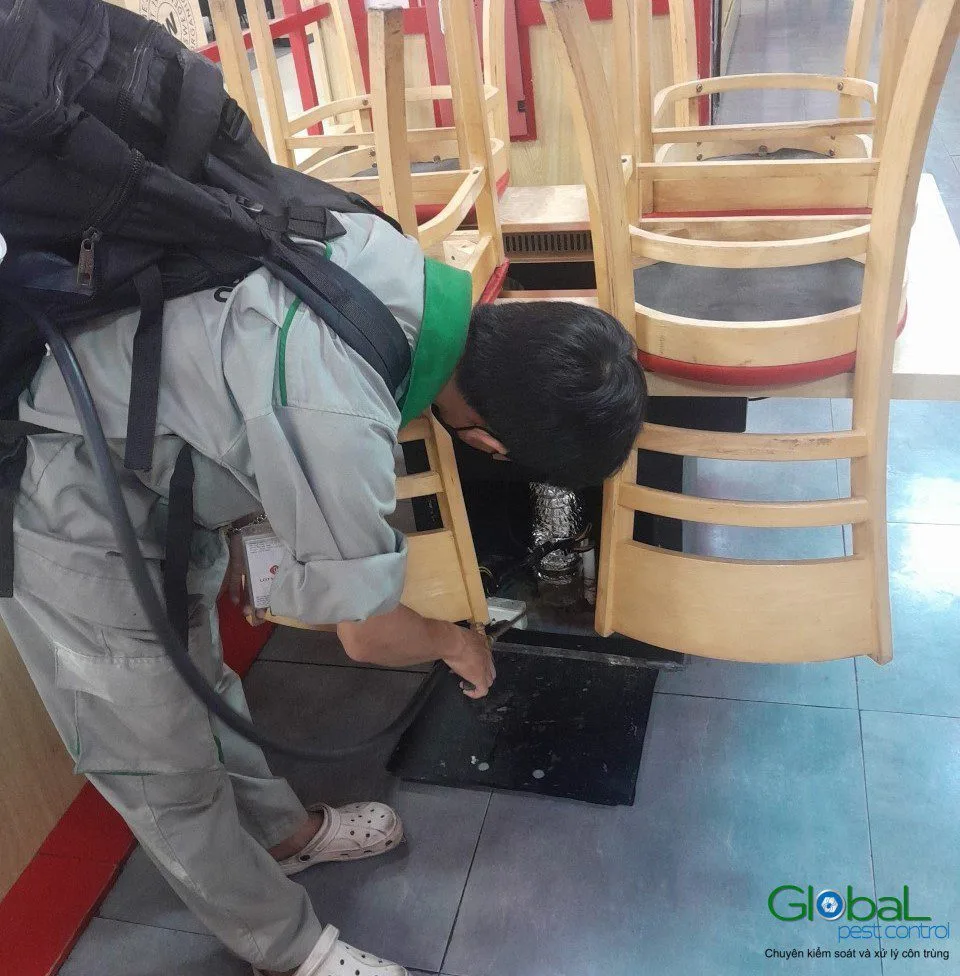
Yes, and for a food business it is normally the appropriate choice for operational reasons. The more important point for a kitchen is method rather than formulation — gel bait in cracks, residual along clean wall-base joints and drain treatment do the work, and a residual applied to a greasy surface binds to the grease and stops working regardless of how it smells.