Swimming Pools and Water Features
Residents often assume the pool is the mosquito source in a building, and a properly maintained pool is one of the few large water bodies in this city that produces nothing at all.
Chlorinated, filtered, circulated water is hostile to mosquito larvae, which need still water and cannot survive the chemistry. The problems around a pool are elsewhere, and they are consistent enough to list.
The balance tank
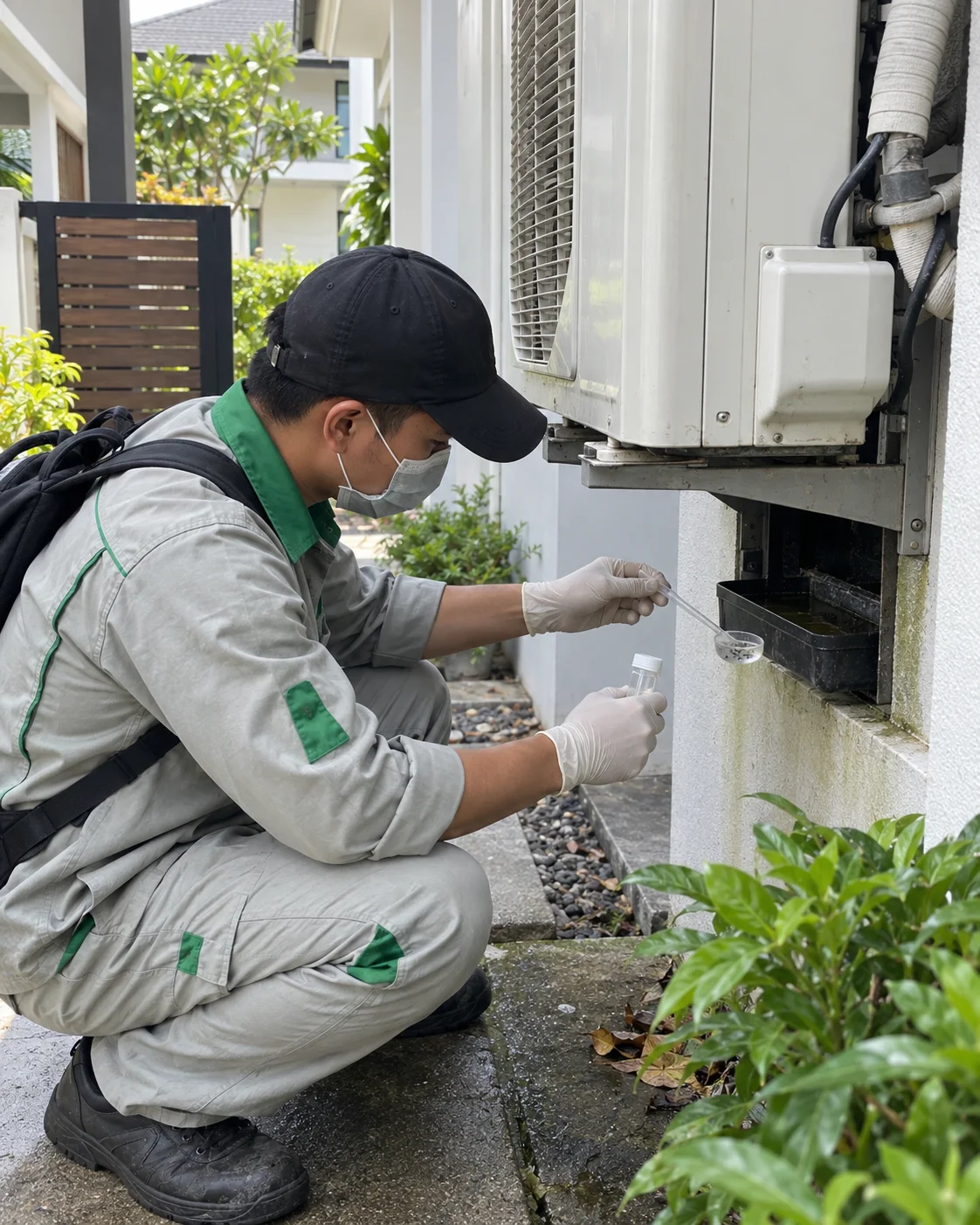
Most commercial pools have a balance or surge tank below deck level, holding water that is part of the circulation system. Where the tank is uncovered, or the cover does not seal, it is a large, sheltered, dark body of water with a surface that is often much calmer than the pool itself.
This is the most common genuine mosquito source in a pool complex, and it is the one nobody looks at because it is behind a hatch in a plant room.
The pump room
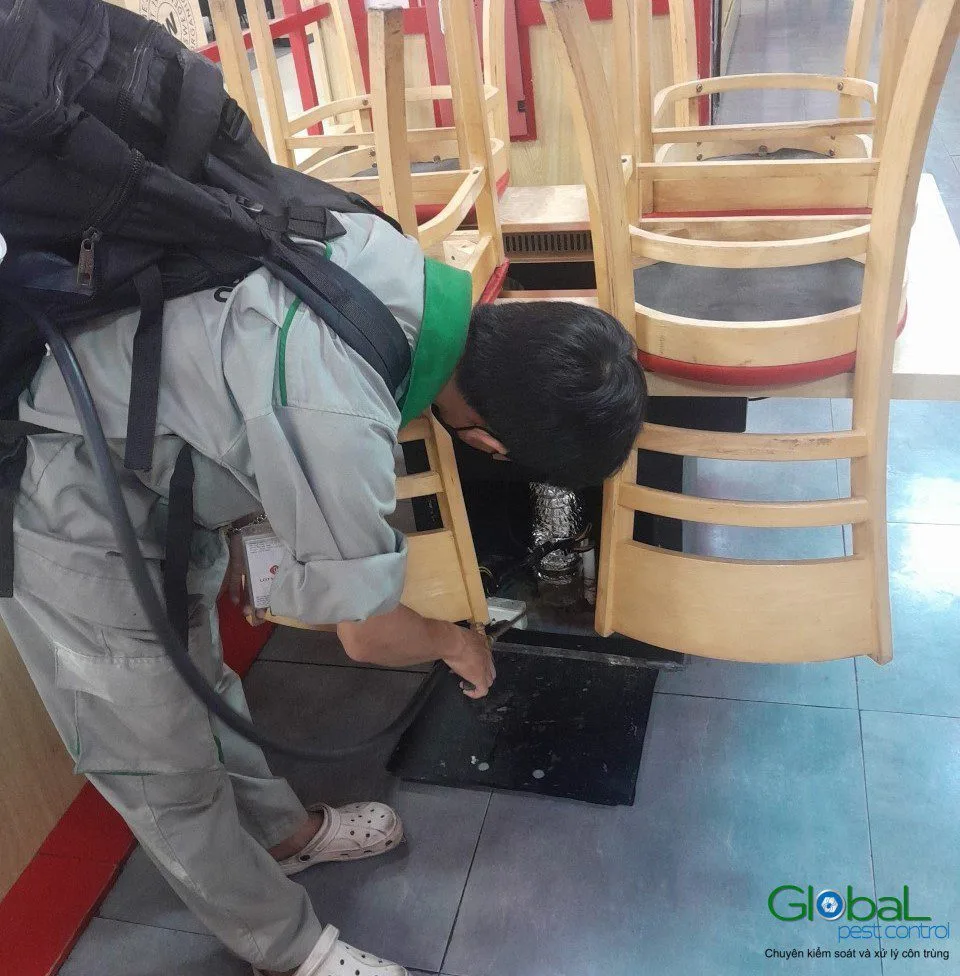
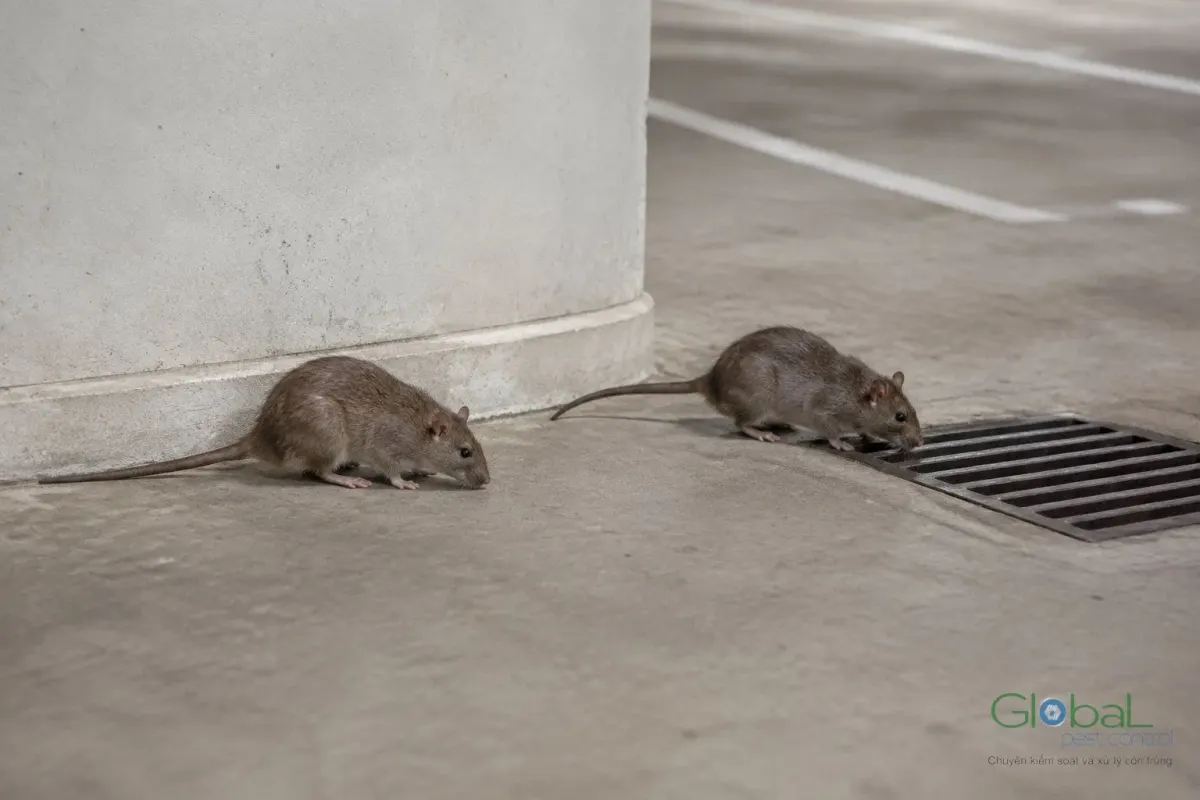
Warm from the plant, humid, dark, rarely entered, and usually containing a floor drain, some standing water in a sump, and stored chemicals and equipment. That is a good environment for cockroaches and for drain flies, and a reasonable one for rodents seeking shelter.
A pool plant room should be on the monthly inspection route of any building programme, and in a surprising number of buildings it is not on any route at all.
Water features, which are a different matter
Ornamental ponds, cascades, reflecting pools and fountains are frequently unchlorinated, sometimes unfiltered, and often turned off at night or during the low season. A feature with no circulation and no fish is a purpose-built mosquito breeding site.
The fixes are straightforward: keep the pump running, stock with fish where the feature is suitable, or apply a Bti larvicide on a schedule. A decorative feature that is switched off for months should be drained rather than left standing.
The unmaintained pool
A pool that has been closed, left uncovered without treatment, or abandoned during a vacancy becomes a very large breeding site within about two weeks. This happens more often than it should in villas between tenancies and in buildings where a facility has been closed for refurbishment.
A green pool in a compound can out-produce every other source in the neighbourhood combined. Where a pool is going out of service, it should be drained or kept dosed, and that decision needs an owner.
The pool surround
Deck drainage channels that hold water, sun lounger frames and folded covers, planters around the terrace, and the gap under decking. All of these hold small volumes of water, and the sun lounger cover left folded on a terrace after rain is the single most reliable one.
Pool bars and food service areas bring the usual kitchen issues into an outdoor setting where waste management is often weaker than indoors.
What to check monthly
The balance tank cover and the plant room. Every drainage channel around the deck. Planters and their saucers. Any water feature that is currently switched off. Stored covers, umbrella bases and lounger frames that hold water.
That is a fifteen-minute walk and it covers essentially every genuine source in a pool complex.
Rooftop pools add one more item to the list. A pool on a roof sits alongside the water tanks, the lift motor room and the plant enclosure, all of which are enclosed, warm and entered only by contractors. In practice a rooftop pool deck should be inspected as part of the roof rather than as part of the leisure facility, because the productive spaces up there are the ones with doors on them.
Treatment near a pool
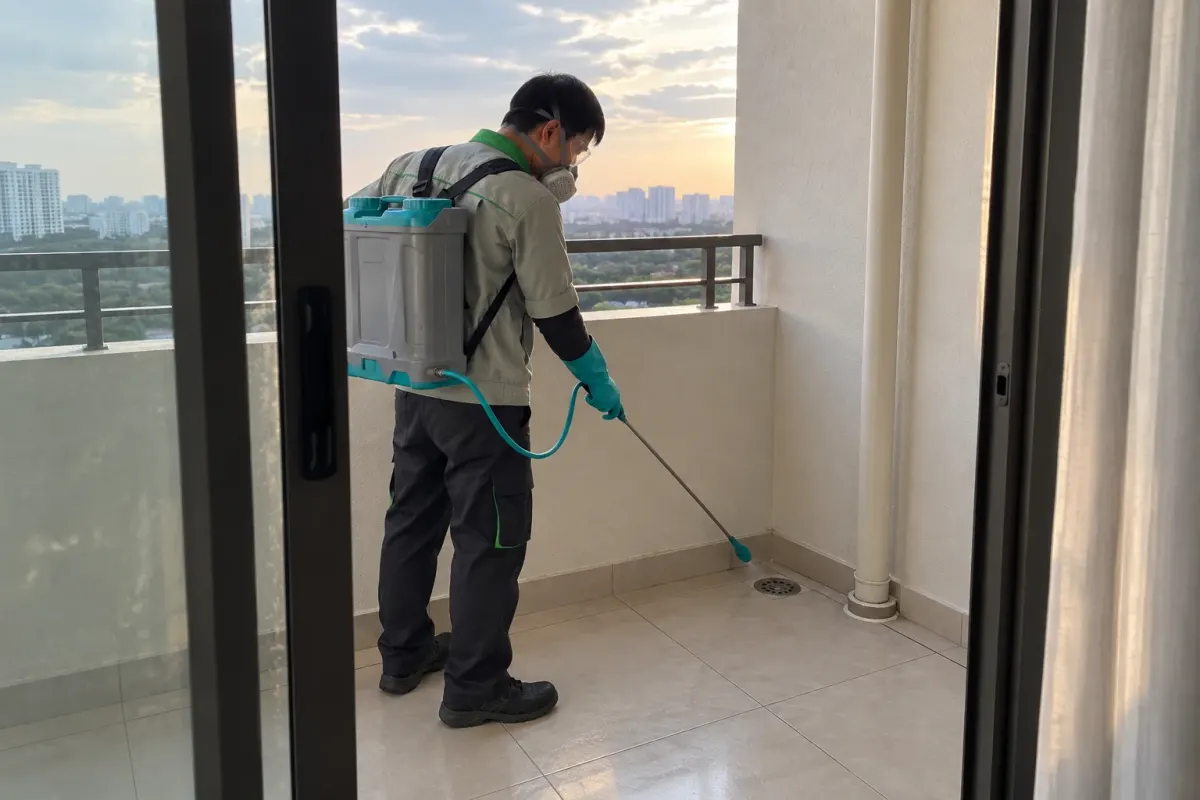
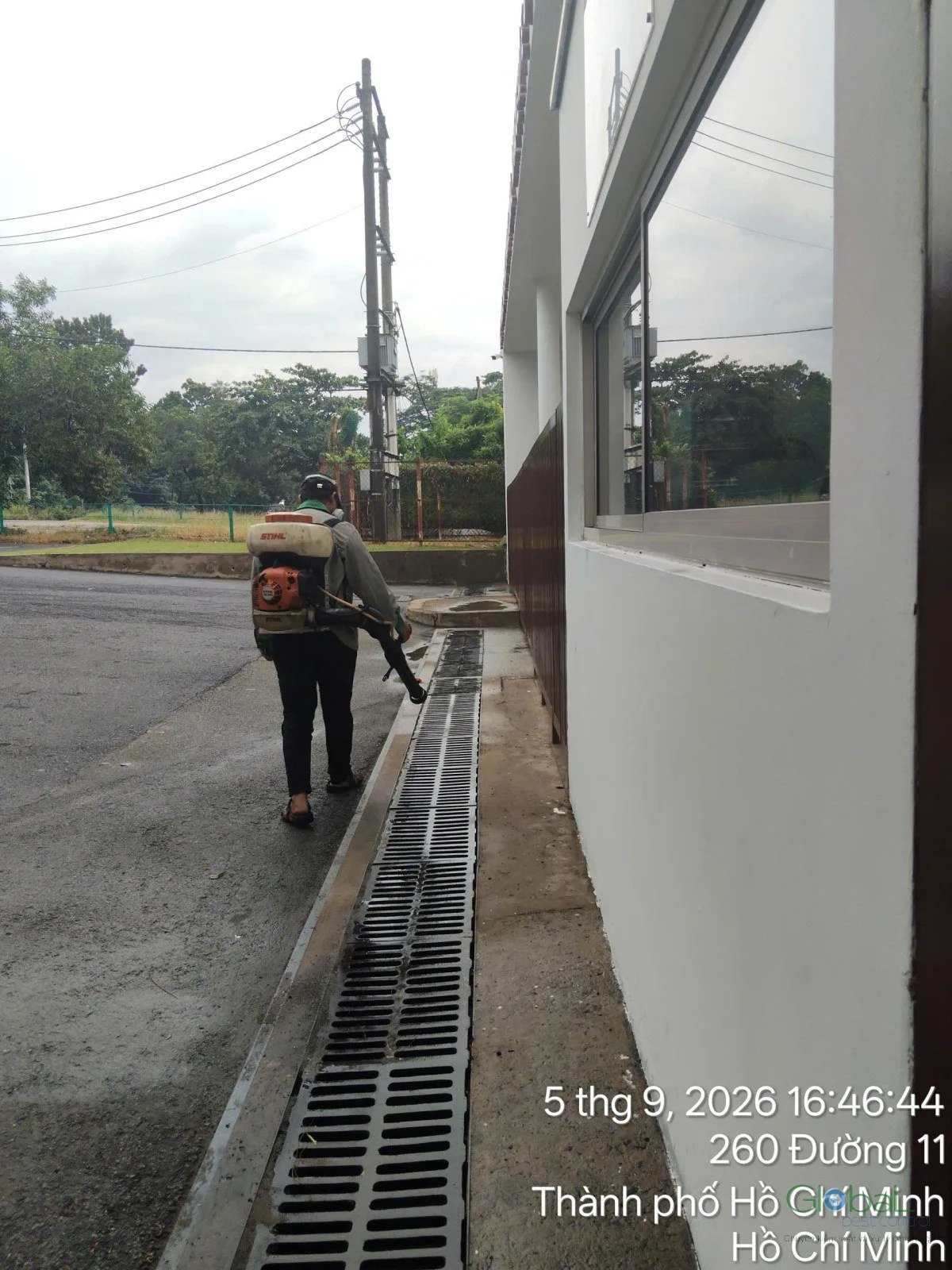
Nothing goes into the pool itself and nothing is applied where it can run into it, both for the obvious reason and because chlorinated water is not the problem. Larviciding is for balance tanks, features and standing water elsewhere. Perimeter treatment of the surrounding planting and structures is done with attention to runoff.
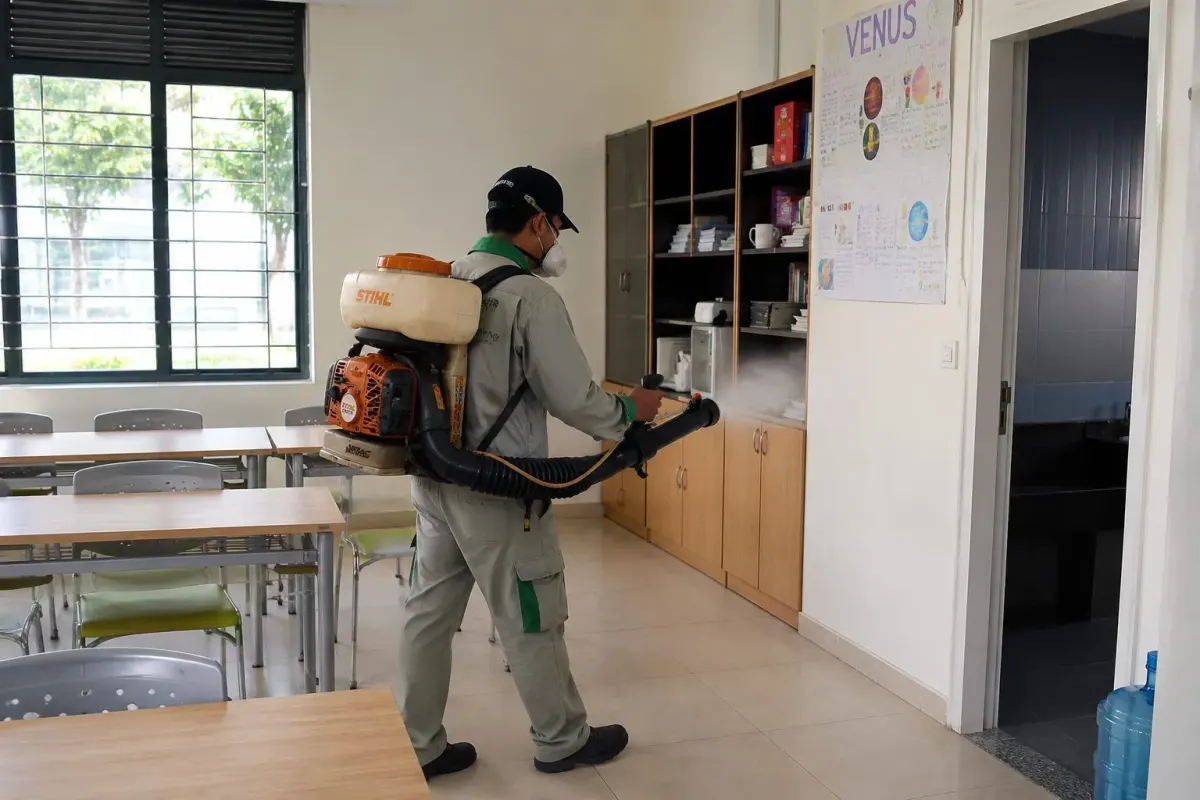
Fogging a pool terrace before an event is a legitimate use of that method, and it should be understood as a few hours of relief rather than as control.
Related reading
See rooftop gardens and green walls and breeding sites around your home. On the species, Aedes and Culex compared. For compounds, villas and compounds and garden ponds in villa compounds. Our parent company runs the Vietnamese-language mosquito control programme.
Global Pest Control is the English-language arm of Khử Trùng Toàn Cầu, based in Thu Duc City.
Common questions
Is Bti safe to use near a pool?
Bti is a bacterial larvicide specific to mosquito and blackfly larvae and is approved for use in water including drinking water at label rate, so it is appropriate for a balance tank, an ornamental feature or a standing body nearby. It is not needed in the pool itself, since chlorinated circulating water does not support larvae anyway.
Our pool has been closed for refurbishment for two months. What now?
Drain it if the works allow, and if it must hold water, keep it dosed or apply a larvicide on a schedule. A standing untreated pool for two months in this climate will produce a substantial population and will affect the whole compound. It is worth assigning this to a named person, because closed facilities are exactly the things that fall between contractors.
Would fish in the water feature work?
For a suitable ornamental pond, yes, and it is an elegant solution — larvivorous fish consume mosquito larvae effectively and need no chemistry at all. It requires a feature deep enough and stable enough to support them, which rules out shallow cascades and anything that is switched off seasonally.