Hotel Housekeeping: A Six-Point Room Check
A hotel that finds a problem during a room turnover has a maintenance task. A hotel that finds it because a guest complained has an incident, a room out of service, and possibly a review. The difference between the two is about three minutes of looking, and it costs nothing.
The check below is deliberately narrow. Housekeeping do not need to identify species and should not be asked to — they need to know six places and one instruction: photograph it, do not clean it, tell the supervisor.
The six places, in the order the room is made up
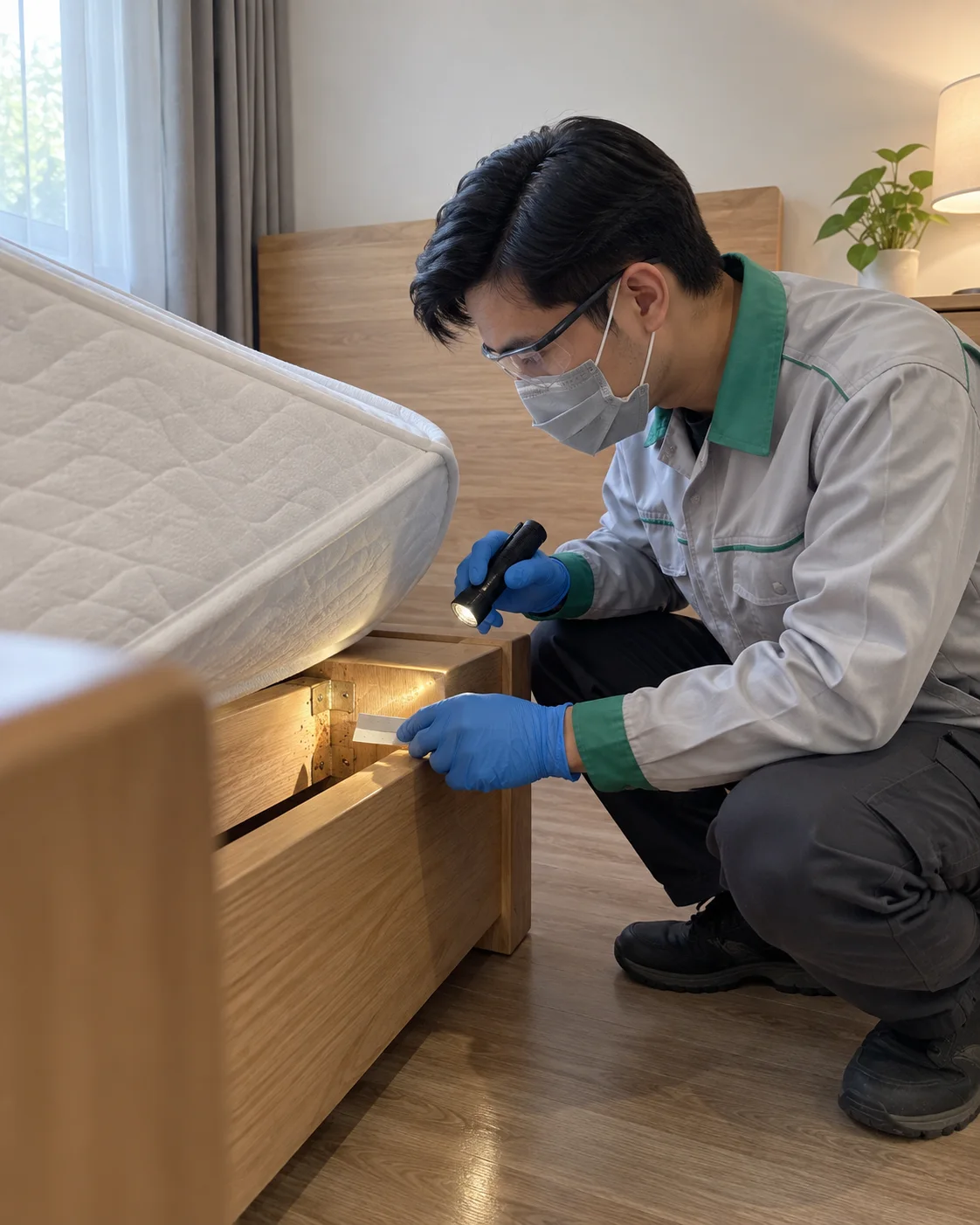
- Mattress seams and the label corner, all four sides. Look for dark specks in a line rather than for insects — an adult bed bug is rarely visible, its droppings almost always are.
- The headboard, particularly where it meets the wall and inside any fixing recess. In most hotels this is where evidence is found first, not the mattress.
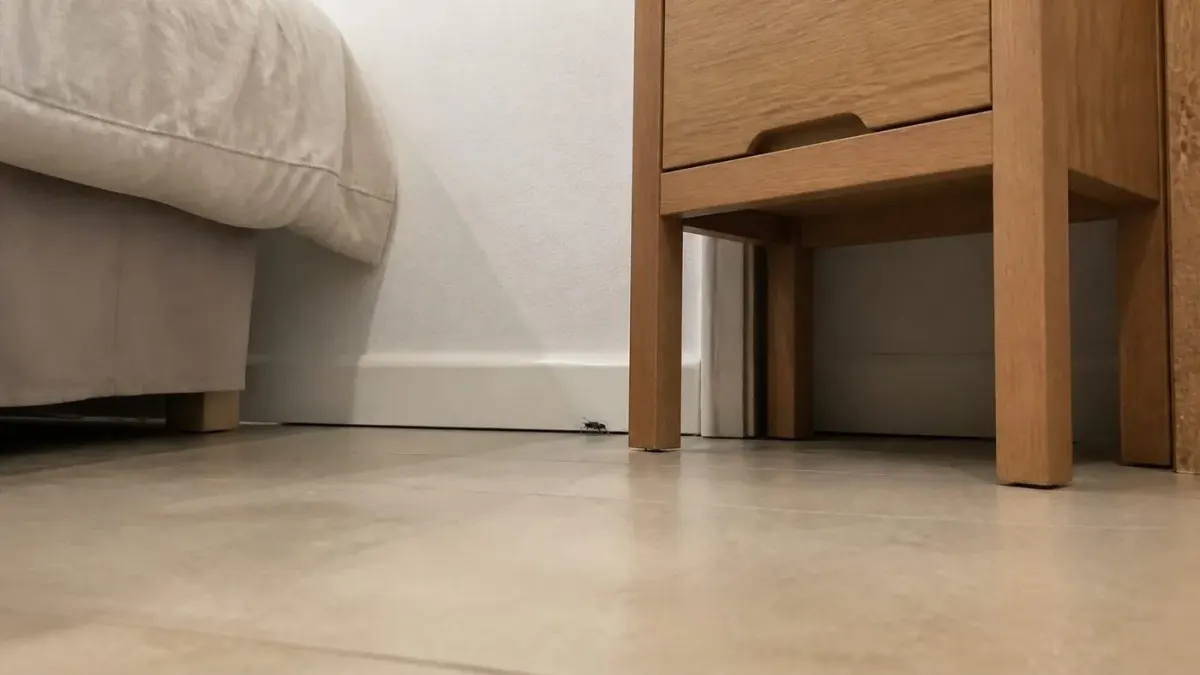
- The bedside table drawer and its runners, and the joint between the bed frame and the base.
- Behind and under the minibar or kettle base — the warmest point in the room and the one nobody moves.
- The bathroom floor drain: is there water in it, is the grating seated.
- The luggage rack and the wardrobe base, including the underside of the rack webbing.
Why the headboard rather than the mattress
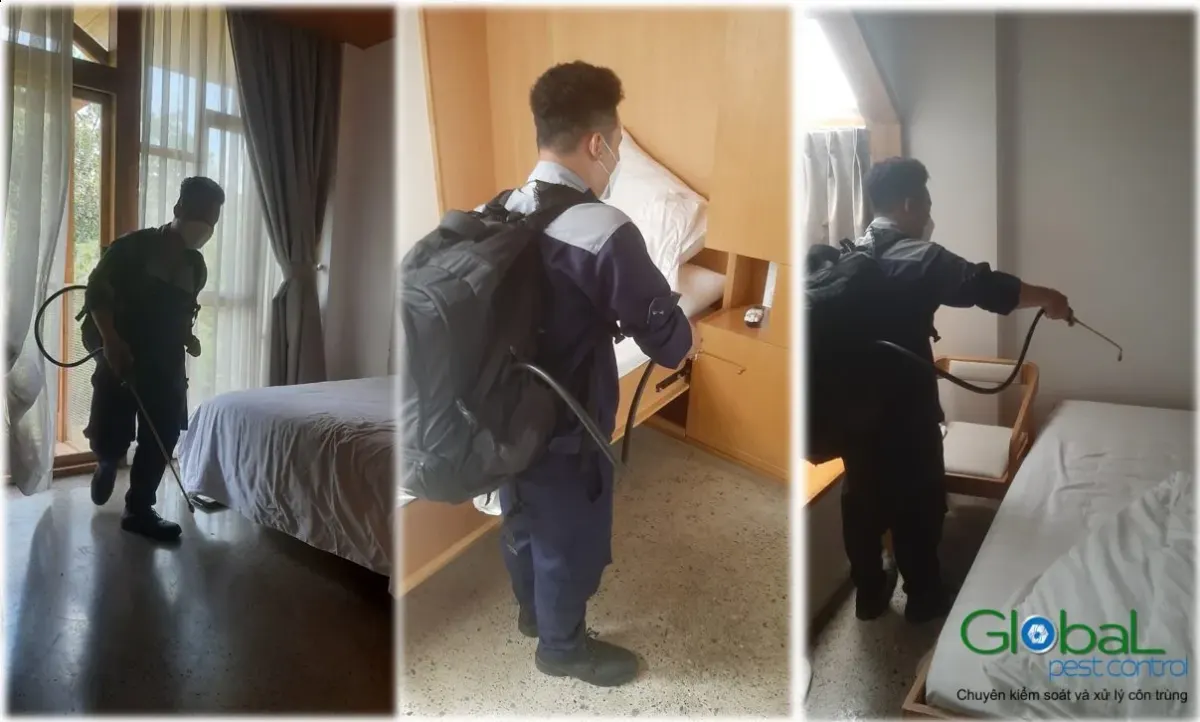
Mattresses are replaced, protected and changed; headboards are fixed to the wall and are rarely moved in years. Bed bugs prefer a harbourage that is close to the sleeping person, dark, and undisturbed, and a wall-mounted headboard with a hollow back is exactly that. In hotels we survey here, evidence appears behind the headboard more often than on the mattress, and a housekeeping check that looks only at bedding misses it entirely.
If the headboard cannot be lifted off without tools, that is worth changing at the next refurbishment. An inspectable headboard is a genuine operational asset.
What to do when something is found
Stop making up the room. Do not strip the bed and carry the linen through the corridor — that is how a single room becomes three. Close the door, mark the room out of service in the system, photograph what was seen, and tell the supervisor. Linen stays in the room in a sealed bag until the technician has seen it.
The instinct to clean it immediately is strong and it is the wrong instinct. A cleaned surface removes the evidence that decides the diagnosis, and it moves the problem rather than containing it.
Rooms that deserve a closer look
Not every room carries the same risk. Rooms let to long-stay guests, rooms that have had recent international arrivals, rooms adjacent to one that has previously had an incident, and rooms that have stood empty for weeks all justify more attention. So does any room where a guest has requested a change without giving a clear reason — that request is sometimes the only warning you get.
Making it stick
Two practical points decide whether this survives contact with a busy property. First, put it on the room card rather than in a training folder; a check that lives in a document is a check that stops happening in week three. Second, make sure reporting is genuinely safe — in any hotel where a report leads to blame, the second report never comes, and by then the problem is in four rooms rather than one.
What the technician does with your reports
A property that records checks builds trend data almost by accident: which floors, which room types, which months. That is what lets a programme move from monthly blanket treatment to targeted work, which is usually both cheaper and more effective. See the serviced apartment programme for how per-unit reporting is structured.
Related reading
For the incident itself, see handling guest pest complaints in a hotel. For the species, bed bugs in Ho Chi Minh City. The full property programme is the hotel programme, and the linen route is covered in hotel laundry and linen. Our parent company runs the same work in Vietnamese on its bed bug treatment service.
Global Pest Control is the English-language arm of Khử Trùng Toàn Cầu, based in Thu Duc City. We train housekeeping teams in Vietnamese and supply the card in both languages.
Common questions
How long does the check really take?
Two to three minutes once a housekeeper has done it twenty times, and it overlaps with work they are doing anyway — the mattress is being made, the bedside table is being wiped. The only genuinely additional movements are lifting the headboard edge and looking under the luggage rack.
Should housekeeping learn to identify bed bugs?
No. Identification takes practice and gets confused with carpet beetles, booklice and skin flakes. What you want is a photograph and an untouched room; identification is a five-second job for a technician looking at the picture.
What if a guest is still in the room?
The check happens during a normal service, so nothing changes. If something is found in an occupied room, do not announce it to the guest — tell the duty manager, who decides whether and how to move them. An unprepared conversation at the door is how a manageable situation becomes a public one.